

Bernard Oliver
Disclaimer: this article contains details which may be upsetting for some readers. Discretion is advised.
January 1967 doesn't jump out of the history pages with any notable events in the UK. That doesn't mean that nothing happened, of course - England famously won the 1966 football World Cup the year before, and the New Years Honours list reflected this by presenting team manager Alf Ramsey with a knighthood, and team captain Bobby Moore with an OBE. Popular children's program Trumpton made it's television debut as the first part of the Trumptonshire trilogy. Charlie Chaplin, the famous icon of the mid-1900s, released what would be his final film, A Countess from Hong Kong. Milton Keynes, which started life as a small village in the Buckinghamshire countryside, was selected by the government to transform into a new town to accept some of the overflowing population of London, more than 50 miles away. The population of the town increased so much over subsequent decades that it absorbed nearby villages such as Bletchley and became one of the largest towns in the country.
For one family in a district of London, though, January 1967 would be imprinted in their memories as one of the most horrific months of their lives, and the start of a life-long torment. The appalling death of a much-loved sibling and son would leave the family traumatised, never to be the same again.
This casefile is about the unsolved murder of Bernard Oliver.
The Disappearance
Bernard Michael Oliver was born in the London district of Muswell Hill in 1950 as the fourth of six children to married couple George and Sheila. The eldest, and only daughter, was Maureen, followed by Andrew, Philip, Bernard, Chris and youngest sibling Tony.
Bernard was known to have a learning disability and presented as younger than his years as a result. He was treasured by his family, who described him as quiet, gentle and friendly, and who provided him with a happy childhood scrumping apples, exploring nearby woodland, and riding around the local area on their bicycles.
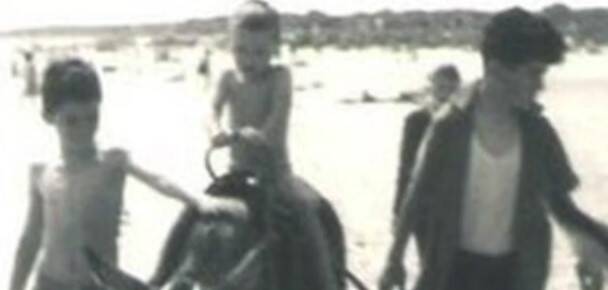
Image 1: Bernard (right) at the beach with his siblings
His siblings kept a close eye on him when they were out together, making sure that he was safe and didn't wander too far. He would enjoy listening to records at home, and sometimes went to the cinema on his own to see the latest picture. His brothers would later say that he generally kept himself to himself, but he seemed content with his way of life.
George and Sheila Oliver separated in 1966, with Sheila moving out of the family home at number 10 Steeds Road and leaving her husband and children to live together in the property. The divorce naturally had a huge impact on the family, especially on the children who were, by then, all in their teens and had known nothing other than a solid family unit. George Oliver continued to work in the printing industry to bring in money to support the household.
Image 2: a map showing the approximate location of Muswell Hill in London
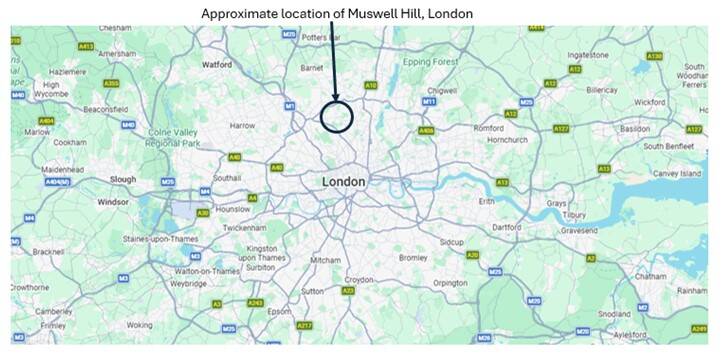
In late 1966, having completed his education at a school for children with special needs, Bernard set about finding some employment and successfully obtained a job at a factory in Crouch End working in the dispatch department. By this time, he was 17 years old - albeit looking a little younger than his years - and was a handsome young man with grey-blue eyes, wavy dark brown hair and a scattering of moles across his face and neck, standing at 5feet 3inches tall and slim in build. He was popular in the workplace, with one colleague later describing: '"Bernard was liked by everyone - especially by the women. He was rather quiet and gentle."' Although he was known to have a good sense of humour once he started talking, he generally kept to himself, perhaps preferring to listen and observe the world around him.
On Friday 6th January 1967, Bernard met a friend - 16-year-old Charlotte Willars, who worked in a nearby chemist's as an assistant - for a coffee in a shop at the top of Muswell Hill. Charlotte would later describe that Bernard had been quiet throughout the evening, but at 8:30pm he had stood up and said: '"well, I'm going to see a friend,"' after which he walked out of the café. There was mention from one of his friends that he may have been heading to the cinema to catch a screening of the film The Ten Commandments, but it's not clear whether he made it to the venue.
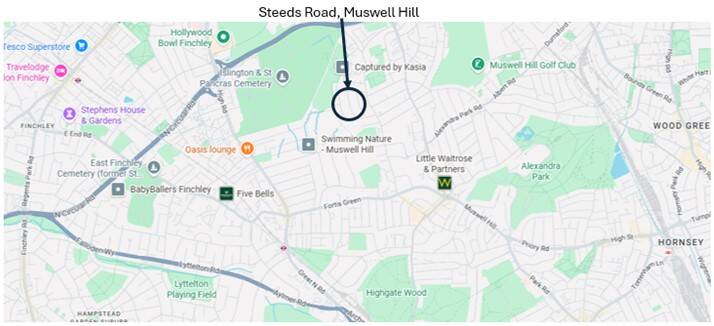
Image 3: map showing the approximate location of Steeds Road, where George Oliver lived with his children
There were some unconfirmed reports that Bernard would buy small gifts for one of Charlotte's friends, whom he referred to as his girlfriend, but this appeared in newspaper articles to be a one-way street, with the girl in question having no interest in the 17-year-old. One of Bernard's colleagues would later tell the press: '"just before Christmas, Bernard said he had three girl friends to take out and would have to buy them all presents. After the holiday, he seemed dejected and advised me to have nothing to do with women. I gathered that his romances had not gone too well."' It's really not clear what the nature of any of these relationships may have been - whether there were some reciprocated feelings, whether they were an attempt from Bernard to attract a girlfriend, or whether they were simply friendly gestures. It's hard to gather from press articles and information online the extent of how Bernard's learning disability affected his day-to-day life and his interactions with people, but it doesn't seem as though he was involved in a romantic relationship at the time of his disappearance.
After he left the café at the top of Muswell Hill around 8:30pm, his movements are unknown. If he did intend to go to the pictures, there's no confirmation that he arrived there, and most media articles simply state that he was spending the evening with friends - although who these friends were and where they may have been located is also unknown.
What is known for certain is that George Oliver woke on Saturday 7th January to find that his fourth child had failed to return home from his night out. Immediately concerned by his absence, he contacted the police and Bernard was recorded as a missing person the same day.
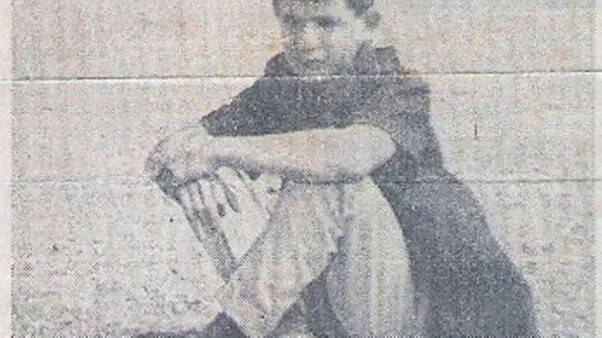
Image 4: Image of Bernard Oliver printed in the East Anglian Daily Times
It's not clear from press reports what action was taken by police in the immediate aftermath of Bernard Oliver disappearing. It would be nice to believe that a thorough and diligent investigation into how a 17-year-old vanished from the streets of London in the late hours of the evening occurred, but how many times have the families of missing people had to listen to officers telling them that their loved one will likely come home when they're ready? That they may have gone missing voluntarily and will come home on their own terms? Or that they may have had a heavy night on the town and were lying low until they'd recovered? Surely in 2026 Bernard would be classified as a high-risk missing person due to his vulnerability as a young man with a learning disability, but it's unclear what the processes were in the 1960s.
Bernard's friends and family became increasingly distressed at his absence. It was incredibly out of character for the teenager to be away from home for any length of time, and the lack of the instant communication methods that we have today meant that they could do little but hope that he would get in touch. One of his friends on the Muswell Hill estate where the Oliver family lived, 14-year-old Terry, told the press that Bernard had a pet poodle whom he had called Pepe. Terry described how the dog had been pining for his owner in the days since he went missing, saying: '"I often used to go around with Bernard. All he talked about was working on a farm with animals - he was mad about them."'
The Discovery
Tucked away off the A12 main road in Suffolk, perched almost midway between Ipswich and Colchester, sits the small village of Tattingstone. Furnished with just a handful of facilities - including a pub, a village hall and a church - it lies on the bank of Alton Water, a lake which provides a haven for those in search of some peaceful time outdoors. A lakeside path completes a full circuit of it's edge, with a number of bird hides for twitchers to tuck away in and beautiful parks in which to while away sunny afternoons.
Image 5: map showing the village of Tattingstone in comparison to London
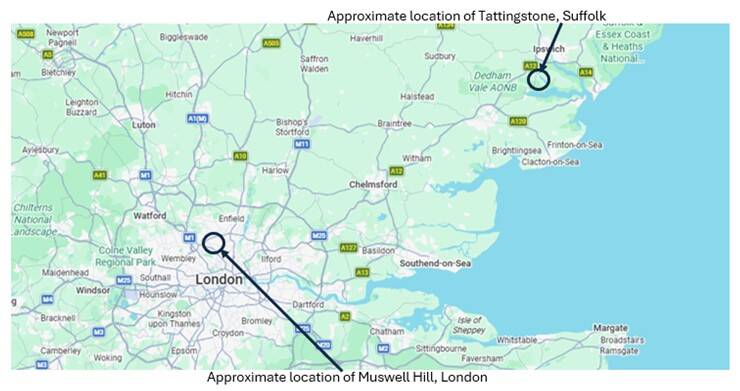
In the chilly morning hours of 16th January 1967, local farmer Fred Burggy, of Folly Farm, started work on one of his fields which was situated just off the crossroad of the A137 with Station Road and Church Road when his eyes were drawn to what appeared to be rubbish dumped along the hedgerow. Curiosity peaked, and perhaps a little frustrated that someone had used his field to discard their unwanted items, he headed over for a closer look.
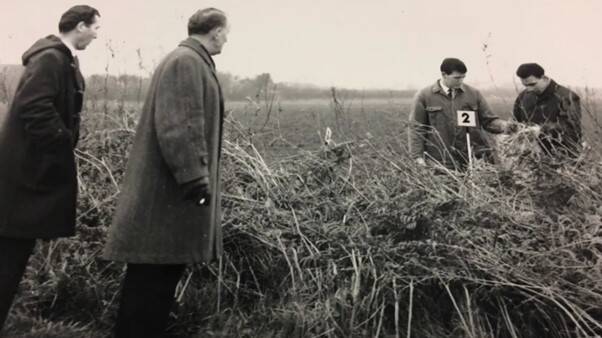
Image 6: officers looking down at the suitcases in the hedgerow
Fred looked down at two suitcases - one of which was grey-blue in colour, with the other a light cream - and casually made the decision to open each of them, perhaps to check if they were in a reusable condition or whether they'd need to go to the tip, or to examine why someone had made the decision to discard them on his land. Upon opening each one to check the contents, the farmer became so disturbed that he could do nothing but climb back onto his tractor and continue to work on the field in something of a daze whilst he processed the information. After nearly an hour had passed, and Fred had composed himself, he clambered back down from his tractor and walked across the road to the nearest phone box to telephone the police.
Officers were quick to arrive to the land at Folly Farm, and able to observe for themselves the horror which had been described to them. The two suitcases contained the naked body of an adult male, neatly dissected into eight pieces, as well as a folded sports jacket.
The village of Tattingstone had little idea how to respond to waking to the information that a dismembered body had been found in their quiet corner of the world. Like Fred Burggy, many of the residents continued their day-to-day activities in something of a daze, unsure how to process the activity which was unfolding around them - police officers and police vehicles had descended on their peaceful haven, and members of the press and media started to appear as the news broke. The village - with it's pub, school and church - were suddenly thrust into the spotlight of what would quickly become a national news story, the previously tranquil roads buzzing with activity.
The crime scene would become the source of controversy over the years. Police didn't extend a cordon around the area where the suitcases had been discarded, meaning that any number of officers - and even a couple of journalists - were able to walk over the surrounding ground with the potential to destroy any evidence left there. Remember, the immediate area had already been stepped over by Fred Burggy and the first responding officers, but the lack of containment after the extent of the situation was identified surely was a critical error.
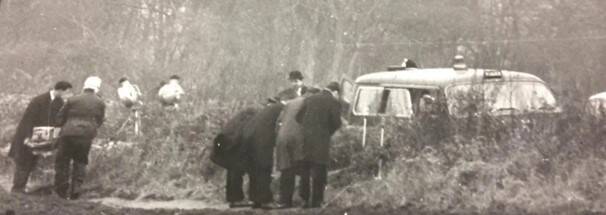
Image 7: officers examining the scene, with a police van visible in the background
Had the area been properly sectioned off, and a boundary drawn around the scene, would forensic teams have been able to find clues which could have helped to develop the investigation in the early days, such as footprints? Was critical evidence destroyed in the immediate aftermath of the discovery of the body? These are questions to which we will never know the answer.
Due to the significance of the inquiry and the brutality of the murder and dismemberment, Scotland Yard were contacted by Suffolk Police and soon became involved in the investigation. Officers travelled from the famous Scotland Yard headquarters to the small village of Tattingstone, working with Suffolk Police in the nearby town of Ipswich.
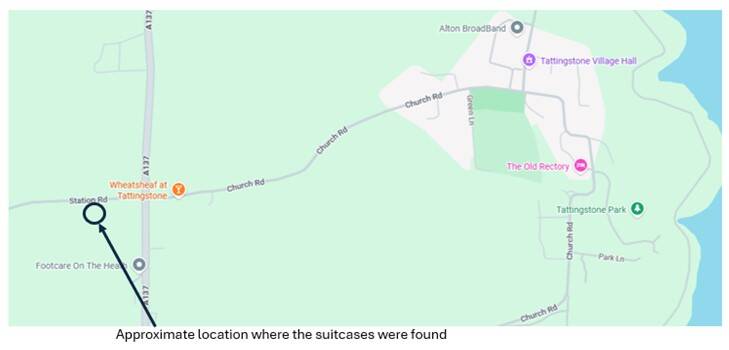
Image 8: map showing the location where the body was found in relation to Tattingstone village
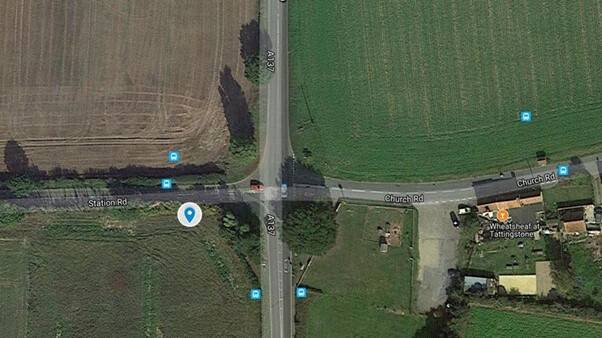
Image 9: an aerial map showing where the suitcases were found (indicated by the blue place marker)
Perhaps the most shocking part of this case, and maybe the most controversial, was the decision made by Suffolk police in a bid to identify the victim of this hideous crime. After fingerprint and dental record comparisons drew a blank, authorities made the unprecedented decision to release an image of the head of the murder victim to the national newspapers, leaving it to the discretion of the editors of each paper as to whether they sent to image to print. The Co-Op funeral director was asked to prepare the head by making it presentable and displaying it with the eyes open in a bid to obtain a likeness to how the male would have appeared in life. This was, naturally, a shocking decision, but a few media companies did opt to print the image with traumatic and devastating consequences. So effective was the presentation by the funeral director that people who spotted the image on the front page of newspapers weren't aware that the photo was one of a deceased human being.
NOTE: a copy of the photo printed in the Hull Daily Mail is going to be shown below. This is not to cause shock, but to enable an understanding of how the case was presented to the public at the time and in an attempt to demonstrate how awful the impact of this was on the family. Please be aware that this image is about to be displayed.
Chris Oliver, then 15 years old, had been travelling on a bus home to Muswell Hill in the early evening of Thursday 19th January, three days after the body in the suitcase was discovered in Tattingstone. One of his friends was sat beside him and had picked up a copy of the newspaper as they had headed to the bus stop, which he opened on the journey. Chris was later interviewed by Sky News about the moment, saying: '"my mate went 'Chrissy that's your brother, isn't it?' I looked at it and I just knew straight away. There was no mistaking it. I hadn't read the story, I'd just seen the picture and [the headline] 'SUITCASE MURDER' and that's all I could see because nothing else registered.'
I think we should pause here for a moment to let the impact of that sink in. The fact that this 15-year-old found out that his beloved brother - the sibling over whom he'd been so protective, who he'd spent his childhood exploring the outdoors with, who he'd looked up to and adored - was not only dead, but had been dismembered, stuffed into a suitcase and abandoned in a field many miles from home. This information wasn't broken to him gently by a parent or trusted adult. He wasn't in a safe space where he could let out his emotions or be supported by his loved ones. He was on a bus in the middle of London, and the information was thrown into his face on the pages of a widely published newspaper. Add into this the fact that the image which was presented to him was one of his deceased brother's severed head, and it's no wonder that Chris Oliver can't remember much beyond the point when he saw the article.
Although the police were keen to identify the body of the victim found in Tattingstone so that the criminal investigation could get underway, one has to consider whether there was a better way of appealing for information from the public. They showed a photo of the severed head of a deceased 17-year-old boy - they didn't release a careful description, nor did they develop a photofit or request an artist to draw a sketch of the victim. It's reasonable to say that the victim was presented as well as possible in the image, but no family member should ever have to go through the additional trauma of finding out about the passing of their loved one in this way.
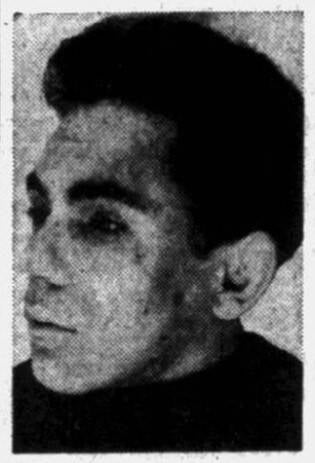
Image 10: a copy of the photo of the victim, as printed in the Hull Daily Mail
Let me know your thoughts on this. Do you think that the police could have handled this situation differently, or do you think it was appropriate to send this image to the press? Even if the police circulated the image, do you think it was fair for the papers to send it to print?
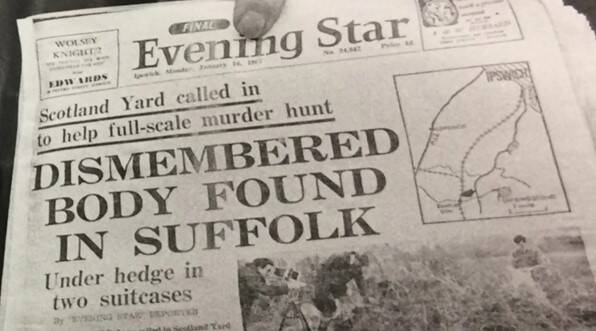
Image 11: the front page of the Evening Star, printed on 17th January 1967
Chris Oliver would have arrived back at the family home on Steeds Road, Muswell Hill, with information unknown to the rest of his family. The 15-year-old boy would have had to break the news to his father that his brother was dead. At around 7pm on Thursday 19th January, Maureen's husband - Chris' brother-in-law - went to Tottenham Court Road police station to report that the victim in the suitcases was most likely Bernard Oliver.
The response by police was immediate, with officers at the London-based station contacting Suffolk Police. Authorities swiftly arranged for a detective to drive to Muswell Hill to collect the family patriarch, George Oliver, and transport him to Suffolk to identify the body of his son.
The Investigation
With a positive identification of the body under their belt, the police were able to vigorously start investigating how Bernard had come to be so far from home, and how the 17-year-old with seemingly no enemies in the world had become the victim of such a heinous crime.
George Oliver remained at Ipswich Police Station overnight into Friday 20th January, likely with little to no sleep after having to identify his fourth child by viewing his head. By Friday morning, just as the Oliver family were starting to digest that, after ten days missing, their son and sibling would not be coming home, police set about ruling out the family as suspects in the murder.
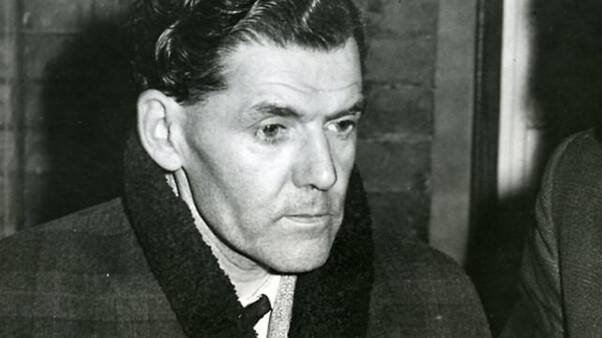
Image 12: family patriarch George Oliver
This, of course, is standard practice in any murder investigation, but would have been particularly hard when many of the family members were still children. George Oliver's car was thoroughly searched, as was the family home, and the Oliver children were transported to Highgate Police Station in London to be asked questions about their brother's disappearance and what, if anything, they knew about his death. Although I can't find it documented anywhere, I hope that Sheila Oliver was also present at Highgate Police Station - at least so the children had one of their parents with them whilst George Oliver was still in Ipswich. In addition to speaking to Bernard's family, officers were also deployed to his workplace to interview his fifty colleagues in a bid to map out his final hours, and find out who he had been meeting on Friday 6th January.
Due to the dual locations involved in the investigation - the deposition site being Tattingstone, Suffolk, and the area where Bernard was last seen being Muswell Hill, London - the Metropolitan Police were drafted into the case in addition to the specialist help from Scotland Yard, with Detective Superintendent Harry Tappin taking over as the lead of Operation Tattingstone from Detective Superintendent Tom Tarling, of Suffolk Police.
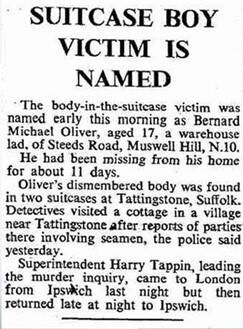
Image 13: a newspaper article released after Bernard's remains had been identified
Whilst Bernard's friends, family and work colleagues were being interviewed by police, a pathologist was examining the remains of the 17-year-old. The pathology report seemed to open more questions than it answered.
The cause of death was found to be manual strangulation, with Bernard noted to have put up a considerable fight against his assailant. He had been sexually assaulted before being murdered, and his time of death was estimated to be 48 hours before his remains were found. After he died, his body had been expertly cut into eight pieces and divided into two suitcases. Examination of his stomach revealed that he had eaten a meal shortly before he died, and his hair had been cut with his nails being carefully manicured.
The sports jacket found folded inside one of the cases was confirmed to have belonged to Bernard, which begged the question why one item of clothing had been placed in the suitcases with the body when the male was naked and all other clothing remained missing. Tucked in one of the jacket pockets was a matchbox from a brand of matches marketed in Israel. Information has never been released to the public whether or not Bernard smoked, but no cigarettes were found in addition to the matchbox and it's unclear if Bernard would have purchased the matches himself or if they could have been given to him by someone else. As well as the jacket and the matchbox, a hand towel was also found in one of the suitcases with the laundry mark 'QL 42'.
Laundry marks were commonly used in the mid-1900s to identify the owner of laundry items, especially when bagged items were washed in bulk. Very few homes in the early and mid 1990s would have owned a washing machine or facilities to do their own washing, and laundry was generally outsourced by transporting it to industrial sized launderettes, then collecting it when it was ready. It was essential that launderettes knew which items belonged to which customer in order that they were returned to the right place, as items were emptied out into the industrial machines and washed together. These facilities would have customers from any number of industries or residences, and replacing any lost items would be a costly practice. Originally, laundry marks were added to items by using tape or hand sewing the customer code onto the item, but as time progressed these would be stamped onto the item with a specialised machine. Beyond the 1960s, a practice developed where laundry marks were fixed to the item by applying a label using heat.
The practice of laundry marking surely gave the police something of a lead in Operation Tattingstone. The towel may have come from a hotel or similar business establishment, and could have the potential to direct officers to the location where the crime was committed. However, if anything did come from looking into the laundry mark, it was never released to the public and it hasn't led to any significant developments in the case.
One of the primary questions must surely be that if the killer, or killers, wanted to disguise the identity of the victim by leaving him naked and going to the effort of dismembering the body, why would they leave an item of clothing in the case which could quickly be linked to them? Not only that, why go through the significant work of dismembering the body if the intention was to leave all parts together in one place? Surely there were other ways the body could be disposed of without trying to fit it into two suitcases. Did the killer perhaps intend to distribute the body parts in different locations, reducing the chance of the parts being linked together and the victim identified? Were they interrupted in their bid to start discarding the body parts, panicked, and threw both suitcases into the nearest field? So many questions arise from the way the body was disposed of.
Examination of the suitcases themselves were undertaken to see if they could provide any information relating to the attacker. One of the cases was stamped with the initials P.V.A., which would generally indicate the initials of the owner. Police considered these letters to be significant at the time, and enquiries into finding out the identity of the owner led the investigation as far away as the Netherlands, with officers looking at the names of those who had disembarked ships from the UK around the time of the murder. As with the laundry mark, nothing seemed to come from these investigations - or at least nothing that the police released to the public. Forensic examination at the time also provided no promising information.
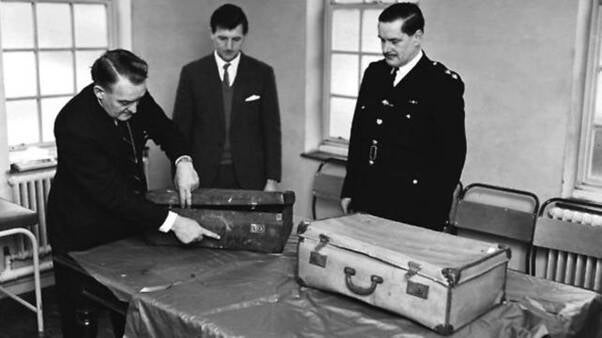
Image 13: officers examining the suitcases
Police worked on the theory that Bernard Oliver had been alive when he arrived in the area of East Anglia and the county of Suffolk, although it's unclear why this became the primary theory. There were reports from some of the residents of London that Bernard had been seen in the days after 6th January - few people knew at the time that he had been reported as a missing person, and therefore didn't think to flag a sighting of him to the police. We know that reports of missing people can be slow to gain traction, with police sometimes waiting to see if the person will come home independently. It begged the question - if Bernard had been seen out in London in the days after he failed to come home, what had he been doing? Why hadn't he visited or spoken to his family? Where had he been staying, and who had he been with? And if police were working on the theory that he had been alive when he was transported to Suffolk, when had he been moved there, and why? Is there a chance that it wasn't Bernard who had been seen in the area, but someone who looked very much like him?
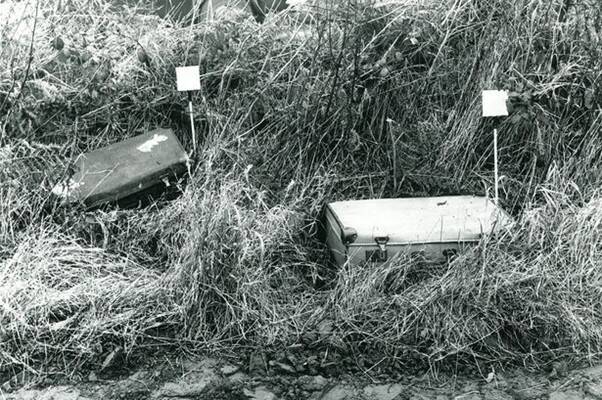
Image 14: the suitcases as they were found in the field
With an open mind as to how Bernard may have made his way to Suffolk, authorities began to interview lorry drivers who travelled regularly between London and Ipswich. They also visited cafes along the A12 road, the main road between the capital city and the Suffolk town, asking the owners and staff whether they had seen the 17-year-old in the days before he was thought to have died. As police had little indication when exactly Bernard had passed away, other than the suggestion that it was around 48 hours before his remains were found, it was unclear when he would have travelled to Suffolk so they needed to bear in mind that this could have been at any stage between 6th and 14th January. This also meant looking at passenger logs for coach trips along the A12 in case he had made his own way there by bus.
On Sunday 22nd January, a week from the day when the suitcases were thought to have been deposited in the field, authorities set up a vehicle checkpoint on the outskirts of Tattingstone on the A137, approximately 200 yards from where the suitcases had been discovered. Four officers stopped any vehicle passing along that route from the evening until the early hours of Monday morning, asking drivers if they had travelled the same road a week previously and if they had any information which could help the police investigation, showing them images of both Bernard and the suitcases in a bid to jog memories, although little of use was brought forward.
A promising report was made by a Tattingstone village resident when they approached police with a description of a man they had seen in the area on the day prior to the suitcases being found. The resident said that they had noted: 'a man, who was middle-aged and wearing a dark trilby and a long trench coat, walking in the direction of Tattingstone on the Harwich Road, carrying a suitcase.' Although work set about trying to identify this man and ascertain where he had come from, it appears that he was either never located, or was located and eliminated from the inquiry as no update was issued on this by police.
Based on the fact that Bernard had been sexually assaulted prior to his death, authorities started a branch of investigation into known homosexual men in the area where he was last seen, with detectives vowing to interview every homosexual man in London. At the time of Bernard's murder, same-sex relationships were still illegal in the UK - something which would change just months later when the Sexual Offences Act 1967 was passed, making gay relationships between consenting males over the age of 21 legal in England. The fact that homosexuality was still illegal in January 1967 meant that many gay men were very covert about their activities, declining to share the nature of their sexuality with family and friends in fear of discrimination.
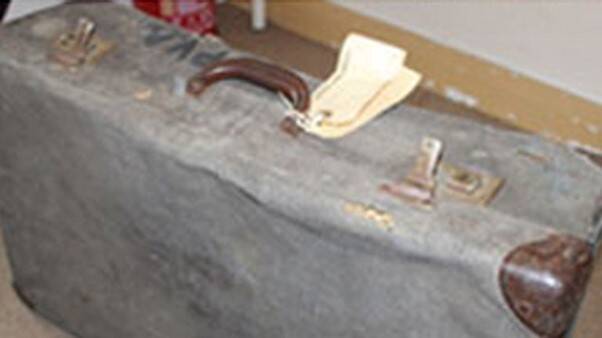
Image 15: a photo of one of the suitcases, with the initials P.V.A visibly stamped in the corner (see top left of image)
This meant that tracing these men in the city would be a huge task for police, but also that encouraging them to speak to authorities would be an even bigger task based on the fear of legal retribution. Those who they did manage to contact and speak to seemed to offer little to help develop the case, and no progress was made from this line of inquiry.
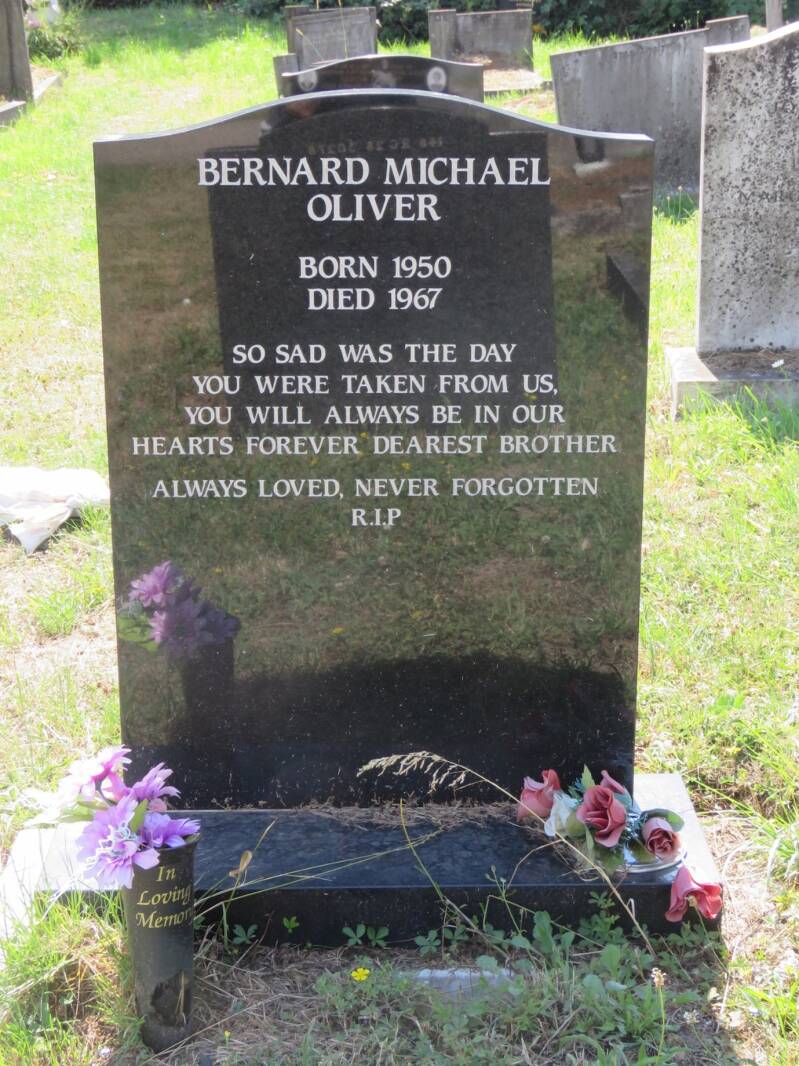
Image 16: Bernard Oliver's headstone
Within the first four months of the investigation, more than 2,000 statements were taken by authorities, with dozens of items sent for assessment at the Metropolitan Police laboratory by forensics technicians. Thousands of police hours were spent studying every available clue or piece of information in this case, but any potential leads ultimately led nowhere. Although investigations continued well into 1968 - more than a year after Bernard's death - the case would go cold after the initial twelve months. Renewed efforts were made to progress the investigation in 1977, but again these led nowhere.
Bernard Michael Oliver was laid to rest in Islington and St Pancras Cemetery in East Finchley, just a short distance from his home at number 10, Steeds Road, Muswell Hill - his final resting place being near to the family who loved him so much, and in an area of peace and quiet for those who wished to sit near him for a while. For many years his grave was unmarked - perhaps due to finances, with George Oliver then supporting a large household with multiple mouths to feed - but this was rectified in 2015 when a beautiful black headstone was installed, with a carefully chosen and heartfelt inscription. Below Bernard's name and years of birth and death, the engraving reads: 'so sad was the day you were taken from us, you will always be in our hearts forever dearest brother. Always loved, never forgotten. R.I.P.'
Suspects
For decades, the general public lived under the impression that there had been no key suspects in the murder of Bernard Oliver. The police had suspected that the murder and dismemberment had occurred in Suffolk, and that the act of dissecting the body had been carried out by someone with expert knowledge, but no evidence had existed to back up these theories.
In 2004, a Freedom of Information request was submitted to the police force in a bid to obtain more in-depth facts relating to the case. The subsequent response provided two names as key suspects in the murder, but this fact-finding mission also raised other suggestions with several plausible possibilities.
Reddington and Byles
The names produced by the Freedom of Information request transpired to be those of two qualified - and highly controversial - medical doctors.
Martin Bruce Reddington (born 26th June 1931, died May 1995) would have been 35 years old at the time Bernard disappeared. He was born in Colchester town, just a short distance from Tattingstone, and would likely have been familiar with the Suffolk area - but he also had substantial connections with London and had previously run a surgery in Muswell Hill.
Reddington had already experienced controversy by the time Bernard Oliver's body was found. In 1965, a warrant had been issued for his arrest on charges of indecent assault against men. On the back of this warrant being issued, Reddington conveniently left the country and made for South Africa whilst inquiries in the case were still ongoing. Although he returned to the UK several times over the subsequent years, attempts by police to arrest him were unsuccessful and his guilt in the 1965 charges remained unascertained. It can't be confirmed if he was in the UK at the time of Bernard's disappearance and murder.
In the 1977 review of Bernard Oliver's case, a private detective approached police stating that she recognised the suitcase with the initials P.V.A., claiming that it was used by a group of three men who frequented a launderette in Muswell Hill. She was able to identify Reddington as one of the men when shown photographs by the police. By the time the case review was being conducted, however, Reddington had moved to Australia and UK police felt that there was insufficient evidence to have him extradited for questioning.
Reddington didn't manage to stay clear from trouble for long, though. In February 1977, whilst working as a medical practitioner in Turramurra, he was arrested on charges of indecently assaulting a man in Sydney, Australia, with the alleged offence being committed sometime between 1st December 1971 and 15th July 1973. He reportedly died in Surrey, UK, in May 1995 aged 63.
Although Reddington can't be formally linked to the Bernard Oliver case, his close association with John Roussel Byles (born 27th January 1933, died 19th January 1975) gave officers due cause for suspicion.
Dr John Byles had spent years working on different naval ships as the allocated surgeon, but like Reddington he had not escaped controversy during his life. In 1963, he was charged in conjunction with another man of assaulting a 16-year-old boy at a flat in Earl's Court in London, a crime for which he was tried and acquitted. He would have been 30 years old at the time of this trial, and 33 when Bernard Oliver was killed. At the time when Bernard disappeared, he ran a surgery in South London.
In the early 1970s, Byles left the UK for Australia. He wouldn't stay out of trouble for long, though, and was arrested in Melbourne on 17th December 1974 after allegedly indecently assaulting a young boy. Byles was able to post the $2,000 bail, equivalent to £8,000 in today's money in the UK. After posting bail he vanished until, on 19th January 1975, his body was found in a room at the Prince of Wales hotel in Prosperine, Queensland - more than 1,000 miles away from where he had been released at the police station. Byles was suspected to have taken a drug overdose, having checked into the hotel under the alias John Matthews.
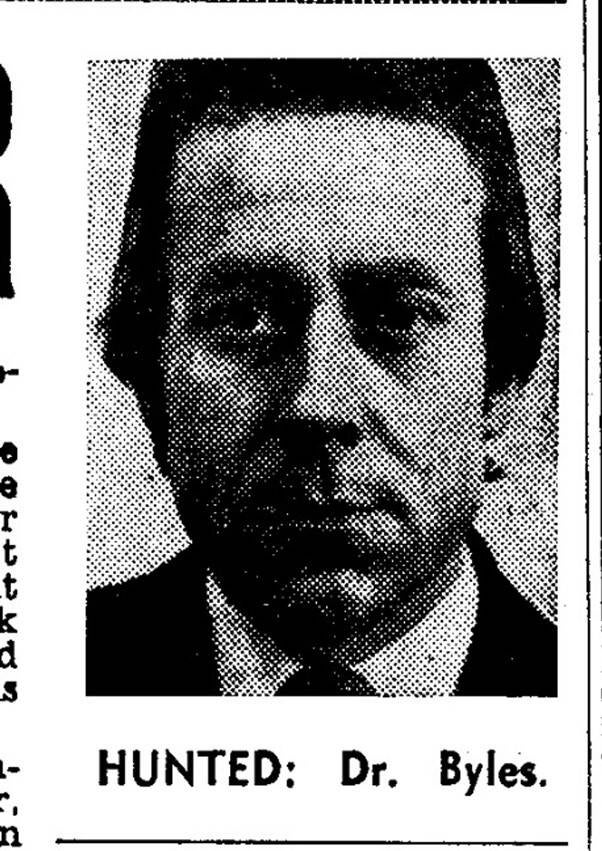
Image 17: Dr John Byles
Three letters were found beside his body - one addressed to his family, one addressed to Martin Reddington, and the final one addressed to Scotland Yard. The contents of each letter has never been made public, other than to say that no reference was made to the case of Bernard Oliver, but Byles did apologise for his actions during his lifetime.
Why did he offer an apology? Well, it transpired that John Byles had emigrated to Australia in the wake of a huge news story breaking in the north of England in the early 1970s. Persistent and dedicated work by police had helped to uncover the sexual assault of multiple young boys between the ages of 9 and 14 in Huddersfield, Yorkshire, as part of what would later be called the Holy Trinity paedophile ring. Five men - the Reverend John Poole, vicar at the Holy Trinity Church, school teacher Clive Wilcock, child care worker Raymond Varley, Dr John Byles and a man named Jack Nicholls - were implicated a crime which involved coercing young boys to visit the vicarage or church where they were assaulted, with photos being taken and sold to indecent magazines in Denmark and the Netherlands.
When rumours broke of a pending investigation, Byles took off to Australia and left his co-accused to face trial. In 1975, Poole, Wilcock and Varley were found guilty of all charges at Leeds Crown Court, with Jack Nicholls unable to be located for trial and Byles having taken his own life earlier that year. Accusations against Byles were that he had invited boys to his surgery in South London, had plied them with alcohol and then sexually assaulted them - with images again being taken during the assault and sold in Europe to magazine companies. After Byles died, it also emerged that he and his friend Martin Reddington had been suspected of the murder of a boy, whom they'd reportedly had a sexual relationship with, in London in 1973.
Reddington and Byles' history - although largely unproven - held enough suspicious behaviour and circumstantial information to suggest an involvement in the murder of Bernard Oliver. What if Bernard had been lured to Byles surgery, but something had gone wrong? The way that his body had been expertly dismembered gave weight to a doctor being a candidate as the suspect - their knowledge of human anatomy would have meant that the dissection would have been neater than those without this experience. However, by the time the 1977 case review got underway Byles had been dead for 2 years and Reddington was unable to be located. Their backgrounds on paper were an excellent start, but little evidence existed to tie them further to the crime.
Joe Meek
Born Robert George Meek on 5th April 1929, the man who would go on to be known as Joe gained a reputation as a hugely influential sound creator, utilising all that the recording studio had to offer in the creation of music. His young interest in electronics and experimenting with building circuits developed even further during his national service in the Royal Air Force where he worked as a radar technician, and he would obtain a role working for the Midlands Electricity Board when he left the service in 1953. From here he would go on to work as an audio engineer in radio production before going on to develop an independent career. As well as writing and producing music for individuals and groups, he also produced music for films and released his own album in 1960 which experimented with use of electronic sound work. He played a pivotal role in the development of reverberation and overdubbing in the recording studio, and was known for experimenting with space-age pop sounds and experimental pop music at his recording studio at 304 Holloway Road in London's district of Islington.
Meek was homosexual, something which he had hidden from his parents and feared that they would find out. His sexual orientation became known in the years before it became legal in the UK and subjected him to open abuse and discrimination. He was the victim of blackmail in 1963 after receiving a criminal conviction and fine for seeking gay sexual encounters in a public toilet in London, known as 'importuning for immoral purposes' by the police.
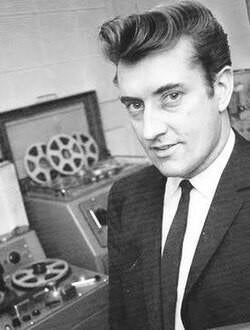
Image 18: Joe Meek pictured in his recording studio
His career success was relatively short lived. He had experienced a somewhat difficult start in life, with unconfirmed reports of him being brought up as a girl for his first four years by his mother at their home in Newent in Gloucestershire. He developed bipolar disorder and schizophrenia. As an adult his frequent use of recreational drugs, including barbiturates, increased his depressive episodes and likely contributed to severe paranoia. This, combined with additional use of amphetamines, added the ability to fly into uncontrolled rages with little trigger or cause, dramatically impacting his ability to safely interact with his clients and potential working partners. He was convinced that secret microphones had been installed behind the wallpaper of the room he rented from his landlady, and that they had been placed there in a bid to steal his ideas. His paranoia seemed to fixate around his landlady with Meek also believing that she was intercepting his phone calls, leading to him ceasing the use of his telephone. She used to despise the noise and sound experiments coming from his flat, and would bang on the ceiling of her downstairs establishment with a broom, something which caused him to seek revenge by putting loudspeakers in the stairwell. He developed an interest in attempting to communicate with those beyond the grave, setting up recording equipment in cemeteries in an attempt to capture voices.
As his mental health deteriorated, Meek started to believe that his rented flat was infested with poltergeists, that his mind was being controlled by aliens, and that he could communicate with photographs - obsessions which slowly began to take over his life and become noticeable to those around him. He became increasingly paranoid of being targeted for the purposes of blackmail, as had happened to him in 1963, with this paranoia focusing on gangsters in London at the time such as the Kray twins. For this reason, he never left his home or recording studio without wearing sunglasses in a bid to conceal his identity.
Meek's mental health took a dramatic downward turn from it's already volatile state when news broke that the Metropolitan Police were attempting to contact every homosexual man in the city to question them about the murder of Bernard Oliver. His overwhelming paranoid about his parents finding out about his sexuality was exacerbated by the strain of his financial situation, as he had lost much of his working commissions due to the complexity and unpredictability of his mental health. He eventually cracked on 3rd February 1967 following an argument with his landlady, Violet Shenton, over unpaid rent and the noise levels in his flat, resulting in Meek shooting her with a single-barrelled shotgun he had borrowed from an associate, subsequently turning the weapon on himself.
Although Meek is often mentioned in conjunction with Bernard Oliver's case, it's unclear how the connection came about. Was it to do with his homosexuality and unstable mental state? Could his mental health have deteriorated not because of the police interviewing homosexual men in London, but because he knew something about the case and couldn't cope with the horror? Had he mentioned Bernard in the past? There were rumours that Bernard had briefly worked stacking shelves in the recording studio, but these are unconfirmed. If Meek was connected in some way, would he have had the anatomical knowledge necessary to dismember the body in the neat way it had been conducted? Even though some elements seem like they could connect Joe Meek to the case, there seem to be several more which don't quite add up.
DJ Tony Windsor
In recent years, Sky News released information that DJ Tony Windsor, real name Tony Withers, had been questioned by police in relation to the Tattingstone Suitcase Murder. Windsor was known to be gay, and was also reportedly a good friend of Joe Meek, something which seems very plausible when they both worked in the same industry.
Windsor would have been around 56 or 57 at the time when Bernard was killed, and worked at the time on the ship MV Galaxy which was being used to host the pirate radio station Radio London. In January 1967, the ship was anchored off the coast of Frinton-on-Sea, approximately 12 miles from where the suitcases were found. A witness had reported seeing a man wearing surgical gloves, with two suitcases resting nearby, at docks near Ipswich in the days leading up to when the suitcases were found in Tattingstone.
Although it's unclear what led officers to speak to Windsor, they were transferred from the shore onto the MV Galaxy on 6th February 1967, staying on the vessel overnight and leaving on 7th. Windsor was interviewed during the time the officers were on board, but no follow up was arranged. Windsor was known to be an alcoholic, with his addiction gradually worsening in the period leading up to the interview. When officers left the ship, DJ Tony Windsor was fired from his role and transferred to the main land.
Windsor died in 1985 at the age of 64. No further connection was made between him and the Bernard Oliver case beyond the initial interview.
Reggie Kray
I'm sure that most people, whether from the UK or abroad, have heard of the Kray twins. Their reputation has long outlived either of the brothers, and tales of their reign of terror in London have reached far and wide.
Ronnie (born 24th October 1933, died 17th March 1995) and Reggie (born 24th October 1933, died 1st October 2000) were born and raised in London's East End to parents Charles and Violet, who already had one son - Charles - and had sadly lost a daughter several years before the twins arrived. Their father was largely absent from their childhood, working as a rag-and-bone man (someone who collected and sold items which some may consider junk or rubbish) across the extent of the south of England, and spending most of his time in the pub when he was back in London. He went AWOL after being conscripted to the army at the start of World War II, spending many years as a fugitive until he was finally caught by police in 1954, during which time he had little contact with his wife or children. The twins were therefore heavily influenced by their mother, who was their primary care-giver.
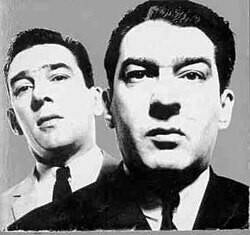
Image 19: Reggie (left and Ronnie (right)
Violet and her three children were evacuated as a family from London during the war, moving to East House in Hadleigh, Suffolk, which the twins would later describe as their first experience of the countryside. Although they only remained in the area for a year - with Violet reportedly moving the family back to London due to missing her friends - the impact of the single year in Suffolk was long-lasting for the twins. As adults they invested in property near Bildeston, purchasing one house for themselves and one for their parents.
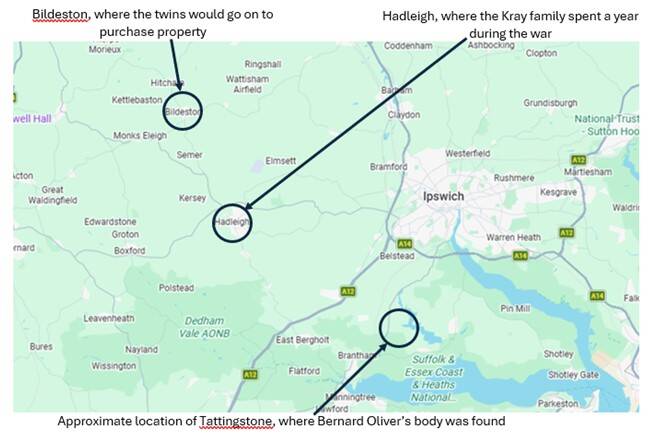
Image 20: key locations in Suffolk linked with the Kray twins
Criminal activity played part of their lives from an early age. Both were involved in amateur boxing as teenagers, a skill which enabled them to take part in numerous street fights and brawls. When called up for national service, the pair presented at the home of the Royal Fusiliers in the Tower of London where they both attempted to leave, with Ronnie causing a significant injury to a corporal who attempted to stop them from leaving the building. They were arrested the next morning at the family home and returned to the army, going AWOL again a short time later and injuring a policeman who attempted to arrest them and transport them back to military grounds. They were detained in the Tower of London before being transferred to Shepton Mallet prison in Somerset to await court-martial, after which they were detained in a Kent military prison.
Their behaviour escalated significantly during this first term behind bars. They became known for assaulting guards, committing arson, throwing tantrums and even escaped at one stage before being recaptured. After being transferred to civilian prison and subsequently being released, they were dishonourably discharged from the army - something which ended any prospects of the pair developing a career in boxing and encouraged both to embrace a full-time life of crime.
Their subsequent activities are perhaps what made the pair infamous. They became involved in arson, armed robberies, money laundering, and eventually progressed to murder. They ran their gang, which was widely known as The Firm, from Bethnal Green near their home. Despite their reputation and history, the twins ran several nightclubs in the capital city which afforded them something of a celebrity lifestyle, with their charming public personas and lucrative businesses enabling them to socialise and run shoulders with high-profile members of society, with names including Frank Sinatra, Judy Garland and Cliff Richard. They publicised the image they wanted, inviting journalists to photograph them in their famous nightclubs and write articles about their donations of money to charities. This image hid the dark and disturbing activities behind the scenes.
Ronnie Kray was openly homosexual at a time when same-sex relationships were illegal, and reportedly took great pleasure in the shock factor this imparted on those around him. He made no effort to hide his relationships with me, and there were rumours that - although Reggie had been married to a woman - he had also dabbled in relationships with men since his teenage years. Ronnie commenced a relationship with a high-profile Conservative party member, running upper-class parties where rent boys were hired to be available to the men who attended. At the same time, he was rumoured to have had an on-off relationship with Edward 'Mad Teddy' Smith, a member of The Firm and loyal supporter of the twins.
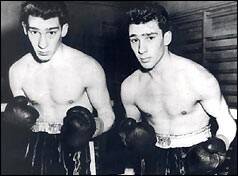
Image 21: The Kray twins during their boxing years
The police had been following the activities of the Kray twins for many years, but had been unable to gather enough evidence to try them for many of their crimes due to the silence they encountered when attempting to interview witnesses. Such was the extent of the twin's reputation and power that people were too afraid to speak out - especially to the authorities. This ended in 1968 when both Ronnie and Reggie were arrested for murder - Ronnie of the murder of George Cornell in 1966, and Reggie of the murder of Jack McVitie in 1967 - and were tried in what would transpire to be the longest trial in the history of criminal justice in the UK. The pair were sentenced in 1969 to life imprisonment, with a minimum term of 30 years each. Their older brother, Charlie, was sentenced to 10 years for his roles in supporting both twins in their crimes. Judge Justice Stevenson said in conclusion: '"In my view, society has earned a rest from your activities."'
Ronnie Kray would end up being transferred to Broadmoor Secure Hospital to serve out his sentence. He had long been diagnosed with schizophrenia, and was certified insane during his detention in civilian prison.
Two of the Kray brothers would die behind bars. Ronnie Kray died in 1995 after suffering a heart attack, passing in hospital two days later. Charlie Kray, although released from prison after his ten-year sentence for involvement with his younger brother's crimes, was convicted in 1997 for conspiracy to smuggle illicit drugs. He died of natural causes in 2000. The only reason Reggie Kray would die outside of the prison walls was his release on compassionate grounds in August 2000, after being told that he had terminal cancer. He died in a suite at the Townhouse Hotel with his wife, Roberta, by his side, having married her three years previously whilst incarcerated. All brothers were buried in the family plot in Chingford.
It was during the wake of Reggie Kray's death when further details and rumours of the brother's criminal activities started to eek into the press. Reggie was interviewed shortly prior to his death by the BBC after inviting cameras into his hotel room, with the interview being shown in the 2001 program Reggie Kray: The Final Word. Reggie reportedly confessed to a murder which he had not previously mentioned and for which he had never been charged, although he refused to name the victim. This claim was backed up by a former cellmate. Pete Gillett had been in two separate prisons with Reggie Kray, and said that he had first confessed to the killing the unnamed victim 16 years before he spoke to the BBC. He went on to describe in a documentary: '"sixteen years ago Reg burdened me with the secret of this other murder he did. It was not a villain, not a policeman, but a young boy, a young gay boy... he was disgusted with himself for realising that he enjoyed that sort of thing, knowing he was gay or bisexual, and he shot the kid."'
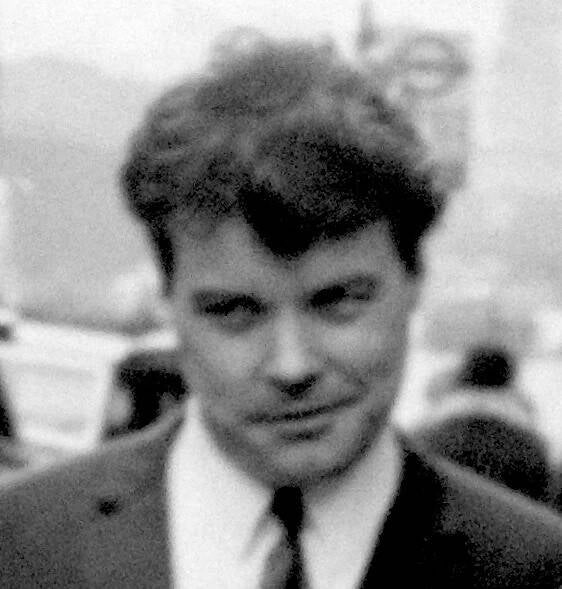
Image 22: Edward 'Mad Teddy' Smith
Whilst it's generally thought that the victim Reggie Kray was referring to was Edward 'Mad Teddy' Smith, who disappeared a day after being seen arguing with the Kray twins, Bernard Oliver's name has been thrown into the ring by many with the potential of being the victim. Some cite the fact that Bernard disappeared from the streets of London during a time when the Kray twins were at the height of power and were known to have committed murder, with others adding that their connections with Suffolk should be considered when looking at where Bernard's body was left. Tattingstone was just 18 miles away from Bildeston, where Ronnie and Reggie owned property, and an even shorted distance away from Hadleigh where they had stayed during World War II.
As with many rumours, though, there isn't always a huge amount of evidence or fact to back them up, and there seem to be more questions with this theory than there are answers.
For example, the murders committed by both Kray twins were exceptionally violent - Ronnie shot a man in front of a pub full of customers, and Reggie stabbed his victim after a gun failed to discharge, with his associates discarding the body at sea. Neither of their known murders tally with the way Bernard was dismembered and discarded. Not only that, the cellmate who confirmed that Reggie had confessed to the murder clearly stated that Reggie had shot the victim. Bernard was strangled. Gillett also mentioned that Reggie had referred to the victim as being gay, and there is no mention of Bernard being interested in the same sex across the information available in the public domain.
Even the theory that the victim could have been Edward 'Mad Teddy' Smith was called into question after witnesses claimed they saw him in London in the years after he disappeared, and reports were made that he emigrated to Sydney, Australia with his mother.
Where is the case now?
Although names have been brought to the surface in a theoretical list of suspects over the years, no-one has been firmly linked to Bernard's murder. Each of the people considered as a possible fit for the culprit have passed away, so even if one of them is responsible there is no way the case will be brought to trial. It's unclear if police have DNA evidence from either Bernard's body or the suitcases, but if they do it would rely on samples existing from any of the suspected people to compare to.
In 2011, Tony Oliver - the youngest of the Oliver siblings - gave his first interview to the press at the age of 57. He had been 13 years old when his older brother had been killed, and had emigrated to the Costa Brava in Spain during 1999. He had shared a bedroom with Bernard up until he disappeared in January 1967. He said during the interview: '"there are times, even now, when I can't believe what happened. I think we could have accepted it in a different way if Bernard had been shot or killed in a fight. But the way his body was dissected, in such a clinical way, was spine chilling. And then to see his head in a newspaper - it's hard to come to terms with. I can't bury it. I don't think I ever go a week without thinking about Bernard."'
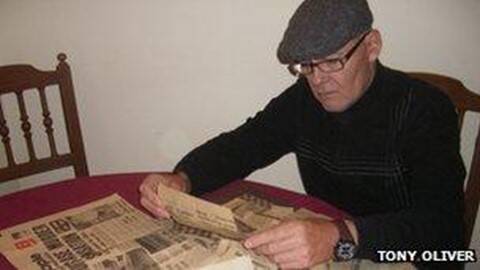
Image 23: Tony Oliver
'"When his body was found I was just hollow. I just kept asking myself: 'why?' What was the motive? Why Tattingstone? Suffolk felt a million miles away in those days."' He spoke about the family's response when his body was found: '"my parents didn't go into graphic detail but I was picking up the facts. Some wouldn't talk about it - they would walk out of the room if it was mentioned. Others were just so annoyed. I think it changed all of us in different ways."' Tony said that he hoped by speaking out that someone, somewhere, would come forward with new information - especially if they had felt unable to talk in the 1960s and 1970s.
It seemed that his wish was granted after police said that they were reviewing new information provided to them in January 2012. A spokesperson said: '"officers have spoken to a gentleman in relation to the inquiry, are reviewing what they have been told and will follow up where necessary."' Further information suggested that the man had come forward in 1970, but a statement hadn't been taken from him at the time. He reported that he had been at Ipswich docks days before the body of the 17-year-old had been found, and that he had seen a man wearing medical gloves with two unattended suitcases nearby. Any hopes that this might help to break the case open soon faded, however, when no updates were issued.
In 2017, six years after his younger brother had spoken to the BBC, Chris Oliver also gave an interview. In his mid-60s at the time and living in Whetstone, North London, he spoke of the long-term effects that Bernard's murder had had on the family: '"it's just tormenting, knowing what happened to him. We were all boys. At the time I was 15. Bernard was a very gently, friendly person. We used to do everything together."' He was quoted in the East Anglian Daily Times as saying: '"it had a massive impact on us. You can't describe it. Even today it still upsets me. To be honest I don't think any one of us have properly sat down and spoken and grieved about it. It was never really spoken about. At the time there was no counselling. It has done incredible damage. It split my family apart. It is still really raw after all this time. I just feel like I want to burst out crying now. I think I have bottled too much up for years. There was no-one brought to justice. It is frustrating. I know they found my brother's body, but look at the way they found it. They never, ever caught anyone who did this. At the end of the day it's not going to make any difference. I have got my ideas that the Krays had something to do with my brother's death and so has Tony. They all used to go down to this house [in Suffolk]. There were rent boys brought in. There were all sorts of people that went to that place."'
Chris also spoke about the effect the death had on his parents: '"It devastated my mother and devastated my father. She felt guilty because she left the matrimonial home. All through my life she cried and felt really guilty even up until she died."' When asked about the future of the case, he said: '"anything is possible. You hear about DNA and that. I'm sure that somebody knows. Fifty years is a long time. It won't make any difference. It won't bring my brother back."'
In 2018, Sky News did extensive research on the case of Bernard Oliver and collated as much information as possible before asking for the opinions of different professionals. One of these was clinical forensic psychologist Mike Berry, who described it to be most likely that Bernard was killed within a four to five mile radius of where his remains were found, saying: '"it is extremely rare for offender(s) to dissect a victim and place the body parts in two suitcases. If a body is dissected by a killer, she or he would normally disperse the body parts over a wide area often to avoid the victim being immediately identified. I find it bizarre why they put two suitcases in the same place."' Although he was unable to give a victim profile based on the little information available, he did estimate that the killer would be in their 30s and have a level of maturity and sophistication based on the way the body was dissected and disposed. He also believed that they would have a familiarity with the area of Tattingstone, and suggested that they may have kept items of Bernard's clothing as trophy items, but that it was highly likely that the initials P.V.A. on the suitcase were left there to act as a red herring to police.
Professor Barry, of Birmingham City University, added to the assessment by Mike Berry by saying: '"Due to the distance between Muswell Hill where he lived and Tattingstone where he was found, I don't think the killer would have dissected Bernard's body and transported him miles away so we have to assume that it's likely he was transported in a vehicle somewhere local to Tattingstone... before he was probably forced to engage in some illegal activity and then killed."'
Despite the information given by the experts not being issued in an official capacity, it does provide some potential insight into elements of the case. Police were convinced that the murder and dismemberment had occurred across the border into Suffolk, even though it couldn't be proved. The suggestion that the crime scene had a higher probability of being within a small radius of the deposition site suggests a much more narrow search radius than was originally considered. The concept that the killer (or killers) were likely to have been in their 30s at the time of the murder links in with several of the names on theoretical list of suspects, such as Reddington and Byles as well as the Kray twins.
Ultimately, no-one has ever been charged or convicted of the murder of Bernard Oliver. The report from Sky News in 2018 was the last time significant information was submitted to the public domain, although the case remains open. DCI Caroline Millar from Suffolk Police stated in 2017: '"using advances in forensic science such as DNA familial profiling and the experience of current and retired senior detectives, the team are looking for any development that could help with the investigation into the murder of Bernard Oliver, including new information from the public. Even with the passage of 50 years, it is never too late for people to come forward with any information they think may help this inquiry. The investigation into this death remains open and we will not stop looking for the person or persons responsible."'
This statement, although made nearly a decade ago at the time of writing, gives hope that police will persevere until they find an answer. Bernard deserves to rest peacefully in his grave with his killer identified and - if possible after fifty years - brought to justice.
The impact this case has had on the Oliver family is plain to see from the heart-breaking words of Tony and Chris Oliver. They were raised in a time where things perhaps weren't talked about as openly as they are today, with the Oliver family finding it difficult to put into words how they were feeling. The sheer horror - not only of finding out that Bernard was dead, but of seeing his head photographed in the newspaper - caused trauma which still persists to this day. It isn't something that can be put into a drawer and tucked away.
The remaining members of the Oliver family deserve to see justice for Bernard. Their gentle, kind and quiet brother was just finding his footing in life, had just started a new job and was starting to earn money of his own. He deserved to keep growing in life and to forge a future of his own. No-one should meet their end in the same way that this 17-year-old did.
He should be remembered for the much-loved boy who loved playing records and going to the cinema, as the boy who spent his childhood riding his bike and running through the woods. He should be remembered as Bernard Oliver - son, brother and friend.
If you have any information about the murder of Bernard Oliver, whose remains were found on 16th January 1967 in Tattingstone, Suffolk, please contact the Joint Norfolk and Suffolk Unsolve Case Team on 01953 423819 or by emailing unsolvedcasereviews@norfolk.pnn.police.uk
You can also submit information anonymously by contacting CrimeStoppers on 0800 555 111, or by completing their online form here: Giving information anonymously | Crimestoppers
References for text:
Murder of Bernard Oliver - Wikipedia retrieved 23rd March 2026
Suffolk Constabulary: Bernard Oliver retrieved 23rd March 2026
Brother's anguish over Tattingstone 'suitcase murder' - BBC News by Mark Bulstrode, published 30th December 2011, retrieved 25th March 2026
Police probe new 1967 Tattingstone 'suitcase murder' lead - BBC News BBC news article, published 18th January 2012, retrieved 25th March 2026
Tattingstone suitcase murder: Police appeal over Bernard Oliver death - BBC News published 6th January 2017, retrieved 25th March 2026
BBC News | UK | Kray's deathbed murder confession published Sunday 25th March 2011, retrieved 25th March 2026
BBC News | ENGLAND | Police to investigate Kray case published Monday 14th January 2002, retrieved 25th March 2026
Kray made deathbed murder confession, The Telegraph article by David Bamber, published 25th March 2001, retrieved 25th March 2026
50 years on we remember Suffolk’s grisliest crime - the Tattingstone suitcase murder | East Anglian Daily Times article by Colin Adwent, published 6th January 2017, retrieved 25th March 2026
Chopped up and placed in suitcases: Mystery of teen's 1967 murder | UK News | Sky News article by Sanya Burgess, published on Tuesday 14th August 2018, retrieved 26th March 2026
Killer linked to child deaths | The Argus published on 20th November 2001, retrieved 30th March 2026
Teenager 'expertly' cut up and dumped in suitcase as paedophile suspect vanishes - The Mirror article by Tom Pettifor, published on 15th November 2025, retrieved 5th April 2026
1967 in the United Kingdom - Wikipedia
Teddy Smith | The Kray Twins Wiki | Fandom
The British Newspaper Archive – Nottingham Evening Post printed Friday 20th January 1967, page 17 ‘Suitcase murder probe is stepped up’
The British Newspaper Archive – Daily Express printed Friday 20th January 1967, page 1 ‘Suitcase victim, aged 17, named’
The British Newspaper Archive – Hull Daily Mail printed Friday 20th January 1967, page 1 ‘Suitcase victim named as boy of 17’
The British Newspaper Archive – Derby Daily Telegraph printed Saturday 21st January 1967, page 1 ‘Suitcase murder hunt stepped up’
The British Newspaper Archive – Daily Record printed Saturday 21st January 1967, page 24 ‘Teenage girls help suitcase murder hunt’
The British Newspaper Archive – Reading Evening Post printed Saturday 21st January 1967, page 6 ‘Suitcase boy may have known his killer’
The British Newspaper Archive – Hull Daily Mail printed Monday 23rd January 1967, page 1 ‘Suitcase under the microscope’
Credit for images:
Image 1 - Bernard at the beach with his siblings: Tattingstone suitcase murder: Police appeal over Bernard Oliver death - BBC News
Image 2 - map showing Muswell Hill: taken from Google Maps with endorsements by the author
Image 3 - map showing Steeds Road: taken from Google Maps with endorsements by the author
Image 4 - image of Bernard Oliver printed in the East Anglian Daily Times: 50 years on we remember Suffolk’s grisliest crime - the Tattingstone suitcase murder | East Anglian Daily Times
Image 5 - map showing the village of Tattingstone in comparison to London: taken from Google Maps with endorsements by the author
Image 6 - officers looking in the hedgerow: Tattingstone suitcase murder: Police appeal over Bernard Oliver death - BBC News
Image 7 - officers examining the scene: Suffolk Constabulary: Bernard Oliver
Image 8 - map of suitcase location: taken from Google Maps with endorsements by the author
Image 9 - aerial map of suitcase location: Chopped up and placed in suitcases: Mystery of teen's 1967 murder | UK News | Sky News
Image 10 - a copy of the photo of the deceased, as printed in the Hull Daily Mail on Friday 20th January 1967 Frf 20 Barnaby's Motor Bodies (Hull) Lto Types Commercial Vehicle Bodies Sculcoates Lane Tel 422278 Great Winter Sale Last Few | Hull Daily Mail | Friday 20 January 1967 | British Newspaper Archive
Image 11 - front page of the Evening Star, printed 17th January 1967: Tattingstone suitcase murder: Police appeal over Bernard Oliver death - BBC News
Image 11 - family patriarch George Oliver: 50 years on we remember Suffolk’s grisliest crime - the Tattingstone suitcase murder | East Anglian Daily Times
Image 12 - newspaper clipping: Chopped up and placed in suitcases: Mystery of teen's 1967 murder | UK News | Sky News
Image 13 - officers examining the suitcases: 50 years on we remember Suffolk’s grisliest crime - the Tattingstone suitcase murder | East Anglian Daily Times
Image 14 - the suitcases as they were found in the field: Tattingstone Suitcase Murder - The chilling story of Suffolk's oldest cold case murder - Suffolk Live
Image 15 - suitcase stamped with initials P.V.A: Chopped up and placed in suitcases: Mystery of teen's 1967 murder | UK News | Sky News
Image 16 - Bernard Oliver's headstone: Photos of Bernard Michael Oliver - Find a Grave Memorial, image by Iain MacFarlaine
Image 17 - Dr John Byles: Teenager 'expertly' cut up and dumped in suitcase as paedophile suspect vanishes - The Mirror
Image 18 - Joe Meek: Joe Meek - Wikipedia
Image 19 - the Kray twins: Kray twins - Wikipedia
Image 20 - map showing key locations in Suffolk: taken from Google Maps with endorsements by the author
Image 21 - the Kray twins during their boxing years: BBC ON THIS DAY | 8 | 1968: Krays held on suspicion of murder
Image 22 - Edward 'Mad Teddy' Smith: Teddy Smith | The Kray Twins Wiki | Fandom
Image 23 - Tony Oliver: Brother's anguish over Tattingstone 'suitcase murder' - BBC News
Add comment
Comments