

David Ombler
You can listen to this case on YouTube by clicking the link to the left, or on podcast platforms.
Disclaimer: this article contains details which may be upsetting for some readers. Discretion is advised.
In this post, we're heading to the city of Kingston-Upon-Hull, more commonly referred to as Hull, at the start of the 20th century. It was 1913, and Britain still had a year of blissful ignorance before a whole generation of men would be lost to World War I. King George V sat on the throne, and Herbert Asquith was the prime minister of a Liberal government who were responsible for introducing unemployment and maternity benefits at the beginning of the year. The suffragette movement was in full force in a bid to improve the rights for women across the country, and October would see the worst mining disaster in British history when 439 people were killed in a mine explosion in Wales.
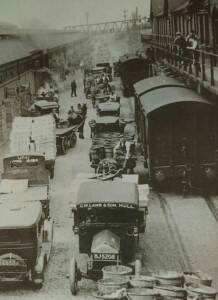
Image 1: Hull docks in the early 1900s
The north-eastern city of Hull had been founded some 700 years before by monks who found the depth and width of the River Humber ideal in facilitating the trade of wool across to mainland Europe. A settlement began to build up in the area, developing over centuries as a hub for trade between Britain and the rest of the world. The introduction of steam-powered boats in the 1830s increased productivity and cemented the city's place as a global commercial trader. The famous Hull docks were expanded and used to transport goods as far afield as New Zealand and Australia. By 1914 - a year after our story occurs - it was the third largest port in Britain and housed the most modern dock in the country, the King George V dock.
Despite its trading success and power, the city was home to high levels of poverty. Of the little over 66,000 homes within the boundaries, over 80% were considered to be working class properties and generally possessed inadequate lighting and air circulation. Only 1% of residents could afford to buy their own home.
Properties were tightly packed together in small land areas, but this provided citizens with small and walkable commuting distances to essential locations and created pockets of close-knit communities where neighbours leaned on each other for help and support.
This close support was well displayed when a man was found seriously injured in his property one morning in May 1913. Despite his neighbours rallying to provide help and support - not only to the victim, but also to the police in the subsequent inquiry- his killer has never been caught.
This article is about one of Britain's oldest unsolved murders - so old, in fact, that no photos of the victim are available in the public domain. This is the story of David Ombler.
David Ombler lived and worked at number 28 West Parade, a side street branching off the main road of Spring Bank. The road was generally busy as it provided a thoroughfare between Spring Bank and Londesborough Street, from which one could head to Paragon Train Station.
David and his wife had run the shop for more than 30 years when his wife passed away in 1911, after which he continued the business alone. Prior to working in the shop, he had run a baker's business in Blackfriargate and had also operated a stall at a local market. He was well known and well respected after many years of serving members of the community, and was a keen fan of local football club Hull Kingston Rovers. The fact that the 72-year-old was so well liked only made the events of 1913 all the more shocking.
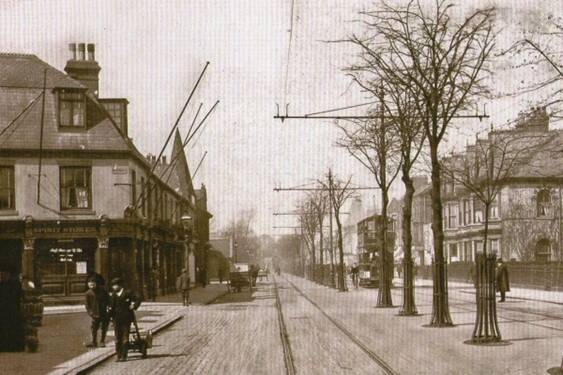
Image 2: Spring Bank in the early 1900s
At 8am on Saturday 30th May, Mrs Harrison walked the short distance from her home at number 16, Sydney Terrace, Londesborough Street to the greengrocer's shop on West Parade to find that the window shutters had been taken down and packed away for the day, and the front door to the premises standing open. Mrs Harrison worked as a charwoman for David Ombler - a term used at the time to describe a part-time worker who was paid to clean for a few hours a week, rather than the work of a maid which tended to be a full-time role - and had worked for the Ombler household for some 25 years.
Mrs Harrison passed through the store to the door at the back which led to the living premises,. This door also stood open, and it was as she walked through it and into the kitchen that she made a horrifying discovery.
David Ombler was lying face up on the floor midway between two rooms, his head and shoulders resting in the kitchen and his feet in the scullery (a room used in many houses as an 'overflow' kitchen, often for washing dishes or other dirty household work). A pool of blood lay beneath his head and was splattered across the cupboard door of the understairs storage and up to 8ft high on the surrounding wall.
Mrs Harrison let out a shout for help, believing David to be dead. She ran from the premises and into the off-license which sat two terraced doors down from the greengrocer's store. Upon telling it's owners, Mr and Mrs Stephenson, that David Ombler was lying on the kitchen floor, they ran back to number 28 to try to help the injured man. Mrs Stephenson later told the Hull Daily Mail: '"Mrs Harrison ran into our shop exclaiming "Mr Ombler is dead on the kitchen floor." I ran into the shop and was horrified to see Mr Ombler lying on his back, partly in the scullery and partly in the kitchen. He was fully dressed, and lay motionless."'
Mrs Stephenson crouched next to David, noting that his lips were moving very slightly. She grabbed a glass of water and used her fingertips to drop fluid onto his lips, as the man was clearly too badly hurt to sit up and drink. She desperately asked him who had carried out such a violent attack, but he was unable to answer her.
Meanwhile, Mr Spence from the fish shop opposite David Ombler's store had heard the commotion and put his head round the door to find out what was happening. When he saw the two women trying to tend to the severely injured man, he ran back to his shop to telephone the police.
Police were quick to arrive, as was Dr George Thomas Hartley of Hull Royal Infirmary who had been called to assess the victim. The doctor directed all neighbours to leave the property so that he could better complete an examination - the kitchen must have been getting incredibly crowded with police officers, the doctor and a variety of neighbours coming in and out, and the risk of damaging critical evidence was high.
Dr Hartley arranged for David Ombler to be conveyed rapidly to Hull Royal Infirmary. Although the man was still clinging to life, his condition was critical and despite the best efforts of the medical team at the hospital David was pronounced dead at 10:55am. Having had no children during his lifetime, the only family present at his bedside as he took his last breath was his brother, Edwin Ombler.

Image 3: a newspaper headline reporting the murder of David Ombler
The Investigation
Police had been carefully assessing the crime scene as the victim was laying in his hospital bed, and took information from those who had been to 28 West Parade that morning. Superintendent Kilvington arrived at the scene to supervise the investigation, calling for both uniformed officers and detectives to be involved with the case.
David Ombler had reportedly gone to the early morning vegetable and fruit market at Corporation Fields before 7am, which was a short walking distance from the store. It was unusual for him to do this on a Saturday according to Mrs Harrison, as it was his normal routine to shop at the market on Tuesday mornings. The items on display in the shop window confirmed that he had made a purchase at the market that day, and also indicated that he had returned home with enough time to open the store and set up the window display for the day before he was attacked. This narrowed the window of the assault to somewhere between 7am and 8am.
Police found the scene to be exactly as the neighbours had. Breakfast had been laid out on the table by the victim, a fire had been lit in the grate and butter was resting on the fender by the flames in order to melt just enough to become easier to spread. A pair of fireplace tongs lay near the body with blood and hair attached to the end, and a blood-covered poker was discovered in two pieces on the floor - the first piece being approximately three feet from the body and the second being another six feet away. It appeared that the attack on the victim had been so frenzied that the poker had split in half, perhaps leading to the assailant resorting to the use of the fire tongs. Some signs of a struggle were noted - a stool had been overturned and some crockery had been smashed - but the property was otherwise undisturbed.
Examination of the outside of the property identified muddy footprints on the tall gate leading into the courtyard of the property, as though someone had climbed over it. If they had been attempting to enter the premises via the scullery door, they were disappointed - boxes had been stacked against the inside of the door, with Mrs Harrison telling police that they were stored there and hadn't been disturbed.
Robbery was quickly assessed to be the most probable motive for the attack. Mr Ombler was known to be a fairly wealthy man - he had worked all his life with no family to provide for other than his recently deceased wife. Running a shop left little free time for holidays, and the length of time he had spent running the greengrocer business indicated that business had been stable and finances steady. It transpired that, up until a few days before his death, David Ombler had indeed kept much of his life savings in the property - in the week prior to the murder, he had moved his money into the bank. Was it a coincidence?
Mrs Harrison was able to describe how David kept only enough money in the store till to be used as change for purchases. If this money ran out, he kept some additional coins wrapped in paper on top of the mantlepiece which he could use to top the till up. He never left money visible in the property, and had kept his cash in a kitchen cupboard until he had moved it to the bank.
The housekeeper told police that David normally wore a silver lever Hunter watch (a silver-coloured watch with steel hands) in his waistcoat pocket, which was attached to his clothing with a gold Albert chain. He also carried a small amount of gold in a calico bag tucked away in an inside waistcoat pocket. She knew that he had this bag, as he had asked her to patch a hole in the material a few days prior. All three of these items were missing from David's person, but money was still sat in the tray of the till and other cash was located in the property.

Image 4: example of a Hunter watch
As the neighbours she had alerted raised the alarm, Mrs Harrison had dashed upstairs in the property to check whether anything was disturbed. His bed had been slept in and was neatly made, but a long grey overcoat which had been hanging on the bedroom door the day prior was missing. She gave all of this information to the police, who subsequently provided information to their officers to be on the lookout for any of the missing items.
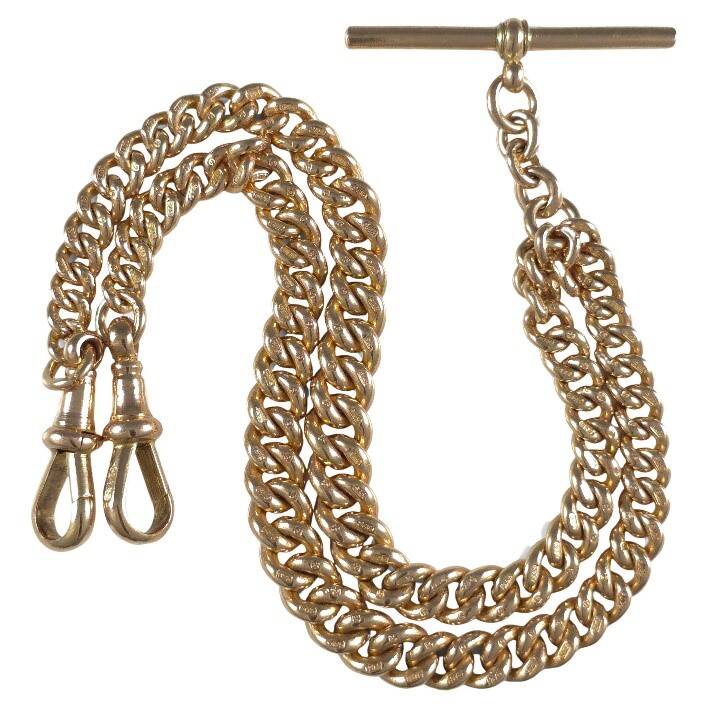
Image 5: example of a gold Albert, so called as it was an item frequently worn by Prince Albert, husband of Queen Victoria
Neighbours and local residents crowded to West Parade throughout the day to catch a glimpse of number 28 and the activities surrounding it. Uniformed police had been stationed at the entrance to the store to prevent unauthorised persons from entering as the investigation unfolded, leaving members of the public to stand and watch from a distance. The press were quick to flock to the scene and Councillor Ombler, the brother of the deceased, was seen visiting the property in the later hours of the morning to speak with police and observe the scene.
The number of people lingering in the vicinity of the store presented police with the opportunity to carry out interviews of those who had seen David that morning, or who may have witnessed something of interest.
One neighbour had heard the latch of her front door being lifted at around 11pm the evening before. She had headed out to investigate but found no-one outside.
Ethel Dibner, an employee of Mrs Stephenson at the off-license, described a 'strange looking' man hanging around in the street during the early hours of the morning. She said: '"just before the discovery I saw a man standing at the corner of the terrace which separates Mr Stephenson's premises from those of Mr Ombler. He looked pale and something about his manner attracted my attention; but knowing nothing of the attack on poor Mr Ombler, I was not curious about this man. He was wearing a muffler with spots, and had an overcoat on. He had a dark moustache. After standing a few seconds he walked away."'
Local resident Mr Foster saw a man with a similar description, and was able to add that he was wearing dark corduroy trousers, had a tilted end to his nose and was approximately 5ft 6in tall. He had seen him leaving the greengrocers store at 7:30am in a hurried manner, something which differed to the account of Ethel Dibner who had seen the man lingering on the walkway for a few seconds. Had Mr Foster seen the killer leaving the premises? Or was this a different person?
Mrs Feetham, a resident of Hunt's Terrace who had been in the West Parade area that morning, saw a man with a moustache running from the premises early on Saturday morning. She described him as having a 'sallow' complexion, his face bearing a slight smile. He wore a long overcoat which was buttoned right up to the top and a cap which he pulled down over his forehead and eyes when he noticed Mrs Feetham watching him. Like other witnesses, she described him as wearing a blue spotted or blue striped muffler around his neck which just showed above the collar of his coat.
It's not uncommon for witness reports to differ slightly as each person remembers things differently. The situation had been influenced by the rapid activities of the morning - the arrival of the doctor at the scene, the influx of police, the removal of the victim from the property, and flocks of people arriving in the area - that it's possible that people had seen the same man but remembered him behaving a little more suspiciously than they would have done without these factors. Gossip also passed quickly from person to person in the tightly-packed community, and recollections could quickly be exaggerated for dramatic effect.
The landlord of Slater's Arms pub on West Parade, Mr Joseph Spokes, told police of a suspicious man who had entered his premises at between 7:30am and 7:45am on the morning when David Ombler had been attacked. Remember, the victim wasn't discovered until 8am so there was no knowledge of the assault having been carried out at this time. Mr Spokes described how the man was around 30 years of age, around 5ft 6in tall and had a slightly upturned end to his nose. He had mild sunburn to his face and was wearing what Mr Spokes described as normal working clothes. He said: '"I have only seen the man in the last day or two. I saw him yesterday. I could swear to him out of twenty men."' The landlord described how the man had asked for two-pence worth of rum at the bar. When he was told that the pub didn't have any rum, he asked for a pint before changing his mind and asking for half a bottle.
The Hull Daily Mail interviewed a young man named Thomas Pinder, who had seen an unknown man hanging around the area in the days prior to the attack. Even in a city the size of Hull, the community pockets were close-knit enough that local residents knew the people living around them and were easily able to identify strangers in their midst. Thomas Pinder didn't recognise the man, but he remembered that he was wearing a spotted scarf. He told the reporter on the day of the murder: '"I saw him yesterday in the morning before going to school, in the dinner time, and at night between 10 and 10:30, when the old man was serving a woman in the shop. This man looked through the doorway window, and then went further up the street."'
Using the descriptions of witnesses and neighbours, police assembled a description of the man, informing the public that he was wearing a single-breasted three-quarter length overcoat in a dark grey colour with a faint stripe. This coat was thought, and later confirmed, to have been taken from Mr Ombler's property, and was the same on Mrs Harrison had noted to be missing from the back of the bedroom door.
The investigation into the murder of David Ombler and the search for his killer was extensive. Newspapers across the country were publishing the story - something which was deemed highly unusual for the murder of a shopkeeper in Hull - and pressure on the authorities to identify his assailant was mounting. A reward of £50 - equivalent to nearly £3000 in today's money - was offered by police for information relating to the murder, but this reward went unclaimed.
The funeral of David Ombler was held on 6th June and was a very quiet affair, with the only mourners being his remaining family and a handful of neighbours. It was held at Hull General Cemetery on Spring Bank and was conducted by the Reverend H. Handley, pastor of the United Methodist Church on Beverley Road. David Ombler was lowered into the ground, taking the knowledge of the identity of his attacker with him.
The Inquest
An inquest into the death of greengrocer David Ombler was opened on Monday 2nd June, just two days after he had been found lying face-up on the floor of his own home. Coroner Colonel Thorney presided over matters, hearing evidence on the first day from Councillor Edwin Ombler on the identification of his brother's body, before adjourning the case until 11th June in order for police to continue their inquiry.
Continue their inquiry they did, but by the time the 11th June rolled around little more information had been uncovered. The information and evidence which had been obtained was presented to the court, with neighbours, witnesses, doctors and police officers being called to the stand. Present in court on the 11th June were Councillor Edwin Ombler, brother of the deceased, Dr George Hartley, Superintendent Kilvington, Detective Superintendent Ramsden and Detective Sergeant Burton.
The two pieces of the broken poker were presented, as well as the fire tongs. They were described as a standard kitchen steel variety. Blood was present on the offending items, in addition to hair which had separated from the head of the victim as he had been struck.
Dr George Hartley took the stand to give evidence of his actions on the 30th May. He told the court that he had been called to number 28 West Parade between 8:15am and 8:17am. Given that David was discovered by Mrs Harrison at 8am, and that Mrs Stephenson and Mr Spence had run through to the property before any calls were made, the time that contact was made with the doctor matched reports from witnesses and neighbours. He reported that he found David Ombler lying on his back with his head and shoulders in the kitchen and his feet in the scullery.
He described how three wounds were evident on the forehead of the victim, and a further head wound on top of his head which extended to four inches in length. Some grazing was noted to the scalp, and there was evidence that his neighbours had attempted to wash and dress his wounds in an attempt to stem the bleeding.
Upon questioning, he described how he saw the tongs approximately 18 inches away from the head of the victim, in addition to the broken head of a poker around three feet away. The shaft of the poker was a further six feet from Mr Ombler. Looking around, he had been able to see blood stains on a door near Mr Ombler's head, which it transpired led to storage under the stairs. This blood extended to the wall above the door, reaching around eight feet from the floor.
Like the neighbours and witnesses at the scene, the doctor described how breakfast was laid out on the table, a fire was burning in the grate and the blinds in the kitchen were still drawn. It appeared, to all intents and purposes, as though David Ombler had been going about his normal daily routine before he had been disturbed.
Questioning from the court led Dr Hartley to state that the victim had been struck around four times, with some of these being inflicted from the front and others from a side angle. Dr Hartley suggested that he had been swung at with the poker first, reorting to the tongs when the poker had broken. He advised that it was possible that some of the blows had been inflicted when the victim was already lying on the floor. Dr Hartley had noted that the victim's cap was lying under his head, but it was unlikely that he had been wearing this at the time of the attack - whether he had been holding this and dropped it as he fell, or whether a neighbour had placed it there so that his head wasn't contacting the cold floor is unclear.
Based on the evidence available to him from the scene, the doctor did not feel that the assailant had entered the scullery when he was in the property, although it's unclear what evidence he was referring to when he mentioned this. He finished his evidence with an opinion that the assailant had been taller than Mr Ombler.
Next to the stand was Dr Gerrard, the doctor who had examined Mr Ombler when he arrived at Hull Royal Infirmary. He advised the court that the victim had arrived at the hospital at 9am, around 45 minutes after Dr Hartley had been called to the scene. This allowed for the time it took for Dr Hartley to arrive at West Parade, assess the victim, and for him to be transported urgently to the hospital. Dr Gerrard said that, despite the best efforts of doctors and medical staff, there had been little hope of recovery based on his injuries, and Mr Ombler was declared deceased at 10:55am.
A post-mortem examination was completed in the wake of his death, with Dr Gerrard noting that the victim was well-nourished. Remember, he had been found to be a reasonably wealthy man and it appeared that he could afford decent meals and food.
In relation to his injuries, David Ombler was found to have three wounds to the forehead and one to the top of the head, consistent with the brief examination completed in the property by Dr Hartley. All four wounds were described by Dr Gerrard as being severe and having been inflicted with a blunt instrument, consistent with being inflicted by either the tongs or the poker. The main wound on the top of the head was almost horizontal across the top of his skull.
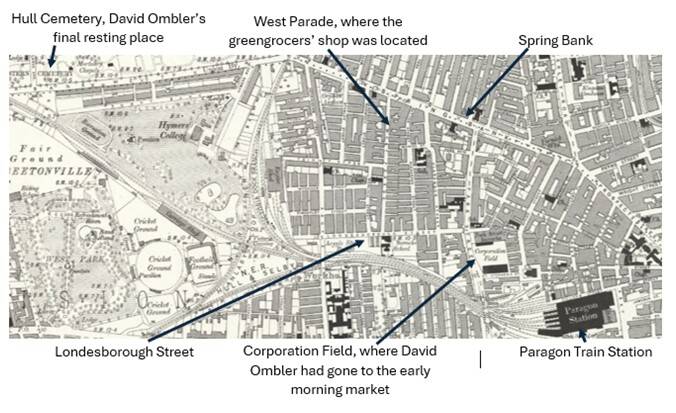
Image 6: Ordnance Survey map showing locations around West Parade
Dr Gerrard described that the blow to the top of the head had caused a radiating fracture, with the frontal bone of the skull being - in his words - 'completely broken up'. The injuries resulted in a laceration to his brain, with cause of death being documented as a fracture to the skull leading to shock.
Mrs Harrison was called to the stand, and reiterated much of the information she had provided to police on the day she had discovered her employer on the floor of his kitchen. She told the court how she didn't usually go to the shop on Saturday mornings, but had chosen to do so on 30th May in order to wash the front of the store. Without her early arrival, it's impossible to know how long David Ombler could have been laying wounded in the property.
The inquest concluded on 12th June as the jury returned a verdict of 'wilful murder against some person or persons unknown'. The Coroner used his closing statement to give his opinion that the attack had been carried out with such ferocity that it was clear the assailant intended to murder Mr Ombler, whether he robbed him or not.
Conclusion
Despite the police continuing the search for David Ombler's killer, they were never identified. The bustling streets of the city of Hull proved to be an excellent background for the killer to vanish into. The suspect would have had multiple transport opportunities to exit the city, too, as West Parade sat only a short distance from Paragon Train Station where he could have caught a train or horse-and-cart to make his journey onwards. He could even have made his way to the docks and boarded a ship.
So where does this leave us? It seems clear that someone who was identified as a stranger to local residents had been lingering in the area of West Parade during the 24 hours prior to the murder. Multiple witnesses had seen a man around 5ft 6in tall with a moustache, an upturned nose, a long overcoat and a spotted scarf or muffler hanging around the area of the shops at different times throughout the 29th and 30th May. There were muddy footprints on the rear gate of the property, but there was no disturbance to the back door of number 28. David Ombler was killed in a violent attack with implements from the kitchen of his own home, with minimal items taken. A man matching the description of the one seen on 29th May was also seen leaving the shop at around 7:30am on Saturday 30th May, within the estimated time window when David Ombler was attacked.

Image 7: Paragon Train Station
The police were certain that this was a case of robbery gone wrong, but are there alternative options? Why would someone walk in the front door of an open shop, when it would be known that the shopkeeper was on site, with the aim of robbing him? Why wouldn't they wait until the coast was clear and there was little chance of them being caught? If they were just after money, why did they walk through the store and past the till into the back rooms? Surely the till would be the first port of call for someone hoping to get a few coins.
It certainly seems as though the attack on Mr Ombler was a spur of the moment decision, with the killer using the poker and tongs as the first items within reach. They didn't head to the property armed with weapons - they used tools which were available at the scene, so it seems reasonable that the primary aim of the visit wasn't to kill the business owner.
So what was the aim of the unknown man? Was he, as police suspected, a stranger who had chanced his luck to get a bit of cash? Had he lingered around the area of Spring Bank and West Parade for 24 hours scouting out the best property to target? If so, why did he leave only with a watch, a gold Albert, an overcoat and a small bag of coins? Why didn't he empty the till on his way in - or out - of the property? And why wasn't there more evidence of searching around the property? Wouldn't a thief empty drawers and rummage through cupboards?
Is there, perhaps, a chance that the killer may have known the victim? Could he have hung around the store waiting for an opportunity to talk to him on his own? Did they have some kind of argument during which the younger man lost his temper and lashed out, grabbing the nearest weapon to assault the 72-year-old? And could he have taken the missing items in an attempt to throw off police, making it look like a robbery?
Perhaps, in a world full of conspiracy theories and outlandish crime novel plots, I could be reading too much into things. Perhaps, as police suspected, there's nothing more to this case than an attempted robbery which was disturbed by the property resident. Something just doesn't sit right with me, though. David Ombler normally went to market on Tuesday mornings, and was normally home on Saturdays. He opened the shop every day at 7:30am. The amount of risk involved for someone walking into the shop in broad daylight with the intention to rob the place seems far too high.
What do you think? Is there more to this case than meets the eye? There is, of course, no chance of the culprit being brought to justice after so many years. They will surely be long in their grave themselves, but I'm keen to know if you think the police were working along the right lines, or if they jumped too quickly to the robbery theory.
Ultimately, this story is about a 72-year-old man who was just trying to make a living and provide a service to the local community. David Ombler was loved and respected by the neighbours who surrounded him, and he deserves to be remembered for the quiet, hard-working man that he was.
References for text:
11 horrific Hull cold case murders that have never been solved - Hull Live
The 1914 murder of David Ombler - Defrosting Cold Cases
Brutal Murder At Hull | Yorkshire Evening Post | Saturday 30 May 1914 | British Newspaper Archive
Robbery As Motive. | Yorkshire Evening News | Saturday 30 May 1914 | British Newspaper Archive
“ I Still Relieve It.” | Birmingham Daily Gazette | Monday 01 June 1914 | British Newspaper Archive
Hull before 1914 | Kingston upon Hull War Memorial 1914 - 1918
Events. | Hull Daily Mail | Monday 01 June 1914 | British Newspaper Archive
Supposed Murder. | Newcastle Daily Chronicle | Monday 01 June 1914 | British Newspaper Archive
Hlll Murder Mystery. | Gloucestershire Echo | Monday 01 June 1914 | British Newspaper Archive
Murder Mystery Clues. | Daily Express | Tuesday 02 June 1914 | British Newspaper Archive
West Parade Murder. | Hull Daily Mail | Thursday 11 June 1914 | British Newspaper Archive
Hi Ll Murder Mystery. | Evening Despatch | Friday 12 June 1914 | British Newspaper Archive
Credit for images:
Image 1 - Hull docks: Hull before 1914 | Kingston upon Hull War Memorial 1914 - 1918
Image 2 - Spring Bank: The mysterious gruesome murder of Hull greengrocer David Ombler which left a killer at large - Hull Live
Image 3 - newspaper headline: The mysterious gruesome murder of Hull greengrocer David Ombler which left a killer at large - Hull Live
Image 4 - example of Hunter watch: Victorian silver lever hunter pocket watch, Chester 1898, the movement signed W.E. Watts & Co. L
Image 5 - example of a gold Albert: George V 9ct Yellow Gold Double Albert Watch Chain, 1919 at 1stDibs
Image 6 - OS map with amendments by the author: View map: Ordnance Survey, Yorkshire CCXL.NW (includes: Kingston upon Hull Holy Trinity and St Mary; Sculcoates.) - Ordnance Survey Six-inch England and Wales, 1842-1952
Image 7 - Paragon Train Station: How Hull looked 100 years ago in 25 incredible pictures - Hull Live
Add comment
Comments