

Fred the Head
Disclaimer: this article contains details which may be upsetting for some readers. Discretion is advised.
In this casefile not only is the murder unsolved, but the victim remains unidentified to this day. He was buried on an isolated, disused piece of land - likely in the hope that he would never be found, and his story never told.
This is the case of the victim known only as 'Fred the Head'.
It was around 7:30pm on 26th March 1971. David Nathan, an employee at Burton-On-Trent jewellers Messrs Time Consortium, left the back of the store after closing time and headed on foot in the direction of the local disused flint mill. The flint mill sat on an abandoned island in the middle of the River Trent, and was accessible via a small footbridge, which was blocked by a locked gate at each end, or across an unpaved path across Burton Bridge to Meadow Road.
David Nathan was able to access the land via the locked gate (I can only presume that he had a key), which he would later tell police that he found secure and intact before he opened it, with no signs that anyone had tried to break-and-enter. Old buildings like the flint mill made excellent places for curious children and youths to run around, but they were also dangerous places - often with machinery left to rot for many years, with the building structures left to fall into hazardous disrepair.
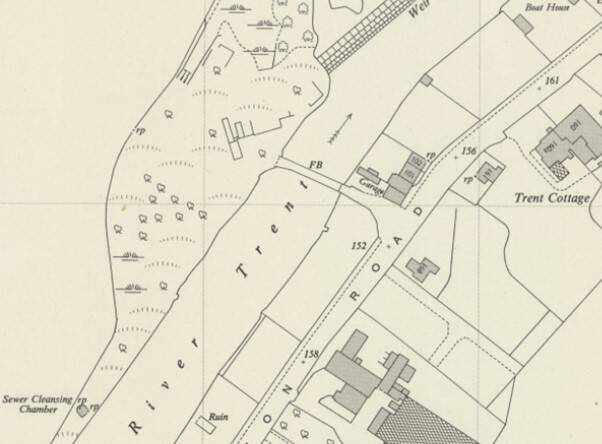
Image 1: Ordnance Survery map of the island, dated between 1944 and 1973. The footbridge, marked 'FB' can be seen crossing to the island. The body was found just off the west end of the bridge.
David Nathan crossed the footbridge, looking for somewhere to do some shooting practice. Today, there is a firing range listed on the island on Google Maps - if this existed in the 1970s, it's possible that he was heading there. He stepped off the bridge, ambling about 100yards from the gate when, in the semi-gloom, he tripped over a mound of earth.
Whereas some people may have perhaps cursed, brushed off their shoes and kept walking, David Nathan paused for a moment and glanced down at the ground. Away from his role at the jewellers, he kept hours as a Special Constable, and was concerned enough by what he saw sticking out of the mound of earth to get in touch with his colleagues at the police station.
Officers attended, meeting David Nathan at the site, where he showed them what they all agreed was likely a fragment of human skull resting close to the area of disturbed earth.
David Nathan's suspicions proved correct. When police started the excavation of the mound of earth, they found the severely decomposed body of an adult male. His hands and feet had been bound, and he had been buried in a kneeling position. The circumstances of how the body had been found left police little doubt that they were dealing with a murder inquiry.
As David Nathan had reported that the gates at either end of the footbridge (which is no longer in place today) were secure and intact, officers assessed that the only way to bring a body onto the island would have been the route across Burton Bridge and onto Meadow Road. The killer, or, indeed, killers, would have been quite hopeful that the isolated location would prove to be the final resting place for the body. Of course, what was a benefit to the murderer was a hindrance to police - the chance of a witness seeing the disposal of the body on the empty island was remote.
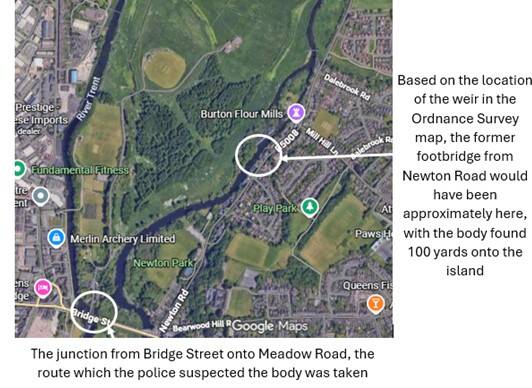
Image 2: satellite map showing the island from above. The island sits in the the centre of the River Trent, and the former flint mill would have been to the right of the island.
Examination of the body assessed the man to be between the ages of 23 and 39 and approximately 5ft 8in tall. He had short, straight brown hair, was slim in build, and had a somewhat prominent lower jaw. His fingernails were found to be short and well cared for. An estimation of the time of his death could only be narrowed down to between 9 and 12 months prior to the discovery of his body. This would later be extended to up to 18 months before the body was found. Due to the level of decomposition, a cause of death could not be ascertained, but investigations were able to rule out any trauma to the head.
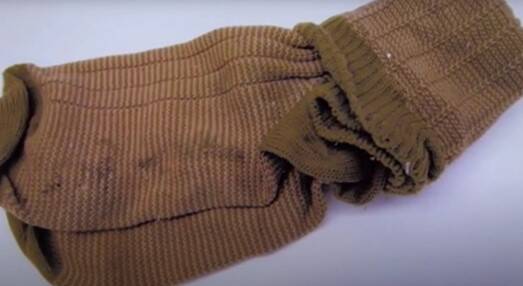
Image 3 (above): the socks found with the deceased
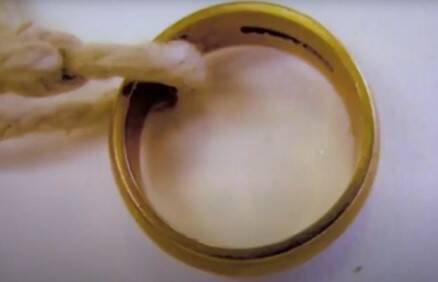
Image 4 (above): the wedding band worn on the ring finger of the right hand of the deceased
The deceased was buried with a couple of items of interest, which were closely examined by the forensic team and police.
The body was naked apart from a pair of socks, described as pink-beige to the most part, with mustard coloured toes and heels. Police found that the same socks were sold on a stall at the market at Burton-On-Trent, felt to be where the deceased had purchased them.
On the ring finger of his right hand he wore a small women's nine-carat gold wedding band. The manufacturing of the ring could be traced to between 1967 and 1968 in the jewellery quarter in Birmingham, with the creator named as Henry Showell. However, over 5,000 of the same ring were made and sold, leaving police with an impossible task if they wanted to trace the purchaser. Even though the ring was worn by the deceased, the consideration that it was a women's ring meant that it could have belonged to a family member, a friend or a partner - the possibilities when trying to find the original owner were endless.
The cords used to bind the male - dubbed as 'Fred the Head' due to the skull being the first body part to be found - were disappointingly found to be made of generic polypropylene for industrial use, having been bulk manufactured in Bradford, West Yorkshire.
Having found little potential for any identifying factors among Fred's personal effects, police turned their attention to the pathologist's assessment of his body.
Fred was found to have had extensive lower dental work, most likely completed within six months prior to his death, and had also had an upper denture inserted at some stage. He suffered from torticollis, a condition where some of the muscles of the neck shorten, causing the head to lean or twist to one side. This can lead to the head tilting in one direction, and can cause the muscles around the neck to be swollen and stiff. The condition can be congenital (present from birth, possibly as a result of the way the baby was positioned in the womb, or from an abnormal development in the neck muscle) or acquired (generally within the first year of life, often caused by swelling in the throat and spasming of the neck muscles). The condition can occur in adulthood, either as a result of spasming or injury within the neck muscles. Different treatments are available for the condition, such as stretching and pain relief. Without knowing the origin of Fred's condition, it was impossible to say whether the condition was acute, or whether he had suffered from it throughout his life.
Police endeavoured to properly identify Fred the Head, but after three years of pursuing all available information, they reached a dead end. Despite the level of decomposition, fingerprints were able to be taken when the body was discovered, but the victim has never been matched to any prints on record. Back in the 1970s, fingerprints would have been kept using ink, with the paper records stored in files on the shelves of police stations. Police would have needed to trawl through files and records manually, then visibly compare prints to find a match. Today, however, fingerprints are stored digitally, but are generally only on the database if the person is known to police.

Image 5: the skull of Fred the Head, showing dental work and upper dentures.
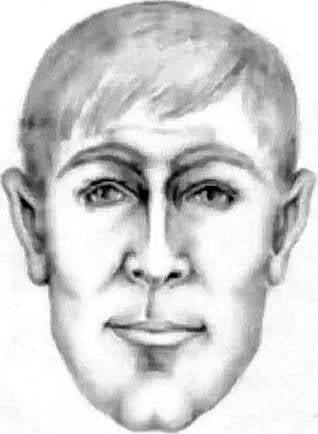
Image 6: the 1971 photofit of Fred the Head
If Fred the Head had never come to the attention of police, his prints and personal information would not have been on file for any kind of comparison. Throughout the 1970s, police compared Fred's prints and details to those of multiple missing men, but no matches appeared over the years.
Fred became one of the first unidentified bodies in the UK to have an e-fit composite image created, giving the public their first look at how he may have looked when he was alive. At the time, this was ground-breaking technology and could have provided police with valuable information from the general public to help identify him.
Despite this step forward, Fred was still unidentified when his case was first featured on Crimewatch in 2006. Although the broadcast brought no promising leads, plenty of activity was going on behind the scenes. DNA was extracted from Fred's skull and added to the DNA database, meaning that it would be available for any future comparisons.
The DNA was provided to the University of Derby in 2014, with extensive testing indicating that Fred was most likely of Hungarian or Danish descent. The concept of the deceased being from mainland Europe had previously been considered by police - the wearing of a wedding band on the right hand had been a focal point across the years. This is common practice in many European countries, including Norway, Denmark, Austria, Poland, Bulgaria, Russia, Portugal, Spain and Belgium. Police had to consider the possibility that, although the ring was a women's model, it could have been worn by the deceased as his own wedding ring.
In 2008, author Michael Posner wrote and published a book which included Fred's case, giving it the title 'Fred the Head: and Other Unsolved Crimes'. He interviewed police who were involved with the 3-year investigation from 1971, and published - for the first time - images of the body taken by police at the crime scene. As well as providing some additional publicity for the case, it also discussed how police had followed lead after lead in a bid to uncover the identity of the deceased, but also to make progress in finding his killer. After all, how were officers meant to find the murderer if they didn't know the identity of the victim?
At the time the book was released, a plausible theory was that the victim could have been milkman and father-of-three Michael Edge, who had vanished from Watford around the same time that Fred was thought to have been killed. Although the concept held some water at the time, the body has never been identified as Michael Edge, and his own disappearance remains unsolved.
A brand new photofit was developed in 2016 by Professor Caroline Wilkinson of Liverpool University. Using cutting edge technology, she was able to develop a new image for police to circulate in their search to identify the victim. Over the years, the image has been altered by members of the public to see what the victim would have looked like with different features such as a moustache, or the fashionable longer hair of the 1970s. Although the deceased was found with short hair, it had to be considered whether his appearance had changed during his life, and whether some members of the public may recognise him with different style features.
In June 2017, Crimewatch showed Fred's new facial reconstruction in the hope of bringing forward new leads. The family of John Henry Jones, who had disappeared from North Wales during the 1970s, made contact with police, and early assessment of dental records gave hope to those involved with the case. However, DNA testing ruled him out as a candidate.
I feel it's important here to mention that, whilst police have been relentless in their quest to find the identity of the victim of Staffordshire's oldest unsolved crime, many families out there still have no answers regarding what happened to their loved ones. Many people have put forward the name of their friend, relative or loved one over the years in the hope that many - just maybe - they could be the person found in the 4ft grave. The fact that someone is so desperate to find their loved one that they are willing to consider that they could have been bound, killed and discarded in a grave is truly heart-breaking. The rollercoaster of emotions that each family must have gone through during the process of ruling their loved one out as the identity of Fred is unthinkable.

Image 7: the updated photofit of Fred the Head, created by Professor Caroline Wilkinson
Fred's case was featured on Crimewatch for the third time in 2021, where it was revealed that police were considering whether he could have been a victim of serial killer Anthony Hardy, who would have been around 20-years-old at the time Fred was killed. This theory reportedly originated in a Facebook group.
Anthony Hardy

Image 8: serial killer Anthony Hardy
I'm going to give a brief overview of Hardy, as there is no information since 2021 as to whether he is still considered of interest to the investigation into Fred the Head's murder.
Anthony Hardy was born in Burton-On-Trent in 1951, had a stable childhood and reportedly excelled academically throughout his youth. He completed a degree in engineering at Imperial College, London, progressing to become manager of a company. He had a settled family life - at least for a period of time - marrying his wife, Judith, in 1972 and having four children. In fact, from the outside, it appeared that he was a man who had it all together with a well-paid job, a loving wife, and a happy family.
Things started to go wildly wrong in 1982. Whilst living in Tasmania, Hardy was arrested for attempting to drown his wife and beat her with a bottle of ice. Although the charges were dropped, Judith - unsurprisingly - divorced him in 1986.
Perhaps this incident was the turning point for Hardy, or perhaps the turning point had occurred before 1982 and the attempted drowning was the first outward sign that something was wrong. Hardy was subsequently diagnosed with bipolar disorder, and was admitted to a variety of mental institutions over the following years. He started to abuse alcohol and drugs, resulting in a number of further admissions to psychiatric facilities for treatment of drug-induced psychosis. His lifestyle afforded him a diagnosis of diabetes, for which he was insulin dependent.
No longer able to afford a mortgage and without a family home, Hardy lived a transient life in different hostels, and became known to the police following criminal convictions for theft and being drunk and disorderly. In 1998, a prostitute accused him of rape and he was subsequently arrested. However, the charges were dropped due to lack of evidence and Hardy walked free from the police station.
In January 2002, four years after Hardy walked free from the accusation of rape, police were called to his property. No longer reliant on hostels, he had moved into a block of flats, but it seems that this did little to settle his lifestyle. One of his neighbours had noted that their front door had been vandalised and strongly suspected that Hardy was responsible.
Hardy let officers into his property when they knocked on the door to ask questions about the damage to the neighbouring door. Whilst inside the property, they became suspicious about a door within Hardy's flat which was locked, and which he denied having the key to. With persistence from the visiting police, Hardy relented and provided officers with the key to open the door. What they found beyond it likely stayed with those officers for a very long time.
The naked body of 38-year-old Sally White was found on a bed, her head covered in cuts and bruises. An autopsy was carried out by controversial forensic pathologist Freddy Patel, who - despite the external injuries and the suspicious circumstances her body had been discovered in - assessed that she had died of a heart attack. Scrutiny followed Patel in the wake of this finding, with questionable decisions in further post-mortems causing increased concerns from his peers. The final strike for the man came seven years after Sally White was discovered, following another controversial autopsy in 2009. Patel was struck off the General Medical Council's register and instructed to cease practice as a forensic pathologist in the UK. A hearing with the General Medical Council reviewed 29 allegations, including that he had not considered other potential causes of death in the case of Sally White.
Due to the ruling in Sally White's autopsy, the police had no power to charge Hardy with anything other than criminal damage for the vandalism to his neighbour's door. In relation to the discovery of her body in Hardy's flat, Hardy told the police that he had no recollection of how she had ended up there due to his alcoholism. He was, however, sectioned whilst in custody and transferred to a psychiatric facility for treatment.
Hardy was released from St. Luke's Hospital in Muswell Hill on 4th November 2002, and was living back in his bedsit flat by December when a homeless person searching for food in bins came across a number of parcels wrapped in black bin liners. To their horror, they opened them to find the dismembered remains of two women - Bridgette MacClennan, 34, and Elizabeth Valad, 29. It was estimated that Elizabeth was killed somewhere between 10th and 31st December, with Bridgette being killed somewhere between 23rd and 30th December.
Hardy became a suspect shortly after the discovery was made, but went on the run when word reached him of his pending arrest. He was tracked down after a week when he attended the University College Hospital to collect his regular insulin prescription. He violently resisted arrest, knocking one police officer unconscious and stabbing another through the hand whilst also dislocating their eye from its socket. Despite being significantly injured, the officer managed to detain Hardy until backup arrived, ensuring that he was unable to escape justice.

Image 9: the bin where some of the remains of Elizabeth Valad and Bridgette MacClennan were located
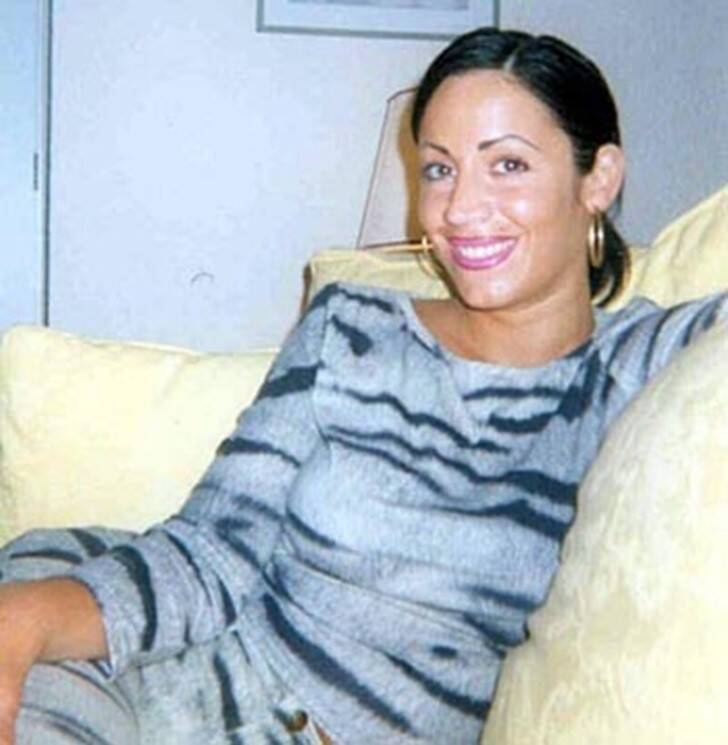
Image 10: Elizabeth Valad
Hardy's flat was searched during the investigation, where extensive evidence was found indicating that the murder and dismemberment of the two women had occurred in the property. The wallpaper was found to be splattered with pieces of flesh and skin, giving just a hint as to the horrors which had occurred within the property. Neighbours would report hearing the sounds of sawing during the night, although had no context of what this meant.
The room where Sally White's body had been found was, again, locked and a cloth had been placed along the bottom of the door - almost like a draught excluder. Officers forced open the door when they detected the smell of decomposition, and found the torso of Elizabeth Valad.
It was found that Elizabeth and Bridgette had both been strangled, and a re-examination of Sally White's documentation drew the same conclusion. This meant that all three women had been murdered in the same way.
Despite answering 'no comment' to every question put to him, Hardy was charged with the murders of Bridgette MacClennan, Elizabeth Valad, and Sally White. He originally pleaded not guilty to all charges, but changed his plea to guilty on each count. Mr Justice Keith sentenced him to a whole-life tariff, something which is rarely handed down in the UK.
Whilst incarcerated, he was diagnosed with a personality disorder and a review commenced into the care he received from the psychiatric facilities. It was of immense concern that a man who was a regular inpatient at mental health hospitals had gone on to commit these crimes, and the question of whether these should have been suspected or identified sooner had to be asked.

Image 11: the outside of Hardy's flat was covered with tarpaulin throughout the seven weeks it took to thoroughly search it
It would also, surely, be an appropriate question to ask whether Hardy would have been able to go on to kill Bridgette MacClennan and Elizabeth Valad if the death of Sally White - nearly a year previously - had been assessed as suspicious by the forensic pathologist. Hardy could have been behind bars and prevented from hurting any more women. Were two more women failed by a system which let a killer get away with murder nearly twelve months earlier?
The women Hardy was convicted of murdering were each homeless, and struggling in a cycle of addiction and poverty. The three women had individually turned to prostitution as a way to make money - both to feed their addictions and to get by. As has been seen in many, many cases involving victims with this lifestyle, their transient existence meant that none of them were reported missing as soon as they could have been. This allowed Hardy the time to kill, mutilate, and dispose of the bodies without anyone searching for the victims. He took advantage of the fact that the three women were almost invisible to the society around them - shunned and judged for their lifestyles - and preyed on their vulnerability.
Articles printed in the media after Hardy was sentenced suggested that he had an obsession with pornography and necrophilia, and part of the incentive for the murders was to take photographs of the bodies of the deceased women. Prosecutor Richard Horwell addressed the Old Bailey, saying: '"he did photograph two of these victims when they were dead in various positions,"' '"the defendant was in the process of preparing the body of the first victim [Sally White] to be photographed when he was interrupted."'
Hardy died behind bars in 2020 from pneumonia, but left unanswered questions in his wake. Was he responsible for more than the three murders he'd been convicted of? The bodies of Bridgette MacClennan and Elizabeth Valad were found by chance - were there dismembered remains of other women which had never been recovered? If they had also been disposed of in a bin, they could have been collected and taken to landfill with little chance of them ever being uncovered from the refuse.
A suggestion was put forward to Staffordshire Police that Fred the Head could have been an early victim of Anthony Hardy. After all, Hardy grew up in Burton-On-Trent and would have been around 20-years-old at the time when the body was discovered, making him in his late teens when the victim was killed. Not only that, Hardy grew up in Winshill - just across the river from the island where the body was found - so one could only assume that he knew of the island, and how many - or few - people visited it. It's not beyond the imagination that he could have had some involvement.
Police haven't released any information relating to whether they are investigating this line of enquiry, or whether the theory holds any weight. It's worth pointing out, though, that the only known victims of the serial killer were all women, and all occurred in the period after Hardy moved back to London from Australia.
John Gick
After the 50th anniversary of the discovery of Fred, marketing agency managing director Ken Davies started a podcast named 'The Mysterious Case of Fred the Head'. Only intending to create ten episodes, Mr Davies carried on with the series after it became incredibly popular on streaming sites.
In 2023, Mr Davies aired an episode which suggested John Gick as a possible identity for the victim.
In February 1969, John Gick was 37-years-old. Single and living in Douglas on the Isle of Man, he worked in the accounts department at the headquarters of the Steam Packet Company, and was a Scoutmaster in his free time for a local scouting group. On Saturday 1st February, John travelled with twelve members of the Scout group on the first daily steam boat to Birkenhead, near Liverpool, to watch a show at the Birkenhead Scout venue. They docked at around 1pm.
Having previously planned to do some sight-seeing in Liverpool with the group, John Gick surprisingly said that he needed to 'return a book', and asked one of the older boys to keep an eye on the group. It transpired that John went to visit a couple of friends in Prenton, leaving at 4pm to make sure that he was back in time for the scheduled show at 6:40pm.
Image 12: John Gick
At around 5pm, John Gick was attacked on the steps outside a public lavatory in James Street, Liverpool. Descriptions of the attack mentioned that three youths were involved, taking his Post Office savings book and leaving him lying on the steps outside the facilities. Arrests were only made several weeks later when one of the youths was found to be in possession of a bankbook containing John Gick's details - a complaint was not logged by John, and it's presumed that he went missing prior to the opportunity to file a report. No-one else filed a complaint, either, but by the time John's bankbook was found in the possession of someone who shouldn't have had it, he had long since been listed as a missing person and alarm bells were quick to ring with police.
All three youths were found guilty of theft, with two being sentenced to a period in borstal, and the third being sentenced to six months detention. The prosecution made it clear in court that trying the case had been made difficult due to the lack of a complainant, but statements from each of the accused, as well as from witnesses, ensured that they were found guilty. One of the youths told police that their co-accused had punched John Gick in the stomach and had waited for him to roll over before punching him again in the region of the neck. It's the theory of Ken Davies that the punch to the neck caused the torticollis found during the autopsy of Fred the Head.
John never returned to the scouting event. The vehicle he had been driving - a minivan - was found at 11pm the same evening at Princes Landing Stage in Liverpool, with bloodstained handkerchiefs and paper tissues found on the front passenger seat and in the offside door pocket. Blood stains were also noted on the passenger seat material in addition to other areas of the interior, and a bloodied scarf was located in the vehicle.
In contrast to John Gick's normal, careful behaviour, the doors of the minivan were found to be unlocked. Police were also unable to find a clear explanation as to why John had taken the tickets to the evening Scout show and the return steamer boat tickets with him when he visited his friends that afternoon. Surely it would have made more sense to leave them with the Scout group? This, perhaps, adds fuel to the theory that his disappearance was unplanned and unpredicted - he must have been certain that he would be returning to the Scout group in time for the evening show.
The search initially focused on the area around the landing stage where John Gick's van had been located, but was eventually extended to a wider radius and into the city of Liverpool.
An article was printed on Tuesday 12th August 1969 in the Liverpool Echo, headlined 'The man who stepped into nowhere'. It talked about how extensive investigations had been carried out - not only by Merseyside police in the Liverpool region, but also by police on the Isle of Man, with all reports, possible sightings, potential witnesses and tips being followed up. Across the six months between John Gick going missing and the article being printed, other forces had also become involved in the case to help follow up leads further afield, but all proved fruitless.
Image 13: John Gick
An unnamed senior police officer with the Merseyside force was quoted in the article as saying: '"the search for the missing man is still going on. We have done everything possible. Every scrap of information about him has been investigated thoroughly but so far we have drawn a blank."'
Police across the water on the Isle of Man were interviewed by the press, too, with Detective Inspector Bill Cook saying: '"the disappearance of Mr Gick is a complete mystery. Since the time he disappeared we have been working closely with the Liverpool Police. Many enquiries have been made but so far nothing has resulted."'

Image 14: map of the key locations in the Birkenhead and Liverpool area
Police spoke to John Gick's parents in the wake of his disappearance, and visited his workplace in Douglas harbour to speak to his colleagues, but no-one could offer any information or indication as to where he may be. His parents Edwin and Isabella, both in their seventies, were distraught with worry over their missing son. Their daughter - John's sister - had flown to the Isle of Man from her home in Surrey to provide support to the couple, with Isabella telling the press: '"we just cannot understand what has happened. John is so reliable and dependable - and now he has just vanished. We can think of nothing else. It's dreadful."' John was clearly a valued member of staff at the Steam Packet Company headquarters, with a spokesperson saying: '"John came here straight from school twenty-two years ago. He has always been a good conscientious worker and a quiet diligent type. His disappearance has upset us all."'
A promising lead arose in May 1969 after a report was submitted by a man named Michael Casey. He stated that he had seen John Gick in the area of Birkenhead Docks on 30th April, and was confident in his statement - he knew John Gick by sight, as Mr Casey worked in the engineering department of the same company which employed the missing man. Mr Casey joined police in searching the area around the docks, but nothing was found to indicate that John had been in the area.
Although it wasn't spoken about openly at the time - either by police or by the press - the public lavatories where John Gick had been attacked were a well-known venue where gay men would seek anonymous sexual encounters. John went missing during the late 1960s, when people were rarely open about homosexuality. In fact, homosexuality had been decriminialised only two years earlier, in 1967, when the Sexual Offences Act was introduced. This made same-sex encounters legal in consenting adults over the age of 21, provided they were carried out in private, but this didn't get rid of the discrimination which LGBTQ people endured. Attacks on gay men occurred regularly, and many still hid their sexuality from their colleagues, friends and family for fear of the response.
The facilities on James Street in Liverpool were known to be one of the more busy venues for anonymous meetings - the toilets were situated near a busy bus station and near a ferry terminal, so passing footfall was heavy and the toilets received a high number of visitors. As public knowledge of these venues grew, however, so did the instances of abuse. Men who were seen using the facilities were often targeted in acts of violence. Many were mugged, whilst some were attacked and injured.
John Gick was never reported as being gay, and the nature of his sexual orientation remains unknown. However, there is some speculation that his not reporting the mugging to police after it occurred could be an indication that he wasn't just using the facilities to urinate - but this is purely a speculation.
John's injuries from the mugging weren't thought to be severe, and he was able to return to his vehicle and clean up some of the blood - as displayed by the tissues and handkerchiefs found in the minivan. Was it possible, then, that he had been unfortunate enough to be set upon by someone else who had gone on to commit murder? Theories on what happened to John Gick range from possible to suicide to the man starting a new life.
Comparison to Fred the Head
The information collected by Ken Davies in relation to John Gick was passed to police in 2023 with the consideration that he could be an identity for Fred the Head. In the last two years, there have been no updates.
On paper, John Gick certainly seems like a candidate who would warrant further consideration - he was within the estimated age range of the Burton-On-Trent body, was approximately 5ft 6in to 5ft 7in tall and had short hair, in direct contrast to the male fashion of longer hair during the 60s and 70s.
So why was John Gick not considered at the time? Records for multiple missing men were compared to those of Fred the Head in the first three years of the investigation. Why is there no mention of John Gick being considered or ruled out at the time?
The Isle of Man exists as a slightly different entity within the UK, and is known as a self-governing Crown Dependency. It has one of the oldest parliaments in the world, having existed continuously for over 1,000 years. It still turns to the British Crown for matters involving security, defence and international relations, but laws may differ from those of the UK. For example, although homosexuality was decriminalised in England and Wales in 1967, the Isle of Man did not adopt this legislation until 1992, meaning that gay sex remained a criminal act.
John's dental records would have been retained by a practice on the Isle of Man, meaning that comparison may not have occurred whilst they were available - someone would have had to physically travel to the Isle of Man to compare these, and obtain the necessary permissions to view them. It's likely that any dental records belonging to John have been destroyed after all this time, and any comparison to Fred the Head would need to be conducted through DNA.
If John Gick is a candidate for the identity of Fred, how did he end up in Burton-On-Trent? The distance between Liverpool and Burton is more than 80 miles, and his minivan remained on the coast. This means that for John Gick to be a feasible candidate, someone would have needed to have transported him from one location to the other, or he would have needed to take public transport. And what would his reason have been for going there? Was he abducted, or did he have a purpose to go there voluntarily?
The indications from John Gick's movements were that he had every intention of being back at the Scouting group headquarters by 6:40pm on 1st February. What happened to him between the hours of 5pm and when his vehicle was found later that evening remain a mystery, and with no update from Staffordshire police it is still impossible to tell if he could be the man in the Burton grave.

Image 15: map showing Douglas on the Isle of Man, Birkenhead and Burton-On-Trent
It has always been the consideration from police that the victim found in the lonely island grave in Burton wasn't local to the area. No-one from the vicinity was reported missing within the timeframe that Fred the Head was thought to have died, and no information was forthcoming from the close-knit community as to who the victim may be. This is, perhaps, complicated by the fact that the socks found on the body were thought to have been purchased from the local market. Were they given to the deceased prior to his death? Had the victim visited Burton before? Or were the socks a product sold widely across the country, with the potential that they could have been bought elsewhere?
It's possible that the victim could have had a link with a location near Burton - the ring on his right hand was manufactured in Birmingham, which is less than thirty miles from the town. Perhaps he wasn't from Burton itself, but a city or town in the vicinity. If, however, the male was of Hungarian or Danish descent, as found in the genetic testing in 2014, perhaps he had no family in the UK to report him missing. It's possible that he could have emigrated, or visited, the UK and been the unfortunate victim of a crime.
That is, sadly, where the case remains. Fred the Head hasn't, to date, been identified, and as a result, his killer has never been caught - because how does one set about finding a murderer when they can't identify the victim? Where would one even start?
Although no updates have been received from Staffordshire Police within the last couple of years, there's still hope that their work on the case could finally provide an identification for the man who was so cruelly left in a 4ft grave on an empty island. Perhaps this could provide closure to a family somewhere who are still seeking answers as to what happened to their loved one.
If you have any information which could help police to identify the anonymous man found in a grave in Burton-On-Trent in 1971, please contact police on 101, or submit a report to Staffordshire Police using the following link:
References for text:
Who was Fred the Head? Murdered man's identity remains a mystery - Derbyshire Live
New police probe to finally solve 52-year Fred the Head murder mystery - Stoke-on-Trent Live
Torticollis (Wryneck): Symptoms, Causes & Treatment
Who was The Camden Ripper? – Overview & Analysis | Crime+Investigation UK
‘Camden Ripper’ pathologist found guilty of incompetence – Channel 4 News
Police to probe whether 'Fred The Head' murder mystery victim is this man - Staffordshire Live
Gulbenkian Ill | Liverpool Echo | Tuesday 11 March 1969 | British Newspaper Archive
Queer-bashed in James Street: the story of a Scout leader who vanished | Liverpool People's History
Murder victim Fred the Head seen in colour for the first time - Staffordshire Live
The Camden Ripper: London’s Forgotten Serial Killer – Londonopia
ANTHONY HARDY: THE SATANIC RITES OF THE CAMDEN RIPPER – Court News UK
Credit for images:
Image 1: Ordnance Survey map Former Newton Road flint mill OS map - Fred the Head - Wikipedia

Image 2: satellite map of the island, taken from Google maps, with endorsements by the author
Image 3: still from Crimewatch episode of the socks Fred the Head - Unidentified Body, 1971 - Crimewatch Live - YouTube
Image 4: still from Crimewatch episode of the wedding band Fred the Head - Unidentified Body, 1971 - Crimewatch Live - YouTube
Image 5: still from Crimewatch episode of the skull of Fred the Head Fred the Head - Unidentified Body, 1971 - Crimewatch Live - YouTube
Image 6: 1971 photofit of Fred the Head Fred the Head | Unidentified Wiki | Fandom
Image 7: updated photofit of Fred the Head Who was Fred the Head? Murdered man's identity remains a mystery - Derbyshire Live
Image 8: serial killer Anthony Hardy Serial killer dies behind bars after contracting Covid-19 pneumonia at HMP Frankland | Chronicle Live
Image 9: the bin where victim remains were located ANTHONY HARDY: THE SATANIC RITES OF THE CAMDEN RIPPER – Court News UK
Image 10: Elizabeth Valad ANTHONY HARDY: THE SATANIC RITES OF THE CAMDEN RIPPER – Court News UK
Image 11: the outside of Hardy's flat 20 years on from the ‘Camden Ripper', nobody mentions the failures that freed serial killer to strike – now the case is pure clickbait | Camden New Journal
Image 12: John Gick New police probe to finally solve 52-year Fred the Head murder mystery - Stoke-on-Trent Live
Image 13: John Gick New police probe to finally solve 52-year Fred the Head murder mystery - Stoke-on-Trent Live
Image 14: map of key locations in Birkenhead, taken from Google maps, with endorsements by the author
Image 15: map showing Douglas, Birkenhead and Burton, taken from Google maps, with endorsements by the author