

Julie Finley
Disclaimer: this article contains details which some may find distressing. Discretion is advised.
Unlike many of the crimes we've covered so far, where newspaper articles and public details have been scarce, there is an extensive amount of information about this case available online. So much so that it's incredibly easy to be pulled down a rabbit hole, leading to talk about multiple victims and a possible serial killer. The case of this victim has never been formally linked to any others, but that hasn't stopped the press and media from speculating extensively as to whether she was targeted by someone who had already killed several women across the Midlands. This murder also occurred less than two decades after the Yorkshire Ripper had terrorised the north-east of England, so the stories published by the press had every potential to reignite the fear in women which had only just simmered down.

Image 1: Julie Finley
The most recent update on this case came in 2021 but the victim's mum continues to campaign for information about her daughter's case, giving hope that there may yet be a conclusion. This is the story of the 1994 murder of Julie Finley.

Image 2: Julie aged 11
Julie Catherine Finley was the second eldest of five siblings, born on 1st August 1971 into a close-knit Catholic family in Liverpool. She had still lived at home until a few months before her death with mum Patricia, dad Albert, and younger siblings Tony, Sharon and Kate. Her elder sister, Karen, lived in her own home with her three children but was still actively involved in the loving family unit. Her mum would later describe her daughter: '"she was a good girl, with a kind heart and always smiling. Everyone loved her."'
Julie had left school, Yew Tree Comprehensive, at the age of 16 with the hope of going on to become a hairdresser. She worked for a period of time in a hotel before a friend provided her with her first taste of illicit drugs. Patricia had described how, when Julie was 17-years-old, she had fallen on the floor at home in fits of hysterical laughter, leading her mum to believe that she had been drinking. However, her daughter eventually confessed that she had been given a magic mushroom by a friend - something which Patricia made her promise she wouldn't do again.
Unbeknownst to her family, though, Julie had started seeing someone nearly a decade her senior, a half-Chinese man by the name of Ng. It appeared that he, too, had something of a drugs habit, with mixed reports stating that Julie started committing petty theft to fund.
The mother of one of Julie's friends contacted Patricia some time after the magic mushroom incident to inform her that she had found some heroin in her own daughter's room and believed that the pair were dabbling in harder drugs together. Although Patricia confronted Julie about this development, her daughter refused to confess to taking the substance or any others. It was only when she reached the age of 19 and her personality had started to noticeably change that her family encouraged her to book in for what would be her first of several stays in a rehabilitation centre. After she finished her first treatment at the facility, she moved back in with her family who rallied round her as she made a promising effort to stay clean and reassemble her life outside of the unit.
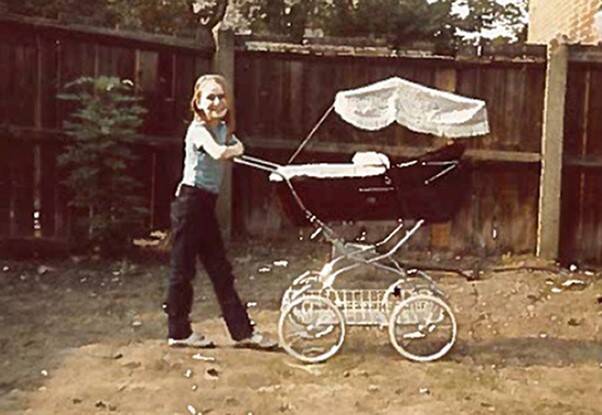
Image 3: Julie, aged 11, pushing her cousin in a pram

Image 4: Julie aged 10 with her brother, Tony, and sister Sharon at Christmas 1981
Unfortunately, it wasn't long before Julie went back to boyfriend Ng and was regularly taking heroin and crack cocaine. She spent time in and out of rehab in the three years before she died, even spending a period of time living with sister Karen who managed to get her clean and feeling better than she had in a long time. Living with Karen wasn't a long term possibility, however, as her elder sister had three children in the property and space was tight, with Karen also needing to focus on bringing up her small children.
Julie had moved back into the family home until a few months before her death, during which time her movements were largely unknown. She would come home to visit her parents regularly before leaving again. Police would later ascertain that she spent these months sofa-surfing with her boyfriend, who didn't have a property of his own and lived something of a transient existence.
Although Julie had the opportunity to stay with her family, it appeared that her drug habit had gotten out of hand by this stage. Her mum, Patricia, later told the press: '"she wanted to give up so badly but she told me it was no longer something she could control. She described it as a disease. In the end we stopped asking questions so she wouldn't have to tell us lies."'
On Friday 5th August 1994, Julie visited her parents at their home at around 4:30pm where she had a bath, washed her hair and got a change of clothes. She also collected her birthday presents, as she had turned 23 years old on the Monday just gone. She left at 5:30pm with the promise that she would be back again over the weekend. Patricia said: '"her last words to me were 'can I come home for lunch on Sunday?' I said 'of course, love'. I never saw her alive again."'
The Discovery
At around 1:15pm on Saturday 6th August, a cyclist stopped in a layby midway between Skelsmerdale and Rainford along the A570 Rainford bypass, heading south in the direction of St Helen's. It's more of a small lane than a layby when you look at it on a map, and has been known as something of a couples meeting place due to its quiet location tucked off the dual carriageway.
The layby was home to the Wheatsheaf pub, which has changed hands several times over the years and today houses an Indian restaurant, and a number of bungalows. The pub was a popular venue with cyclists and walkers due to the shared path which runs the full length of both sides of the Rainford bypass, making it a convenient stopping point for a drink and a rest along the route.

Image 5: a map showing the location of the layby along the A570 Rainford bypass
The cyclist ducked into a field in order to relieve himself where he was confronted by what he initially thought to be a tailor's dummy laying, face down, on the ground next to the hedgerow. He moved closer to the item and realisation washed over him when the reality of what he was looking at became apparent.
The cyclist contacted police immediately, and authorities flocked to the area to assess the situation. They were greeted, as the cyclist had described, by a deceased woman lying abandoned in a field. No clothing or belongings were anywhere to be found, and no vehicle which could be attributed to the woman was found parked in the lane off the A570, sparking questions as to how she had come to be there. Marks were present on her upper arms which were indicative of a struggle prior to her death, giving police the consideration that a third party may be involved.
Due to the suspicious circumstances the woman had been found in, a forensics tent was assembled over her body to protect it from the August weather and from the prying eyes of passers-by, and plastic sheets were used to cover the footpath leading to the body to protect any footprints which may prove relevant to the subsequent investigation.
The woman's body was conveyed to the mortuary where a post-mortem examination was carried out. The pathologist noted marks to her neck approximately one inch wide, which were initially thought to have been inflicted by the hands of an assailant, but further examination led to the conclusion that she had been strangled with some sort of ligature and left no doubt that police were dealing with a murder inquiry. Her time of death was estimated to be somewhere between midnight and 4:30am on the morning of Saturday 6th August, meaning that she had been discovered approximately twelve hours after her death and disposal at the site. Despite all of her clothing being missing, the pathologist confirmed that she had not been sexually assaulted. The victim was assessed to be 5ft 3in tall and a mere 6 and a half stone in weight at the time of her death.
The only firm conclusion drawn by police was that victim had been transported to the area - either whilst still alive, or having already been killed - by vehicle. The killer likely dragged her body through a gap in the hedge from the layby into the field which was used by tractors. The field where the body was found was being used to grow carrots at the time, and was clearly still an area that farm traffic visited on a regular basis.
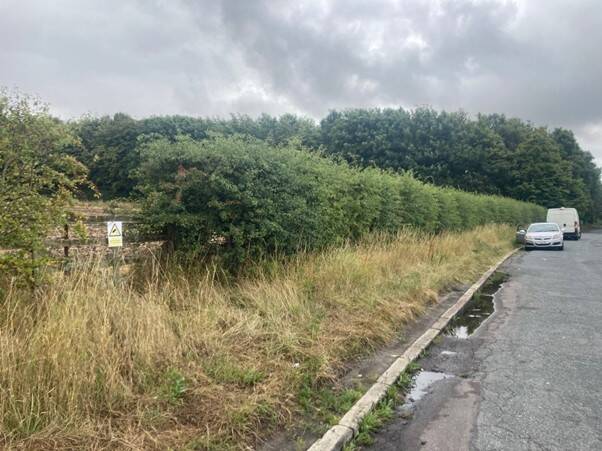
Image 6: the layby next to the field where Julie's body was found
Fingertip searches of the field and surrounding area was commenced by officers, and detectives in plain clothes began house-to-house enquiries at the bungalows along the lane. Police obtained fingerprints from the body of the victim and compared these to those held on record, enabling them to identify the woman as 23-year-old Julie Finley. How her prints came to be on police record is a point for debate - some newspapers mention that Julie had previous convictions for petty theft, but her parents disputed this fact at the inquest.
Regardless of how her prints came to be on record, authorities attended the Finch Street property to break the news to her family. They were, understandably, devastated - how could something so tragic have happened to the daughter that they adored, and who they thought they would be seeing the following day at Sunday lunch?
Despite their distress, Patricia and Albert were able to tell police that they had received a telephone call just an hour before authorities arrived to break the news from someone who introduced herself as 'Helen from Huskisson Street'. She had been asking to speak to Julie, and when told that Julie wasn't at the property she had asked for a message to be passed to her to let her know that Helen would be unable to meet her later that evening. Helen would call the family back on Sunday, asking if the body found in the field by the A570 was Julie's. After Patricia confirmed that it was, Helen reportedly became hysterical with Patricia describing: '"she sounded as though she knew something about what had gone on. If she does I urge her to ring the police and help us to find this evil person."'
Detective Chief Inspector Youell, who would remain in charge of the investigation for many years and dedicate much of his time to solving Julie's murder, made an appeal to the public in the initial days following the discovery of the body, saying: '"I want to speak to anyone who may have seen Julie between 4:30pm on Friday and 1:30pm on Saturday. I would ask anyone who saw any suspicious activity at the scene between the above times to contact me. I appreciate that people may have been at the spot for all the wrong reasons but I stress any information I receive will be treated in the strictest confidence."' As we mentioned above, the layby was commonly used as a 'lover's lane' and any witnesses who may have been meeting there for a secret liaison would likely have been very reluctant to come forward.
The Investigation
From the very early days of the inquiry, police became aware that Julie spent a lot of time with known sex workers in the Liverpool area, but they were unable to establish if she had been working the streets herself. Although authorities had set up a temporary incident room over the weekend at Skelsmerdale, a village near the location Julie's body had been found, by Monday 8th this had been moved to Farnworth Street Police Station in Liverpool.
As they tried to ascertain Julie's movements after 5:30pm when she had left her parents', they were able to trace her to the areas of the red light district in the city, with sightings of her being reported in the areas of Huskisson Street, Hope Street, and the back of the Royal Liverpool University Hospital.

Image 7: officers working at the crime scene
When the press got hold of the information about where Julie was last seen, they were quick to draw comparisons between her murder and the murder of a known prostitute six years earlier.
Linda Donaldson had been brought up by her grandmother until she had married at the age of 18, a relationship which failed after she became addicted to heroin. With an addiction to feed and no stable job, Linda had turned to prostitution to make money. She regularly worked the Toxteth area of Liverpool - the same area in which Julie Finley had been staying with a friend at the time of her death. Linda had disappeared in October 1988, with her mutilated body found in the Wigan area. Although DCI Youell confirmed that similarities between the two cases were being looked into, it was deemed that there were too many differences in the way that the two had been killed and that they were not connected. The case of Linda Donaldson may be one that we cover at a later stage on Undiscovered, as it, too, has never been solved.
By the time Monday 8th August came around, police were approaching known drug addicts and prostitutes in the areas where Julie was last seen in order to try to obtain further information from anyone who may have seen or spoken to her on the night she was killed. Some of the people they spoke to had seen Julie in the area of Mount Vernon in the months leading up to her death, an area which was on the edge of the red light district, but her activities in this region were unknown. There were also reports of a woman matching Julie's description seen talking with a man out the back of the Royal Liverpool University Hospital on the evening of 5th August, with details of the male's appearance being provided by the witness.
The press gave frequent mention to the potential of Julie being involved in prostitution as well as her drug addiction, something which prompted a comment from Detective Superintendent Bob Denmark: '"although Julie may have had some question marks against her activities and lifestyle, her death is as much of a tragedy as if she had been a bishop's daughter. She was a loved and loving daughter and sister."' Julie's family strongly dispute the suggestion that she was a prostitute, and didn't believe this to be the case. The police were also unable to find evidence that she had been involved in this line of work.

Image 8: the location of the layby on the A570 in relation to Liverpool city, where Julie was last seen
It would later transpire that many of the sightings reported of Julie on the evening of Friday 5th August had actually been of someone who looked very much like her, putting the police back a few steps in the investigation. Undeterred, they continued to search for information about her last known movements, and were able to ascertain that she had left her friend's property, where she was staying with Ng, at 10:30pm that evening. Police suspected that she had gone out to purchase drugs, but finding a trail of communication to back up this theory was much more difficult in 1994 than it is today - mobile phones were in their infancy and were few and far between. Julie would likely have done much of her communication using public telephone boxes or in person, and tracing particular calls on these devices would have been very difficult.
When she had been discovered, Julie was not wearing any make-up and had her light brown, gingery hair tied up with an elastic band. Although she'd been found naked, the description of the clothing she'd been wearing on the night of 5th August was of a white blouse with buttons down the front, black canvas trousers and black boots. It sounds like her appearance somewhat diminished any theory that she may have been working as a prostitute - particularly on that evening - as one would have thought that she would have perhaps been wearing make-up and different attire if she was trying to attract customers. Police's theory that she had possibly been heading out to buy drugs seemed much more plausible, as it sounded like she was dressed as though she was running an errand - it was just a case of finding out where she may have gone, and who she had been meeting in order to fill part of the gap in her timeline.
Police would receive a telephone call from someone calling themselves 'Tina' in the days following Julie's murder. Tina described herself as a friend of Julie's and informed the police that Julie had been planning to meet a taxi driver late in the evening on 5th August, saying that she had information about Julie's final hours. Police were keen to obtain further information about the identity of the taxi driver, where they were meeting or what the purpose of the meeting was, and Tina agreed to meet with them to chat. However, she didn't turn up at the agreed time and police had no way of contacting her. Despite multiple appeals being made over the years for Tina to get back in touch with authorities, she never did.
Whilst officers pursued this line of enquiry, others were looking into reports of a white transit van being seen in the layby late in the evening of 5th August. The vehicle was described as being manufactured between 1986 and 1989 and was a D, E or F registration Ford Transit van and authorities appealed to the public for any further information which may help them to trace it.
Linking in with the reports of the white van, a witness told police that they had seen a man and a woman arguing in the layby leading up to the Wheatsheaf pub at 12:30am on the 6th August - just hours before her body was found. The description given of the woman closely matched Julie, and the witness reported that the man accompanying her was trying to force her into a van parked in the layby. Information from speaking to Julie's friends and acquaintances had revealed that she had planned to meet someone at 11pm on 5th August, just a short time before she was believed to have been killed. Could she have been the woman in the layby being forced into the white van? If so, was the man the person she was supposed to have been meeting that evening? Was he the taxi driver that Tina had mentioned, or a different man? Was the layby the planned meeting place, or had she been driven there?
The investigation into the van led to officers tracing every matching vehicle across the north-west of England, but their extensive efforts did not result in a lead. The van seemed to have disappeared - indicating that it either hadn't been from the area or had been disposed of rapidly by the owner once they knew that police were on the lookout.
Officers who had been looking at potential leads in the red light district started speaking to clients who frequented the area - not on the basis that Julie may have been trying to attract work from them, but on the basis that they may have seen something important on the evening of 5th August. This not only included the women who worked the area, but the customers who cruised the area. On Wednesday 10th August the force issued a warning via the press, telling the men: '"come to us, or we'll come looking for you"'. They meant it, too - they told the public that they had the vehicle registrations of many of the regular customers in the red light district, and would start turning up on people's doorsteps if they didn't come forward by Saturday 13th August at 9am. This gave any men who had been in the area that night ample opportunity to avoid the embarrassment of a police officer turning up at their home - perhaps in front of their children or partners - and asking awkward questions.
Many men did come forward on the back of this threat, with their accounts of the evening carefully scrutinised by police in case they had seen anything of interest. Some didn't, however, perhaps calling the bluff of the authorities, only to find out by the weekend that officers meant what they'd said when they turned up on the doorsteps of those who hadn't come forward. By Wednesday 17th August, this tactic had resulted in 40 men being questioned in relation to their activities on Friday 5th August.
Police received a call during the week after Julie's body was found from a man saying that he had seen a pile of clothing on an area of wasteland near the junction of Low Hill and Prescot Street, somewhere which was a known haunt of sex workers and was only a quarter of a mile from where Julie had last been seen. He reported that he had seen the attire at around 4pm on Saturday 6th August, but hadn't registered it's importance until some days later when a description of Julie's clothing had been released.
He was able to describe what appeared to be a white top and trousers which had been neatly stacked as though they had been taken out of a bag and placed there, but by the time police attended the land on Friday 12th August the only remaining item they located was a bra. Julie's sister, Sharon, identified the undergarment as one that she had lent her sister and DNA testing commenced the same day to establish if any other information could be gained from it. A full fingertip search was completed of the area, but the other items of clothing were long gone. Officers theorised that someone out scavenging may have picked the clothes up and taken them, as Julie's family reported that they were in good condition, so an appeal was continued for anyone who may have the blouse, trousers and boots in their possession.
As well as the appeal to find Julie's clothes, police also asked any members of the public who had attended Haydock races on Friday 5th August, and who may have gone to the Wheatsheaf pub afterwards, to come forward if they had seen anything unusual in the area. As mentioned earlier, the Wheatsheaf pub was at one end of the layby next to where Julie's body had been found and where the white Ford Transit van had been spotted. Police even spent some time in the pub circulating with regular patrons, perhaps trying to boost their presence in the area or trying to gain a tiny new piece of information through casual conversation. They set up two mobile incident rooms - one near the Wheatsheaf pub and one between Canning Street and Hope Street in Liverpool, providing locals with a space to come forward and speak to police if they had concerns or thought that they may be a witness.

Image 9: Julie Finley
The murder of such a young woman had an extensive impact on the community. Regular customers at the Wheatsheaf pub clubbed together to buy a wreath, as did the residents of the bungalows along the layby, and the two individual groups laid them near where Julie's body was found.
On Saturday 13th August, police's attention was temporarily drawn to the region of Cambridgeshire after the press printed headlines about a man who had been found deceased with three handwritten notes found with his body.
The man was identified as 32-year-old Alan Conner, also known as Alan Gadd, originally from Yorkshire but living life as something of a drifter at the time of his death. His body was found on 7th August by a passer-by, hanging from a tree in Bromholme Lane near Brampton, just half a mile from the headquarters of Cambridgeshire Police. The lane itself was relatively remote, being tucked off the main road between Brampton and Huntingdon, with authorities theorising that he had hitchhiked to the Cambridgeshire area.
In one of the notes, Conner confessed to the murder of a young woman who had been found along the coastal path near Salcombe in Devon the month before. The note read: '"this letter is to the mother and brothers of Sandra Parkinson. Please, I am sorry for what I did to her. Please believe me, it wasn't me, it was the other bastard I can't live with. I beg that you can forgive me for what I did."'
Forgiveness may have been very difficult for Sandra's family to provide at the time. Sandra Parkinson had been working at the Grafton Towers Hotel near Sharpitor on the outskirts of Salcombe when, on 20th July 1994, she had decided to take a walk during her lunch break. And why wouldn't she? She was lucky enough to work in a location along the coastal path with fresh sea air and the July sunshine, and she should have had complete confidence that she would make it back to the hotel for the remainder of her shift. It was the second year that she had worked the summer job in Devon, having travelled down from the family home in Ayrshire, Scotland.
Sandra didn't return to complete her day's work. Her body was found 24 hours later in a patch of woodland, having been sexually assaulted and strangled. A man had been seen in the area around the time of the attack, with witness descriptions noted to be a close match to Alan Conner.
DNA would later prove that Conner was Sandra's attacker and killer, but it also linked him to the rape of a woman in Shropshire nearly two years previously. Muriel Harvey, who waived her right to anonymity in the hopes that telling her story would help her attacker to be caught, was a former magistrate and had taken on the role of church warden in Ludlow. She had been heading home from Midnight Mass on Christmas Eve 1992 when she was attacked and sexually assaulted. Her case had gone unsolved until DNA and fingerprints from Alan Conner were compared to unsolved crimes on the police database.
These weren't Conner's first offences, either. In 1986 - just six years before the attack on Muriel Harvey - he had been arrested and charged with the rape of a 16-year-old in South Yorkshire, for which he served just four years of a six year sentence. The former chief psychiatrist at Broadmoor hospital, Tony Black, later described the notes left by Conner as revealing a character who had been tormented by the remorse of his actions. It isn't clear whether he had any kind of mental health diagnosis, and based on his transient lifestyle he may not have seen a doctor for some time. His death and the collection of his DNA and fingerprints sparked a review into 33 other unsolved rapes and murders, with senior officers in Devon and Cornwall Police calling for a national database which would hold the details of sex offenders, citing that if Conner had been caught after his attack on Muriel Harvey he could have been locked up before he had the chance to murder Sandra.
Although the police warned the public and the press not to speculate about Alan Conner whilst they ran his DNA and fingerprints through the relevant systems, the press were quick to compare the attack on Sandra Parkinson to that of Julie Finley with one obvious difference - Julie had not been sexually assaulted. Ultimately, Alan Conner was ruled out as having any involvement in Julie's case.
Although every effort was being put into finding the person responsible for Julie's death, it couldn't be denied that pressures on Merseyside Police were significant. Seven murders had occurred in the Liverpool area over the space of three weeks, with Julie's amongst them, and resources were becoming increasingly stretched.
An additional pressure placed on them was frequent talk in the press of Julie's case being connected with the murders of six women across the Midlands in the 9 months prior to August 1994 - some papers went so far as to suggest the existence of a 'Midlands Ripper'. Several of the women had been known prostitutes, but others were not. The mention of this in the daily newspapers had the potential to cause significant distress in the population - it was less than 20 years since the Yorkshire Ripper had been caught, and memories of his reign of terror were still vivid for many women.
In the five years between 1975 and 1980, Peter Sutcliffe had killed 13 women and created an atmosphere of fear across the north-east of England. Women were warned against going out alone during the dark hours, and male university students were encouraged not to let female students walk home alone from social events and parties. Speculation as to the identity of the so-called Yorkshire Ripper was rife and divisive, with people becoming suspicious of those whom they had always deemed to be trustworthy. Such was the impact of the five years that I'm sure many women in the north-east who lived through it will still remember it today.

Image 10: DCI Youell
It seems astonishing (or... perhaps not) that the newspapers would make a suggestion which could invoke such intense fear, especially among the female population. DCI Youell confirmed that he was aware of the other murders, and had been in discussions with detectives from other counties, but that there was no immediate indication of a connection with Julie Finley's murder. He maintained communication with neighbouring police forces in case the situation changed.
An inquest into Julie Finley's death was opened on Wednesday 31st August by coroner Howard McCann. During the opening day, Albert Finley requested an end to speculation over his daughter's criminal convictions and that she had been a prostitute, declaring that none of the rumours were true. The coroner adjourned the inquest to enable police to continue with their inquiry.
In September 1994, the Liverpool Echo launched a campaign in conjunction with Merseyside Police to publicise Julie's case in a bid to catch her killer. As no photo existed of Julie in the clothing she was wearing when she went missing, the press created one by superimposing similar clothes onto an existing image of her to give the public an impression of what she may have looked like on the evening of 5th August. The image was circulated in copies of the Liverpool Echo as well as being printed and handed out in shops and newsagents, or stuck to walls and telegraph poles, in a bid to increase publicity.
Around the same time police confirmed that they were investigating a report of a prostitute being attacked by a client in Aigburth, near the Otterspool Promenade in Liverpool. When it came time for the man to pay, he had become violent and robbed the money she had on her person before attempting to strangle her. She managed to escape and flagged down a passing car in a bid to attract help, but the male fled the scene before he could be caught. The woman described him as in his late 20s or early 30s, around 5ft 7in tall with straight, dark brown hair. He had been clean shaven at the time of the attack, had distinctive tattoos on both arms, and had been wearing a black t-shirt with a yellow design on the front with navy blue shell suit trousers and trainers. She had noted that he had been driving a Vauxhall Cavalier, which he likely used to escape the scene. Police confirmed that they were open to the fact that the man may have been involved in the murder of Julie Finley due to the parallels of strangulation in both cases.
It seems as though this assault wasn't a one-off. Towards the end of October, police had received reports of a spate of assaults and robberies targeting sex workers in the Liverpool area and moved a special incident vehicle to the junction between Catherine Street and Canning Street, hoping to encourage some of the regular workers to speak to them. With four attacks occurring across September and October 1994, the force were hopeful that information would come forward to help them catch the perpetrator and were mindful that it may help to lead them to Julie's killer. Perhaps they hadn't fully ruled out the thought that Julie may have been a sex worker, been mistaken for one, or maybe they were just aware that she socialised with a number of women who worked the streets and may have been targeted by the same man. No further information was released by police in relation to these cases and whether they were thought to be connected to Julie's murder.
The posters pasted around Liverpool by the Echo and the police brought forward a promising lead in the middle of November 1994.
26-year-old Julie Wilson had been driving down Pembroke Place, behind the Royal Liverpool University Hospital, at approximately 11:20pm on Friday 5th August when a woman had suddenly dashed out across the road in front of her car, causing her to brake hard and press the car horn. The photo put together by the Liverpool Echo and images shown to her by police only made Julie Wilson even more convinced that it had been Julie Finley who had run out in front of her car.
Ms Wilson said that Julie had continued to run across the road towards a male who was waiting on the other side, who she described as being around 5ft 10in tall, aged between 23 and 28 years old, and was smartly presented with dark hair. She noted that there was a car parked near him, but there was no way to tell if this belonged to the man or not.
This very promising sighting gave police new information about Julie Finley's timeline on the night of 5th August. From the information gathered so far in the investigation, they made an educated guess that Julie may have been meeting a drug dealer, hence the reason why she was in such a hurry to cross the road. Officers managed to track down and speak to Julie's regular dealer, but he denied having contact from or seeing her on the night in question and did not match the description of the man she had been running towards across Pembroke Place. With little information to go on other than the description from Julie Wilson, tracking down this man was difficult from the outset.
By the time December came around, police had started contacting registered sex offenders in the area of Rainford to see if any of them could be a candidate for the attack on Julie. It certainly felt as though the case was going cold by this stage and that authorities were clutching at straws for some kind of lead - after all, we're aware that Julie was not sexually assaulted, so it's unclear why sex offenders became a line of enquiry. Perhaps this was a natural consideration during the process of the investigation.
In January 1995, Patricia and Albert Finley made the difficult decision to list the family home for sale. The pain that Julie's parents and siblings were enduring became clear in an interview the couple gave to the press, describing how they were struggling to cope with the overwhelming memories of their daughter in the home. Patricia spoke of how her husband became unbearably anxious about their younger two children - 17-year-old Sharon and 14-year-old Kate - whenever they left the house, worried that something may happen to them and that they wouldn't come home. The family hadn't been able to hold a funeral for their loved one, as the inquest was still open and Julie's body was being held in storage until it was released by the coroner, leaving them unable to say a proper goodbye.
This, at least, would change in February 1995 when the coroner's inquest resumed. Home Office pathologist Dr James Burns was called to give evidence, stating that Julie had likely been strangled between 11:40pm on Friday 5th August and 4:40am on Saturday 6th August. The inquest closed with a verdict of 'unlawful killing' being recorded, and the coroner finally released Julie's body to her family.
Julie Finley's funeral was held at midday on Friday 24th February 1995 at St. Dominic's Church in Southdene Road, Merseyside. She was subsequently interred at Allerton Cemetery, an area which is well kept and peaceful for those seeking to sit and reflect near the resting placed of their loved ones. A beautiful headstone was installed in her memory, with the site lovingly cared for by her family.
The funeral finally afforded her family and friends with the chance to say a proper goodbye to their loved one, and some small sense of closure after such an appalling tragedy, as well as providing them with somewhere to go to talk to and think about her. The length of time they had to wait for this opportunity, although necessary, surely increased the sense of trauma for them all.

Image 11: Julie Finley's headstone
On Thursday 13th April 1995 Crimewatch aired an episode on the BBC which featured a reconstruction of Julie's last known movements on the evening of Friday 5th August the year prior, with more than 12 million people tuning in. The response to this was encouraging, with multiple calls being made to the hotline with hints and tips as to the identity of the man standing on the roadside in Pembroke Place. Several of these calls indicated a man known only as 'Nelly', with police immediately starting a search for the individual.
As part of the program, an appeal was reissued for anyone who had seen the clothing that Julie had been wearing on the night she died after it had been removed from the area of wasteland, as well as anyone who had seen a white Ford Transit van with a D, E or F registration plate in the area of the Rainford bypass. Out of the 70 calls received in response to the Crimewatch episode, one was from a woman who claimed to have possession of the blouse and trousers worn by Julie on 5th August. Despite efforts by police to extract more information from her, she put the phone down before answering any questions and was unable to be called back, leaving the force with no option other than to publicly appeal for her to contact them again. This appeal went unanswered.
Perhaps the biggest lead so far arrived in August 1995, a full calendar year since the death of Julie Finley, when a witness came forward with a story which would stun police.
The unnamed witness told officers that he had picked up a hitchhiker the month prior (July 1995), and the pair had travelled along the Rainford bypass in the direction of St. Helen's. As they passed the layby by the Wheatsheaf pub, the male hitchhiker had become notably agitated and uncomfortable. The hitchhiker told the driver that in August the previous year he had been travelling along the Rainford bypass when his motorbike had broken down. With little other option, he parked on the side of the road and started to fix it.

Image 12: an e-fit of the hitchhiker
As he was working away in the dark, he heard a banging noise and a woman's voice nearby shouting 'help me, help me, for God's sake, help me!' Curious and uneasy, he went in search of the source of the scream and found a naked woman locked inside a van. About to help the woman, the man was suddenly approached by a male who told him that the woman was his girlfriend and aggressively telling the hitchhiker to leave. Concerned for his own safety, the hitchhiker did so. He didn't make contact with police after the incident.
The witness described the hitchhiker as being in his 20s, approximately 5ft 8in tall and a resident of the St. Helen's area.
Police appealed for the hitchhiker to come forward to tell them his version of events directly - they were sure that he had seen Julie Finley and was the last person to see her alive aside from the person who killed her. The hitchhiker was also their best chance to get a clear description of the man who had been with her in the last hours before her death, and the prime suspect in her murder. Although they waited for a response, the hitchhiker didn't come forward in the wake of their appeal.
DCI Youell would be in contact with Greater Manchester Police in the week after the appeal for the hitchhiker went out. On Sunday 13th August, 15-year-old Louise Sellars failed to return home after meeting friends at a bus stop near her home in Appley Bridge. She had left the family home at 6pm and had been seen by a passer-by at the bus stop at 9pm, which was the usual location where she and her friends would meet to sit and talk outside of school.
Despite her home being a short distance from the bus stop, Louise never walked back through the front door. Her body would be found, fully clothed, in a quiet lane just 4 miles from where Julie Finley's body was found nearly exactly a year before. A 10ft length of blue nylon rope was wrapped around her neck, something which was sent for forensic testing in the hopes of obtaining some DNA from her attacker.
DCI Youell confirmed that he had been in communication with Greater Manchester Police to assess if there were any similarities between Louise's case and Julie's. He updated the press on Tuesday 15th August that no identifiable links had been noted at that stage.
Julie Finley's case was featured on Crimewatch for the second time on Thursday 2nd November 1995, with police again appealing for the hitchhiker to come forward. The Crimewatch hotline received more than 90 calls as a result of this program, but again no realistic leads were generated.
With the press still pushing rumours of a so-called 'Midland's Ripper', police from nine different forces gather in December 1995 to hold intense discussions about the murders of nine women and whether there was a potential that all, or some, of them could be linked. The meeting was held at West Mercia Police Headquarters in Worcester over the course of three days and was attended by DCI Youell. This extent of cooperation between police forces had become commonplace after the backlash created by the Yorkshire Ripper inquiry, with measures such as these put in place to ensure that connections between cases would be identified as early as possible. After extensive discussions with experts and senior team members, it was assessed that Julie Finley's case was not connected to any of the others on the list, although the forces agreed to meet again in future to discuss updates in all cases in the event that new evidence emerged which changed the situation.
Despite the conclusion from the meeting, rumours of a serial killer acting across the Midland's and into the north-east persisted, ignited further by the discovery of the body of 33-year-old Angela Heyes in a layby off the A666 Darwen to Bolton road on Sunday 14th January 1996. She had been sexually assaulted and strangled, and indications were that she had been dead for several days. Connections were also considered with 19-year-old Celine Figard, a French national, who had vanished from a service station along the M4 at Chieveley, Berkshire on 19th December after reportedly accepting the offer of a lift from a lorry driver. Her body was discovered ten days later discarded in a layby along the A449 in Worcestershire, having been bludgeoned and strangled.
The press were quick to point out that, as in the cases of Julie Finley, their bodies had both been dumped near roadside laybys within a short distance from a motorway, and no attempt had been made to cover them from view.
Rumours around Celine being a victim of a potential serial killer were quashed when a 36-year-old lorry driver, Stuart Morgan from Poole in Dorset, was arrested and sentenced to life for her murder. 37-year-old Steven Penn, a neighbour of Angela Heyes, was charged with her murder.
In May 1996 multiple forces joined together to review 207 unsolved murders across the UK, five of which were located in the north-west of England. A criminal psychologist employed by Liverpool University, Professor David Canter, had suggested that there could be up to five serial killers operating across the UK based on similarities between many of the cases.
The review - titled 'Operation Enigma' was headed by Assistant Chief Constable Jim Dickenson of Essex Police in combination with a panel of 12 detectives from different forces, none of whom had any connection with the respective investigations into the 220 victims. This meant that they were being brought into the operation with open minds and no biased opinions, giving as best an opportunity for a fresh review as possible. Even though the main panel was made up of only 12 people, representatives from all of the forces involved were permitted to attend the event, with 43 additional officers present.
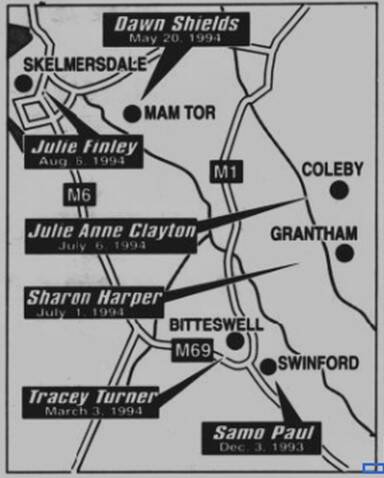
Image 13: a map printed in the Liverpool Echo of unsolved murders in the north-west of England
The earliest of the unsolved murders dated back to 1986, and a full analysis identified 72 cases where further investigation could be conducted, with advice and suggestions made to the relevant police forces for the next steps. Advances in DNA and fingerprint analysis were utilised to review evidence in many of the cases, and questionnaires relating to each case were completed and uploaded to computer databases to enable swift comparison of information.
The review continued for two years, but no developments emerged in the case of Julie Finley.
By the time September 1997 rolled around, there had been 20 arrests related to Julie Finley's case but all 20 people had been released without charge and there are very few details of these arrests available. The police had interviewed 3,800 people, taken 1,000 statements, assessed 2,000 vehicles and followed up 3,500 lines of enquiry. Despite many police hours being dedicated to the investigation, it seemed that they were no closer to finding who had murdered Julie Finley.
DCI Youell remained in charge of the investigation, and would persist in the hunt to find the culprit until he retired from the force. He had several theories on the case, and suspected that she had been killed in the vehicle which had been seen in the layby along the Rainford bypass. He said that it took half an hour to drive between the location where Julie was last seen - Pembroke Place - and where her body was left in the field near the Wheatsheaf pub. No motive has ever been established for the murder, and he suggested that it could have been a failed attempt at a sexual assault, some kind of revenge, or that perhaps she had tried to rip someone off for drugs - but he acknowledged that strangling someone would be a serious reaction to this. He theorised that her clothes may have been removed in an attempt to destroy evidence - but then why would someone leave them out in the open on a patch of wasteland? Many questions remained unanswered.
Detective Chief Inspector Youell passed away in June 2015 aged 68, having retired from the force without managing to solve one of the cases which he had dedicated so much time to.
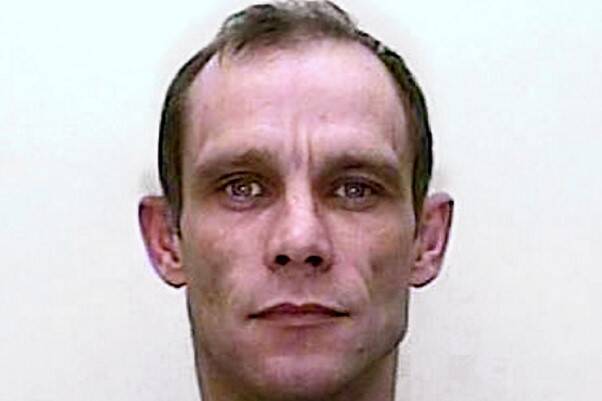
Image 14: Christopher Halliwell
In 2019, a witness reportedly approached the Mirror newspaper to provide the name of someone they suspected in the Julie Finley case - and it's a name we've mentioned in an Undiscovered case previously.
The witness reported that Christopher Halliwell, the taxi driver imprisoned for the murders of Becky Godden-Edwards and Sian O'Callaghan in Swindon, had been staying in Aughton - just four miles from where Julie's body was found - from Monday to Friday in 1994. He had been working as a window cleaner at the time and would return to Swindon at weekends, with the male witness describing that Halliwell would have been driving a 1986 D-registration Ford Transit van.
This, combined with the report from Tina who claimed that Julie had been going to meet a taxi driver on the night of 5th August 1994, gave the Mirror enough ammunition to start their own investigation into his movements. They looked at multiple unsolved murders of women and where Halliwell was living at the time, especially identifying victims who had been alone when they disappeared and who had been left in rural areas after their deaths.
Julie's mum, Patricia, implored the police to look into Halliwell as a possible suspect. They commenced a review of him in 2020, but no updates have been received since. As we mentioned when previously discussing this man, officers involved in the cases of Becky Godden-Edwards and Sian O'Callaghan are convinced that Halliwell had other victims, but so far no further arrests have been made.
It's not an unreasonable consideration that Halliwell could have been involved in the death of Julie Finley - Becky Godden-Edwards and Sian O'Callaghan were both abducted as single women out on their own late at night, and neither were subjected to sexual assault, with the motives for their murders remaining a mystery. Their bodies were left in rural areas - Becky's body was only located when Halliwell took police to the area where he had buried her. It does open some questions, though - if Halliwell was a window cleaner, why would Julie have told a friend that she was going to meet a taxi driver? Was he working two jobs at the time? And if he returned to Swindon at weekends, would he still have been in the Liverpool area late on a Friday night? How would he have managed to lure Julie into the van and drive her thirty minutes down the road? Would he have forced her into the van, or did she get in voluntarily for some reason?
This casefile took a while to put together, not just due to the amount of information available in the public domain, but because of the number of rabbit holes it's possible to be drawn down. I've tried to separate the red herrings from the facts to provide a clear line of events, but it's been very difficult due to the sheer number of newspaper articles and theories. Although police during the 1990s were convinced that Julie's case wasn't linked to any others, there's always the chance that a killer can change elements of the way they operate in a bid to throw authorities off their trail. Can we ever really say that cases aren't linked unless DNA categorically rules people out?
It's unclear if police have DNA in the case of Julie Finley. If they do have a profile on record, we can only assume that it doesn't match anyone on the DNA database otherwise an arrest would already have been made. If there is no DNA or physical evidence, what are the chances that Julie's case will ever be solved?
Julie's family deserve answers. Her mum is into her 80s now, and her dad passed away in 2019 without ever finding out what happened to his daughter. Her siblings have grown up and had to get on with their lives with the mystery of what happened to their sister hanging over them. People never forget their loved ones, and not knowing who killed her or why must hang over the family every day.
Julie was a much-loved daughter, sister and aunt. She had told her mum that she desperately wanted to be clean of her drug addiction and to make a life for herself - an opportunity which was taken from her. She deserved the chance to have a promising future, a career and perhaps a family.
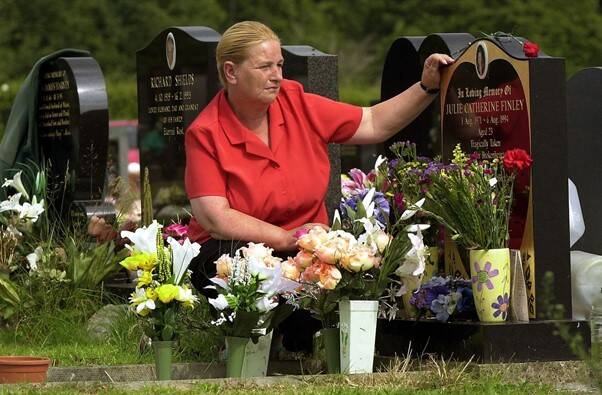
Image 15: Patricia Finley at her daughter's grave
The police have said that no murder case is ever truly closed, and that they will act on new evidence and information they receive, but this relies on people coming forward and speaking up if they saw something - even if it didn't seem significant at the time. The Finley family deserve answers. Julie deserves to rest in her grave with her killer behind bars. But most of all, she deserves to be remembered for the vibrant, loving character her family have described her as.
If you have any information about the murder of Julie Finley on 6th August 1994, please contact Merseyside Police via 101 or submit information on their website by following this link: Home | Merseyside Police
You can also contact Crimestoppers to submit a report anonymously by calling 0800 555 111 or by filling out there online form here: Giving information anonymously | Crimestoppers
References for text:
Julie Finley: Mother of 1994 murder victim 'wants justice' - BBC News
08 - Julie Finley - The Crime Portal
Serial Killer Link To Julie | Liverpool Echo | Monday 04 December 1995 | British Newspaper Archive
Julie Murder Clues | Liverpool Echo | Friday 03 November 1995 | British Newspaper Archive
Murder Hunt Large Weds | Liverpool Echo | Friday 09 December 1994 | British Newspaper Archive
BBC News | UK | Police to reopen 'Enigma' murders
Family Set The House | Liverpool Echo | Friday 20 January 1995 | British Newspaper Archive
I Have Murder Girl's Clothes | Liverpool Echo | Thursday 20 April 1995 | British Newspaper Archive
Julie Poster In Hunt Clue | Liverpool Echo | Friday 18 November 1994 | British Newspaper Archive
Fight To | Liverpool Echo | Friday 30 September 1994 | British Newspaper Archive
20] 4pm Update | Liverpool Echo | Monday 08 August 1994 | British Newspaper Archive
Stern Call To Kerb Crawlers | Liverpool Echo | Wednesday 10 August 1994 | British Newspaper Archive
Deadline Kw Kedi Mans | Liverpool Echo | Thursday 11 August 1994 | British Newspaper Archive
Suicide | Daily Express | Saturday 13 August 1994 | British Newspaper Archive
Murders Test Police Teams | Liverpool Echo | Monday 22 August 1994 | British Newspaper Archive
The | Liverpool Echo | Saturday 01 October 1994 | British Newspaper Archive
Killer begs 'forgive me' in suicide note | The Independent | The Independent
Murder of Céline Figard - Wikipedia
Credit for images:
Image 1 - Julie Finley: Julie Finley: Mother of 1994 murder victim 'wants justice' - BBC News
Image 2 - Julie aged 11: Murder victim Julie Finley - Liverpool Echo
Image 3 - Julie aged 11 pushing her cousin in a pram: Murder victim Julie Finley - Liverpool Echo
Image 4 - Julie with brother Tony and sister Sharon: Murder victim Julie Finley - Liverpool Echo
Image 5 - map showing the layby location: taken from Google Maps with endorsements by the author
Image 6 - the layby next to the field: How missing man who heard murder girl's screams could snare killer who dumped her naked body in carrot field
Image 7 - officers working at the crime scene: Fresh hope killer of woman, 23, will be brought to justice - Liverpool Echo
Image 8 - map of the layby in relation to Liverpool: taken from Google Maps with endorsements by the author
Image 9 - Julie Finley: Julie Finley: Mother of 1994 murder victim 'wants justice' - BBC News
Image 10 - DCI Youell: Mum of murder victim urges for monster Christopher Halliwell to be quizzed over 30 year mystery - The Mirror
Image 11 - Julie Finley's headstone: Murder victim Julie Finley - Liverpool Echo
Image 12 - e-fit of the hitchhiker: Mum of murder victim urges for monster Christopher Halliwell to be quizzed over 30 year mystery - The Mirror
Image 13 - map printed in the Liverpool Echo: 20] 4pm Update | Liverpool Echo | Monday 08 August 1994 | British Newspaper Archive
Image 14 - Christopher Halliwell: Mum of murder victim urges for monster Christopher Halliwell to be quizzed over 30 year mystery - The Mirror
Image 15 - Patricia Finley at her daughter's grave: Mum of murder victim urges for monster Christopher Halliwell to be quizzed over 30 year mystery - The Mirror
Add comment
Comments