

June and Royston Sheasby
You can now listen to this case on YouTube by clicking the link to the left, or find us on podcast platforms!
Disclaimer: this article contains details which may be upsetting for some readers. Discretion is advised.
In this casefile, we're heading back to 1957 and to the southwest city of Bristol.
Bristol sits on the southern bank of the River Severn, the large estuary which feeds into the Bristol Channel. If you were to swim along the Bristol Channel and travel west in a relatively straight line, you'd probably touch on the south coast of Ireland before heading into the North Atlantic ocean.
The River Avon flows through Bristol to the southwest side, and connections to the rest of the UK are excellent, with the M5 motorway (taking you south to Devon and Cornwall, or north to Birmingham) and the M4 motorway (taking you west across the Severn bridge into Wales, or east towards London) both touching on the outskirts of the city. It is a lively city, with Cribbs Causeway providing a range of shops, and a well-respected university making it an attractive destination for students. Despite the area being built up, water-side towns and villages are a stone's throw away, as is open countryside, with attractions such as Cheddar Gorge only a short drive from the city centre.
With all the positive things which can be said about the city, though, there is naturally a flip-side. Bristol has a number of unsolved murders dotted across its history, and in this post we're going to revisit the horrific disappearance and deaths of two young children - a case which remains unsolved more than six decades later.
This is the story of June Sheasby and her little brother, Royston Sheasby.
Bristol was in the middle of an early summer heatwave on 20th June 1957. People were making the most of the extended evening daylight by journeying to the rivers and beaches after working hours and over the weekends. Temperatures across the country were hitting highs of 35 degrees centigrade, and the month of June had more hours of sunshine than any previously recorded. The heatwave extended not only across the UK, but well into Europe and would be held responsible for hundreds of deaths.
Tucked away in Bristol's district of Stapleton was the home of the Sheasby family in Brockworth Crescent.

Image 1: Royston (left) and June (right)
Parents Jesse and Barbara lived with their three children, John (11), June (7) and Royston (5), with Jesse being employed as an iron moulder at a wage of £12 per week - just over £286 in todays money. It's not clear whether Barbara was employed, but it was very common for women at the time to be stay-at-home mothers, looking after the children and the household.

Image 2: June Sheasby, taken shortly before 20th June 1957
After school hours, June and Royston asked their mother if they could walk up the road to visit two ponies in a field at nearby Wickham Glen. It was very common for children during this era to go out on their own at such a young age - communities were more tight-knit than they often are today, and the sense of trust was considerably higher. My parents and grandparents thought nothing of going out on their own at that age - whether to play in the local park, or to pop to the shop on an errand - as long as they were home either by teatime or the time the streetlights came on, but I (a 90s baby) wouldn't be allowed out alone until I was over ten years old, not even to walk to the village school.
Barbara waved her two younger children off at around 5:30pm, and they were seen by their neighbour walking, hand in hand, towards Ham Lane at 5:35pm. A local 10-year-old boy, Roger Turton, would then see them at 6:30pm as they were watching the flowing river in a local park, but witnesses who could testify to the actions of the children in between these times were sparse.
At 7pm, when the children had still not returned, Barbara started to worry.
She had been decorating the house, and hadn't realised how time had crept on without the children coming home. Daylight was starting to fade - an indication to most young children that they should be returning home. She headed out into the lanes in the direction the two young ones had said they were going, but there was no sign of either of them. After more than two hours of fruitless searching, Barbara and Jesse called the police at 9:15pm.
The response was, thankfully, immediate. Police set out to search the area, with detailed descriptions of the missing children at hand. If the family were hoping that they had gotten lost or hurt, and that the search would be over quickly, they were disappointed. By the early hours of Saturday morning, there was still no trace of them, and the search party had been extended to over three hundred policemen and more than five thousand volunteers, including soldiers, scouts and local citizens. Word had spread quickly, and nearly everyone from the Stapleton area wanted to help - including children who went to the same school as June and Royston. With so many people involved, ten miles of fields, woodland and undergrowth was able to be covered, still with no sign of the siblings.
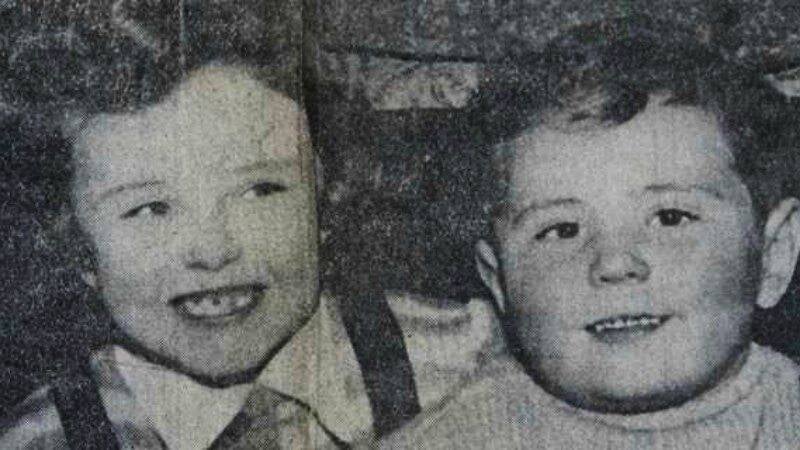
Image 3: June and Royston Sheasby
Sniffer dogs were brought in from neighbouring Dorset Police in a bid to track down the last movements of the children, but one officer commented: '"the scent is rather difficult to get now because it is old. The hot weather has not helped, either."' The children, by that time, had been missing for nearly 48 hours, having walked down paths which were used by local residents, dog-walkers and children on their way to school every day. Any hopes of picking up the scent of two individuals must have been slim, even for the powerful nostrils of a working dog.
Despite the difficulties, one of the dogs did lead their handler to Duchess Pond, a small area of water approximately a mile from the children's home. With nothing else, as yet, to go on, the police set about arranging divers from the Bristol Sub-Aqua Club to trawl through the water, but the clarity was such that the fire brigade were subsequently called on Saturday 22nd June to start pumping fluid from the pond to view anything which may be concealed in its depths. After the dogs had led the police to the pond, they were called off as the scent was deemed to be too old, with too many distractions for any clear indications.

Image 4: a photo of volunteers who turned out to help the search for the Sheasby children
A report came in from a member of the public that two children had been seen playing at an abandoned water mill at Frenchay, located along the River Frome, which flows through Bristol and further south into Dorset. This area was duly searched but drew no leads.
Jesse Sheasby, the father of the missing children, told the press: '"it is my firm belief that my children are not in this area at all. My own theory is that they have been abducted by someone, perhaps a neurotic woman who has lost a baby or who has never had children, and that they are safe and sound somewhere."'
I'm sure that the heart of every parent reading that newspaper statement went out to Jesse and Barbara - the hope for an innocent outcome from such horrific circumstances must have given them something to cling on to. The couple received a visit from clairvoyant Mr J. Beavis, from the Bristol district of Knowle, who recommended the family search a nearby quarry. It's unclear if any money exchanged hands as part of the tip-off, but a subsequent search of the quarry yielded no results.
On Tuesday 25th June, two newspaper offices in Bristol received copies of the same letter - something which transpired to be a ransom note. The note demanded £200 cash for the safe return of the children, reading:
'The children, June and Royston Sheasby, are alive and well at this moment. It is useless for police to continue searching. We hope they [the police divers] enjoyed their bath in the river. My brother and I took the children away on Thursday night and they will be returned unhurt on payment of £200. This must be left at the G.P.O. addressed to H.Rice, to be called for on Wednesday afternoon. My brother will collect it, but if he should be detained I shall kill the children after two hours from the time he leaves here. If he is allowed to leave, the children will be returned unhurt.'
The notes were handed directly to the police, who responded with some scepticism, instantly concerned that the letter was the work of a prankster hoping to make some money off the back of the misery of the family. However, they discreetly stationed officers outside of the post office where the letter requested the money be dropped off, but no-one appeared to make a collection. The identity of the letter-writer would eventually be discovered, proving it to be a woman who had no involvement with the case.
Eleven days after June and Royston went missing, Constable Derek Brough was rostered to patrol Snuff Mills Park for his night shift. Snuff Mills was named after a former employee at the mill, known as Snuffy Jack, and is a popular place to walk and cycle today. Police presence in the area had increased at all hours, both in hope that something unusual might be spotted, and to provide some peace of mind to the local residents.
As the sun started to set, Constable Brough's attention was caught by something pale sticking out from undergrowth in an area close to the river. As he stepped closer to investigate, he realised that the pale shape was a small human hand. The location was nearly 100 yards from the river running through the park, and in close proximity to Stapleton Mental Hospital. Heartbreakingly, the location was a mere 200 yards in a straight line from the Sheasby home.
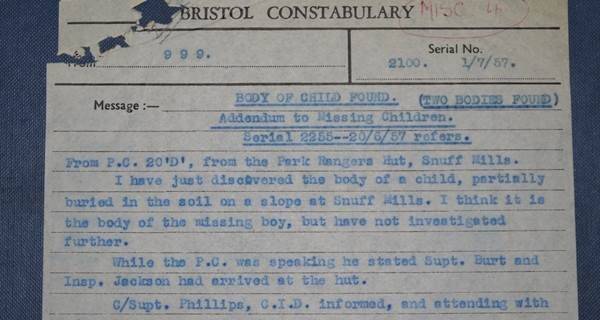
Image 5: The call handler record of the call made by Constable Brough to the station
Ensuring that he didn't disturb anything in the immediate area - which he now considered to be a crime scene - he contacted the station to raise the alarm.
Initial investigation of the scene found that the hand belonged to Royston Sheasby, who had been concealed in what transpired to be a shallow grave with a layer of undergrowth dragged across the top. He was initially thought to be buried in the grave alone, and officers were quickly drafted in during the gathering gloom in a bid to find June - although whether they were looking for a further body was unclear.
As work commenced carefully brushing dirt away from the figure of Royston, the body of his sister, June, came into view, placed beside her sibling, and the search of the surrounding area was, sadly, no longer required. Dr. A. C. Hunt, the pathologist called in to work on the case, had lighting installed around the area, and started collecting samples of soil from around the bodies to be sent for examination. Dr Hunt worked as part of the Home Office Forensic Science laboratory in Bristol, as well as lecturing forensic pathology at Bristol University, with a wealth of experience to bring to the case.

Image 6: Part of Snuff Mills Gardens, as seen today - a picturesque area which gives little away as to the horror discovered in 1957
On examination of the bodies at the scene, Royston was found to have very clear injuries to the head, but it was not immediately clear how June had died. She was found in the same clothes which she had gone missing, but the level of decomposition meant that it was impossible to tell if she had been sexually assaulted prior to her death. The police considered that, if June had been the target of an assault, it was possible that Royston had been killed as he shouted for help for his sister.
Police stayed at the scene well into the night, with Chief Constable Norman Frost still present at 1am, with the head of Bristol CID, Detective Chief Superintendent Melbourne Phillips. The body of Royston was removed in a small coffin at approximately 12:45am, and was escorted to the waiting mortuary van by four solemn police officers. The body of June remained in place overnight under police guard, waiting for the light of day for further examination to take place.
Image 7: a map with approximate locations of key sites in the investigation

The Investigation
By the time the sun rose the next morning, the media had already dubbed the two children 'the babes in the wood', a title which would be used the reference the case for many years to come (not to be confused with the 1986 murders of two girls in the Brighton area, a crime which was given the same title). The outcome left the family heartbroken, and deeply affected the local community. Parents stopped letting their children go outside to play after school or pop to the local shop, and many parents chose to escort their children to the school gates of Begbrook - the school which both June and Royston had attended - at the start of the day, and collect them at the end instead of letting them walk home with their friends.
On the 2nd July, the morning after the bodies of both children had been discovered, police held a press conference with Detective Chief Superintendent Phillips. The superintendent described to the press that the bodies were found laying side-by-side, hidden beneath a coating of soil and undergrowth. The discovery had been made after heavy rain on 30th June had dislodged enough soil for Royston's hand to become visible. He asked members of the public to come forward if they had seen anything on the 20th June which they felt was suspicious, such as anyone lingering by the river at the time the children had gone missing, or if they had information relating to the case which could help catch the killer.
Post-mortems were completed on the bodies of June and Royston, but the cause of death could not be ascertained for either child. After eleven days in a shallow grave, the level of decomposition made it impossible to obtain much information aside from the fact that each child had sustained significant injuries to the head. On the back of this, the police spent considerable time combing the area in search of any discarded implement which could have caused such injuries, collecting artefacts including a length of metal piping which was found near the body and sending them for analysis. This effort proved fruitless, though, when forensic investigation was unable to tie any of the items to the wounds inflicted on the children.
The two children were laid to rest on 9th July, just over a week after they had been discovered in Snuff Mill Park. Although details of the funeral were kept as quiet as possible, a crowd of one hundred local residents gathered outside the Sheasby home in the morning, accompanied by a number of police officers who had been helped the search effort. Twenty wreaths were laid out on the front lawn of the property, including two floral crosses composing of ferns, roses, carnations, dahlias and scabious. Cards were attached to each of the crosses, reading: 'From heartbroken Mummy and Daddy. Good night and God bless.'
A small service was taken by Reverend H. Sturdy, of Beechcroft Methodist Church, at the family home. The children had attended Sunday School at the Methodist Church, meaning that the service would have been conducted by someone who knew the children - a personal touch for the family. The children's coffins would be conveyed to what was then called Harry Stoke Cemetery in the Bristol district of Filton, where they would be laid to rest. A beautiful grey headstone would later be installed at the head of the grave as a memorial to the two young ones.
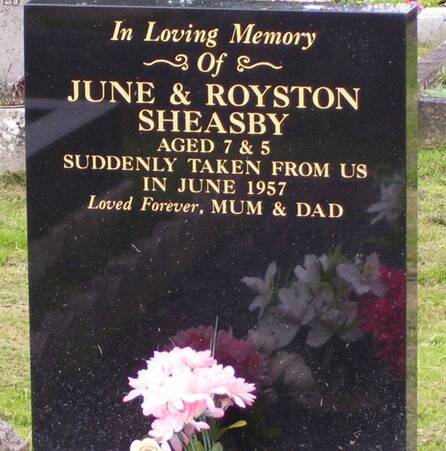
Image 8: June and Royston's memorial stone
Detective Chief Superintendent Phillips, who was present on the day of the funeral and was asked about the police presence, told the press: '"the type of person who could commit a murder of this kind might very well come along, if at all possible, to see the climax of his actions."' It is now well known that some culprits involved in the commission of crime like to return to the scene either before or after their crimes have been discovered. Some killers have been known to make frequent trips to the location where they have buried a body, or visit a crime scene which is bustling with police officers to see the impact that their actions have had. Many murder victims now have a subtle police presence at their funerals and at important occasions, such as annual memorials, to give police the opportunity to keep watch on the crowd for signs of anything suspicious.
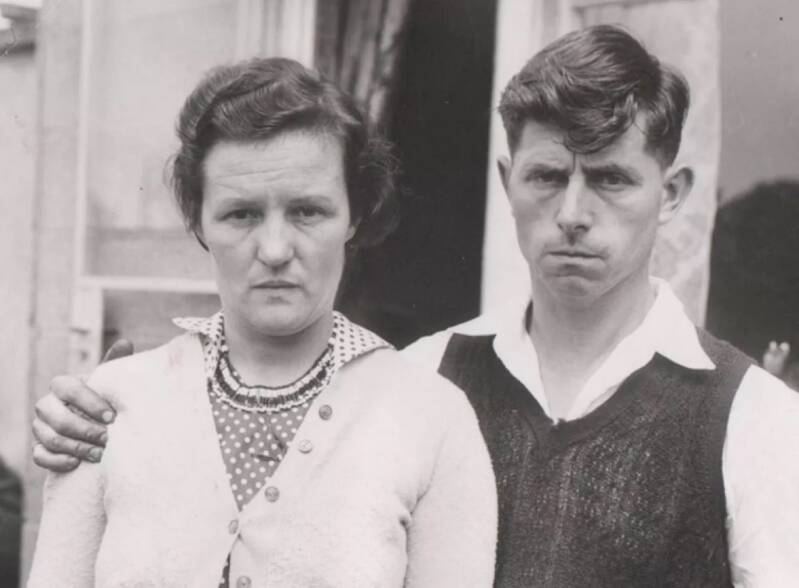
Image 9: Barbara and Jesse Sheasby, parents of June and Royston
During the later part of July, after their youngest children had been buried in their final resting place, the Sheasby parents and their remaining child, eleven-year-old John, travelled to Blackpool under the advice of Barbara's doctor for some much-needed respite. A fund had been started by the community of Stapleton to help support the family during the difficult time, and part of the money raised went towards paying for them to have a break away from the family home and the prying eyes of the press. Unfortunately, it appeared that not all media agencies afforded the family the same privacy as others, as an article soon appeared in a newspaper stating that the family were seen arriving in Blackpool on 21st July. The concept that the family had gone away for a break after such trauma, and to escape thoughts about their recently-deceased loved ones, yet have their every move reported on by journalists is something that could only add to the horrific despair they must have felt. Every family going through this experience deserves private time to grieve.
Just days after the discovery of the bodies, Scotland Yard in London received a letter which caused them to make contact with the police force in Bristol. The letter had originally been sent to the office of a newspaper in the English capital, but they handed it straight to the police headquarters after opening it. The postmark on the envelope indicated that the letter had been sent several hours before the bodies had been found, making the contents of the letter all the more concerning. The letter claimed that the two Sheasby children would not be found in the river - the location where the police had been searching before the bodies were found - but stated that they had been buried nearby. The letter was anonymous, but police had reason to believe that the writer was possibly German, or had spent extended time in Germany - although the reasons why they believed this are unknown. If the letter was handwritten, perhaps they picked up on characteristics of the handwriting, or phrases used by the author, but little other information has been published around this. I can only hazard a guess that the police put this letter, like the one received whilst the children were missing, down to a cruel hoax carried out by someone wanting to integrate themselves into the case.
During the week after the children had been discovered, the police took a Welshman into the station for questioning. Several of his friends had made a report to Monmouthshire Police, who in turn contacted Bristol Police, after he had made comments about having a 'vision' in which he saw the two children being murdered and buried. These comments were made several days before the bodies were found, giving police enough reason to bring the man in for an interview. He was picked up by police in Gloucester, several miles north of Bristol, after he was found to be absent from his property in Wales, and conveyed to the station in Bristol for questioning. He was released without any charges being filed.
Police took a great interest in a mental health facility near the area where the Sheasby children had been discovered. Whilst it would have surely been irresponsible not to complete some investigation into patients residing at the facility, I'd been keen to hear your opinions in the comments as to whether the amount of time they dedicated to this line of enquiry was appropriate, or whether they perhaps dedicated too much energy to this.
The group of hospital units were founded by a former prison chaplain, Reverend Harold Nelson Burden, along with his wife, Katherine, in 1909 as part of what they would call 'The Stoke Park Colony for Mentally Defective Children'. The couple had a history of founding establishments for those in society who needed extra support, having created the Royal Victoria Home for Women during the 1890s. They played pivotal roles in setting up reformatory homes for alcoholics after the Inebriates Act came into force in 1898, which demanded that convicted alcoholics should be confined to what were, effectively, rehabilitation centres.

Image 10: aerial view of Stoke Park Colony
As time went on, their focus turned towards those with learning disabilities, initially setting up a home in West Bromwich. When this venue reached residential capacity, they leased a venue on the outskirts of the sprawling Stoke Park estate, in Bristol, called the Dower House. The property sat on top of a hill, and was complete with foreboding looking turrets.

Image 11: The Dower House, now transformed into residential flats
They expanded this establishment by leasing more buildings across the estate, including a former chapel, a lodge, and residential buildings to create something similar to a small town, equipped with a laundry outhouse and a workshop. Over a number of years, hundreds of children with learning disabilities became residents.
Reverend Burden and his wife continued to expand the site, purchasing Leigh Court and Hanham Hall - both located in Bristol - with the buildings supporting those with mental health conditions and learning disabilities. By 1948, several years after the death of Reverend Burden, the Colony had transferred to the ownership of the NHS, who removed many of the outbuildings to make space for new houses around the estate. However, the Dower House remained as the centre of the new Stoke Park Hospital, housing mental health patients of all ages across a number of buildings, amounting to more than 1,500 in separate male and female units.
The police first made contact with the secretary of the management committee of Stoke Park Hospital, Mr J. L. Davis, within hours of the discovery of the children's bodies. Mr Davis was called in for a police interview, where the conversation lasted for nearly four hours. He told the police that the mental hospital, adjacent to Snuff Mill Park, housed five hundred male patients and seven hundred female patients, with two hundred of the male patients being allowed out on day release without direct supervision. This meant that they could leave the premises in the morning and visit shops, pubs, or cafes, or take a walk around the local area, provided they returned to the facility by 7:30pm each day. This is a practice which is still in place across mental health facilities today, and is an important part of supporting patient's progress and preparing them to return to the world outside of the hospital. It enables them to partake in elements of every day life, whilst still returning to the sanctuary of the hospital that they have been accustomed to as an inpatient. For some patients, they are granted leave for days at a time, with a date of return to the facility being agreed before they are granted leave. This may be for events such as Christmas, to enable them to spend precious time with their families before returning for ongoing treatment.
With this information in mind, police set about reviewing details of all staff and patients across the hospital and its attached units, looking at the history of each patient and records of their behaviours whilst admitted.
Police focused largely on the documentation of male patients with a known history of violent behaviour, looking at behaviour both before the patient was admitted to the facility, and their behaviour whilst an inpatient.
As soon as June and Royston's bodies had been discovered, the mental hospitals had been put into lockdown. All day leave was cancelled, as were visits from relatives, as well as social activities such as organised film nights. These arrangements would stay in place until Saturday 20th July, during which time the police would interview many of the inpatients under the support and supervision of doctors and nurses who worked on the units. Due to the mental health conditions of many of the people they were interviewing, the police received a number of false confessions, and would have needed to review the information provided in each one of these to assess whether they contained any credibility. The amount of time taken up by this would have been extraordinary, but necessary.
A 25-year-old male nurse was held for questioning for thirty-two hours until he could be eliminated from police enquiries. Upon his release, he voiced his concerns that he would be hounded out of Bristol by accusations that he was a child killer. In the 2010s and 2020s, 'trial by social media' can lead to many people receiving threats and harassing messages, even if they haven't done anything wrong. In the 1900s, people still faced similar challenges, but gossip passed through word-of-mouth in tight-knit communities. People who were accused of wrong-doing - even if it was unproven - were faced with abuse face-to-face in the street, in shops and at their place of work. In extreme circumstances, victims may find their homes under attack with spray paint or petrol bombs, so concerns about people finding out that you had been taken in for police questioning in a child murder case were very, very real.
Despite the lockdown being in place, a patient was able to escape from one of the hospitals just three hours after police had arrived to start questioning. The 40-year-old man climbed through a window on the third floor of the building before scaling a drainpipe to reach the fire escape stairway. From there, he disappeared across the hospital grounds and into the darkness. Police checked his personal effects, unearthing a handwritten letter addressed to Mr and Mrs Sheasby, as well as a newspaper cutting containing an article about June and Royston. The unnamed male would remain on the run for over a week, with police finally tracking him down and bringing him in for questioning on 10th July. However, he was able to be eliminated from enquiries, although no explanation was given to the media about the articles found in his personal possessions.
Several patients absconded from the collection of hospitals between 20th June, when the children went missing, and 1st July, when their bodies were found. Two patients were found on the day they went missing, with one being traced by a male nurse to a local pub, where he had purchased a pint. He returned peacefully to the hospital with the nurse - but only after being allowed to finish his drink.
Police took particular interest in locating an inpatient who was on the run from Purdown Mental Hospital. George Weston, originally from Portsmouth, had been transferred to the facility from Rampton Secure Hospital over a decade prior to the children's deaths. Rampton is one of three high-security hospitals across England - the other two being Ashworth Hospital in Merseyside, and the notorious Broadmoor Hospital, in Berkshire. Most patients are sent to these facilities via the criminal justice system, but the interior of the buildings relates much more to a hospital than a prison, and is developed to facilitate therapy and treatment in a secure and safe environment. Broadmoor has housed a series of high-profile names, such as Peter Sutcliffe (the Yorkshire Ripper), Ronnie Kray, and twins June and Jennifer Gibbons. Rampton has also played host to a variety of notorious criminals, including serial child killer Beverley Allitt.

Image 12: Purdown Mental Hospital, located in Stapleton Grove
The police appealed for assistance finding the man, who was described as 43-years-old, 5ft 4in tall, with dark, balding hair and, notably, two fingers missing from his left hand. Although he wasn't linked to the case of the children, DCS Phillips said: '"he may be able to help with our enquiries."' However, he was quick to add: '"people are on the run from mental hospitals all the time, and it is not fair to point the finger of suspicion at them unless we have something definite to work on."' No further information was released about this patient.
On 16th July, an elderly patient was interviewed at length by police. He was regularly allowed out on day passes, and would spend his time wandering by the river, singing to himself and telling stories, and was affectionately known as 'the Storyteller' by locals. He enjoyed spending his free time sat by the river, and would tell stories to the passing children about the Wild West's Davy Crockett, as well as Swiss hero William Tell. On the day the children went missing, he had been seen down by the river, sitting on a log until 7:30pm. From here, he had gone back to the hospital for dinner before going for another walk and checking back into the facility at 9pm. Although he was kept in overnight for questioning by police, he was ultimately found to be a harmless elderly man who genuinely cared about the younger generation, and enjoyed telling lively stories to enthusiastic listeners.
Witnesses recalled on the day the children went missing that a man in a blue suit had been seen in the vicinity of the river. This blue suit was reportedly found later in the outhouse of the hospital, and was sent for forensic evaluation. Police were very keen to identify the person who had worn the suit, but despite interviewing more than 25,000 people and documenting 2,000 statements, they were never able to find its owner. If the suit had been discarded in the grounds of the hospital, it's natural to assume that the owner was a patient there. But - depending on the security level of the facility - it may be possible that someone discarded the clothing on their way past the site, thinking it a reasonable way to implicate a patient of the facility. No information on whether blood was found on the suit was released, as far as I can see, so it's possible that the 'man in the blue suit' wasn't even linked to the deaths of June and Royston - after all, one can assume that the culprit who beat both children around the head would have received significant blood splatter on whatever they were wearing.
Despite the extensive investigations across the mental health hospitals in the area, no charges were brought against any of the patients. Although over 2,000 homes had been visited as part of house-to-house enquiries, no leads opened up.
As investigations started to slow, DCS Phillips made another plea via the media for anyone with information to come forward. As the children had disappeared in the midst of a heatwave, police were convinced that more people had been in the area around the river on 20th June, and that there were potential witnesses to what had happened who were yet to approach police. He said: '"our only interest is in the murder inquiry. We are not concerned with people's personal reasons for being in this area that night, and their confidence will be respected."' Police were trying to encourage people to approach them with information, even if they had been in the area for romantic meetings or questionable activities during the hours of darkness. The promise that their personal activities wouldn't be publicised or made common knowledge may have encouraged people to come forward, even if they'd been too worried to do so previously.

Image 13: Dr Williams
The investigation would, ultimately, go cold, with the next significant activity occurring several years later.
In August of 1964, psychiatrist Dr Williams spoke at the International Psychotherapy Conference in London. During his address to the audience, he spoke about a patient he had seen several years ago who had confessed to the murder of two children, noting specifically that it had been a girl and a boy. The murders of the Sheasby children were the only ones matching the description at the time.
Naturally, when word of Dr William's presentation reached Bristol Police, their ears pricked up and they made attempts to get in touch with the psychiatrist to arrange an interview. Assistant Chief Constable, Aubrey Burt, even wrote to the doctor in person to ask for further details. However, any hopes that the police had that the case may finally be gaining some steam were short lived.
Dr Williams declined to give any further details of either the patient or the murder victims, reasoning that he had a professional confidence with the patient to maintain. He likened his position to that of a priest who had received confession, and refused to talk further with officers. The patient was never identified, never questioned, and never charged with an offence. He passed away, with Dr Williams stating his own belief that the patient had been driven to the grave by his own conscience.
This is, unfortunately, where the case has stayed for more than six decades. No suspects have been identified, and the case remains unsolved. Detective Sergeant Pete Frank, working in the major crime review team, spoke to Bristol 24/7: '"sixty years doesn't diminish the tragedy. The killing of two children is a horrific event, and the memories will be long lasting for anyone who was living in Bristol at the time. Over the years, we've spoken to thousands of people and taken more than 2,000 statements but no conclusive evidence has been found proving who carried out this heinous act. We have lots of original documents from the initial police investigation, including scene photos, house-to-house inquiry logs, original index files, correspondence from the public and an original map showing the movements of the Sheasby children on the evening they went missing. But sadly, the key piece of evidence missing is DNA. You never give up hope of a breakthrough, but we have to be realistic. The chances of a murder case being solved after 60 years is minimal. Solving a case this old without any DNA evidence is very unlikely."'
The resolution of so many of today's cases hinges on DNA evidence and forensics. Even with the extraordinary developments over the years, if DNA couldn't be obtained from the children's bodies or clothing at the time, there is no hope of any further technology developments solving this crime. It's unclear if the police still have the clothes of the Sheasby children in the evidence room - if so, could it be possible somewhere in the future that tiny fragments from these could hold the key?
With the crime being committed more than sixty years ago, it's highly likely that the culprit has passed away, unless they were in their teens or early twenties at the time of the murders, and the likelihood of anyone being put behind bars for the murders of these two small children is remote. Jesse, Barbara and John Sheasby seemed to be able to maintain private lives after the death of June and Royston - I hope that they were given the space and the support that they needed. Grief has no time schedule - such trauma is likely to have affected the family for many, many years, and would have surely been made all the more painful by the fact that no-one was brought to justice.
What are your thoughts on this case? Do you think that police spent too much time focusing on the mental hospitals, or do you think that the killer could have been hidden inside the walls of one of the facilities? The horror of two small children being murdered on a warm day in June, just metres from their front door, will likely still haunt many in the area of Stapleton to this day, but the children will never be forgotten.
If you have any information about the murders of June and Royston Sheasby in June 1957, please contact Bristol Police. Submissions can be made online by following the link below:
References for text:
June and Royston Sheasby – Crime Immemorial
'The unsolved murders of two Bristol children is still a tragedy 60 years on'
June and Royston Sheasby. | Birmingham Daily Post | Tuesday 02 July 1957 | British Newspaper Archive
By Cyril Wain | Daily News (London) | Saturday 14 September 1957 | British Newspaper Archive
Babes 'Ransom' Note By Ned Grant | Daily Mirror | Saturday 29 June 1957 | British Newspaper Archive
Mill Search For Children | Daily Express | Thursday 27 June 1957 | British Newspaper Archive
| | Belfast News-Letter | Wednesday 10 July 1957 | British Newspaper Archive
Babes: Police Seek Man | Daily News (London) | Thursday 04 July 1957 | British Newspaper Archive
They Just Would Not Say Die | Daily Express | Wednesday 03 July 1957 | British Newspaper Archive
Nightmare Hunt For Killer | Daily Express | Friday 05 July 1957 | British Newspaper Archive
Rent Controls | Birmingham Daily Post | Thursday 18 July 1957 | British Newspaper Archive
He Went —for His | Daily Mirror | Friday 05 July 1957 | British Newspaper Archive
'The unsolved murders of two Bristol children is still a tragedy 60 years on'
Rampton Secure Hospital - Wikipedia
Bristol 'Babes in the Woods' murder has been unsolved for 60 years | Bristol Live
Stoke Park Hospital - Wikipedia
MF0063 Snuff Mills | Bristol image
Stoke Park Colony for Mentally Defective Children, Bristol, Gloucestershire
Credit for images:
Image 1 - June and Royston Sheasby: June and Royston Sheasby – Crime Immemorial
Image 2 - June Sheasby, taken shortly before 20th June 1957: Photos of June Sheasby - Find a Grave Memorial
Image 3 - June and Royston Sheasby: Photos of June Sheasby - Find a Grave Memorial
Image 4 - volunteers at the search: 'The unsolved murders of two Bristol children is still a tragedy 60 years on'
Image 5 - Call handler record card: 'The unsolved murders of two Bristol children is still a tragedy 60 years on'
Image 6 - Snuff Mills Gardens: The Local's Guide: Fishponds - VisitBristol.co.uk
Image 7 - map of important locations in the investigation: Google Maps
Image 8 - June and Royston's memorial stone: Photos of June Sheasby - Find a Grave Memorial
Image 9 - Jesse and Barbara Sheasby: Bristol 'Babes in the Woods' murder has been unsolved for 60 years | Bristol Live
Image 10 - aerial view of Stoke Park Colony: eaw005367 ENGLAND (1947). The Stoke Park Colony (Stoke Park Hospital) including the Dower House, Stoke Gifford, 1947 | Britain From Above
Image 11 - The Dower House (cropped to show house only): The Dower House, Stoke Park, Bristol, England arp - Stoke Park Hospital - Wikipedia

Image 12 - Purdown Mental Hospital: Purdown Hospital, Stapleton Grove, Bell Hill, Bristol | Educational Images | Historic England
Image 13 - Dr Williams: Dr Arthur Williams: Psychiatrist and psychoanalyst noted for his work with offenders | The Independent | The Independent
Add comment
Comments