

Shelley Morgan
This case is available to listen to on YouTube by clicking the icon on the left. Also available on podcast platforms!
Disclaimer: this article contains details which may be upsetting for some readers. Discretion is advised.
We're travelling back to Bristol for this casefile to review the unsolved murder of a loving, and much-loved, mother, wife, sister and daughter. The case is still cold forty years on, with no-one being convicted and brought to justice for the offence. Police renewed appeals for information in 2019 and 2024, on the 35th and 40th anniversaries respectively, in the hopes that someone who was perhaps unable to come forward with information in the 1980s may now be able to speak with police. No new updates have been released since 2024, and the victim's heartbroken family still at a loss for answers.
This is the case of Shelley Morgan.
Shelley Cameron Morgan was born in 1951 in the US state of Iowa, and would become the oldest child of Frederick and Leona Brian. Frederick was an art teacher, and it was clear from an early age that Shelley had inherited a number of his creative talents. She would make beautiful dolls and stuffed toys by hand, and, as she grew up, developed into designing and making her own clothes. It became clear that she wasn't just creatively gifted - she learned to talk some time before others the same age, and faired very well academically once she started school.
If her peers thought that her love for design and tailoring might be a phase, they were proved wrong when Shelley joined the theatre department of her high school and was given the responsibility of designing and making costumes for the stage. Although she had toyed with thoughts of a career in acting, the experience in the theatre department turned her sights to training in the design industry.
At the age of 17, she travelled abroad as part of the American Field Service foreign exchange program, staying with a family in Japan over the summer. Although she would return to the States to start a university degree in theatre arts, Shelley had caught the travelling bug. In her second year, she was given the opportunity to visit Rome, Italy, to work in the costume department at an opera house. Shelley was thrilled and, whilst still in Rome, started looking for other job opportunities across Europe. Once her placement finished, she moved to Spolleto, Italy, spending May and June of 1972 looking after the costumes at a festival. Italians adore their festivals and celebrations, and their costumes generally reflect the eccentricity, flamboyance, and flair that their events incorporate.

Image 1: Shelley Morgan
In July 1972, Shelley moved on from Spolleto and made her way across parts of Europe, soaking up the culture and enjoying the experiences each new place offered. She ultimately made her way across the English Channel to London, from where she travelled north to Liverpool with the aim of crossing the Irish Sea to spend some time in Dublin. However, her attention was captured by a job advert with the Liverpool Playhouse theatre company as their wardrobe manager. She applied and was quickly accepted. Shelley was later interviewed by the Liverpool Daily Post about her job working with costumes, and would joke that she did eventually make it to Dublin - but only for a two-day visit. At the time of the interview, she was living in a flat in Mount Pleasant, and told the press: '"I hope I'm staying here. The people are incredibly friendly and sometimes I forget I'm not back home in the States. And this is a good theatre. It's a long time since I've felt like this about a theatre. It's a happy place."'
Many years down the line, in a victim impact statement, Shelley's family would talk about her love for work, describing her as a woman with the ability to make order out of chaos. Shelley loved to work as part of a team, thrived off the pressure of meeting deadlines, and gained great satisfaction out of watching all pieces of a project come together.
It was whilst working at the Liverpool Playhouse that Shelley Brian met Nigel Morgan. They married shortly after, and had their first child - a son, Liam. Whilst Liam was still small, the couple made the decision to move to Nigel's native Wales. They bought a cottage in the peaceful area of Brecon (the area which Nigel was originally from), and would have their daughter, Charlotte, not long after relocating. Shelley took time out of work to be a full-time mum to the couple's children, something which also enabled her to pick up on early signs of a developmental disorder in Liam.
Despite their love for the Welsh countryside, the couple acknowledged that the services in rural Wales at the time simply weren't set up to provide Liam with the kind of support and education that he would require, and they made the decision to move across the Severn bridge to the English city of Bristol. Once both children were enrolled in, and had started, school, Shelley found herself craving a return to the working environment and - especially - the design industry. Keen to finish her degree, she enrolled in art classes at Bristol Polytechnic Art College and started building a portfolio of work to put towards a university application. With her talents plain to see, she was commissioned to paint three Bristol scenes as part of a series. At the time of her disappearance, she had completed two pieces - a street scene including Bollom Dry Cleaners, and a scene of Bordeaux Quay in Bristol Harbour. The third piece would, sadly, never be finished.
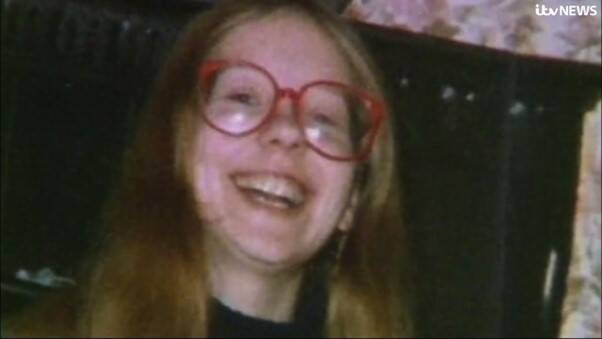
Image 2: Shelley Morgan (colour photo showing Shelley's red-framed glasses)
The Disappearance

Image 3: Shelley Morgan pictured with her two children
The morning of 11th June 1984 began in a completely normal manner for the Morgan family. Nigel was away from the Bristol family home, having returned to the family's Brecon cottage to run some repairs and maintenance before it was marketed for sale. Whilst he was away, he was sending regular envelopes of money to the Royal Mail sorting office for Shelley to collect and put towards the bills for their new home. Shelley woke Liam and Charlotte and got the pair ready for school, with the trio leaving the family home at 67, Dunkerry Road, in the Bristol district of Bedminster, at 8:30am. Shelley was carrying a home-made carpet bag which, although made from a pattern and not designed herself, had been created using various bits of material from the Morgan family home. The bag contained sketching materials, and an Olympus OM20 camera. She told her children that she was planning to go and take some photos and sketch - likely to add new material to her portfolio ahead of applying to university.

Image 4: a map showing the approximate locations where Shelley dropped her children off on the morning school run
The family walked towards the junction of Brendon Road with Dunford Road and Cotswold Road. Here, Shelley left Charlotte in the care of a trusted female adult who would take the youngest Morgan child to school.
Shelley and Liam continued towards St John's Lane, where Shelley would watch Liam board the Bugler's Company bus at 8:35am which would take him to school. Although I can't find information about why the children went to separate schools, it's reasonable to assume that Liam was attending a school specific to his needs - hence why the family had moved to the area. As you can see from the map, the locations which formed the morning school run were all quite close together and within easy walking distance from the family home.
Later that same afternoon, the police were alerted when Shelley failed to collect Liam and Charlotte from school. Shelley was known as a very reliable and responsible parent and person, and not turning up to collect her children was extremely out of character. Although consideration was given, as is often the case with any missing person, to Shelley having perhaps gone somewhere voluntarily - such as running away with a new partner - one of her friends was quick to quell this line of thinking, saying to the Bristol Evening Post: '"she's a very capable and caring mother, and a cheerful person with no worries. Shelley took the children to school and home again every day. She is not the sort of person to go off."'
Due to the lack of mobile phones in the 1980s, and the rural location in which Nigel was staying at the time, getting hold of Shelley's husband took much longer than it likely would today. Once he heard the news, he rushed back to the family property in Bristol to look after their children and to aid police in their enquiries. Shelley was officially registered as a missing person at approximately 7:30pm on the same day that she went missing.
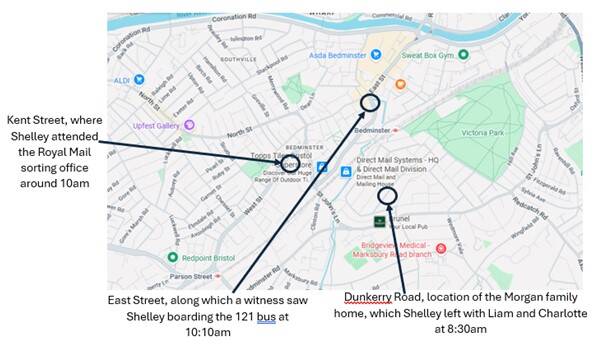
Image 5: a map showing the approximate locations where Shelley was seen after dropping her children off on the school run
The team of police detectives involved in the search for the missing mother expanded to include eighty people in the days after Shelley went missing, with an incident room being set up in Nailsea for officers to work out of. Over two hundred posters were put up in Bristol and the surrounding areas, giving a description of Shelley and asking for anyone with information to come forward. With some eyewitnesses coming forward, police were able to establish a sparse timeline of Shelley's potential movements until around midday.
After Shelley waved Liam off on the school bus at 8:35am, her movements until 10am remain, to this day, unknown. However, she was known to have then attended the Royal Mail sorting office in Kent Street, Bedminster, somewhere between 10am and 11am to collect the weekly envelope of money from Nigel in Wales. The envelope was reported to contain £35, amounting to approximately £96 today.
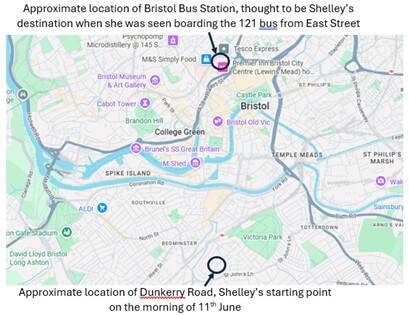
Image 6: map showing the approximate locations of Dunkerry Road and Bristol bus station
A witness who recognised Shelley from her distinctive spectacles reported to police that they had seen her boarding the number 121 bus in East Street, Bedminster, at 10:10am. Provided Shelley stayed on the bus until the end of the route - something which was thought to be probable - she would have arrived at Bristol bus station at 11am. It's likely that Bristol bus station was estimated to be her intended destination from East Street based on the places that Shelley would have hoped to go sketching and taking photographs - the bus station would have been a hub to help her reach a wide range of locations outside of the city.
By the time the summer came to a close, there was still no sign of Shelley Morgan. Inspector Martyn Shell spoke to the media in late August, saying: '"it seems she's joined the 18,000 people who go missing in this country every year. We are always hopeful of tracing people."'
Police staged a reconstruction which was shown on BBC's Crimewatch in September 1984. As well as bringing some clarity of her movements up until Shelley boarded the number 121 bus, which hadn't been fully released to the public until that point, it also instigated a telephone call from an anonymous male. The call was received in the police call centre on Monday 24th September at 7:18pm from a man with a Bristolian accent. He informed police that the investigation would turn into a murder inquiry, and that Shelley's body could be found in a 'watery grave'. He described a stretch of water in Hanham River, at the bottom of Conham Hill, but was unable to give police an exact location.
With no other leads to work on, police deployed divers to the area. The search continued for nineteen days before divers were withdrawn, with the call being deemed a hoax.
The search took a turn when a call was received stating that someone matching Shelley's description had been seen boarding the ferry from Weymouth to the Channel Islands. This information was passed to police on the Channel Islands, but no information relating to Shelley was found on either Jersey or Guernsey.
The Discovery
Four months had passed since Shelley's mysterious disappearance - and only 48 hours had elapsed from the underwater search being called off - when, on Sunday 14th October 1984, a telephone call was made to Avon and Somerset Police.
Children playing in a wooded copse at Watercatch Farm, off Long Lane, Backwell, stumbled across the severely decomposed, nearly skeletal remains of a woman. The body was lying, face-down, on the ground, with no clothes visible except for a pair of torn tights twisted around the ankles.

Image 7 (left): map displaying the approximate locations of Dunkerry Road and Long Lane, Backwell
Image 8 (right): satellite image of the approximate locations of Watercatch Farm and the road-side wooded copse where Shelley's body was discovered

Police attended immediately, sealing off the area and declaring it a crime scene. Nearby the body, a pair of sandals were found discarded in undergrowth, but no other personal effects were discovered in the area.
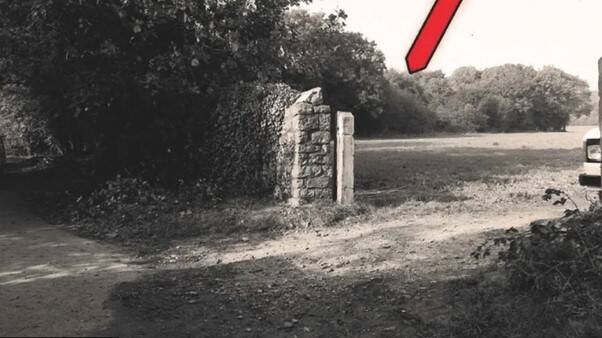
Image 9: a photo of the wooded copse where Shelley's body was discovered (indicated with an arrow), taken from the turning into Watercatch Farm from Long Lane
Although police were surely considering that it could be the remains of missing Shelley Morgan, the level of decomposition was such that dental records needed to be used to positively identify the mum of two. Despite police being convinced that the attack was sexually motivated due to her body being found naked, the length of time which had elapsed since her death meant that no evidence could be recovered to prove this suspicion. A post-mortem was conducted, revealing that Shelley had been stabbed in the back fourteen times. It was highly likely that she had died on the day of her disappearance, with her body remaining undiscovered since 11th June 1984 - a thought that would have added further trauma to her devastated family.
Shelley's husband, Nigel, had remained largely silent in the face of the press since his wife had disappeared - perhaps at a loss of things to say, or overwhelmed by the sudden intrusion into what had been a stable and, by all accounts, happy family life. He had stopped working and taken the couple's two children back across the River Severn to their former home in Wales, protecting them from the glaring eyes of the media, and the disruption of police searching their Bristol home. His time became devoted to caring for Liam and Charlotte, putting his faith and trust in the hands of the police force to track down his missing wife.
Nigel broke his silence after the discovery of Shelley's body, telling the press: '"I am doing my best to help the police, but it really is up to the public... I am very anxious that anyone who can help the police should do so."' Remember, at the time that Shelley vanished, Nigel was at their property in Wales completing works to prepare their Brecon property to be put on the market. Police must have been able to confirm his alibi rapidly, as he was never considered a suspect in the case.

Image 10: photo from outside the wooded copse with police tape visible
Nigel never remarried after the devastating loss of Shelley. He remained living in Wales until he died many years later from cancer, having been cared for at home throughout the latter stages of the illness by the couple's daughter.

Image 11: photo from outside the wooded copse
Shelley's parents, Frederick and Leona, made the 4,000 mile trip from their home in Iowa, USA, on 17th October and met with police on the 18th to give as much information about Shelley's background as they were able. I'm unsure if they had spoken to police before this time - it feels like some of this information would have been pertinent to the case at the time that Shelley had disappeared, especially if police were trying to establish if she had left voluntarily with a person, or persons, unknown. Speaking to the press in the murder squad incident room at Nailsea, Shelley's father, Frederick, said: '"ironically, we were always very happy about her living in England. We always thought she would be safe here. England is much less violent than the United States and we never expected anything like this to happen to her. It has been pure unmitigated hell for my wife and I."' Shelley's parents had last seen the Morgan family, including Liam and Charlotte, when they visited England for Christmas 1983.
Shelley's funeral was held in the Cathedral of St. John the Evangelist in Brecon, and was followed by interment. A headstone was erected, simply reading: 'Shelley Cameron Brian Morgan 2-2-1950 - 11-6-1984'. As the Morgan family had only moved to Bristol from Brecon in the spring of 1984, with Nigel and the children moving back to the Welsh countryside after Shelley's death, it seems fitting that her final resting place should be near the family to whom she was so devoted.
The Investigation
With Shelley's remains being found in such a rural location, information was hard to come by. Her body had lay, undiscovered, for such a long time that it went without saying that the area in which she'd been disposed was far from prying eyes, or even an intrepid dog-walker. Police reached out to BBC's Crimewatch UK television program for help, and a reconstruction of Shelley's last known movements was shown to the nation on Tuesday 6th November 1984. The outfit that Shelley had been wearing - a scarlet-coloured top, white skirt, maroon-coloured tights and her signature large red-rimmed glasses - was meticulously recreated. The police even went so far as to arrange a replica of the carpet bag she had been carrying. This was made by Shelley's mum, Leona, to the same pattern that Shelley had used, and with materials obtained from her daughter's home in Bristol to give as close a likeness as possible. The bag was made to be hung over the shoulder rather than carried like a briefcase, leaving both hands free - convenient for Shelley if she had been holding the hands of both children whilst walking them to school.

Image 12: the recreation of Shelley's carpet bag used for the Crimewatch UK episode, made to the same pattern and with materials from Shelley's house by her mother, Leona
As a result of the screening, more than 120 calls were received by the Crimewatch UK hotline which helped police to piece together a better picture of Shelley's journey on the morning of 11th June.
After the mum-of-two had waved Liam off on his school bus at 8:35am, as we mentioned above, her movements are unknown. At the time, CCTV cameras weren't installed on every street corner and police therefore had to work on information obtained through routes such as public feedback. We then know that she was seen at the Royal Mail sorting office. After leaving the sorting office, Shelley's movements are, again, uncertain, and little information was forthcoming from the calls to Crimewatch UK to fill this period of time.
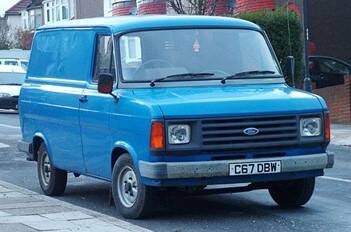
Image 13: an example of a blue Ford Transit van from the 1980s
Just before Christmas 1984, on Thursday 20th December, Crimewatch UK provided a program update which included the new information provided to police after the November episode, in a bid to fill in some of the gaps which remained in the timeline. More calls came into the centre, including from a witness who reported seeing an American woman on the 354 bus on 11th June. This bus travelled in the direction of Nailsea, but would have driven through the village of Backwell en route. The person described by the caller had disembarked at 11:15am in Long Ashton (see on the map in image 14 on the main road between Bedminster and Backwell). Whilst the bus had been dropping passengers at the bus stop near the entrance to Ashton Court, a royal-blue Ford Transit van had pulled up behind the coach.
The driver had reportedly called out of the window, beckoning to Shelley, who approached the vehicle. The caller described the van driver as male and wearing a white t-shirt, and got the impression that he was asking for directions. Police, thinking it possible that the driver may have offered Shelley a lift, made multiple appeals for the man to come forward, but all proved fruitless.
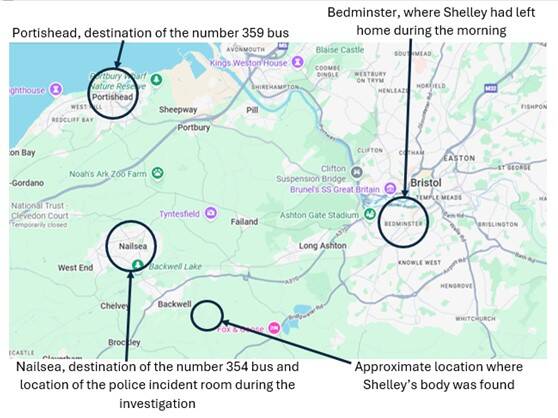
Image 14: map depicting Shelley's starting point (Bedminster), the location her body was found, and the destinations of each of the buses which witnesses stated they saw Shelley on
Another call which came in from the public after the Crimewatch UK update was aired stated that Shelley had been seen boarding the number 359 bus instead of the 354. This bus would have taken her in the direction of Portishead, instead of Nailsea. Due to her aim to sketch and take photos during the day, it's likely that Shelley planned to disembark the bus at a more rural location along her chosen bus route, and did not plan to stay on the bus until it reached it's destination.
After police had time to study the information from the calls which had been made to the Crimewatch UK hotline, they released appeals for the drivers of a number of vehicles, or witnesses who had seen the vehicles on 11th June, to contact police. As well as the repeated appeals to the driver of the blue van, police asked to speak to the driver of a yellow lorry which had been seen in the Backwell area. Also of interest were the occupants of a two-tone BMW, seen on the road between Bristol and Portishead on 11th June at approximately 12:20pm. Witnesses described the driver as a black male with dreadlocks, with a white male in the passenger seat and potentially a third passenger in the back, although details of their appearance were scarce.
Despite the requests from police for further information, by March 1985 the incident room at Nailsea was closed down as the case met a dead end, with many of the detectives reassigned to other duties, leaving only six officers active on the case.
Police would continue to chip away at trickles of information over the next few years, but no significant action occurred until January 1987, when the press were informed that a 34-year-old lorry driver from Ashton, Bristol, had been arrested on suspicion of the murder of Shelley Morgan and the murder of 17-year-old Melanie Road in the Lansdowne district of Bristol's neighbouring city of Bath. The lorry driver would be released without charge, but it was the first time that Shelley's murder was linked to another case. It wouldn't, however, be the last.
Melanie Road was a 17-year-old in the middle of her A-level exams, and hoping to embark on a university course in just a few months time. Her death on 9th June 1984 marked the start of a prolonged campaign by Avon and Somerset police to trace a vicious killer.
Melanie's case was reviewed by a team of cold case detectives in 2014 - something which would ultimately lead to a killer being put behind bars. The lead detective in the team, Julie Mackay, was convinced that the culprit was responsible for other deaths, with Shelley's being named amongst them.
Possible Links
Melanie Road
As far as official reports go, the case of Melanie Road has never been formally linked to that of Shelley Morgan, but Julie Mackay's suspicions following her years as a cold case detective in the region have given me reason to include it here.
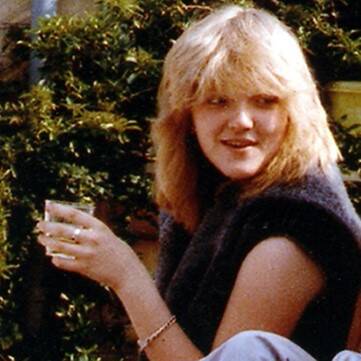
Image 15: Melanie Road
Melanie Roads lived in the family home at the time of her death in June 1984. She had been only months from starting a university course, with hopes of becoming an archaeologist. Photos of her in various newspaper articles show a beautiful young woman with her whole life ahead of her. For many, university is the window to adult life - experiencing their first time away from home and the protection of their parents. Her mother, Jean, would tell the podcast Catching Melanie's Killer that Melanie'"made herself welcome wherever she went"', describing her daughter as popular and intelligent, and a person who would never argue with anyone. In fact, Melanie excelled academically and socially, achieved A-grades in multiple subjects, and was deputy head girl at her school.
During the evening of 8th June 1984, Melanie joined friends and her boyfriend at the Beau Nash nightclub, having some down-time before the start of their A-level exams. The venue, previously on Kingston Road in Bath, no longer exists, with the whole road having been built over as part of the SouthGate development.
The last confirmed sighting of Melanie was around 1:30am, when she parted cheerfully with the group in Broad Street. Despite her friends insisting that they call Melanie a taxi to take her home, she decided to make the 20-minute journey by foot back to her home in St Stephen's Close, Lansdowne, as she had many times before. Despite the relative safety of the area, this was a decision that would surely be a cause of much distress and rumination for her friends in years to come. The first part of her walk from Broad Street went through parts of the city centre, still busy with people leaving clubs and making their own journeys home, but she soon headed into residential areas where the odd passer-by was few and far between. Melanie wasn't seen alive again.

Image 16: Melanie Road
It 5:30am on Saturday 9th June, the local milkman was going about his rounds before the general population woke and started their day. Due to the lack of school on weekends, he had his 10-year-old son in tow as he delivered orders to properties in his allocated area.

Image 17: Melanie Road
The early hour meant that the pair were the first to stumble across a trail of blood, leading from St Stephen's Road into St Stephen's Close. Following this for thirty metres, they reached the shocking sight of Melanie, lying on her back near a row of garages, just 200 metres from the sanctuary of her home. The milkman would later describe his first impressions, saying that the body of the teen looked 'just like a mannequin doll'.
The residents of St Stephen's Close woke that Saturday to find a lack of milk on their doorsteps, but a heavy police presence in their street. A striped police tent had been erected to shield Melanie's body from view whilst police and forensics worked to find out more about the victim. Her body lay in a pool of blood, which had poured from the 26 stab wounds which had been inflicted on her, including 8 across her breasts. It was ascertained that she had been sexually assaulted before her death.
On the wall next to where her body lay was a wooden key fob, with her name on it, giving police the first clue as to the identity of the victim.
In an attempt to reach Melanie's family before the media broke the story of a body being found in Lansdowne, a police car drove slowly through the surrounding streets with an officer leaning out the window, shouting Melanie's name through a megaphone. It was a tactic that worked. Melanie's mother, Jean, then 49-years-old, had already noticed that her youngest daughter hadn't returned home from her night out after seeing that her bed was still made from the day before.
Jean would describe to the Catching Melanie's Killer podcast, many years later, how she had run out of the front door of the family home and chased after the police car. Due to the slow speed that the vehicle was travelling, Jean was able to catch up to the boot of the car, which she started hitting with her hands in an attempt to get the attention of the officers. She told them: '"we have a daughter Melanie and she hasn't come home"'. When faced with the devastating information that Melanie would not be coming home, Jean told the podcast that she would forget to eat, started experiencing regular nightmares, and would wander the streets of Bath, hoping to catch a glimpse of Melanie's face - even though she knew that it was impossible.
Even though police had much more information than they had in the early days of Shelley's disappearance, none of it led to the killer. They launched what would be the biggest manhunt to date at that time in the UK - Operation Rhodium - in a relentless bid to find her killer and bring them to justice.
As more details emerged about the attack, it became clear that police were dealing with a depraved human being. Melanie was reportedly stabbed once before trying to run from her attacker, who chased her round the corner of the street and continued the assault. However, the ferocity of the knife attack led to the killer injuring himself in the process. Police were able to identify a separate trail of blood at the crime scene which, when tested, came back as a different blood type to Melanie. In fact, the blood type was a rare one in the UK and police raised their hopes that it would lead to the killer being identified.

Image 18: photo of a police forensics tent erected at the crime scene where Melanie's body had been found
Over the subsequent years, 94 different men would be arrested on suspicion of Melanie's murder. None of these men were ever charged with the murder, and all were released by police after being ruled out of the investigation.
If you've stayed with the casefile until now, you'll have realised that Melanie's attack and murder occurred just two days before Shelley Morgan disappeared. Bath, where Melanie was murdered, is only a stone's throw from Bristol - something which would stand out to the cold case detective who later took over Melanie's case.
Detective Julie Mackay would lead the cold case team after they were drafted in to review Melanie's case in 2014. One of the first things she followed up on was a telephone call from a witness known as Ben. He told the detective that he had made contact with the police a few times over the years, but his calls had never been followed up. He had seen Melanie in the company of a man who could have been her killer, and was able to give police a description. He saw the same man running from the area where Melanie's body would later be found, but it went further than that - Ben recognised the man, noting him to be local to the area. This meant that Julie Mackay's team were able to narrow the search radius for the person that they were looking for, ruling out suspects who came from outside of the Bath area.
The cold case team told the public in April that year that they had a full DNA profile for the attacker, meaning that the team just needed a match to be able to solve the case. Despite this huge leap forward, no direct DNA match was found on the database - but the team didn't give up hope. They applied for funding to undertake a familial DNA review. This enabled the police to look for DNA on the database which was a close - but not exact - match to that of Melanie's killer. This would provide them with some sort of lead, and enable them to start exploring family members if a match was found.

Image 19: Christopher Hampton
In May 2015, they were able to identify a familial link on the system, meaning that the DNA that they had on the system closely, but not precisely, matched that of Melanie's killer, with the culprit likely being a close relative of the DNA match.
The DNA in question belonged to a young woman who had been arrested for criminal damage in November 2014. As a matter of routine, her DNA had been added to the DNA database. Police made contact with the woman, and asked her father if he would voluntarily provide a sample of DNA. He agreed. It was a match.
Christopher Hampton - then 64-year-old husband, father and family man - was arrested and charged with the rape and murder of Melanie Road over 30 years earlier. He lived just a few miles from Melanie's family home.
Although he originally pleaded not guilty, he stunned the court by later changing his plea before the start of the trial. The judge sentenced him to a minimum term of 22 years in prison, telling Hampton that it was likely that he would die behind bars. Melanie's family - sister Karen, brother Adrian and 81-year-old mum Jean - were all present in court to see the man that had taken away their beloved Melanie finally brought to justice.
After the case had been solved, Julie Mackay gave an interview to the press. She spoke about how, when reviewing the documents which formed the casefile for Melanie Road, she had stumbled across a report written by a psychiatrist at Broadmoor Hospital, the notorious secure facility in England which houses many of the most dangerous criminals. The report, written in 1984 by Dr David Mawson, compared evidence found in Melanie's murder to the disappearance and murder of Shelley. It stated: 'I think the most important observation on this must surely be a statistical one. Given the low incidents of sexually motivated homicides, which at least, in part, we must assume both to have been, and given the low incidence of these in the area, it is extremely improbable that two such events would occur so closely together other than as the result of the actions of one man.'
This, naturally, set the detective's mind whirring. As well as making a link to the case of Shelley Morgan - who would go missing just 48 hours after Melanie was killed - she scoured the details of other similar crimes committed in the area, eventually stumbling across the case of Linda Guest.

Image 20: Detective Julie Mackay
Linda Guest
I'm going to refer to the victim here as Linda Guest, despite this name being an alias, to avoid any confusion.
In the early hours of Sunday 22nd April 1985, a car full of young men headed back to Frampton Cotterell - a small, peaceful village approximately nine miles outside Bristol - after a night on the town. Seeking a quiet area away from the village to sit in the car, play music, and smoke, the driver pulled into Perrinpit Lane.

Image 21: Linda Guest
At 12:10m, local residents Mr and Mrs Shilton drove past the end of Perrinpit Lane, oblivious to the boys sat in the car metres away from them. They did, however, see a large, white transit van parked in the gateway to a field with a male in a multi-coloured bomber jacket and blue jeans standing outside, looking down at a white bundle at his feet. Although the boys in the lane didn't see the white transit van, they did see a red Ford Cortina arrive in roughly the same location at around 12:15am.
Just five minutes later, Craig Howell and his girlfriend, Julie, walked past the same gateway, having taken a shortcut along a bridleway known as 'Lovers Lane' on their way back to Frampton Cotterell on foot. They saw the Cortina as it left, but their eyes were also drawn to what appeared to be a woman laying on the ground. As they drew closer and noted that she was surrounded by blood, with her blue-and-white mini dress displaced and one shoe missing, they knew that something was seriously wrong.
The young couple, horrified and unsure of what to do, knocked on the door of nearby Perrinpit Farm, saying that they thought someone had been raped.
The resident, despite it being 12:30am, went with the couple to the scene and, upon seeing the extent of the situation, contacted the authorities. Police arrived to find a deceased female with multiple stab wounds obtained in what appeared to be a frenzied attack, with evidence that she had been sexually assaulted.
Police were able to quickly identify the victim of the ferocious attack as that of Linda Guest from St Paul's, nearly ten miles away from where her body had been found. Any further information, however, proved to be difficult to come by. Linda seemed to be somewhat of an enigma - her neighbours in the Churches Houses Association flats in Hepburn Road had little recollection of her, and could provide no details as to her normal routine or who she may have met with that evening. Anyone who did know her reported that she mainly kept to herself, staying inside for long periods of time, but could provide no details as to her personal life.
Despite this setback, information about Linda gradually started to trickle out.
The victim worked as a prostitute under the alias of Linda Guest, with her true identity being Jackie Waines, a mother-of-three. Her regular working haunt was Ashley Road, and it was here on Saturday 21st April that she was last seen alive, walking in the direction of Bevin Court, which police would later discover was the location of a council maisonette where Linda would normally take her clients. She had previously shared the property with her three daughters before they were removed from her custody and placed into care.
After Linda lost custody of her children, she moved into the Hepburn Road property with friend Avril Myles. She didn't tell the council of her new living arrangements, continuing as a tenant at the Bevin Court property, using it both as her postal address and a place to conduct her work.
The authorities were able to establish that Linda had visited her housemate, Avril, in hospital earlier in the evening on Saturday 21st April. From there, she had headed to Ashley Road to seek work. The town centre was reportedly busy due to the nearby Badminton Horse Trials, attendees of which had flocked to the town centre after a day out. At 10:45pm, she was seen with one of the other workers.
A red Ford Cortina was noted during the late evening to be parked on the corner of Hepburn Road, near the property where Linda lived. She was seen getting into the car without bending down to speak to the driver first, as would normally happen during negotiating a price for services. This gave witnesses the impression that Linda knew the occupant - perhaps as a regular client, or as a friend.
Just a short time later, at 11:10pm, Linda was seen again in Ashley Road. From here, she was spotted getting into an Escort-type van. She was last seen alive at 11:20pm, having exited the van and started walking back up Ashley Road.
Police have never been able to establish what happened in the time between the last sighting of Linda at 11:20pm, and the time her body was found discarded in the field gateway at 12:30am. They worked on the theory that Linda had picked up another client in Ashley Road, and set about trying to identify the mystery man. Unsurprisingly, though, witnesses who may have seen where Linda had gone, and with whom, were reluctant to come forward - anyone in the region of Ashley Road in 1985 who may have information was likely in the same profession, or a client. Despite the police telling the public that any witnesses would not face prosecution or retribution, and would be treated in the strictest confidence, very few willingly came forward.
Police were only able to obtain sparse information from local residents near Frampton Cotterell, which was that a white two-tone or three-tone van had been seen in the area at around 12:10am. It was described as being windowless with some damage to the off-side. The same vehicle was later seen at the junction between Iron Acton and Latteridge Road at 1:40am. The driver was described as a slim male, aged between 20 and 40, with short, dark hair. A couple of witnesses had seen him climb out of the van to discard a bundle wrapped in white material, and told police that he had been wearing a bomber jacket at the time.

Image 22: a police officer standing guard near the scene where Linda's body was found
In a bid to jog the memories of the public, police released images of a shoe which Linda had been wearing that night, the pair to which has never been located. With no new leads coming from this, police ultimately turned to Crimewatch to help publicise the investigation. The program aired a reconstruction, portraying Linda getting into the passenger side of the red Ford Cortina whilst a man with blonde curls sat in the drivers seat. The show generated more than 120 telephone calls from people trying to help the enquiry, but the information provided ultimately led nowhere.
Police confirmed that the motive for the brutal attack was unlikely to be robbery, as Linda was found with money still on her person. It was reported that she wasn't an argumentative or confrontational person, so they didn't feel it likely that she had fallen out with someone and been killed out of revenge. Based on the sexual element of the attack, authorities believed that the attacker had gone out that evening with the intention of killing a prostitute, regardless of their identity. They told Crimewatch that it was possible that the contents of the white bundle seen laying outside the large transit van had been Linda's body. Although they weren't treating the driver of the Ford Cortina as a suspect, they believed that they may have witnessed something and appealed for them to come forward. No information has ever been released as to whether this driver presented themselves to police.
Linda's murder, like Shelley Morgan's, remains unsolved. The investigation is still active today, and is being led by Detective Sergeant Pete Frank in the Major Crime Review Team.
Back to the Shelley Morgan Case
In the article by The Sun newspaper, published on 14th April 2024, they also mention the murder of 66-year-old Helen Fleet in Weston-Super-Mare in 1987. Having had look at some of the details available, I've opted not to include it in the above list of linked cases. Helen was strangled and stabbed but not sexually assaulted, was considerably older than Melanie, Shelley or Linda, and police followed up on a number of leads relating to reports of possible suspects seen in the area. It is, of course, entirely possible that it may be linked, but I (personally) feel that there are notable differences between her case and those mentioned above, so have made the decision not to list it here in case it muddies the waters. If you'd like to have look yourself and see what you think, you can follow this link to the Wikipedia page relating to Helen's murder: Murder of Helen Fleet - Wikipedia. I may cover the unsolved murder of Helen Fleet in a future casefile, so keep your eye out!
Julie Mackay linked the case of Melanie Road to that of Shelley Morgan by describing a unique rosette pattern of stab wounds on the body of each of the victims. It was deemed that the infliction of such a precise template of wounds would have been a deliberate act, giving the detective the indication that the same killer could have been responsible for both. Not only that, the small interval between Melanie being murdered and Shelley going missing was too much of a coincidence for the detective. Was it possible that the same person, bolstered by their crime against Melanie, went searching for a second victim just days later? Was it possible that he continued searching for victims over the next few years?
Julie Mackay was able to track Christopher Hampton's movements through his job as a painter and decorator, and was able to link him with the areas where Melanie Road, Shelley Morgan, Linda Guest and Helen Fleet were murdered. However, no formal records existed to be able to provide solid evidence to back up the information she uncovered, meaning that it was unlikely to stand up in court.
No more notably similar crimes were reported beyond 1987, after the death of Helen Fleet. Detective Mackay noted that this coincided with a time when Christopher Hampton started a new relationship and moved house. Although Julie Mackay wrote to Hampton in prison, he never responded. He is now in his 70s and, having been sentenced in 2016, there's every chance that he could die behind bars for his crimes against Melanie Road.
Despite the suspicions of the cold case detective, evidential links to other cases have never been found. In fact, Avon and Somerset Police released a statement after the interview between Julie Mackay and the Telegraph newspaper where she aired her suspicions, stating:
'Our thoughts continue to be with the families of Helen Fleet, Linda Guest and Shelley Morgan and we remain committed to providing them with the answers they deserve.
'A number of reviews have taken place over the years but regrettably, those responsible for the horrific crimes have not yet been brought to justice. Scientific techniques are constantly advancing and, in time, they could well provide new lines of inquiry which may prove to be the key to identifying the offenders and securing convictions against them.
'While there is no established link between any of these unsolved cases or with any solved ones either in our policing area or nationally, we remain open minded and will act appropriately on any new information which comes to light.'
In the case of Shelley Morgan, police renewed appeals on the 35th and 40th anniversaries of her disappearance. As part of the 35th anniversary, Shelley's sister gave a victim impact statement from the United States. Sadly, but the time these key anniversaries rolled around, Shelley's parents and her husband had passed away.
In June 2019, Avon and Somerset police released images of of two postcards which had been brought to their attention, with information coming to light that they could have some sort of involvement with the investigation. They appealed for anyone with any information about them to come forward and speak to police, whatever this information may be.
The postcards depicted images which were printed in a calendar sold by the Bristol Hospice charity somewhere in the 1980s or 1990s. Police gave no information about where the postcards were found, but printed copies of the photos - a view of Clifton Terrace across the river Avon in Bristol, taken from Bower Ashton, and an image of St. Andrew's Church in Backwell - for the public to see, hoping for a response from someone who may recognise them.
The statement that they provided to the public was: '"both locations are significant as they are linked to the areas where Shelley was heading on the day she disappeared, and where her body was found. We'd like to speak to anyone who may have bought this calendar or who kept the tear-off postcards with these specific images, possibly for some time."'
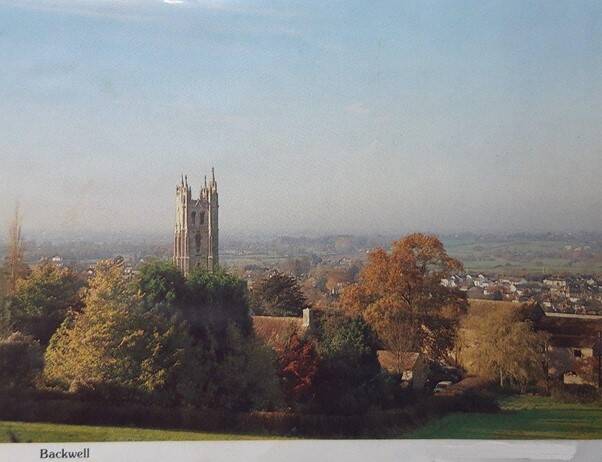
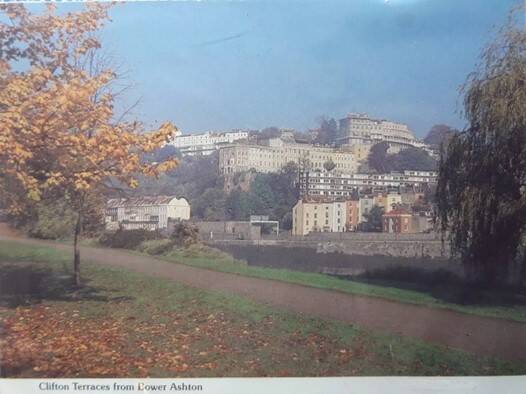
Images 23 and 24: the postcards which formed part of the police appeal (top - St. Andrew's Church, Backwell; bottom - Clifton Terrace)
In an interview, Detective Sergeant Sarah Barnston said: '"Shelley was passionately interested in art and the theatre and was attending art classes at the Bristol Polytechnic Art College. She left home that day intending to photograph and sketch in the Leigh Woods area so possible her work and the locations she was visiting that day hold the key to her killer's identity. We remain of the belief that her killer must have had access to a vehicle and may have had links through work or other associations to Backwell and possibly the Leigh Woods or Clifton areas of Bristol."'

Image 25: a still from the Crimewatch UK appeal showing the camera with the serial number
In the 2019 appeal, police brought attention to the camera which Shelley had taken with her on the day she went missing. The camera, as we've mentioned, has never been located, but it's felt possible that it could still be in circulation today. The Olympus OM20 cost around £130 at the time - in excess of £355 in today's money - and is still a popular collectors item, with the chance that someone may have stumbled upon it in a second hand shop or at an antique store. Although police are hopeful that the camera may still be found, the chances of any evidence being obtained from it are remote. Any film which may have been in the camera is likely to have been discarded long ago - especially if it was prepared for resale by a store.
There is, of course, always the chance that the killer may have retained the item as some sort of 'trophy', or that he discarded items he'd taken from Shelley at the scene in landfill to ensure that evidence couldn't be traced back to him. He may even have gifted it to a friend or relative. The lens which was attached to the camera at the time may have been removed and sold on separately, as it is reportedly compatible with other cameras in the Olympus range.
Shelley's own camera had the serial number 1032853, and was a 35mm Olympus OM20 model. The OM20 was released for sale in the UK in 1983. Shelley had purchased and fitted an Olympus OM-System Zuiko 50mm f1.8 lens, which carried the serial number 3271752. The OM20 camera model remained on the market until 1987, with only 4 years on the active market. However, as mentioned above, the camera remains a popular collectors item and police urge anyone who has possession of, or finds, the camera or the lens to come forward.

Image 26: an Olympus OM20 camera, the same model as the one owned by Shelley Morgan
Shelley's sister, Holle Brian (note: I have seen her name spelled both 'Hollie' and 'Holle, but have opted to spell it as 'Holle' in this article, as this is how I have seen it spelt most often), made her own video appeal, and gave a Victim Impact Statement as part of the 35 year appeal. She said:
'"Shelley's death had a profound impact on our family and her loss has been felt ever since. I've come to believe that people aren't really dead until the people who love and remember them have passed also. As long as we carry Shelley in our hearts she'll always be with us, but we're all getting older and the time is going to come when all those doors are closed.
'"We beseech you, if you know anything about what happened that day in June of 1984 please come to the police. Maybe you were afraid to speak out at the time? Maybe your situation has changed? Out of love and respect for my sister we really want to know what happened and be sure the person who killed her will never hurt anybody ever again."'
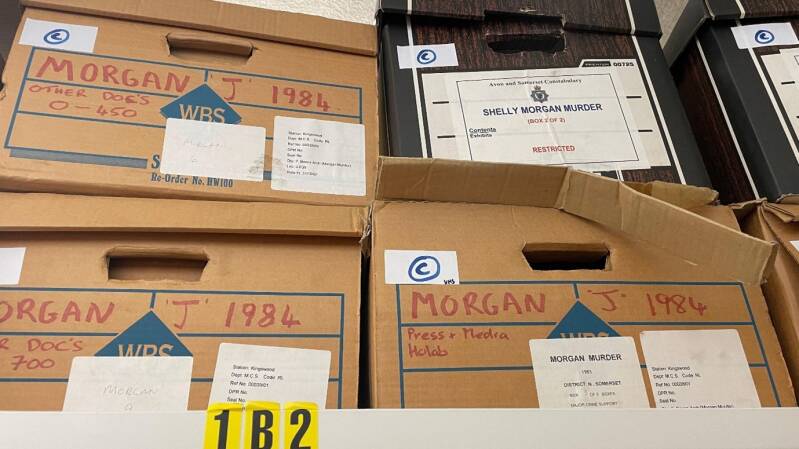
Image 27: storage boxes containing evidence an information relating to Shelley Morgan's murder
Despite the 35-year appeal and the input from Holle Brian, no new information was forthcoming. It was therefore five more years of waiting for the family before police released a brand-new appeal on the 40th anniversary.
Police started by saying that they had been able to rule out the postcards as having any link to the case, with information from the public following the 35th anniversary appeal helping to eliminate these as being relevant to the investigation. They reinstated to the public their certainty that Shelley's intended destination had been Leigh Woods, although they were unable to confirm whether or not she had made it there before her death.
Leigh Woods is owned by the National Trust, and sits above the Avon Gorge. The picturesque area is popular for walks and with nature enthusiasts, and would have been a peaceful destination for Shelley to take photos and sketch.
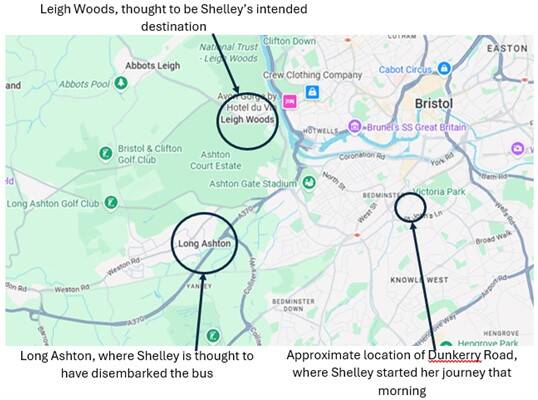
Image 28: map showing the approximate locations of Leigh Woods and Long Ashton in relation to Dunkerry Road
In an interview with the BBC for the 40th anniversary, Detective Inspector Dave Marchant said:
'"Forty years may have passed, but our resolve has not lessened. We will never give up trying to identify the person responsible for Shelley's murder and for leaving her two young children without their mother."
'"We remain committed to providing her family with answers and, if her killer is still alive, to bring them to justice.
'"We know after dropping her children off at school on 11th June 1984, Shelley headed towards Leigh Woods where she planned to take photographs and sketch. While we can't categorically say for certain she made it to Leigh Woods, we've unconfirmed sightings of her on a bus travelling towards the area and near Ashton Court. We know Shelley was wearing a scarlet-coloured top, a white skirt and maroon-coloured tights along with large red circular glasses. And we know she had with her a homemade patchwork bag and her 35mm Olympus OM20 camera.
'"Neither her clothing or her camera have ever been recovered but we remain hopeful someone may yet come across the camera as it's still popular with collectors.
'"If you own an Olympus OM20 camera from the 1980s with the serial number 1032853, please get in touch.
'"Five years ago we released images of two postcards which depicted the River Avon in Bristol and St Andrew's Church, from the direction of Backwell Hill. Several members of the public contacted us in response to that appeal and officers were subsequently able to rule out any significance of the postcards to the investigation.
'"We believe the locations Shelley was visiting that day hold the key to her killer's identity. It's highly likely her killer was familiar with the Leigh Woods and Backwell areas and could have had links through work or other associations.
'"If you have any information, no matter how small or irrelevant you think it might be, please come forward. You could have the missing piece which helps complete this case."'
I'm sure you agree that the harrowing case of this young woman, taken away from her family in the prime of her life, deserves a resolution. Although her husband is no longer here to see justice, her children and family in the United States deserve to see someone be put behind bars for so cruelly taking Shelley's life, and leaving a lasting impact on so many people.
I'm keen to hear your thoughts about Julie Mackay's theory that Christopher Hampton could be the responsible party. As Avon and Somerset Police have said, there is no evidence linking him to the murders of Shelley and the other women who Julie Mackay feel could be tied to him, but it's an interesting theory to hear to get your feedback on.
If you have any information about the murder of Shelley Morgan, please contact the Major Crime Review team via 101. Alternatively, you can submit information via the Avon and Somerset Police website by clicking this link:
Avon and Somerset Police
References for text:
Loving mum stabbed 14 times and left in woodland after waving children off to school | Bristol Live
Fresh appeal to find Shelley Morgan's killer 40 years later - BBC News
Shelley Morgan: Fresh appeal over 1984 unsolved murder - BBC News
About Shelley → Shelley Morgan Murder
Police Investigation → Shelley Morgan Murder
Items of Interest → Shelley Morgan Murder
Public Appeals → Shelley Morgan Murder
Victim Impact Statement → Shelley Morgan Murder
Fears Melanie Road murderer may have killed three more women, says ex-police detective - The Mirror
The mystery of the murdered Bristol prostitute, who had an alias and two homes | Bristol Live
Jackie Waines – Crime Immemorial
The 1985 Cold Case Murder of Bristol Prostitute Linda Guest : r/ColdCaseUK
Murder of Helen Fleet - Wikipedia
To Hunt A Killer: Conversation with cold case detective
Shelley Cameron Brian Morgan (1950-1984) - Find a Grave Memorial
Credit for images:
Image 1: Shelley Morgan Fresh appeal to find Shelley Morgan's killer 40 years later - BBC News
Image 2: Shelley Morgan (colour photo) ITV News report police renew enquiry into death of Shelley Morgan - YouTube
Image 3: Shelley Morgan with her two children Loving mum stabbed 14 times and left in woodland after waving children off to school | Bristol Live
Image 4: map showing locations of Shelley's school run, taken from Google maps, with endorsements by author
Image 5: map showing locations where Shelley was seen between 10am and 11am, taken from Google maps with endorsements by author
Image 6: map showing approximate locations of Dunkerry Road and Bristol bus station, taken from Google maps with endorsements by author
Image 7: map showing approximate locations of Dunkerry Road and Long Lane, Backwell, taken from Google maps with endorsements by author
Image 8: satellite image of Watercatch Farm, the wooded copse and Long Lane, taken from Google maps with endorsements by author
Image 9: the wooded copse as seen from Long Lane Fresh appeal to find Shelley Morgan's killer 40 years later - BBC News
Image 10: photo from outside the wooded copse with police tape visible The murder of Shelley Morgan: Full story of a shocking death which remains unsolved 35 years on - Somerset Live
Image 11: photo from outside the wooded copse The murder of Shelley Morgan: Full story of a shocking death which remains unsolved 35 years on - Somerset Live
Image 12: still of the recreation of Shelley's carpet bag, from Crimewatch UK episode Shelley morgan murder 1984 Crimewatch UNSOLVED Murder
Image 13: example of a 1980s blue Ford Transit van Evolution of the Ford Transit van
Image 14: map showing locations of bus destinations, taken from Google maps with endorsements by author
Image 15: Melanie Road Inside the grisly sex murder of schoolgirl Melanie Road, 17, which sparked 32-YEAR manhunt for 'family man' killer
Image 16: Melanie Road Fears Melanie Road murderer may have killed three more women, says ex-police detective - The Mirror
Image 17: Melanie Road Inside the grisly sex murder of schoolgirl Melanie Road, 17, which sparked 32-YEAR manhunt for 'family man' killer
Image 18: a police tent at the scene of Melanie's murder Inside the grisly sex murder of schoolgirl Melanie Road, 17, which sparked 32-YEAR manhunt for 'family man' killer
Image 19: Christopher Hampton Fears Melanie Road murderer may have killed three more women, says ex-police detective - The Mirror
Image 20: Detective Julie Mackay Fears Melanie Road murderer may have killed three more women, says ex-police detective - The Mirror
Image 21: Linda Guest Fears Melanie Road murderer may have killed three more women, says ex-police detective - The Mirror
Image 22: police officer guarding the area where Linda's body was found The mystery of the murdered Bristol prostitute, who had an alias and two homes | Bristol Live
Image 23: the postcard showing St. Andrew's Church Shelley Morgan: Fresh appeal over 1984 unsolved murder - BBC News
Image 24: the postcard showing Clifton Terrace The murder of Shelley Morgan: Full story of a shocking death which remains unsolved 35 years on - Somerset Live
Image 25: still from Crimewatch UK of an Olympus OM20 camera Shelley morgan murder 1984 Crimewatch UNSOLVED Murder
Image 26: Olympus OM20 camera Fresh appeal to find Shelley Morgan's killer 40 years later - BBC News
Image 27: boxes in storage Fresh appeal to find Shelley Morgan's killer 40 years later - BBC News
Image 28: map depicting Leigh Woods, Long Ashton and Dunkerry Road, taken from Google Maps with endorsements by author
Add comment
Comments