

The Baby On The Beach
Disclaimer: this article contains details which may be upsetting for some readers. Discretion is advised.
When people mention Weymouth Beach, it's generally in the context of a holiday resort or somewhere to spend a pleasant few hours walking up and down the esplanade with some chips or an ice cream. People may reminisce about blissful childhoods spent building sandcastles, paddling in the shallow water, spending money in the arcades, or riding donkeys on the sand. It's a well-known Dorset tourist spot and continues to attract thousands of visitors every year - with the close proximity to attractions such as Durdle Door, Lulworth Cove and Swanage, it's often a stepping stone for people enjoying a tour of the Jurassic Coastline. The hosting of the sailing events during the 2012 Olympic Games only boosted it's profile in the eyes of the nation, with spectators flocking to the area.
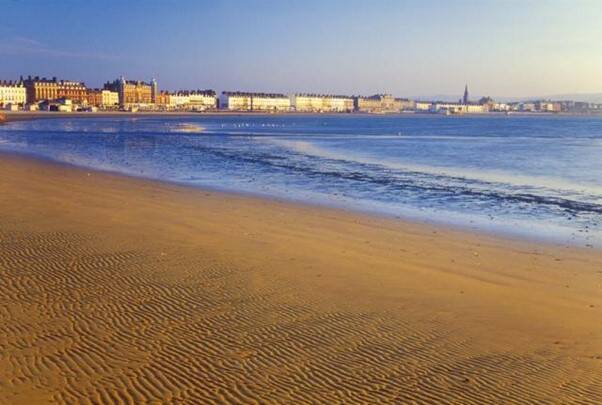
Image 1: Weymouth Beach
I was brought up not far from Weymouth and have my own memories of walking along the seafront and round the harbour, but one thing I know very little about is the story we're going to cover in this casefile. Except from the publicity it received in the days after the discovery and a brief update in 2009, it seems to have faded into the background away from public attention.
In this casefile, we're going to talk about the unidentified baby girl who was found washed up on Weymouth beach more than forty years ago.
After the hubbub of the school holidays has faded and the bulk of the tourists have gone back to their normal routines as summer tips into autumn, the beaches of the UK become much more quiet and sparsely populated. Fairground rides start to close for the cooler months, ice cream vendors move on, and beach chairs are folded up and stacked away to protect them from the elements until next year.
It was in this quiet and chilly environment that three men took to Weymouth beach on Thursday 15th October 1981 to take part in another popular pastime - metal detecting. Hoping to come across a newly washed up artefact or hidden treasure, they made their way along the seafront, stopping from time to time as the machines alerted.

Image 2: a map showing the approximate location of Weymouth Pier Bandstand in 1981. The original building has since been demolished, with a new building in its place
One of the men, Brian Mitchell, who had travelled down from Bristol, had his curiosity peaked as he drew near the area of the Weymouth Pier Bandstand. The pier reached from the Esplanade out to the edge of the water, constructed on sturdy wooden stilts, enabling enough room for those walking along the sand to wander underneath and out the other side. Beneath the structure at around 11:30am, Brian spotted a canvas bag which clearly held some contents based on the bulging shape.
Intrigued, he opened the bag to find... another bag. This one was a carrier bag stamped externally with the words Bath Street Wine Cellar, Quality Wine Merchant, Jersey CI, but from the absence of the sound of clinking glass it clearly didn't contain any bottles. The traumatic sight that would meet Brian Mitchell when he opened the discarded white carrier bag would be difficult to remove from his memory, as it contained the naked body of a baby girl.
The three men contacted Dorset Police, who promptly arrived to investigate the discovery. They were pictured covering the tiny body with a sheet, perhaps protecting it from the elements until it could be removed from the scene, or attempting to hide it from prying eyes.
Further assessment of the contents of the bag found that it also contained two bars of soap - one in an oval shape and pink colour, and the other being green, rectangular and measuring approximately 3inches by 2inches. There isn't any further information relating to these bars of soap, such as whether they had a brand stamped on them or whether they had been used or were visibly new. The relevance of them to the body in the bag was unclear, and probably somewhat baffling to investigators.

Image 3: police holding a sheet over the discovery made by the pier bandstand
The baby girl was removed from the beach and transported for post-mortem examination by Dr Peter Pullar, a home office pathologist who was normally based in Winchester. He found that the baby was around 7lb in weight, and was likely to be around six days old but certainly less than two weeks old. She had not been stillborn - she had been in good health during her very short life. The pathologist noted that she died from compression to the neck, leading police to declare to the press that they were investigating the case as a homicide.
Based on the tidal flow and the direction of ferries travelling between Weymouth and the Channel Islands on the day before the baby girl was found, authorities began to work on the possibility that the body was thrown overboard one of the ferries.
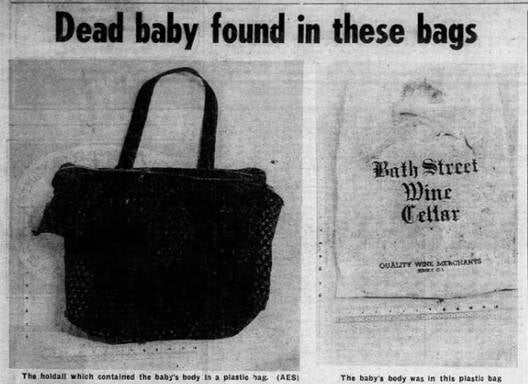
Image 4: a clip from the Dorset Echo showing the bags involved in the case
Detective Chief Superintendent Tony Conway would tell the media that it was evident that the canvas holdall, carrier bag and body had been in the sea for a period of time prior to being washed up on the beach. He said: '"there is no doubt that the baby's body had been in the water, but we don't know for how long."' He was also able to clarify that no baby had been reported missing in the Dorset area, although police commenced a search of recent births in the vicinity.
In addition to the search of local records, police also opened a 24-hour hotline and invited members of the public to make contact with them if they had any tips which would help the investigation, assuring them that their details would be kept in strict confidence. The inquiry was being led from Weymouth Police Station, and police moved a caravan to Weymouth seafront to act as a mobile incident unit, enabling passers-by to stop and talk to police officers.
By the time the weekend rolled around, officers had extended lines of inquiry to the Channel Island of Jersey, and a number of detectives travelled across on the ferry. This was on the basis that the carrier bag had originated from a wine store on the island, and police followed up several lines of inquiry in the area. By Monday 19th October, the island of Guernsey had also become involved in the investigation, and reinforcements were sent across the water by Dorset Police to support the officers already present. Jersey and Guernsey Police fully supported the inquiry, but the combined efforts of the forces failed to unearth the identity of the baby or of the parents.
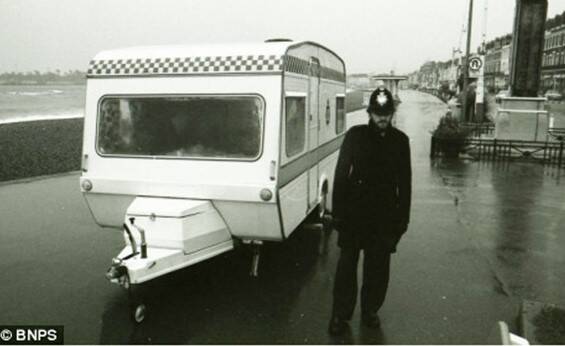
Image 5: the mobile incident unit on Weymouth Esplanade
As I mentioned at the start of this casefile, the information available in the public domain is very limited - perhaps because police are keeping information close to their chests, or because they have been unable to obtain much evidence. After the first few days of the inquiry, the story seemed to disappear from the pages of the newspapers, barely cropping up again.
That was until 2009, when a huge announcement was made.
In August 2009, news made it to the papers that a man had approached Dorset Police with some important information relating to the case of the unidentified baby girl. Police didn't give away what this information was and it has never been made public, but it was followed in November 2009 by the announcement that DNA testing had uncovered a full profile of the baby, and police were working on separating further profiles from the evidence collected on Weymouth Beach.
Phil James, a crime review officer working with Dorset Police in 2009, stated: '"there was a major investigation in 1981 and lots of inquiries were carried out. However, we can now take advantage of scientific advances which weren't available back then. I have a DNA profile of the baby and I expect to have the mother's or possibly even the father's profile in two to three months from material that was left at the scene. It's probable we'll be knocking on their door so I'm allowing them a chance to come forward now with some dignity so they can bring some closure to this sad case, rather than living in fear of receiving that unexpected call."' He went on to appeal to the public to come forward with any information, even if they had sat on that information since 1981. '"It's 27 years on but people do have long memories. Someone may not have had the confidence to go to the police at the time or they may have had strong loyalties which prevented them from coming forward. It's likely that someone knows something about the case or remembers a woman that was pregnant and subsequently wasn't but didn't have a baby."'
A second profile was ultimately isolated, felt likely to belong to the mother, and both DNA profiles were run through the national DNA database but neither produced a hit. Phil James reinforced the importance of finding a conclusion to the case: '"while being sympathetic to the potential circumstances of the case, and appreciating the delicate nature of this enquiry, Dorset Police has a duty to bring this unsolved historic case to a conclusion and is committed to doing so."'
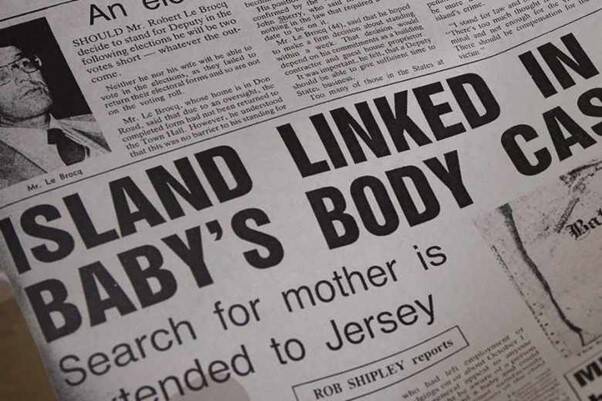
Image 6: a headline from the Jersey Evening Post
The case went quiet again for another few months until Jersey Police announced that they were questioning two people in conjunction with Dorset Police. One person had already been ruled out of the inquiry, but further discussions were necessary with the second person. Detective Inspector Chris Beechey, of Jersey Police, told the press: '"information was passed to us about two subjects. We have since eliminated one from inquiries. The other person lives off the island and Dorset Police are following up inquiries about this individual. We will continue to support Dorset Police in this investigation."'
No further information was released about those being questioned, and with the fact that 15 years have elapsed since the announcement there's every chance that both individuals were eliminated from the inquiry.
The Dorset Echo interviewed former detective Alan Burt, who had worked for Dorset Police for 30 years - including 26 years in CID - and who was involved with the case in its early days. He told the newspaper: '"it was a shocking discovery and a sad case. We started a major investigation involving numerous officers and opened an incident room at Weymouth. Some of the team went to the Channel Islands to follow up a line of enquiry. We exhausted our enquiries and slowly the number of people involved was reduced, although the case was always kept open."'
He spoke of how detectives had liaised with local hospitals and social workers as part of the investigation, as police had to consider that the mother may have been depressed, or in a distraught frame of mind. They considered that she may perhaps have been in her teens at the time she had given birth. He said: '"it was a major story for the town and there was genuine concern. Some wonderful steps have been made in forensic science, particularly with DNA, and I'm pleased this case may be brought to a conclusion."'
If you were hoping for any more updates in the case, I'm afraid you're going to be disappointed. The DNA announcement in 2009 and the questioning of two people were the last drips of information from the authorities. The unnamed, unclaimed baby girl was buried in an unmarked grave to await the time when she is identified and can be given her own headstone.
I'd like to think that the police are running the two DNA profiles through the DNA database on a semi-regular basis to check for any potential new links, and that a review for familial matches has been undertaken, but we simply don't know what's going on behind the scenes. As with all cases in the public eye, the information and evidence held by the police will be far more extensive than what they choose to reveal to the media.

Image 7: the building in Weymouth which has replaced the original bandstand
People could speculate for hours on how this baby girl came to wash ashore under the pier bandstand on Weymouth seafront. Police feel that the most likely option is that she was thrown over the side of a ferry passing between Weymouth and the Channel Islands. If this does prove to be the case, it introduces a key question: was the ferry going from Weymouth to the Channel Islands, or coming from the Channel Islands to Weymouth? The answer to this could indicate the area where the baby was born. If she was only a few days old and had travelled from the Channel Islands, there is surely a higher chance that she was born there rather than in England. But if she was travelling from Weymouth to the Channel Islands, the possibilities of where she may have been born are more extensive.
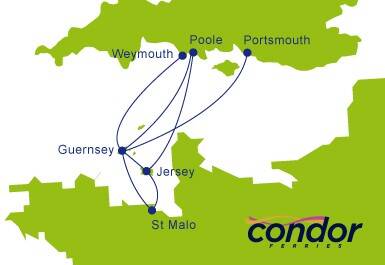
Image 8: a map showing some of the ferry crossings available to the Channel Islands today
Ferry crossings to France are much more widespread across the south of England than crossings to the Channel Islands, although I can only find information from today and not the 1980s - trips 45 years ago may have been slightly different. Today, ferries cross to the Channel Islands from Weymouth, Poole and Portsmouth. If the person who disposed of the baby was travelling from Weymouth to the Channel Islands, it's surely more likely that he/she came from the west side of Dorset - if they were any further east, one would have thought they'd have opted for a ferry from Poole or Portsmouth. If the baby was born in England, she could have been born anywhere from the far tips of Cornwall up to west Dorset, or perhaps a location somewhere up the M5 motorway in the direction of Bristol. Unless police are certain that the baby was born on Jersey, it would be interesting to know how far they extended their search of birth records and how far away they think the baby may have been from.
This is, of course, working on the basis that the birth was registered at all. The mother could have perhaps been a young teenager, scared at the prospect of finding herself pregnant and unsure what to do. If she managed to keep her pregnancy a secret and arranged to be away from home around the date the baby would be due, there's a chance that the birth may never have been registered at all. There are so many possibilities when considering the situation of the parents - they could have been any age and have had any number of home circumstances. It's truly heart-breaking to think what may have been going through the minds of the person who committed this act which resulted in the death of an innocent child.
It would be interesting to know what theories the police have considered in relation to the cause of death. Many of the newspaper articles state that the little girl was strangled, and the pathologist specifies the cause of death as compression of the neck. As authorities made the decision to treat the case as a homicide, they must be fairly certain that the injury was inflicted deliberately, but is there any chance that something occurred which was unintentional or accidental? It's impossible to know without the full details of the pathology report, and I suspect that any further details are being retained by police for use should they manage to identify the parents.
I'm curious to know what kinds of checks were carried out during the 1980s when passengers were boarding ferries. Today, cruise ships have x-ray scanners in place for passengers to put their bags through when they board the ship from any port, and one would think that they would be able to identify if a baby was tucked away inside a bag. Smaller ferries probably have more lenient security, but surely still have something in place to prevent unlawful items being taken aboard. I wonder what checks were in place in 1981? Did staff conduct bag searches? Did the person who disposed of the body manage to find a way to smuggle the bag on board, or - more disturbingly - was the baby girl still alive when they boarded the boat, and was carried on as a passenger? If she was, would there have been a record of her boarding the boat with her mother or father?
These are all considerations working on the basis that the baby was thrown from the side of a ferry between Weymouth and the Channel Islands. Is there any chance that something else may have happened? Could she have been thrown into the sea from somewhere on land - such as Portland - and drifted across to the pier bandstand with the tide? Could someone have disposed of the body from a small fishing boat or family-owned boat, hoping that the sea would take it away never to be seen again?
The carrier bag is an interesting piece of evidence. Whoever originally had possession of the bag must have been to Jersey at some stage and made a purchase from the wine store. But there's nothing to say that the bag remained in the ownership of that person - I'm sure we've all got the faithful 'bag of bags' at home which we take to the supermarket each week. If it had been bought by the person who disposed of the body, though, it either indicates that they were a regular visitor to Jersey or had come from the island and were travelling across to Weymouth.

Image 9: a map showing Weymouth and Portland
I'm really interested to hear your thoughts on this case. There are so many possibilities as to what may have happened, and we could come up with different theories for days on end. Ultimately, though, the police have the potential to solve the case if they eventually manage to find a DNA hit, and I'm sure that they have many more details tucked away in their files than we, as the public, are aware of. They are still actively investigating any information which comes their way, and we can only hope that some information comes to light which will help solve this decades-old case.
Researching the information which has gone into this casefile has been incredibly heart-breaking - the concept that this small child was killed and disposed of in the sea is something that's almost impossible to fathom. She was just a few days old, and should have been adjusting to the big, wide world with a loving family around her. To meet such an horrific, tragic end is an overwhelming injustice, and someone should have to answer for the actions which led to this baby's death.
This little girl deserves to be identified. She deserves to have some kind of memorial, printed with her name, where people can go to remember her. It doesn't matter that she was just a few days old - she deserves justice, to be remembered, and not to be forever known simply as the baby on the beach.
Footnote
I’m not sure about you, but this case left a particularly uncomfortable feeling in the pit of my stomach. The concept that a tiny baby was most likely killed and discarded in the waters of the English Channel, left to be washed up on the shores of the nearest beach, is a deeply upsetting thought.
Whilst researching and writing this casefile, the only information I could find about what ultimately happened to the little girl was an article by the Dorset Echo stating that she had been buried in an unmarked grave, something which didn’t sit right with me at all. Everyone should have the right to have some sort of marker on their final resting place to show that they existed in this world and, as the area is local to where I grew up and not too far from where I am now, I decided to see if there was anything that I could do about it.
I started trying to locate the gravesite in the hopes that, if I found it, I could perhaps fund a small memorial to mark the spot, giving this little one the dignity of having a properly marked grave where she could be remembered. I spoke to multiple teams in a bid to try to find where the baby girl was buried, and was lucky enough to come across several very helpful people along the way who were happy to go back through burial records in their parish, although all were without success. In the end, I filed a Freedom of Information request with Dorset Police and waited.
Their response came a few weeks later, and it wasn’t what I’d expected. The report came back saying that the unidentified baby girl had been cremated and her ashes had been spread in the Garden of Remembrance at Weymouth Crematorium. This came as a bit of a surprise, as I’ve not heard of many unsolved murder victims being cremated and had thought that most of them were buried – once a body has been cremated there is absolutely no opportunity to obtain any further information from it in the future and it’s a very final act. Perhaps this is a lack of knowledge on my part, though – let me know if you know any more about the procedures in these situations.
I contacted Weymouth Crematorium and the staff were able to find a record of an unidentified baby girl being cremated at the facility. Her date of death was listed as 15th October 1981, and her date of cremation was 30th March 1982, five months after she was found. I made an appointment with the office and headed up to Weymouth in March to have a chat to the staff there about options for some sort of memorial, and to have a wander around the grounds.
The main lawn of the Garden of Remembrance, where her ashes would have been scattered, has been turned over several times in the decades since 1981. Any of her remains will be long since gone, either turned over in the soil or carried away on the wind. Wall plaques and memorials such as roses or trees are only in place for a set period of time in crematoriums, but the facility holds a memorial book which is a lasting document.
The book of memorial sits in a glass cabinet in the memorial room, a quiet side room which is attached to the main building but is accessed by its own door and is a peaceful room for reflection. The book is laid out like a diary, with the page being turned every day so that the current date is showing with the names of those who have passed away on that date over the years listed. Flowers and cards can also be left in the room by those wishing to pay their respects.
After running the suggestion and the wording by Dorset Police, I have paid for a couple of very basic lines in the book of remembrance. The book is updated with applications every few months, so it will take some time for it to be written in the beautiful calligraphy in which each entry is written, but on 15th October this year when the page is turned over there will be a note than an unidentified baby girl was found on Weymouth beach on that date in 1981.
It’s a tiny, tiny gesture and it feels so inadequate when thinking about what this little girl deserves, but at least there is some kind of written record in the memory of a baby who has never had her name restored to her. We now know where her final resting place is, and there is some kind of small memorial, albeit a very basic one, to say that this human being existed – that this little person was part of the world, even if for a short time.
So, this episode goes out with thanks to the staff at Weymouth Crematorium in Dorset, to Dorset Police, and to my dad. Thank you to those who listened and took time to help. But mostly, this episode goes out in the memory of a tiny, unidentified, week-old baby girl whose remains were scattered in the peaceful, quiet Garden of Remembrance in Weymouth Crematorium in March 1982.
If you have any information about the baby girl found washed up on Weymouth Beach on 15th October 1981, please contact Dorset Police via 101 or submit a report on their website using this link: Home | Dorset Police
Information can be submitted anonymously through CrimeStoppers by calling 0800 555 111 or by using their anonymous online form here: Giving information anonymously | Crimestoppers
References for text:
DNA breakthrough in 1981 baby death | UK | News | Express.co.uk
Police reopen case of baby's body found on Weymouth beach 28 years ago | Dorset Echo
Two quizzed in Weymouth 'Baby of the Beach' probe | Dorset Echo
10 murders still unsolved in Dorset | Dorset Echo
Browse: United Kingdom › England › Weymouth › Dorset Echo › 1981 › October › 16 Oct 1981, Fri
Browse: United Kingdom › England › Weymouth › Dorset Echo › 1981 › October › 17 Oct 1981, Sat
Browse: United Kingdom › England › Weymouth › Dorset Echo › 1981 › October › 19 Oct 1981, Mon
Unsolved mystery of the baby on the beach - Jersey Evening Post
Credit for images:
Image 1 - Weymouth Beach: Weymouth Beach - Visit Dorset
Image 2 - map showing the Pier Bandstand: taken from Google Maps with endorsements by the author
Image 3 - police holding a sheet over the discovery: Cold case DNA review could solve 28-year mystery of Weymouth's 'baby on the beach' | Daily Mail Online
Image 4 - images of both bags: taken from the Dorset Echo printed on 16th October 1981
Image 5 - photo of the mobile incident unit: Cold case DNA review could solve 28-year mystery of Weymouth's 'baby on the beach' | Daily Mail Online
Image 6 - headline from the Jersey Evening Post: Unsolved mystery of the baby on the beach - Jersey Evening Post
Image 7 - Weymouth bandstand today: Bandstand Beach | Dorset Coast
Image 8 - map of ferry crossings: Condor Ferries - Book cheap Condor Ferry crossings to the Channel Islands, UK and France.
Image 9 - map showing Weymouth and Portland: taken from Google Maps
Add comment
Comments