

Trevaline Evans
Disclaimer: this article contains details which may be upsetting for some readers. Discretion is advised.
The picturesque town of Llangollen sits just across the border from England into Wales, with the cities of Wrexham to the north and Stoke-on-Trent to the east. The Welsh town has roots dating back to the 7th Century, taking part of its name from monk Saint Collen who founded a church beside the River Dee, a stretch of water which remains a focal point for the area. It has an extensive history in the farming industry - something which continues to this day - and the extensive number of sheep farms in the vicinity of the town encouraged the development of the local wool industry, with spinning and weaving being an important source of income across the centuries. Factories cropped up along the shores of the River Dee to facilitate the processing of wool and cotton, and a 600-year-old water mill can still be viewed near Llangollen railway station.
Despite being a popular tourist destination for those visiting Wales due to its picturesque scenery and Welsh charm, the town remains small with the 2021 census registering just over 3,600 residents, providing it with a community feel where people know their neighbours and those they pass in the street. Much of the town's income circulates around the tourism industry, with people visiting for day trips and extended holidays, taking advantage of the beautiful walks around the mountainous landscape, visiting the steam railway or kayaking on the river. The Llangollen canal benefits from sightseers, too, with a horse-drawn barge being a popular attraction.
The peaceful town was thrown into the spotlight in June 1990, however, when a life-long and much loved resident went missing in broad daylight in the middle of her working day. North Wales Police launched an extensive investigation which was one of the largest missing person searches in their history, but all efforts have been without success.
More than thirty years later, the case is still unsolved and many questions remain unanswered. Her son passed away in 1999 and her husband in 2015, both without knowing what happened to their beloved family member.
This casefile is about the disappearance of Trevaline Evans.
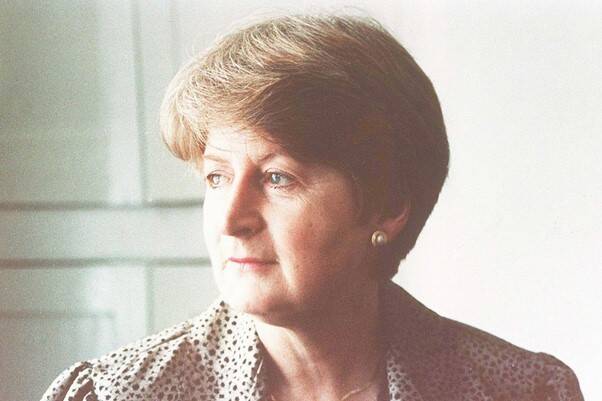
Image 1: Trevaline Evans
The Disappearance
Trevaline Evans was born on 6th September 1937 in Llangollen, North Wales, and remained a resident of the town until she disappeared. Her mother died when Trevaline and her brothers were young, leaving the siblings to be brought up by their father.
She was well known and respected in the community - not only as a neighbour and friend, but also as a business owner after opening Attic Antiques on Church Street in 1989. Trevaline lived in Market Street - a short distance from her shop - with her husband, Richard Evans. The pair had one grown son, also called Richard, a daughter-in-law, Anwen, and were grandparents to the couples one-year-old son, Huw.
In addition to their permanent residence, Trevaline and Richard owned a holiday cottage in Rhuddlan on the coast of North Wales, over 30 miles and an hour's car journey from their Market Street home in Llangollen. The couple had been staying at the property in June 1990 and were in the process of renovating parts of the home in preparation for them to move there permanently once they both retired. 52-year-old Trevaline returned to Llangollen on Wednesday 13th June 1990 to manage the shop, whilst Richard remained in Rhuddlan to continue some of the work.
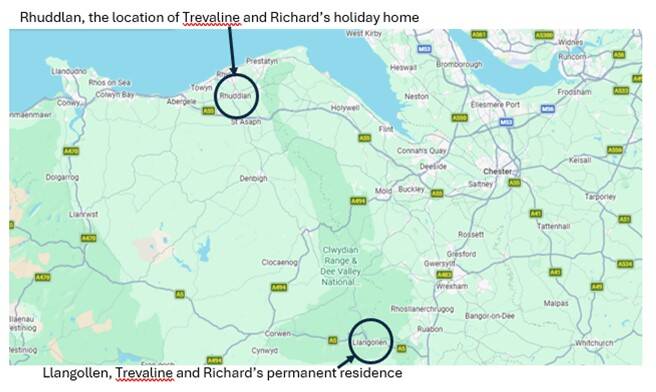
Image 2: map showing the locations of Llangollen and Rhuddlan
On Saturday 16th June, Trevaline headed to Church Street to open Attic Antiques at 9:30am. Her dark blue Ford Escort estate car was reportedly parked 200 yards away from the shop in the place where she normally left it - I'm not entirely clear on whether she moved the car before she went to work, but I can only assume that she would have walked from her home to the shop as the two were less than half a mile apart. It would seem unusual to drive any of that distance, especially if she was going to leave her car 200 yards from the front door of her store.
Image 3: map showing the approximate location of the Church Street antique shop, and Market Street where Trevaline and Richard lived

Llangollen town was busy that morning - the sunny weather was drawing people out of their homes and tourists had already started visiting the area for the early days of summer. The streets were bustling and Trevaline had 25 visitors to Attic Antiques before lunch, composed of a mixture of friends and customers. When these visitors were later interviewed by police, they would describe Trevaline as being her normal cheerful self, seeming relaxed and happy and mentioning that she had made arrangements to go out that evening.
Sometime before the lunch period, a smartly dressed man was noted to be in the store talking animatedly with Trevaline. He was described as being between 50 and 60 years old with grey hair and wearing a dark-coloured blazer.
At approximately 12:40pm, Trevaline popped a note on the door of the shop reading 'back in 2 minutes', turned the key in the lock and placed the key fob in her pocket alongside her purse, which reportedly contained nearly £100. At 1pm, she was seen buying an apple and a banana from a grocer, and was also seen crossing Castle Street which runs centrally between Market Street and Church Street. The last confirmed sighting of her was near her home on Market Street at 2:30pm - but not the last reported sighting of her.
Five minutes after the Market Street sighting, someone matching Trevaline's description was seen walking along Riverside Park, parallel with the A5 road, heading away from Llangollen town. More than an hour later, at 3:45pm, another unconfirmed sighting was noted of a woman similar in appearance walking along Park Avenue away from the River Dee. Neither of these later sightings have been confirmed, and are described as unofficial, meaning that the last time she was definitely seen was at 2:30pm on Market Street. Any reason she may have had for being in Riverside Park or on Park Avenue are unknown.
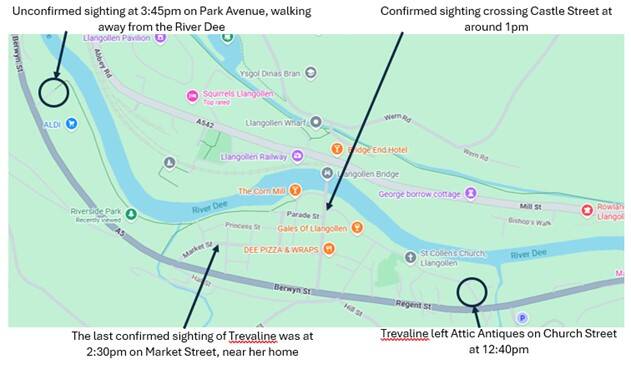
Image 4: map depicting the last sightings - both confirmed and unconfirmed
Trevaline's brother visited the store at around lunchtime and found the sign reading 'back in two minutes' in the door window. He returned 25 minutes later to find that the sign was still in place, the lights still on, but the store unmanned. Husband Richard arrived at 5pm to find the shop locked, her handbag and keys still in the store, and her car parked in the usual place, but there was no sign of his wife. It was thought at the time that 5pm was when Mr Evans had returned from Rhuddlan.
The alarm was raised by Mr Evans at approximately 11pm on Saturday 16th June, and a description of Trevaline was circulated advising that she was 5ft tall and slim, with short red hair and blue eyes.
The Investigation
Officers responded to the scene and took a careful look around Attic Antiques. They found Trevaline's handbag, car keys, jacket and some fresh flowers which she had planned to take home at the end of the day - but no other sign of the shopkeeper. A banana skin was found in the waste bin, but police weren't able to tell if it was from the fruit she had purchased from the grocer at lunchtime or if it had been discarded in the days previously. Her purse was missing from her handbag, as she had taken this with her to make her lunchtime purchases, meaning that the £100 she was thought to have with her was also absent.
Police were trying to ascertain if Trevaline had returned to the store at any stage during the afternoon - reports of her being seen around the town had been submitted to them, but no-one came forward to say that they had been a customer there after lunchtime.

Image 5: the note left in the door window of Attic Antiques
The questions as to whether the banana skin was from Saturday 16th June is more important than it may sound, as the attempt to create a firm timeline of Trevaline's movements during the afternoon and exactly when she had gone missing could be indicated by the items in the shop. If the banana skin was from Saturday, it meant that she had returned to the shop after she had been seen purchasing the fruit from the grocer at 1pm. If it was from a day before and there was no fruit present in the store, it looks like she kept her purchases with her whilst she was out and didn't return to the shop.
Police found a variety of pre-written notes to go in the door window as needed, with one saying 'back in half an hour' and another saying 'back in two hours'. It indicated that Trevaline used the sign which most closely reflected the need at the time, so if she had put the 'back in two minutes' sign on the door that day, she likely anticipated being absent for a very short period of time indeed.
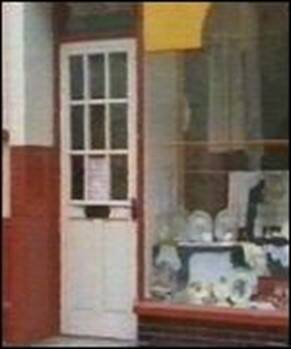
Image 6: the front door of Attic Antiques in the wake of Trevaline's disappearance
The sign in the door window of the shop was photographed still in place, an image which would later go on to be published in the newspapers, indicating that she hadn't made it back - but for keys to be found with Trevaline's possessions, it indicated that she perhaps had returned to the store and had unlocked the door upon her arrival. She was seen near her Market Street home at 2:30pm, and she would surely have needed her keys to get into the house, but these were reportedly found with her handbag. Additionally, if she had returned and reopened the shop, one would have thought that the sign in the door window would have been removed and that any customers who had visited the store during this time would have been able to recall this information for police.
Despite extensive considerations, police were unable to categorically confirm whether Trevaline had returned to her store after she left at 12:40pm. If she hadn't, though, where had she been - and what had she been doing - between 1pm and the last confirmed sighting of her at 2:30pm on Market Street? To this day, what Trevaline Evans did in that hour and a half remains unaccounted for.
Once police had established that he Ford Escort car was still parked in its usual space 200 yards from the shop, they set about interviewing as many residents of Llangollen as possible in a bid to track down further witness sightings of the 52-year-old. After they had spoken to all households in the town, they extended door-to-door enquires to areas further afield.
More than 700 cars which had been in the Llangollen area on Saturday 16th June were traced and reviewed as part of the inquiry, with police considering that she may have gotten into a car - either voluntarily or otherwise - but no leads were generated from this line of investigation.
She had told customers and friends on Saturday 16th June that she had plans for that evening, but it's unclear what these plans were - had she arranged to meet someone? Was she hoping to spend some time with her husband after he had returned from Rhuddlan?
Searches were undertaken of the area surrounding Llangollen, contemplating that Trevaline may have gone for a walk and become injured or lost, with divers and canoeists scouring the River Dee and Llangollen Canal, and mountain rescue volunteers searching local mine shafts and caves with the support of specially trained dogs. A helicopter was employed to cover the more difficult terrain in the Welsh countryside, but there was no sign of the missing woman.
On Saturday 23rd June - exactly one week since Trevaline had vanished - senior investigating officer Detective Superintendent John Cooke described how the case was developing from that of a missing person inquiry, stating: '"once we had analysed the facts and once we established Mrs Evans' lifestyle and her mental health and physical health, it became suspicious. There are no obvious reasons, no medical history, no personal reasons why she should voluntarily go missing. And I think that as time increases we must become more concerned. I'm particularly concerned about her safety at this moment. She has now been missing for six days, there are no reasons why she should absent herself, there are no known reasons why she should harm herself. So the possibility of her being harmed by a third person is increasing. I don't think at this stage we can call it a murder inquiry. But frankly, the family and we the police are considering the fact that we may, in fact, be looking for a body."'
Particular focus was given to the smartly dressed man seen speaking animatedly in Attic Antiques with Trevaline on Saturday 16th June - even more so when reports came through that he may have been seen with her on different occasions in the 24-hours prior to her disappearance, including twice on Friday 15th. Two Scottish tourists spoke to the police after they believed they had seen them in Gale's Wine Bar on the Friday night, but no reports from locals who knew Trevaline well were made to say that she had been seen in the bar that night, so questions were raised as to whether it could have been a similar looking couple. Their search for the mystery man prompted DCI Colin Edwards, of Wrexham CID, to publicly say: '"we believe he holds the key to her disappearance. It is quite likely that he is professionally involved with antiques or is interested in antiques and bric-a-brac."'
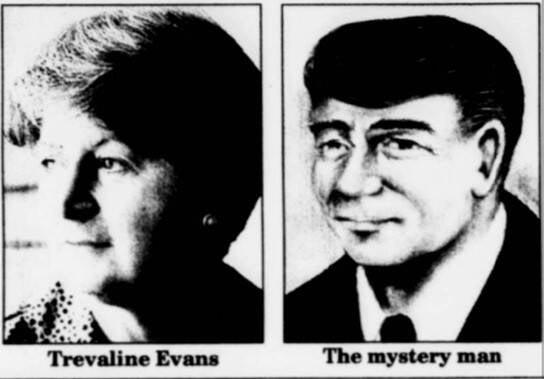
Image 7: images posted in the Shropshire Star showing Trevaline with an artist's impression of the man seen in the antique shop
Police were particularly curious as to why the male was dressed so smartly on a weekend day when people generally weren't working, especially when the weather was nice and people were making the most of the summer sun. Did he normally dress like this, or was he in the town on business? What was his connection with Trevaline? Was he looking for antiques, or did she know him?
Weeks turned into months without any sign or sound from the missing woman. A recreation of Trevaline's last known movements were shown on Crimewatch UK on 6th September 1990 - what would have been her 53rd birthday - in a bid to keep her case in the public eye and generate new leads. By Christmas of that year, however, the case was no closer to being solved. The Evans family were interviewed between Christmas and New Year by the Liverpool Daily Post, with husband Richard saying: '"I miss her and the whole family misses her. My thoughts are sad. I hope the new year will bring us some better luck, that we will come to some conclusion, one way or another."'
A promising tip was submitted to police in March 1991 about a male in Southport who was felt to resemble the smartly dressed man seen in Attic Antiques on 16th June the year before. It transpired that he had visited Llangollen around the time, and had an interest in antiques and bric-a-brac - but he had not visited Attic Antiques on Church Street. The lead ultimately fell flat.
Trevaline's store had remained closed since she disappeared on 16th June but it was opened on the first anniversary in 1991 and manned throughout the day by police, who invited people to drop in and talk to them about the case, especially if they had any information which hadn't been brought forward previously. Richard Evans was interviewed again by the Liverpool Daily Post as part of the anniversary appeal, and was quoted as saying: '"after 12 months you get into a routine, so I am coping alright. But it does leave you in limbo. Expecting something to turn up, some time, means you can make no plans for the future. All the plans my wife and I had have gone by the board."' He was employed by Monsanto Chemical Works but had been set to retire, with the couple having planned to move to their coastal holiday home. What should have been a peaceful and happy path into their golden years together had been thrown into turmoil. Richard offered up a £5,000 reward for any information leading to answers in his wife's case, but this would never be claimed. At the same time, Detective Superintendent Cooke commented that all of the evidence available to them indicated that Trevaline had not left the area voluntarily, saying: '"whatever occurred was unplanned and very sudden"'.
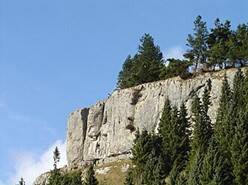
Image 8: World's End Vale
As part of their enquiries into the unknown man, police interviewed antiques dealers from the midlands and the north west of England with the consideration that some of them may have been in contact with Trevaline or may have visited the Llangollen area, but this line of enquiry petered out as no new leads were generated. It's likely that the antique-dealing community is the same as many others - people know each other and have been in contact with others in the trade, so there was every chance that someone across the border into England may have known the 52-year-old or have been in touch with her before she went missing.
In 1992, police were contacted by a medium who provided information which led to police searching an area of woodland near the World's End, a rugged valley sited between Llangollen and the Welsh city of Wrexham. No discoveries were made in the area, and the investigation tailed off yet again. A similar report was received a year later in 1993, which led to a police search along the banks of the Llangollen Canal without success. Calls also came in of sightings of the missing woman in Scotland, France, and as far afield as Australia. Interpol were brought in to help investigate these claims, but they transpired to have no significance to the case. The impression that the investigation was clutching at straws was paramount - but what other option did authorities have when there was so little information to go on?
Detective Chief Inspector Colin Edwards, who took charge of the investigation in 1992, spoke to the Leader newspaper and summed up what must have been the thoughts and feelings of many who knew of the case, stating: '"it is without doubt the strangest inquiry I have ever been involved with. How a happily married woman could vanish without a trace on a sunny Saturday morning in a busy town centre is totally baffling."'
Although the case remained open, few updates were documented in the press over the next few years. People went about their lives, and the little antiques shop tucked away down Church Street in Llangollen would change hands and eventually be converted into a residential property. The residents of the town wouldn't forget, though - the disappearance of a member of their community hung over them, the unsolved mystery playing on the minds of those who knew and loved Trevaline.
Further grief was to strike the Evans family in 1999 when the younger Richard Evans, Trevaline's son, died from a fatal heart attack at the young age of 37, leaving his wife and young family. He had worked for many years in the North Wales police force, covering communities along the border between Wales and the English county of Shropshire. He had previously worked in Llangollen police station, nearby Bangor-on-Dee, and had been in charge of running Chirk police station for a period of time before transferring to Wrexham police station 18 months before his death. He had been a part of the huge search for his mother in 1990, and whilst this may be unthinkable to some, actively taking part and trying to help would have been the only way they managed to deal with such a traumatic situation.
A review commenced into the case in January 2001, with developments in forensic testing and technology being utilised in the hope of gaining more information from evidence collected in 1990. A special incident room was set up, with ten detectives being enrolled in the renewed investigation. Detective Chief Inspector Alan Jones was quoted by BBC News as saying: '"we see this as a potential crime but we still do not have a body. Our task is to look at the circumstances surrounding the disappearance of Mrs Evans and to extend the line of inquiries. We are looking at the information collated during the original investigation and how developments in police methods and new scientific techniques can assist us in gaining further information on the disappearance of Mrs Evans."' The same BBC article described how Trevaline's family had always fear the worst, echoing earlier police opinions that she would not have left her husband, son and grandchild voluntarily.
The ten detectives focused on filling the gap between Wednesday 13th June 1990, when Trevaline had returned from Rhuddlan, and Saturday 16th June, when she had last been seen, considering that some activity or hint from those days could give them a clue as to what had happened to her. Although officers had vague reports that she had been seen with the unknown man in a wine bar on Friday night, her other activities across the four days remained largely unaccounted for. New posters were put up around Llangollen, bringing the case back to the centre of talk of the town. The earlier artist's impression of the smartly dressed man in the blazer was reviewed and disregarded from the case as no longer being accurate, meaning that it would no longer be used as part of the active investigation.
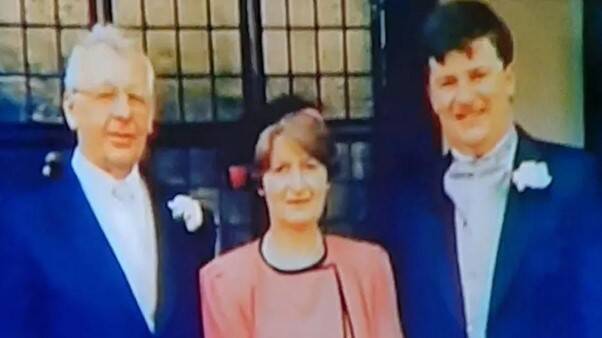
Image 9: Richard Evans senior (left), Trevaline Evans (centre), and their son Richard Evans (right)
A shock development occurred in June 2001, eleven years after the investigation began, when Trevaline's husband, Richard, was arrested. He was transported to Wrexham police station for questioning, and whilst the potential charges were never made clear, he was subsequently released on police bail. He wasn't taken back into police custody, and charges against him were never filed.
In 2005, Trevaline's younger brother Len Davies spoke to the press about the experience of the last fifteen years, giving his opinion that his sister had most likely been killed within the first 24-hours after she went missing. He recalled the day he heard that she had vanished: '"it was Sunday morning about 7 o'clock, my brother Philip rang up to say Trevaline was missing. She hadn't come home - we started searching around the town. We searched all that day without success. Once the initial twenty-four hours was over I started to believe that something had happened to her, that she'd been abducted and actually murdered. It was very difficult really, my father was quite aged and we had to tell him, we couldn't carry on. He was naturally very, very upset and we were concerned for him as well as my sister."' He also spoke of the impact of his sister having been missing for so long, saying: '"the worst part of it is the fact we don't know where she is. I'd hate to think that she's possibly just lying in a wood, under cover somewhere and untraced. I'd really like to find her and give her a Christian burial. If it was murder it's secondary to finding out what happened, I just want to find her and bring her home. I believe there are people, for whatever reason, who have not come forward. I appeal to those people now, if they feel they can't approach the police, I'd be more than grateful to have a chat with them myself."'
In the same year, Detective Superintendent Alan Jones publicly said that inquiries into the possible sighting of the man in the wine bar with Trevaline were closed - whether this meant that the couple had been proven not to be Mrs Evans and the man in the dark blazer, or whether he had been ruled out as being involved in the case were unclear. He did comment to the press: '"if she had simply gone missing she would have made contact - if she had suffered an accident a body would have been found. It's very frustrating for us and devastating for the family, and we would appeal for anyone with information to speak to us."'
The case went quiet again for another few years until 2010, when a then 67-year-old Len Davies appealed for police to renew their investigation efforts into his sister's case, citing that advances in policing techniques over the past 20 years could help to move things forward and provide the breakthrough that was so desperately needed. Of his sister's disappearance, he said: '"I cannot say you ever come to terms with it, you accept it. People you speak to have different ideas about what happened to her. Some say she might have just gone off, but I don't believe that at all. I have no idea what happened by my opinion is that she has been abducted."'
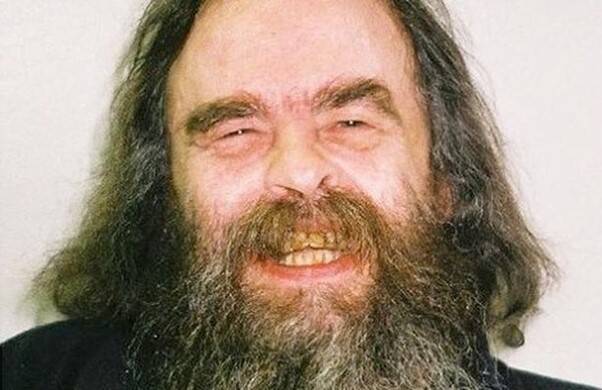
Image 10: serial killer Robin Ligus
Len Davies' wish was granted when police reviewed the casefiles again in June 2010, around the twentieth anniversary of Trevaline's disappearance. Part of this review centred around the consideration that a convicted serial killer could have been responsible for her abduction, brought about by another trial of the murderer in 2011. Robin Ligus was already serving a life sentence for the murder of 75-year-old Robert Young in the English town of Shrewsbury in 1994 when he stood trial for a further two murders - with all three deaths occurring within a 30-mile radius of Llangollen. In April 1994, antiques dealer and father-of-three Trevor Bradley was killed in Melverley, Shropshire, with 57-year-old Brian Coles being attacked during a burglary in Whitchurch, Shropshire during October of the same year. He later died from head injuries.
Ligus was convicted of the first murder - that of Robert Young - in 1996, but it took a further fifteen years for him to be brought to trial for the murders of Trevor Bradley and Brian Coles. The trial was one of facts only, as Ligus was deemed unfit to stand following a stroke. He was transferred to a secure mental hospital following his sentencing, and passed away in 2022 at the age of 70. His criminal history had stemmed from use of illicit drugs and his need for money to fund his addiction, with all of the murders he was known to be involved with occurring in 1994.
Police interest came from the fact that one of the victims worked as an antiques dealer, with the possibility that they knew Trevaline, and the close radius around Llangollen in which all three attacks occurred. None of the information in the public domain states that money or items were taken from Attic Antiques, so it feels unlikely that robbery posed any kind of motive as to what may have happened to Mrs Evans, and any connection between her case and serial killer Ligus was ruled out within a year. All of his victims were male, and the attacks upon them were violent with their bodies being found with significant injuries. This contrasted completely to the case in Llangollen.
In the lead up to the 25th anniversary in 2015, and in the wake of the death of Richard Evans, Assembly Minister Ken Skates, who's constituency office sat in Llangollen, wrote to North Wales Police to ask if the case was being reviewed, perhaps in a bid to drive more activity. Skates was quoted in an article for NorthWalesLive as saying: '"Mrs Evans' husband Richard passed away aged 83, without ever knowing what had happened to his wife. It's a tragic situation. North Wales Police have said the case remains open, but the investigation is currently inactive. I'm sure Mrs Evans' surviving family will never lose hope that they might find out what happened to her, and I would urge anyone who has information which could help to contact police. Twenty-five years is an incredibly long time, and this is a most unusual case, but of course it's possible that someone still alive today knows what happened."'
2019 onwards
A bizarre development hit the headlines when, in 2019, two brothers approached police with a stunning tale. The brothers had heard rumours that Trevaline Evans' body may be hidden at Rhuddlan Golf Club - rumours which naturally peaked their interest. Andrew Sutton lived in Wrexham and his brother, Lee Sutton, lived in Kinmel Bay, just a few miles to the north of Rhuddlan. Both were well in the radius of Llangollen and would have been exposed to the publicity of the Evans' case in the wake of Trevaline's disappearance and the years since. Remember, Rhuddlan was the location of the holiday cottage being renovated by Trevaline and her husband, Richard, so they had a connection to the area - it wasn't beyond the realm of possibility that her remains could be there if she had been the victim of foul play.
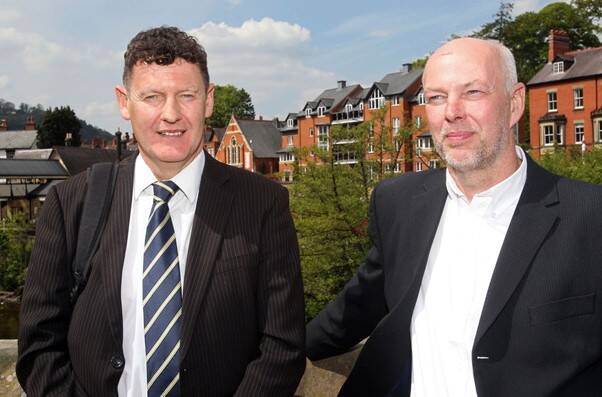
Image 11: brothers Andrew and Lee Sutton
Andrew and Lee passed the circumstantial information onto North Wales Police but, whilst waiting for a response from the force, they made contact with the golf club themselves and were reportedly permitted to use a specialised underfloor camera. They believe that the camera showed evidence of a body lying beneath the floorboards of the bar area - images which they immediately took to police. In response, officers carried out their own search and lifted the floor of the bar area - probably much to the dismay of the owners and regular patrons - but found nothing in the floor space and no evidence that a body had ever been there. For good measure, the grounds of the club were also searched but nothing of significance to the case was recovered.
The only place I've been able to find copies of the images taken with the under floor camera is on the Crime Junkie podcast website. It looks like these images were passed directly to the podcast by the Sutton brothers, and you can view them by visiting the Crime Junkie website here: MISSING: Trevaline Evans | Crime Junkie Podcast. I have to be honest and say that I can't see anything that I would interpret as a body or remains, but the images aren't great quality - I'd love to hear your thoughts and whether you can see something that I can't, though. There must be enough there for the police to have instigated a search, as they wouldn't take such a time-consuming and expensive operation lightly.
The Sutton brothers would go on to file a complaint about how North Wales Police handled the search of the area, which was passed onto the Independent Office for Police Conduct (IOPC) for review. A statement was released in response to the complaint, with temporary DCI Tim Evans of the Professional Standards Department saying: '"in response to the statement released by Mr Andy Sutton and Mr Lee Sutton, I can confirm that we have received complaints which have been formally recorded. I am foremost mindful that such serious allegations have the potential to cause anxiety to Mrs Evans' family and our officers will continue to support them as necessary. To allay any wider public concern the identified area was examined by crime scene investigators, but no evidence was identified to corroborate the allegations received."' The complaint was passed back to North Wales Police by the IOPC, who were happy for the force to investigate it internally, but the complaint was subsequently rejected. The brothers, unhappy with the outcome, were reviewing what further action they could take but no additional information is provided in the media.
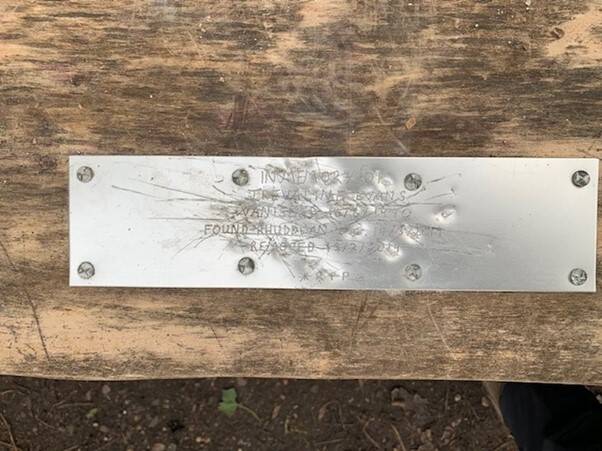
Image 12: the plaque with the first inscription
On 4th May 2022, the Mirror reported that an inscribed plaque was placed on a bench near Prestatyn, just a few miles north of Rhuddlan. The bench sat on the side of a hill next to an abandoned 200-year-old miners cottage, used only by dog walkers and hikers as a space to sit and rest. It transpired that this was the second plaque relating to Trevaline's case which had appeared, with the first being added to a bench at a venue along the coast a year earlier - later being removed by the local council. The first read: 'In memory of Trevaline Evans vanished 16/6/1990. Found Rhuddlan GC 14/3/2019. Removed 19/3/2019 RIP'. The second piece of writing said: 'Justice awaits those responsible for the removal and disposal of Trevaline Evans (in this life or next) from Rhuddlan Golf Club on March 19, 2019 at noon. May the Lord have mercy upon their soul.'
In images across national newspapers, the plaque looks quite new aside from scratches across the inscription itself, which look as though they have been done deliberately. The Sutton brothers were approached by the press for comment about the plaques, and they reported having no knowledge about them - Lee Sutton visited one of the benches to have a look for himself, saying: '"it's very strange. I don't know who would do it and why they would choose to put it there."' The person - or people - who put the plaques in place has never been identified, and therefore the motive for doing so is unknown. The plaques appeared several years after the activity at Rhuddlan Golf Club, so was someone making a sorry attempt at a joke in the wake of this? Or trying to bring the case back to the attention of the media? I can't believe that it was the later - who knows how long the plaques could have been in place before someone came across them? They were both applied to benches in rural areas, where the odd dog walker might have taken a seat, not in the middle of a town where they may grab attention. The information on the inscriptions is oddly specific, though - could there be any truth to the writing? Or is it the ultimate hoax? If it is a hoax, why would someone do this so many years after the search at the golf club, or had the plaques been in place for a while before they were noticed and reported?
In the Footsteps of Killers documentary
In 2023, Channel 4 released a documentary series titled In the Footsteps of Killers, featuring actress Emilia Fox and criminologist Professor David Wilson, with episodes focused on reviewing cold cases and trying to establish any developments or potential suspects. Whilst the program itself received mixed reviews, some of the points raised in the episode dedicated to Trevaline Evans (series 2, episode 6) make for an interesting watch.
The team believed that they identified the smartly dressed man in the dark blazer after they were approached by Linda, the former partner of Trevaline's brother, Philip Davies. Linda was confident that the man seen with Trevaline on Friday 15th June and Saturday 16th June was Philip, and brought a photo to the meeting with David Wilson to compare the likeness to the photofit published by police in 1990. The images certainly bore an undeniable likeness, with Linda describing how Philip always dressed in a shirt, tie and... a smart dark jacket similar to a blazer. The presenters of the program clearly thought that they'd cracked park of the riddle, and it certainly looks like a promising theory - but I do have some questions.
When asked why witnesses had described seeing Trevaline with a stranger in a dark blazer, why had no-one recognised that it was Philip? Linda explained that Philip worked away most of the time in Budapest, Hungary, but Trevaline and her brothers had been brought up in Llangollen town since birth. Surely the whole family would be well known and recognised by members of the community. And if it was Philip who she was seen with, why did he not say anything in the days, months and years after she went missing? An enormous amount of effort was put in by police to trace the man in the dark blazer - if it was her brother that she had been with, surely it would have been easier for him to tell the police and stop the extensive searching? What on earth could be the reason for keeping their meetings a secret? And surely, above all, if the police interviewed Philip Davies - as I'm sure they must have done in the wake of his sister's disappearance - wouldn't officers have picked up on the likeness as he sat across from them?
Although the program feels that this question has been answered, I feel that it only opens up a list of fresh new questions - I'm not convinced by this answer at all, but let me know your thoughts.
No mention was given in the episode to the plaque inscriptions found in rural North Wales, nor the search of the Rhuddlan Golf Club, but there could be a reason for this. The second series was released in 2023, and people in the background of the episode 6 were wearing facemasks. It's possible that some of the series was filmed during or in between Covid lockdowns, or before news of these events broke. I'm unsure of the timelines, but I feel like both events are significant enough that they would have been included in the episode if they had been known about.
By the end of episode 6, the two presenters feel that they have narrowed the case down to two key suspects - and I must stress that these are the views of the program. If there was evidence to back up these theories, police would surely have released a statement or made an arrest where possible. We're going to look at the theories here, though, because some very interesting questions are posed.
The first suspect considered by the pair is Richard Evans (senior), husband of Trevaline. This isn't an unreasonable consideration in many ways - Richard was, as we mentioned previously, arrested in 2001, although he went on to be released without charge. This meant that police had reason enough to take him in for questioning, although no further information has ever been confirmed.
The program discussed how the Evans' marriage perhaps wasn't the rosy picture painted in the newspapers. Professor David Wilson spoke of how local residents had mentioned rumours of Trevaline having affairs, even supposedly inheriting £10,000 from one of these men who had passed away. As much as Trevaline was well-liked and respected around Llangollen town, it seemed that her husband of 30 years was as equally disliked. Gossip spread in the wake of Trevaline's disappearance that she had been deeply unhappy about the planned move to Rhuddlan, having only opened the antique shop in 1989 - one year before she vanished - and was still developing the business in the town which she had lived in since birth and loved deeply. All of this, of course, is hearsay and little information can be corroborated.
Many of the people who knew the couple are likely to have passed away themselves by now, and the opportunity for interviews are slim. However, Linda - Philip Davies former partner - used to work behind the bar in a local pub named Jenny Jones, where she often served Richard Evans as a customer. She served him on Saturday 16th June, in fact, but much earlier than police had previously been aware of. Linda remembers Richard being in the pub at 2:30pm, meaning that he had returned from Rhuddlan earlier than initially thought. She mentioned to Professor David Wilson that Richard had been seen removing carpets and furniture from the couple's Market Street home in the weeks after Trevaline had disappeared, something which Philip didn't think that his sister would be happy with if she came home. Was this something to do with the move to Rhuddlan? Or did it have a darker implication?
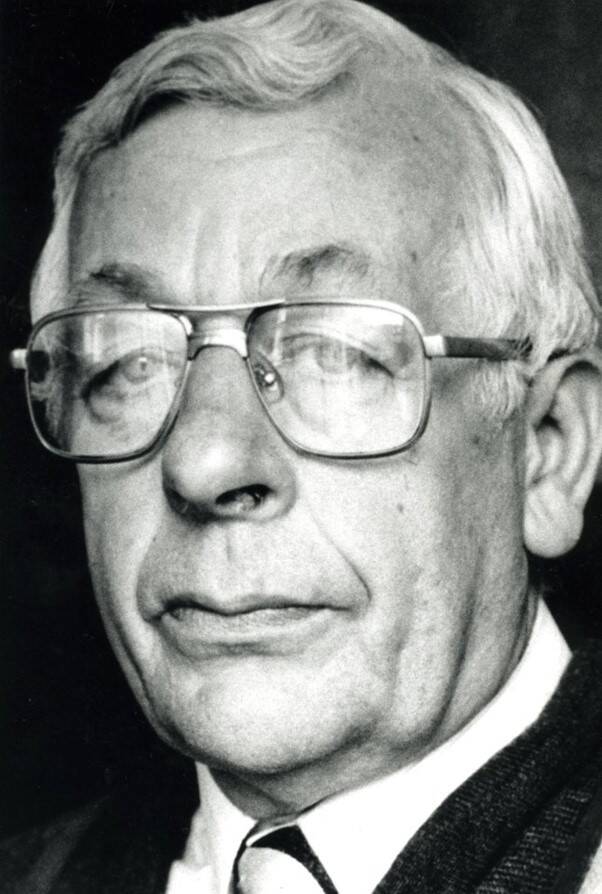
Image 13: Richard Evans
Linda was able to give a first-hand account of Richard's behaviour in the weeks after his wife disappeared, saying that he would come into the pub but would never wonder aloud where she had gone or what had happened to her - something which made the bartender increasingly uncomfortable and unnerved.
It's common knowledge that the spouse of a missing or murdered person is one of the first police turn to for a close examination, and one would have thought this case to be no exception. It's unclear, however, when police found out - or if they found out - when Richard Evans had actually returned from Rhuddlan. Did this information come to light in 2001, and form part of the reason behind his arrest? Did Richard deliberately deceive police? If he was in the pub at 2:30pm, what time did he arrive for his drink and what time did he leave? These questions are surely vital to Trevaline's timeline - she was last seen at 2:30pm in the region of the couple's Market Street home. Is there a chance that Richard had met her there? Did he see her with the reported stranger in the antique shop and intend to ask some questions? Is there a chance that the couple argued and that the argument turned violent with something happening to Mrs Evans? Did Richard amend his timeline to give him opportunity to cover his tracks, then wait until the late evening to report her missing?
There are many, many questions and possibilities, but no evidence to point in any particular direction. It certainly can't be denied that, if Richard did return from Rhuddlan hours earlier than he initially indicated, it wasn't a good look for him in the face of the police investigation. His actions during those additional hours when he was originally thought to be near the coast would need to be accounted for, but the gaps remain frustratingly empty.
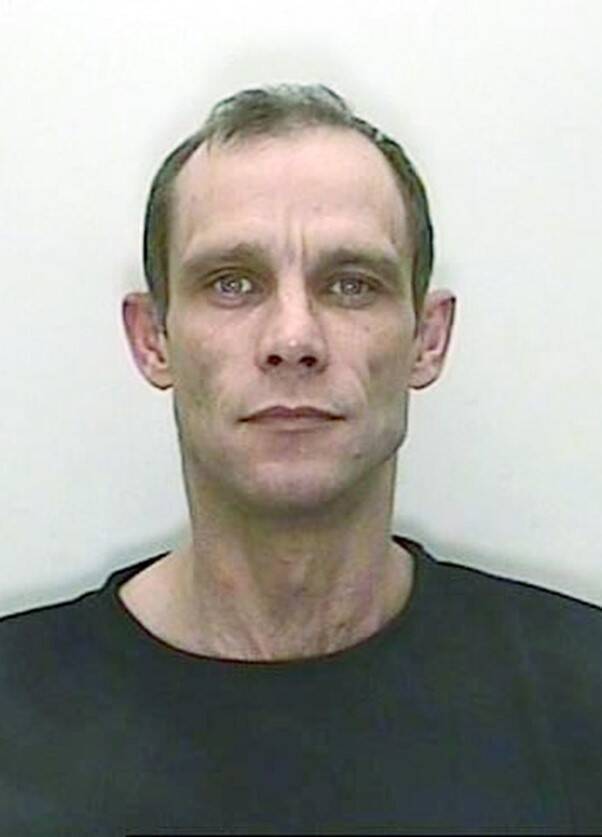
Image 14: Christopher Halliwell
The second suspect listed in the program is someone we've come across more than once in the Undiscovered casefiles. Christopher Halliwell needs no introduction to our regular readers and listeners, but if you're not completely familiar with this man then head over to the file of Claudia Lawrence, where you'll find a section which talks about his arrest and convictions for the two cases of which he's been convicted.
I say the cases for which he's been convicted because Wiltshire Police still have an open file on this horrendous criminal, and as of 2025 were looking into links with a minimum of five other unsolved murders of women. He was convicted of the murders of Sian O'Callaghan, who died in 2011, and Becky Godden-Edwards, who died in 2003 but whose body remained undiscovered until after Halliwell's arrest for Sian's murder. Although he was convicted of these two murders, he was found to be responsible for the disposal of more than sixty items of women's clothing in a lake over a period of several years - but it was only after his conviction and once the items were too degraded to do forensic testing that this was linked to Halliwell. The lake was considered to be something of a trophy store, and it certainly sounds possible that the clothing related to far more women than Sian and Becky, but without the ability to forensically test any of the items it was impossible to tell who they had belonged to.
So, how does Halliwell fit into the Trevaline Evans case? His two known victims were both in their twenties at the time of their respective deaths - thirty years younger than the suspected victim here. As well as being much older than his previous victims, Trevaline also disappeared in broad daylight, something which would have been a considerable break away from Halliwell's modus operandi, where he would abduct women in the small hours of the morning when there were few witnesses around. That being said, Trevaline disappeared many years earlier than either Sian O'Callaghan or Becky Godden-Edwards - more than two decades earlier, in Sian's case - so there's a chance that his practice changed over the years.
Experts believe that Halliwell's serious offending started decades before he was caught. He has been described as a manipulative and controlling individual, and his ability to maintain the façade of a normal life whilst masking his criminal activity displays many of the hallmarks of an organised serial killer in the eyes of criminal psychologists. The North Yorks Enquirer assembled a document with details of his early life right through to his later offences, finding that his official offending began in 1982. He was in Dartmoor prison by 1985 on charges of car theft and burglary, but it was during this jail term that he would confess to a fellow inmate that he had murdered an unknown victim, suggesting that it may have been a former girlfriend, asking him: 'how many do you need to be a serial killer?' as well as 'have you ever thought of strangling your girlfriend?'
If it's anticipated that Halliwell could have been committing murder since early in the 1980s, it's certainly possible that he was criminally active during the 1990s, although this is currently unconfirmed. He was released from prison in 1987 and would start a relationship at the age of 23 with someone several years his junior, 16-year-old Lisa Byrne. They married in 1991, ran a taxi business together in Swindon and had three children before divorcing in 2005. Following this, he grew close to and developed a relationship with a neighbour, Heather Widdowson, and became something of a family unit including her three daughters. We know from the profiles of many serial killers, though, that having a stable life doesn't mean that they aren't committing offences. If Trevaline Evans was abducted and murdered, the fact that her body has never been found would link with the way Halliwell worked - Becky Godden-Edwards would likely have never been recovered had he not directed officers to where she was buried. Halliwell seemed to have the ability to make people disappear.
An anonymous witness spoke to the team on In the Footsteps of Killers to say that he had seen a man acting suspiciously in Market Street on 15th June, the day before Trevaline vanished. The man had been fitting a carpet in a property and, whilst outside, had seen a man walking along the street without engaging with anyone. Remember, this is a small, friendly town in the Welsh countryside where people know each other, so strangers would be noticeable - especially if they were behaving unusually. The witness described the man as tall with big, staring eyes, and said he crossed the road halfway down Market Street before going on his way. He saw him again the following day - Saturday 16th June - at 7:45am. He had been driving along Horseshoe Pass, a road with a spectacular view across the valley, and had spied a campervan parked on the grass verge. The witness thought this to be particularly unusual, as there was a layby on the opposite side of the road which he could have parked in rather than haul the vehicle up onto the bank. As he drove by, he glimpsed the same man he had seen in Market Street the day before, and said he was convinced of this because the man was wearing the same clothes. He was looking across the valley as though enjoying the view. The witness later saw the same campervan in a supermarket car park in the town at around 12:30pm, just two minutes walk from Attic Antiques.
He did give a witness statement to police at the time, but it's unclear if police looked into this report or whether anything came of this. During the program, Emilia Fox shows the witness two images of Halliwell, with the first being his mugshot and the second being a photo of him as he looked in 1991, with the witness saying that there was definitely a likeness to the man he had seen that weekend in 1990. Professor David Wilson would hand this information over to Stephen Fulcher, the detective who had put Halliwell behind bars in 2011, who described the information as significant and felt that Halliwell made a good candidate in the Trevaline Evans case. I can see a huge problem with this, though. Police identify parades and photo galleries contain multiple people for a reason - to make sure that they are as impartial as possible. If you show someone one image and ask if it looks like the person they are describing, there's a chance that it will sway their judgement - whereas if you give them a choice, you aren't adding any bias to the situation. The options must be there to make the identification fair and to make sure that it stands up in court. By showing the witness a photo of one man, the presenters of the program have given him one choice - and they've also explained who the person in the photo was. With this knowledge in mind, even if the police approach this witness in the future to make enquiries, it's unlikely that they will be able to obtain an impartial answer.
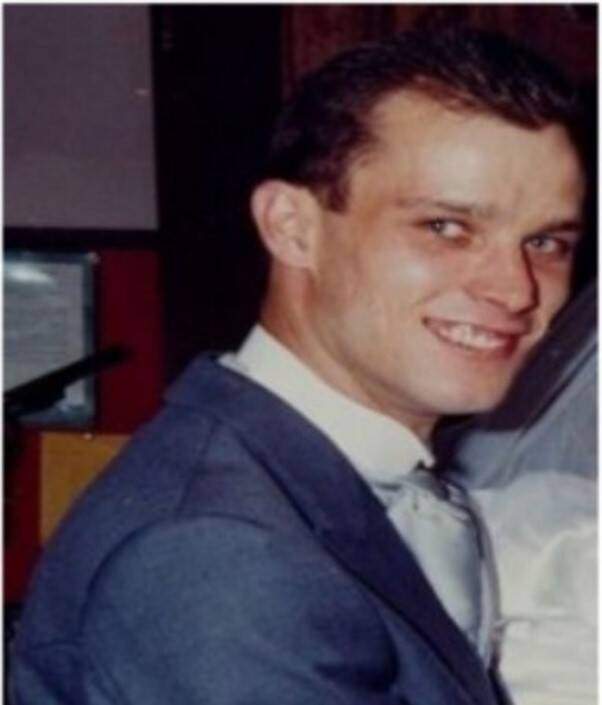
Image 15: Christopher Halliwell in 1991
Journalist Tick Hicks was interviewed as part of the program, and described how Halliwell had lived in Lancashire during the 1990s, working as a window fitter. He had reportedly previously used this tactic to stake properties out for burglary. I'm a bit unclear on this fact though - we know from the Julie Finley case that Halliwell visited Lancashire in 1994, travelling up during the week and going back to Swindon at weekends, but other reports say that he was married in 1991 and living in Swindon, so his exact movements during 1990 are a little unclear, although Wiltshire Police likely have a more in-depth and accurate timeline. It's not impossible that he was in the area of Llangollen, but why would he target a 52-year-old woman when his known targets have been in their 20s?
In the Footsteps of Killers had an answer for this. Halliwell had been extensively abused by his mother during his childhood, and she eventually put him in foster care. His ex-wife, Lisa Byrne, later described how he would become utterly enraged if he saw someone who resembled his mother, and it's suggested in the program that he may have targeted someone like Trevaline due to the violent feelings he harboured against his mother. It seems like a bit of a stretch, though - unless it was very much a spur of the moment attack, why would he break from his preference to attack younger women? The crimes he's suspected of being involved with, but hasn't been convicted of, primarily involve younger women. Would he really attack one singular middle-aged woman before going back to younger women? If he had such extensive rage with his mother to the point this would flare up when he saw someone similar to her, why isn't he suspect of other crimes against women of that age?
A lot of interesting concepts are drawn up in the program - but I feel that it also raises a lot more questions than it answers. Much of the information provided is circumstantial, with no evidence to back up any of the theories. There's certainly a lot of things to consider around the suggestion of Richard Evans or Christopher Halliwell as potential suspects, but there is now no chance to conduct any further interviews or investigations into Richard, since he passed away in 2015, and it doesn't seem as though there's enough physical evidence for police to approach Halliwell with questions. Of course, they could be doing this behind the scenes - we simply don't know.
Ultimately, it's down to North Wales Police to fully look into the suggestions made by In the Footsteps of Killers. The only thing the public can do is sit back and wait for any updates.
Conclusion
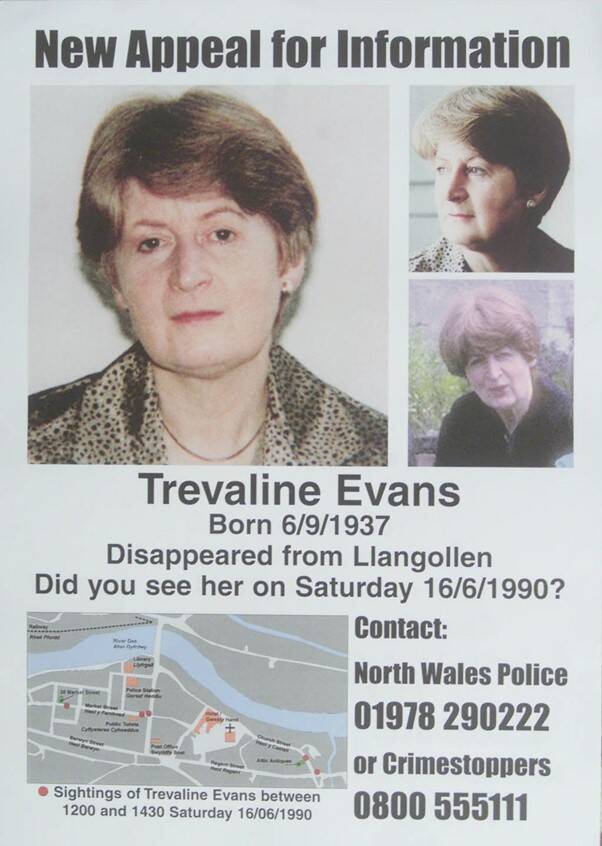
Image 16: Trevaline Evans missing poster
So, where is the case now? The simple answer is... there isn't an answer. The case remains open with North Wales Police, but it appears to be inactive until new information comes forward. They could be looking into claims about Christopher Halliwell behind the scenes, but it's unlikely that we will receive any information in the public domain unless there is a significant update to the case.
Trevaline Evans has never been found. Her bank account hasn't been touched since she disappeared. The money that she had with her on the day she vanished - thought to be around £100 - was never found. No-one has had contact with her in over 30 years. Many of her family members - her son, her husband, her father and her two brothers - have passed away without knowing what happened to her.
The police indicated in the 1990s that all of the evidence suggested that Trevaline had met with foul play. If this is the case, her remains are out there somewhere with the deposition site unknown.
This mystery deserves a resolution. The remaining members of Trevaline's family deserve answers - they deserve to at least know where she is so that they can give her a proper burial or cremation, or have somewhere they can go to remember her. They deserve to know what happened to their loved one.
The beautiful town of Llangollen remains a tourist hotspot, but the community is still shrouded in mystery from more than 30 years ago. The fact that a much-loved, much respected resident can vanished, seemingly into thin air, is something that weighs heavily on the town to this day. Trevaline was a daughter, sister, wife, mother and grandmother. She was the centre of so many people's lives. She was loved and treasured in her home town. She deserves justice, and the town of Llangollen deserves the ability to put this mystery to rest.
If you have any information about the disappearance of Trevaline Evans on 16th June 1990, please contact North Wales Police on 101 or by submitting information on their website using this link:
Information can also be submitted anonymously to CrimeStoppers by calling 0800 555 111, or by heading to their website using this link:
References for text:
Disappearance of Trevaline Evans - Wikipedia
Chilling message posted on bench linked to woman who vanished 32 years ago - The Mirror Article by Cathy Owen and Sara Obdeen-Isbister, published 4th May 2022, retrieved 11th May 2026
20 years on: What really happened to Llangollen antiques dealer Trevaline Evans? | The Leader By Phil Robinson, published 7th June 2010, retrieved 11th March 2026
Serial killer linked to 21-year-old case of missing antiques dealer - Mirror Online published 11th Sept 2011, retrieved 11th March 2026
Trevaline Evans: New appeal over missing Llangollen woman | North Wales Live by David Powell, published 13th January 2015, retrieved 12th March 2026
I want to find my sister and give her a Christian burial - North Wales Live published 27th October 2005, updated 19th April 2013. Retrieved 12th March 2026
Plea over 20-year mystery of missing Trevaline Evans - BBC News published 16th June 2010, retrieved 12th March 2026
BBC News | WALES | Antique shop mystery re-examined published 11th January 2001
BBC News | WALES | Antique shop mystery re-examined published Thursday 11th January 2001, retrieved 13th March 2026
BBC News | WALES | Missing shopkeeper's husband released published Friday 29th June 2001, retrieved 13th March 2026
Trevaline Evans: The woman who popped to the shops and never came back | Express.co.uk The Express article by Harry Hodges, printed Friday 19th June 2015, retrieved 16th March 2026
Shrewsbury serial killer Robin Ligus dies aged 70 - BBC News printed 6th January 2023, retrieved 19th March 2026
Gone in two minutes - chilling tale of gran who vanished into thin air 34 years ago before eerie note appeared on bench The Sun article by Holly Christodoulou, printed 30th June 2024, retrieved 19th March 2026
Cops referred themselves to police watchdog over search for missing antiques dealer | North Wales Live NorthWalesLive article by Kelly Williams, printed 23rd May 2019, retrieved 20th March 2026
Christopher Halliwell: Crimes, Victims & 2025 Updates - Londontweet
Halliwell-4-MSK-Victim-List.pdf North Yorks Enquirer chronological profile of Christopher Halliwell, retrieved 21st March 2026
The British Newspaper Archive – Liverpool Daily Post printed Tuesday 19th June 1990, retrieved 19th March 2026
The British Newspaper Archive – Liverpool Daily Post printed Wednesday 20th June 1990 retrieved 19th March 2026
The British Newspaper Archive – Shropshire Star printed Monday 18th January 1999
The British Newspaper Archive – Liverpool Daily Post printed Monday 25th November
The British Newspaper Archive – Liverpool Daily Post printed Saturday 23rd June 1990
The British Newspaper Archive – Liverpool Daily Post printed on Wednesday 12th June 1991
The British Newspaper Archive – Liverpool Daily Post printed on Wednesday 27th March 1991, retrieved 13th March 2026
The British Newspaper Archive – Liverpool Daily Post printed on Thursday 27th December 1990, retrieved 13th March 2026
The British Newspaper Archive – Liverpool Daily Post printed on Thursday 2nd August 1990, retrieved 13th March 2026
The British Newspaper Archive – Shropshire Star printed Thursday 2nd July 1992, retrieved 13th March 2026
The British Newspaper Archive – Shropshire Star printed Thursday 6th September 1990, retrieved 13th March 2026
Credit for images:
Image 1 - Trevaline Evans: Chilling message posted on bench linked to woman who vanished 32 years ago - The Mirror
Image 2 - map showing the locations of Llangollen and Rhuddlan: taken from Google Maps with endorsements by the author
Image 3 - map showing the locations of Church Street and Market Street: taken from Google Maps with endorsements by the author
Image 4 - map showing the last reported sightings: taken from Google Maps with endorsements by the author
Image 5 - the sign left in the door window of Attic Antiques: Trevaline Evans: The woman who popped to the shops and never came back | Express.co.uk
Image 6 - the front door of Attic Antiques: BBC News | WALES | Antique shop mystery re-examined
Image 7 - images posted in the Shropshire Star on 12th January 2001: Nt - U By Sue Austin The Family Of Missing Llangollen Woman Trevaline Evans T.odafr Welcomed A Police Decision To | Shropshire Star | Friday 12 January 2001 | British Newspaper Archive
Image 8 - World's End Vale: World's End, Denbighshire - Wikipedia
Image 9 - Trevaline with her husband and son: Who was Trevaline Evans' husband Richard and is he still alive?
Image 10 - serial killer Robin Ligus: Serial killer linked to 21-year-old case of missing antiques dealer - Mirror Online
Image 11 - brothers Andrew and Lee Sutton: Cops referred themselves to police watchdog over search for missing antiques dealer | North Wales Live
Image 12 - the plaque with the first inscription: Chilling message posted on bench linked to woman who vanished 32 years ago - The Mirror (credit: ugc)
Image 13 - Richard Evans: Gone in two minutes - chilling tale of gran who vanished into thin air 34 years ago before eerie note appeared on bench
Image 14 - Christopher Halliwell: Gone in two minutes - chilling tale of gran who vanished into thin air 34 years ago before eerie note appeared on bench
Image 15 - Christopher Halliwell in 1991: Police respond to claims murderer should be considered suspect in Trevaline Evans case | North Wales Live
Image 16 - Trevaline Evans missing poster: Chilling message posted on bench linked to woman who vanished 32 years ago - The Mirror
Add comment
Comments