

Trevor Deely
You can listen to this case on YouTube by clicking the link to the left, or on podcast platforms.
Disclaimer: this article contains details which may be upsetting for some readers. Discretion is advised.
Work Christmas parties should generally be a time to relax, celebrate and let your hair down. They should be an opportunity to socialise with colleagues, eat too much festive food and have a few light-hearted Christmas drinks. Sure, sometimes they can be a bit stressful - the addition of alcohol to any existing fractured or tense work relationships could lead to full-on arguments, and piling drunk colleagues into a taxi at the end of the night can be hard work. But one should be leaving the house before the event with the surety that you'll be unlocking the door and falling into your own bed when you return several hours later.
This wasn't the case for one young man in Dublin during December 2000. He met his colleagues for their Christmas party, left the event in the early hours and headed home before seeming to vanish off the face of the earth, with the last glance of him being a brief CCTV clip at a busy city junction. The search for him continues to this day, with little to no indication as to where he may be or what may have happened to him that evening.
This casefile is about the mysterious disappearance of 22-year-old Trevor Deely.
Trevor Deely was born on 15th August 1978 as the youngest of four siblings, with two sisters - Michele and Pamela - and one brother, Mark. They were raised by their parents Ann and Michael Deely in Naas, County Kildare, as a close-knit family unit - something which was maintained even when the siblings had grown and flown the nest.
Trevor was described as an easy-going, laid back teenager with an interest in mathematics at school. He was tall at 6ft 1in, with red-blond hair, blue eyes and a fair complexion. He was described as having a very distinctive gait, where he walked with his arms straight down by his sides instead of swinging naturally as he walked. When Trevor left school, he moved 100 miles away from home to study business at the Waterford Institute of Technology, keeping a part-time supermarket job to obtain some basic income. He found that this course wasn't for him, however, and made the decision to instead switch to a computer course in Dublin - something which he took to like a duck to water, excelling at the course and being offered three different jobs when his training ended. After discussions with his dad, Trevor opted to accept the offer of a job in the IT department of the Bank of Ireland Asset Management building in Dublin, a role which he started in May 1999.
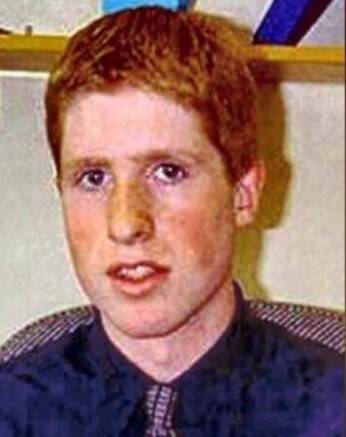
Image 1: Trevor Deely
Trevor was part of a team of 10 people in an open-plan office, managed by Daragh Treacy who described Trevor in an interview with Rosita Boland for the Irish Times: '"he was almost the perfect employee: he was reliable, nothing was too much trouble, he was hungry to learn, he was ambitious and he mingled well with everyone in the company. He was a very happy guy. He had this big, happy face on him. He was one of these nice guys to be around. He was very positive. He never bitched about other people or gave out about them. He had a very good work ethic. He was very trustworthy. I'm not just saying this because of the situation, but Trevor was a good guy."'
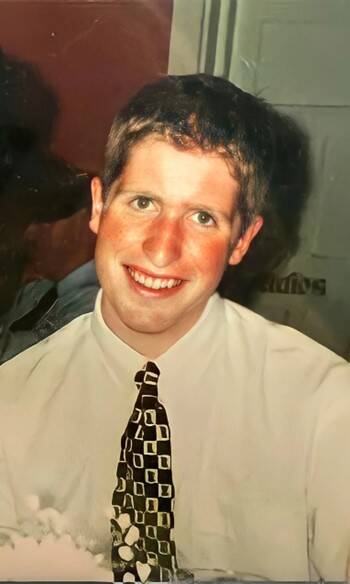
Image 2: Trevor Deely
In addition to being highly thought of in his workplace and a much-loved member of the Deely family, Trevor had a close circle of friends who he kept in regular contact with. Two of these were Glen Cullen and Conleth Loonan, both of whom he had known from his secondary school days. Glen would later describe that he and Trevor had done most things together from the day they met, and they would often meet with Conleth in Thomas Fletcher's pub in Naas for drinks - a ritual which they continued after Trevor had moved to Dublin.
In October 2000, Trevor joined his brother Mark and a group of Mark's friends to watch the Gaelic Athletic Association game between Kerry and Galway, which was being hosted in Dublin. Trevor stayed with the group after the game, where they went out into Dublin during the evening for drinks and an enjoyable evening. Mark would later describe this as the last time he saw his brother, who was seven years his junior, before he went missing.
In the summer of 2000, 22-year-old Trevor had met an American girl who had been holidaying in Ireland with friends. They stayed in contact after she went back to the States, mainly via email, and Trevor travelled across to Alaska in late November 2000 to visit her on a discounted ticket provided by Glen Cullen, who worked as a long-haul flight attendant with Aer Lingus. There was no mention in the available information of this being a romantic relationship, and it seemed to be purely a social meeting between friends.
Trevor returned to Ireland on Tuesday 5th December, and took a bus to Naas after landing at Dublin airport to visit his parents. Michael Deely would recall that he passed Trevor briefly in the family home as he was leaving for a work meeting, with the pair exchanging conversation before Michael waved goodbye. Ann cooked dinner for her youngest son and he stayed for a few hours before heading home to Dublin, where he flat-shared with two women - one of whom was a friend of his sister Michele's. He would spend the rest of the day unpacking and preparing to return to work on Wednesday 6th December.
The Disappearance
On Thursday 7th December 2000, Trevor Deely finished work and headed home to get ready for the team Christmas party that evening. On his way to meet the group, he withdrew £60 from an ATM - the last activity which would be noted in his bank account or on his card. He was dressed in a pair of beige-grey corduroy flared trousers, a shirt with a yellow and brown diamond check pattern, dark deck shoes with white stripes and a green padded jacket.

Image 3: Example of a Nokia 1610, owned by both Glen and Trevor
He met his work colleagues at Copper Face Jacks pub for drinks before the team moved on to the Hilton Hotel where they would have a sit-down dinner accompanied by band entertainment. After the meal, many of them headed on to Buck Whaley's nightclub on Leeson Street for a few more drinks and to spend time socialising and dancing.
Trevor knew that his friend Glen was also out for the evening and it was commonplace for the pair to speak over the phone when they were both out drinking. He called Glen between 11pm and 11:30pm, but Glen was unable to hear his friend due to the background noise on both ends of the line and he told Trevor that he would call him back. Despite calls going back and forward between the two, they didn't manage to catch each other.
Trevor left Buck Whaley's nightclub at approximately 3:25am on what was, by that time, Friday 8th December. A couple of factors would lead to Trevor's next decisions - as to whether they played into the ultimate outcome is unlikely to ever be determined.
The first factor was the Dublin weather. A storm alert had been issued that evening - when Trevor left the nightclub, rain was lashing down and wind speeds were over 60mph. His travel options to make the 1.5mile journey home were limited, though, as the taxi drivers were on strike across the city. Whilst it appears that there are some overnight bus services in Dublin in 2026, some of these are only operational on Friday and Saturday nights (remember that Trevor was out on a Thursday night into Friday morning) and it's not clear how many of these were operating 26 years ago. Trevor may had decided that it was quicker to make the journey home on foot rather than wait in the rain for a bus, especially if there wasn't a bus route passing his home on Serpentine Avenue.
The office of the Bank of Ireland Asset Management was a short distance from the door of Buck Whaley's, and Trevor opted to stop in the building to collect an umbrella and prepare his desk for work in the morning, likely to reduce his need to organise himself after so few hours sleep. Trevor made a call from his mobile to the security team in the office who agreed to grant him access through one of the two back gates of the banking premises, located on Wilton Terrace. The first gate appears to be a pedestrian access, leading from the pavement up a few steps, with the second gate looking more like vehicular access.
CCTV footage on the rear of the building shows a figure - believed by Gardai to be a male - dressed in black clothing appearing at the first rear gate at 3:05am, nearly half an hour prior to Trevor arriving. He wanders by the kerb before lingering by the wall, visible throughout on the CCTV camera. At 3:34:13 (3:34am and 13 seconds) Trevor comes into view in the top right corner of the camera from the direction of Buck Whaley's, heading past the man in the direction of the second gate, which is tucked back off the road just feet from the pedestrian gate.

Image 4: map showing the location of Trevor's workplace in relation to Buck Whaley's nightclub

Image 5: the gates on Wilton Terrace
As Trevor walks past the man dressed in black, he appears to have his left hand to his ear as though he's on the phone - perhaps speaking to the security team to let them know he's arriving, although this hasn't been confirmed. The CCTV footage in the video released by Gardai (which you can view here: CCTV Footage of Missing Person Trevor Deely - YouTube) then switches to a view of the second gate, although this is less clear than the footage from the first camera - it looks like glare from a streetlamp is impacting the screen, although a motion-activated light seems to come on as the man descends the slope. Although the man dressed in black left the area of the first gate after Trevor, he appears at the second gate before him. Did Trevor linger on the pavement for a moment? If he was on the phone perhaps he paused whilst mid-conversation or was hanging up, but it seems strange that the man in black effectively undertook him on the pavement. Trevor must surely have noticed this, but there's no camera covering the space between the first and second gates to know exactly what happened.
The man in black tucks himself behind the right side pillar to which the gate is attached, temporarily out of the gaze of the camera, and Trevor comes down the slope to the gate. His left hand is no longer by his ear but it looks like it reaches for his jacket pocket, possibly putting his phone away. The man in black steps forward as Trevor extends a hand towards the gate, where there seems to be a brief exchange of conversation between them. The man then steps back out of view again and Trevor opens the gate and slips through, closing it behind him.
I may be reading too much into the footage - and it's difficult not to when so little information exists around Trevor's disappearance - but when Trevor is talking to the man, it looks like he glances back towards the road or gestures that way, with the man turning to look in the same direction. Let me know your thoughts, though - the footage is quite grainy and jumpy and it's difficult to get a clear impression of the actions of both men. If Trevor was gesturing back to the road, I wonder if the man had asked him a question which Trevor is answering - something along the lines of whether he could borrow Trevor's phone or whether he had any cigarettes. Trevor could be gesturing in the direction of the nearest telephone box or corner shop and this could be a very innocent conversation. This is purely speculation on my part, though.
An enormous amount of attention has been given to the identity of this man, with police persistently trying to ascertain who he was and why he was waiting outside the rear entrance to the Bank of Ireland Asset Management offices at such an unsociable hour. Not only that, the time that he arrives and the fact that he follows Trevor from one gate to the next gives the distinct impression that he was waiting for the 22-year-old, but why? If he was waiting for Trevor, how did he know that he was going to stop at his workplace on his way home? Someone would have had to call the man to tip him off, and have done so with enough time for him to get to the Wilton Terrace gate. Despite repeated appeals for information, the man in black has never been identified.
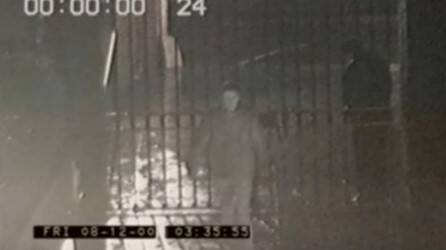
Image 6: a still from the CCTV footage of the second gate
Trevor heads through the gated entrance at 3:34am and disappears from the view of the CCTV camera as he walks into the building. After he disappeared from view, two more men arrived at the rear gate - this is not shown in the Gardai footage - but these were later confirmed to be other colleagues of Trevor's, although their reason for being at the building has never been released. One would think that they would have been extensively interviewed by Gardai in the aftermath of Trevor's disappearance, but no information has ever been given out by authorities and they have never confirmed if the two work colleagues spoke to the man in black, or whether he was still there when they turned up.
Trevor was met in the building by night-shift worker Karl Pender, who had ended up working the small hours after the original night worker - who had agreed to cover the shift so that Karl could go to the party - had been admitted to hospital. The pair agreed to have a hot drink together whilst Trevor was there, and the 22-year-old logged on to his PC whilst Karl finished a task. Trevor checked his emails - whether these were his personal ones or his work ones is unknown - and wrote a to-do list for the following morning before signing off.
The two men headed to the office canteen, where Trevor had a cup of coffee and Karl had a cup of tea, and they chatted for a few minutes before Karl went back to work and Trevor made his way towards the exit. On his way out, he collected one of the office golf umbrellas to protect him from the worst of the elements as he finished his walk home. Karl would later tell police that he didn't have any concerns about Trevor's presentation, and didn't consider him to be very drunk.
Trevor is captured on CCTV leaving the premises via gate two at 4:01am. The man dressed in black is no longer hanging around outside the building, and it seems that Trevor wasn't concerned enough by his earlier presence to mention it to Karl Pender or the security team. As Trevor closes the gate behind him, he bends down briefly as though adjusting his trouser leg, then stops by the wall which runs parallel to the vehicle ramp. Here, he props the umbrella against the wall whilst he zips up his jacket, picks the umbrella back up and heads up the ramp to the edge of the pavement. He pauses again to open the umbrella - a movement which seems to take him a couple of seconds - before lifting it over his head and walking left out of the camera view, heading along Wilton Terrace.
Trevor made a final call to his friend Glen Cullen at approximately 4:03am. Glen would later tell Gardai that he had left his mobile phone downstairs in his kitchen to charge overnight - something which he did infrequently as his Nokia 1610 battery lasted between seven and ten days. He normally kept his phone next to his bed where the ringtone would wake him up, but on this occasion it was too far away for him to hear. Trevor left him a voicemail along the lines of: '"Hi, Glen, I've missed you there. Just on my way home, all going good. I'll talk to you tomorrow."' Glen, upon receiving the voicemail on Friday morning, thought it to be nothing of significance (why would you, under normal circumstances?) and deleted it. The Gardai didn't attempt to retrieve it from the network as Glen had no concerns about how his friend sounded or the words used in the message, and said that it was quite normal for the pair to call each other in the early hours of the morning if they had both been on respective nights out. The final activity on his phone is registered at 4:06am, after which there is no more communication through the device.
The final footage of Trevor Deely was captured at 4:14am as he walks past the front of the former AIB building on the corner of Baggot Street and Haddington Road, still heading in the direction of his flat. The umbrella is held above his head and he weaves a little as he walks along the pavement - perhaps due to the alcohol in his system, or perhaps to avoid the worst of the puddles on the pavement. Just thirty seconds behind him is a figure dressed in dark clothing, walking at a casual pace.
Trevor Deely is never seen alive again.
The Investigation
Trevor failed to arrive for work on the morning of Friday 8th December, something which had never happened before. He was known as a reliable, consistent employee and had this occurred on any other day, perhaps the alarm would have been raised much more quickly. Karl Pender had probably finished his night shift and gone home by the time Trevor's colleagues arrived to start the day, so it's unlikely that Karl had a chance to tell them that Trevor had turned up just before 4am to ready his desk for the morning - and again, why would he think to pass this information over if it didn't seem significant at the time? Perhaps if he had the office staff may have wondered why he had gotten everything ready then failed to turn up.
As it was, Trevor wasn't the only member of staff who didn't turn up for the last day of the working week. Based on the festivities and alcohol consumption of the night before manager Daragh Treacy let it slide, choosing not to call or hassle his staff.
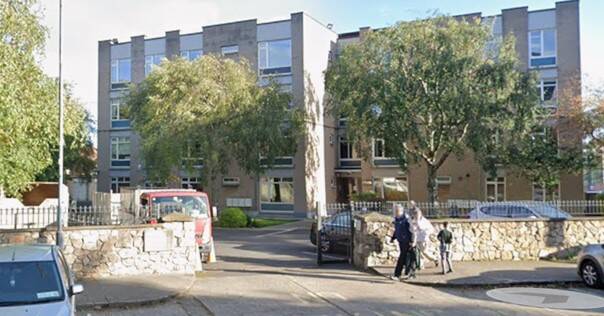
Image 7: The Renoir Complex on Serpentine Avenue
The two young women with whom Trevor shared a flat in the Renoir Complex on Serpentine Avenue were both away for the weekend and therefore weren't present on Friday, Saturday or Sunday to notice that he hadn't come home. His sister, Michele, was visiting London over the weekend and had spoken to him earlier in the week to discuss presents for the upcoming Christmas, obtaining Trevor's shirt size so that she could buy him some new clothing. Whilst in London, she purchased him a pale blue Ralph Lauren shirt and attempted to make several calls to her younger brother on Saturday and Sunday. All of these calls went unanswered with Michele tentatively recalling that they rang out, but she couldn't be completely certain of this.
It was only when Trevor failed to present to work on Monday 11th December that alarm bells began to ring. When Daragh Treacy ascertained that none of the office staff had heard from Trevor since the night out the previous Thursday, he spoke to the Bank of Ireland HR department. On their advice, Treacy made contact with Trevor's next-of-kin Ann Deely.
Ann, initially not too worried about her youngest son, called Michael Deely who worked in Dublin city and asked him to pop round to Trevor's apartment to check if he was alright. Michael duly did so, but upon arriving at the property he failed to raise an answer at the front door. Trevor's flatmates were still away, and Michael didn't have a key to the home so had no way of getting into the apartment to check if Trevor was unwell or injured.
After receiving an update from her husband and beginning to feel more uneasy, Ann called her eldest son, Mark, at his home in Castlebar, County Mayo. Mark took the information seriously from the very beginning, telling his wife - who was pregnant with the couple's first child and the first Deely grandchild - that he had to head to Naas immediately as it was completely out of character for his brother to be absent from work.
Unknown to Mark, he would not return to his home and wife for two months.
By the time Mark arrived at the family home in Naas later on Monday both Ann and Michael were frantic, having called round family members and friends and established that no-one had spoken to Trevor since the night of his Christmas party. By the time the early evening rolled around, Michael made the decision to walk to Naas Garda Station - accompanied by Glen and a group of Trevor's close friends - to report his youngest child as a missing person.
At the same time, Mark was driving north to Dublin. He used his father's employee permit to park his car at the Bord Bia offices in Clanwilliam Court on Lower Mount Street, just one street from Trevor's workplace, then set out on foot in search for his brother.
Mark walked to Copper Face Jacks first, checking with the staff whether Trevor may have gone back there for any reason. He then traced a route to the apartment in Serpentine Avenue, ducking down alleyways along the way to check in skips and refuse bins, not really knowing what he was looking for but hoping for some answers. As he passed the US embassy, he stopped to talk to the security guard out the front of the building who informed him that US president Bill Clinton would be visiting the city the following day, and that all of the waste bins in the city had been emptied in preparation. At this stage, Mark walked into a nearby pub and ordered a large brandy, calling his wife in distress to tell her that he couldn't find his younger brother.
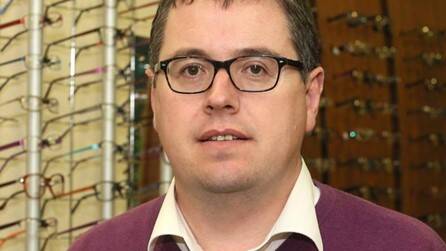
Image 8: Mark Deely
Ann Deely called Michele, who was still across the sea in London staying with friends. Michele made immediate arrangements on the Monday night to travel home to Naas.
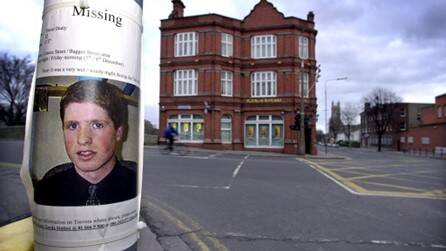
Image 9: a missing poster on the corner of Baggot Street and Haddington Road
By the time Tuesday 12th December rolled around, a rapidly assembled search party set out in Dublin to look for any sign of Trevor Deely. Fronted by siblings Mark, Michele and Pamela and accompanied by many of Trevor's friends, the team put up hundreds of laminated posters, handed out thousands of leaflets to people on the street and in shops, and spoke to multiple business owners, homeless people, and passers-by in case anyone had information which could help. The Irish Meat Board (An Bord Bia), Michael Deely's employers, paid for full-page adverts to be placed in national newspapers across Ireland, as well as for colour posters for the search party to apply around the city.
Only once all of Trevor's nearest and dearest were all in the same place did it become apparent how long it had been since anyone had heard from the 22-year-old. Nearly 72 hours had elapsed between the last time anyone spoke to Trevor and the alarm being raised, meaning that they were already on the back foot when it came to searching for him or any of his possessions.
On Tuesday 12th, divers from the Gardai sub-aqua team were deployed to scour the Grand Canal and the River Dodder. Just weeks before Trevor had gone missing, a man in his mid-20's had fallen into the canal after a night out and his body had been retrieved after two days in the water. It was something which had to be considered, and anxious family and friends watched on as divers disappeared under the surface of the water. Nothing of significance was found - not only did Trevor still remain missing, but there was no sign of any of his possessions on the river bed. One of the divers theorised that, as the umbrella he was carrying - stamped with the distinctive company initials 'ACC' - wasn't found, it was unlikely that the man had ended up in the water.

Image 10: divers searching the Grand Canal
Consideration was given to draining the Grand Canal basin, but this was deemed to be impossible due to the impact this action would have on the structural integrity of the surrounding buildings. The stretch of water was searched, and part of the Grand Canal between Leeson Street and the basin at Ringstead was drained not once, but twice to make sure that nothing had been missed. On the night of Thursday 7th December into the following morning, the canals and river in Dublin had been on flood alert due to the horrendous weather forecast, although it's unclear if any flooding did occur over that period of time.
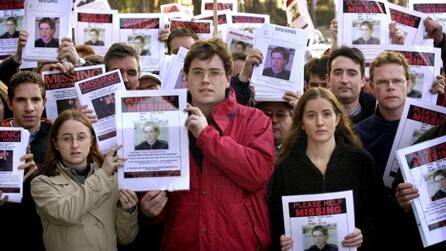
Image 11: members of the search party, fronted by Pamela, Mark and Michele
Dr Phillip Perry, a senior research fellow in the radio and optical communications laboratory at Dublin City University, later advised that the mobile which Trevor would have been carrying - a Nokia 1610, the same model as owned by Glen Cullen - would have gone dead almost as soon as it was submerged in water. He commented: '"if the phone was on when it went in the water, it would be dead in seconds. The radio signals would not penetrate more than a few inches of water. So it couldn't ring. If a phone has been in the water since 2000, there may still be a slim chance of getting the SIM out of it and getting phone numbers off it, but that's really all you could get from it now."'
The inference from this remark was that if Trevor had fallen into the canal or the River Dodder on his way home, his phone would have stopped working almost immediately. Although Michele couldn't recall for certain, she thought that her calls to Trevor over the weekend of the 9th and 10th December had rung out, suggesting that his mobile was still turned on and that Trevor was unlikely to have fallen into either body of water.
Conleth Loonan, Trevor's close childhood friend, worked for a company which supplied CCTV equipment and knew that time was now of the essence when it came to obtaining camera footage. He knew that recordings would be on VHS tapes and would either be stored for a short period of time or recorded over during the following 24-hour period. On the back of this information, the group set about speaking to the owners of shops and businesses to see if anyone had cameras installed. They drew a blank until they visited the AIB building on the corner of Baggot Street. The bank reused their VHS tapes every 28 days, with the cycle about to recommence, and the group were only just in time to ask the company to hold the tapes for review by the Gardai. This swift action provided the 4:14am footage of Trevor heading home, with DS Michael Fitzgerald later telling the press '"I've never worked on a case where the family were so proactive."'
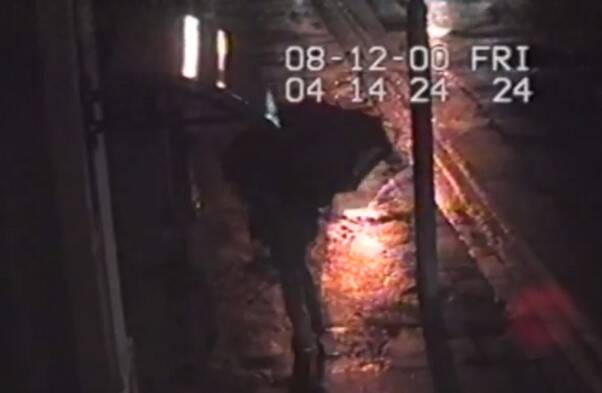
Image 12: a still from the CCTV footage on Haddington Road which shows Trevor holding the umbrella he had borrowed from his workplace
Three weeks after Trevor had vanished, more than eighty volunteers from Castlebar, County Mayo - the town where Mark Deely lived - travelled to Dublin to distribute more posters around the city in a desperate bid to keep information coming in. Mark made a personal appeal to the public to come forward if they knew anything about Trevor's disappearance, even handing out his own mobile phone number in case people weren't comfortable speaking to Gardai. In a heart-breaking comment, he said: '"it doesn't matter how we get him back now as long as we can have him back."'
Two detectives travelled to Anchorage, Alaska, to interview the girl who Trevor had visited less than a month prior. Trevor's sisters, Michele and Pamela, made an identical journey to satisfy their own minds that there was no link between the Alaska trip and Trevor's disappearance, but neither party found any information of significance - although there was mention in a news article that the woman had not expected Trevor to turn up. Previous emails exchanged between the two showed that she was busy with university work at the time, but the full details of these exchanges aren't available in the public domain and it was deemed to be nothing of significance by Gardai.
By January 2001, Gardai were tracing prostitutes who worked the red light area of Baggot Street and were seeking clients on the night when Trevor went missing. By the middle of the month, authorities had taken 15 statements from women working that night, but were keen to make the public aware that they did not believe Trevor had been seeking their services. With the taxi strike in place, there were far fewer potential witnesses available - taxi drivers and their passengers have the ability to see activities at times when most of the world is asleep, and the lack of either of these must have been a serious blow to the investigation. Anyone who had been in the area of Baggot Street and Haddington Road that night needed to be interviewed in case they had seen anything at all, no matter how insignificant they felt it had been at the time, with Gardai seeking witnesses in the form of early morning delivery drivers, night shift workers, petrol station staff and customers, and anyone else who may have had reason to be out in the small hours of the morning. However, no new leads came from these efforts.
Trevor's disappearance and the subsequent efforts by family, friends and Guards to find him created the biggest publicity campaign ever seen across the city of Dublin, but as weeks turned into months teams had no alternative other than to step down. Mark Deely made the decision to go home in February 2001 without any answers as to what had happened to his little brother.
Even though the case ceased to be front page news, the hunt for Trevor Deely didn't stop. His family persisted in publicising his disappearance and asking the public for help. Film director Kieran Walsh spoke to the Deely family in 2005 to discuss running an exhibition including images of Trevor Deely's missing posters attached to lamp posts and walls around Dublin city. The exhibition went ahead in December 2005, not only providing a display of photography but also reinvigorating publicity for the case after four years. Walsh would tell the Dublin Evening Herald: '"every time I went out for a walk there would be a poster in front of me all the time, I couldn't ignore him. It was like he was haunting me."'
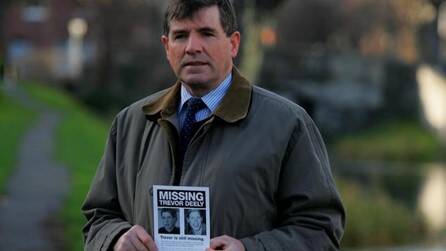
Image 13: Michael Deely with a missing poster
By the time 2014 rolled around, Trevor's casefile was being stored at Pearse Street Garda Station and contained 140 statements and logs of 300 tasks completed as part of the investigation. The files reflected the intense search which had been undertaken, with multiple avenues being pursued.
Superintendent Michael Cryan, who was allocated as one of the family liaison officers for the Deely family, commented: '"the unfortunate thing for the family is that we just don't know what happened. If you can find a body, people can grieve. They have acceptance. They have a place to go. And the longer it goes on, the harder it gets."'
In the same year, Rosita Boland - a journalist with the Irish Times - wrote a 3-piece article on Trevor Deely's disappearance. The Deely family had kept journalists out of their home ever since Trevor had vanished, describing the family home as their refuge, but several family members and friends agreed to meet with Boland and be interviewed. This was with the exception of Trevor's mother, Ann, who remained so traumatised by the disappearance of her youngest son that she has never spoken publicly. At the time the interview, Michael and Ann were grandparents to nine grandchildren - the first of which was due to be born shortly after Trevor disappeared. During the interviews with Rosita Boland, it was mentioned that Trevor had been due to meet Glen Cullen and Conleth Loonan on the evening of Saturday 9th December 2000 but it's unclear if this was a firmly-set plan or if it had been cancelled. If it had been due to go ahead, it's also unclear why the flag wasn't raised when Trevor failed to attend this meeting.
On 29th December 2015 the TV series titled Donal MacIntyre: Unsolved aired an episode about the case. Criminologist Donal MacIntyre liaised with several professionals to review the available information and look at realistic theories in the case, including the consideration that Trevor could have been hit by a drunk driver - something which could have been a possibility due to the taxi strike potentially increasing the number of these on the road.
Although Trevor's case wasn't officially closed, it was largely dormant until a reinvigorated review commenced in December 2016, just after the sixteenth anniversary of his disappearance. Updates and developments in technology enabled CCTV footage obtained in 2000 to be cleared up and defined, with authorities able to take a closer look at the man in black by the Bank of Ireland Asset Management building, and the man seen 30 seconds behind Trevor as he walked past the former AIB building heading onto Haddington Road. Tucked away in the archives of the initial investigation was information that the man behind Trevor on Haddington Road had been identified, spoken to, and ruled out as having any involvement in the case back in 2001, but a closer review was taken of the clearer footage to see if there were any similarities between him and the man in black. In April 2017, Gardai released the CCTV footage from gates 1 and 2 on Wilton Terrace to the public and appealed for anyone who may be able to identify the man outside the banking building to contact them.
After the CCTV images were released in April 2017, CrimeStoppers in Ireland announced that a reward of 100,000euro was being offered for information which led to finding Trevor. This money had been provided to the organisation by a donator who did not wish to be named, and provided an enormous incentive for anyone who may have been withholding vital information to come forward, but no leads appeared. Gardai also released a computer-generated image which gave an example of how Trevor may have looked 17 years after his disappearance in the hopes that, if Trevor was still alive, he may be recognised by a member of the public.
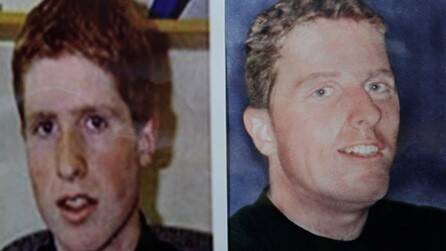
Image 14: the age-progressed image released by Gardai in 2017
A media frenzy occurred in August of the same year when the Gardai announced that they were commencing a search of three acres of land in the Dublin suburb of Chapelizod. This land was approximately 5 miles from Haddington Road - the place where Trevor was last captured on CCTV camera - and the search had been triggered by a statement received from an informant who the authorities were unable to name.
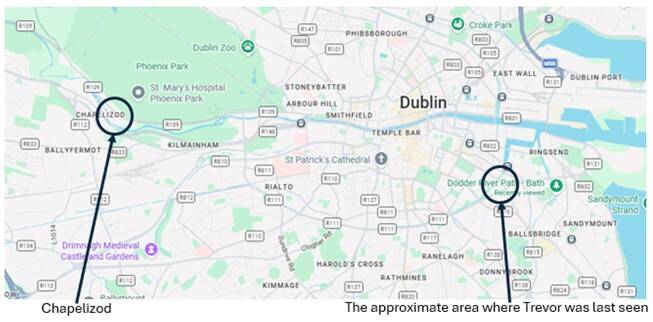
Image 15: map showing Chapelizod in relation to where Trevor was last seen
The informant told Gardai officers that Trevor had been murdered by a criminal, who was well-known to authorities, in the Crumlin area of Dublin. The reported culprit was known to be involved in Dublin's drug and prostitution trade, and operated as part of a gang. The same gang had been investigated in relation to the murder of Sinead Kelly in 1998, which perhaps gave Guards more of an incentive to take the information seriously. He told officers that the gang were currently operating a prostitution business in Baggot Street, near to where the former AIB building CCTV had captured Trevor's movements at 4:14am. The informant stressed that Trevor hadn't known his assailant, saying the two had met in a chance encounter whilst Trevor was heading home.
A source from the Gardai spoke to the Irish Independent, saying: '"while there are certain doubts in this case, Gardai were given an account of what happened to Mr Deely and where his remains were buried."' The source went on to stress that the information had to be acted upon to either confirm or disprove the report, and with no other leads what option was there? Detective Inspector Paul Costello told the media website thejournal.ie that he felt the information to be genuine: '"a lot of it added up and it did fit, so we couldn't leave it behind us."'

Image 16: tarpaulin covering the entrances to the site
The search lasted for five weeks, with Gardai fitting black tarpaulin to gates and fences around the area to prevent press photographers sneaking images of the scene and enabling officers to get on with the operation undisturbed with the combined effort of forensics, officers and police dogs.
The area was excavated and examined as thoroughly as possible, but no sign of Trevor or his possessions was found. This likely let the Deely family with mixed feelings - it still provided them with no answers as to what had happened to their beloved son and brother, but it left the chance that he could still be alive.
Whilst Guards didn't find any evidence leading them to Trevor, they did uncover nearly £80,000 worth of drugs concealed in the area in addition to a number of weapons. They concluded it to be a stash area for criminal activity - somewhere which gangs would return to as and when required. It wasn't clear from press reports whether this was linked to the gang which were reported to be operating in the Baggot Street area, and whether this is what had led the informant to believe that Trevor could be there.
By September 2017, the search was called off and little further information about the case arose in the media in the following months and years.

Image 17: the excavation site
Where is the case today?
In December 2023, Mark Deely spoke to the media and said that the Haddington Road CCTV footage had been further enhanced by police and the man walking behind Trevor had been identified, spoken to and categorically eliminated from the inquiry. It was ascertained that he was not the man outside the Bank of Ireland Asset Management building between 3am and 4am on 8th December 2000, putting to bed the theories and contradictions which had been circulating over the course of two decades that the men were one and the same.
Gardai released a fresh appeal for public help in the case in December 2024, focusing largely on trying to identify the man in black. Over the course of 24 years he had never been identified, and his purpose for being outside the building hadn't been established. The only person who would have been able to provide a good description of the man was Trevor - his face didn't appear clearly on CCTV and he spent a lot of his time in the shadows during the footage. Since this appeal was released there have been no updates from authorities, so it's unclear if any information has been submitted by members of the public.
In June 2025, Gardai were quizzed on the status of the investigation. They confirmed that the case of Trevor Deely continues to be classed as a missing person inquiry, and that it has never been officially progressed to a murder investigation. Officials stated that the investigation will remain under review, but no new resources will be allocated until fresh information is brought forward.
Although Mark Deely praised the Gardai for doing an excellent job back in early 2001, there is a bone of contention over whether more could have been done to trace Trevor's mobile phone in the weeks after he went missing. Information was obtained over the final calls made from the device, but no attempt was made to pinpoint the location of the Nokia 1610. Michele told Rosita Boland: '"I don't accept that [the Garda] couldn't have done more at the time. I know it wasn't as advanced as today, but it was still the mobile phone era: it wasn't back in the day when there was nothing electronic or digital."' Although Michele's recollection is hazy and she isn't confident of the fact, she believed that Trevor's mobile was ringing out when she called it over the weekend of 9th and 10th of December 2000, so if calls were going through to the device surely this could have given Gardai the opportunity to obtain the location from the phone network? If this had been done at the time, could this have led to a more concise area to coordinate the search for the 22-year-old?
None of the personal possessions which Trevor had with him at the time he disappeared have been found. His mobile phone, wallet, clothing and the umbrella he borrowed from his workplace all remain missing. Trevor's bank account and bank cards have seen no activity since the night of Thursday 7th December 2000, when he withdrew money from an ATM on the way to his work Christmas party.
The fact that Trevor - who was communicative with both family and friends on a daily basis and a reliable employee - ceased all contact with those he loved, stopped using his bank accounts, and failed to turn up to work indicate that something occurred in the minutes after he passed the Haddington Road CCTV camera at 4:14am. Whether it involved another person or whether a tragic accident played out is a cause for extensive debate, but the sudden cessation of activity points towards a significant incident occurring. His family and friends are confident that he wouldn't have taken his own life, and to leave to start a new life somewhere else would have required money - a theory which doesn't seem credible when his cash sat untouched in the bank.
The statement provided by Gardai in June 2025 indicates that the case has hit a brick wall, and that no further activity is planned by authorities unless they receive information of interest from the public. Despite the dormant status, his case remains the subject of discussion on social media and in documentaries. The fact that a man can disappear from a city street without a trace is bewildering at best, and terrifying at worst, and theories on what could have happened to the young man are dissected repeatedly.
Theories
We don't tend to delve too much into theories on Undiscovered because they often have little basis in fact and they can become more and more wild as discussions escalate. However, the physical evidence in this case is so sparse and the indications on what may have happened to Trevor are so few that I took a bit of a dive into some of the theories which have been thrown about online, and have studied some of the realistic ones and some of the questions posed about his case. If you're feeling brave, you can check out some of the threads on Reddit or the comments on YouTube videos - just be aware that you could be drawn down a very deep rabbit hole!
There is a lot of debate about why Trevor chose to take a route home via Haddington Road that night, both on social media and in the press. People who are local to the Dublin area have remarked that the street is considerably less well lit than other available options, and it's a less direct journey to his flat on Serpentine Avenue. One comment said that the most direct, busiest - and therefore safest - route would have been to go via Baggot Street and onto Pembroke Road, especially if the weather is adverse and you want to get home quickly. It would have been the quickest route to his flat on foot, and surely the most appealing if he was cold and wet from the rain.
So why, then, did Trevor head down Haddington Road instead of taking the widely preferred route? Some suggest that he was heading for a 24-hour convenience store to purchase cigarettes. He often smoked Benson & Hedges or Marlboro Light brand cigarettes which he lit with a Zippo lighter, and it's possible that he wanted to pick some up to smoke on his way home or first thing in the morning. But, as some people have asked, would he have been so desperate for a cigarette that he went nearly a kilometre out of his way to buy some?
A Dublin resident who commented on a Reddit thread dedicated to Trevor's case mentioned that there was a 24-hour convenience store on South Lotts Road, which can be reached by walking straight along Haddington Road and crossing two junctions en route. I'm not local to Dublin so am relying largely on information from Google Maps, but it appears that the majority of Haddington Road is fronted by embassies for different countries or office buildings. It's only when crossing the junction from Haddington Road onto South Lotts Road that shops start to appear.
Image 18: the suggested most direct route back to Serpentine Avenue from Wilton Terrace
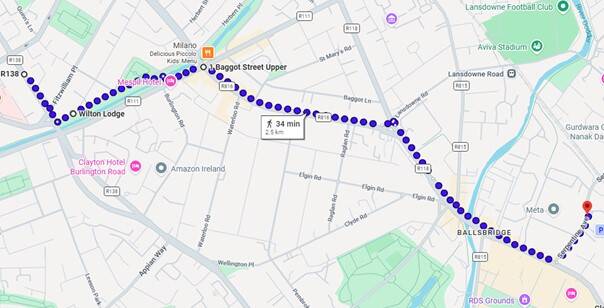
If you're listening to this case on a podcast platform, I would recommend that you check out the images on our website, as I'm going to provide a few maps which show some of the routes Trevor could have taken home. In the image above, I've mapped out the suggested best route home for Trevor from his office backing onto Wilton Terrace back to his flat in Serpentine Avenue. This has been agreed by many in the media and online to be the most direct and safest route to his home - it also works out to be the shortest at 2.5km, or 1.5miles.
For Trevor to have been captured on CCTV heading along Haddington Road, it meant that he had crossed over the canal running alongside Wilton Terrace, had crossed the junction at Baggot Street and had made the deliberate decision to continue straight on. Let's say, then, that he had decided to head to the convenience store on South Lotts Road to purchase some cigarettes, perhaps thinking it would save him time in the morning and that he'd get it out the way during the quieter hours. He could have made it to the convenience store, but nobody has come forward in the now 26 years since he went missing to say that they saw him or served him in the establishment. The extent of the publicity around this case would have surely jogged the memory of the staff working overnight if they had seen him in the store. Does this perhaps mean that he didn't arrive there? If not, it means that something must have happened to him along the length of Haddington Road in the approximately 1km or 0.6miles between the CCTV camera and the South Lotts Road store.
As mentioned above, once Trevor had crossed the Baggot Street junction there would have been two more significant junctions to cross - each one a crossroads with four exits. If, as suggested in the Donal MacIntyre: Unsolved episode, there were more drunk-drivers on the road due to the lack of taxis available that night, is it possible that someone knocked Trevor down as he crossed the road? They could have panicked about losing their license or being arrested and put Trevor in the car, either injured or deceased, and transported him elsewhere. Or could he have been confronted by someone trying to mug him, or by a gang member as suggested by the police informant?
An alternative is that Trevor did make it to the convenience store, bought his cigarettes and went on his way. If this was the case, there were multiple options available to him as he chose a route to walk home. I've mapped some of them out below, but I feel sure that there are more options available - as mentioned above, I don't know Dublin so am working off what I can see on Google Maps.


The first two routes would have involved Trevor doubling back on himself for a short distance up Haddington Road before cutting off down other streets, but the third and fourth options would have led him a distance along Bath Avenue and across the River Dodder. In the third map, the route includes cutting down the riverside walkway and into a housing estate on the way to Serpentine Avenue. Although Google Maps indicates that there is railing along the walkway as of 2024, I'm not sure if this would have been the case in 2000 - it would certainly have been darker and likely deserted in the early hours of the morning. If Trevor had gone to the convenience store and chosen this route home, there would have been a very slim chance of any witnesses and the area would perhaps have created a good opportunity for someone looking to rob an innocent passer-by. If someone had attempted to rob him, though, why would they have made him disappear? It's a huge leap to go from mugging someone to killing them.
Although the general consensus is that Trevor hadn't fallen into any body of water on his way home - the report from Michele that she thought his phone rang over the weekend, and the fact the mobile network would have ceased operation under water indicate this to be highly unlikely - can this be completely eliminated as a possibility? If the rivers were on flood alert due to the weather, and the wind speed was between 60mph and 70mph, could Trevor have been knocked off balance by a gust of wind pulling at the large gold umbrella? If he had, for example, gone to the convenience store and travelled home via the riverside walk, would the speed of the river under flood conditions have been enough to sweep his body and his possessions out to sea? Remember, it was 72 hours before anyone raised the alarm - which means that the river would have had 3 days to pull his body out to open water without anyone even knowing that he was missing. I know that the basic evidence available is against this theory, but it's an interesting consideration.
Would Trevor have been desperate for cigarettes at that time in the morning? The general consensus in comments online from those who are smokers is that they'd have rather gone home, especially based on the weather conditions, and worried about getting a new supply in the morning. After all, more shops would have been open in the morning, and it wouldn't have required a detour of more than half a mile. Perhaps he was looking to buy some food, which would have made the convenience store more appealing, but it's impossible to know the answer to either of these questions.
Another theory raised across the media and online is that Trevor may have been concerned that he was being followed by the man behind him, and had taken the detour to throw the person off his track. But if Haddington Road was the lesser lit and quieter of the routes available to him, why would he choose to go this way? Surely this would be an illogical choice and put him at greater risk. Was he perhaps going to visit someone? Did he know someone living in that area? If the last activity on his phone was at 4:06am and his call to Glen Cullen had been at 4:03am, what was the last activity? Could he have been contacting someone else who he intended to stop and visit?
For some reason, there's not much mention of the visit from Bill Clinton in the newspaper reports from the time in it's relation to Trevor's disappearance - in fact, the first mention I found of this was the interview given by Mark Deely to journalist Rosita Boland. I find this a bit bewildering, because surely the impact that the presidential visit could have had on the case was huge. If all bins and skips in the city were emptied, and public areas tidied, over the weekend of 9th and 10th December 2000 then any evidence relating to Trevor's disappearance which had been discarded in one of these would have been transported to landfill. If, for example, someone had tried to mug Trevor of the cash in his wallet but something went wrong, they could have thrown both Trevor and his possessions in a refuse bin in the hopes that he wouldn't be found. If Trevor himself had been abducted but any of his possessions left on the pavement - such as the umbrella - refuse collectors would likely have picked this up and thrown it in the back of the truck long before Trevor was even reported missing. The city clean up in the days before Clinton visited seems like a much more significant factor which is little mentioned in the press. Vital evidence could have been removed by a refuse truck with no-one being any the wiser.
No evidence has been found by the Guards that Trevor was involved in any illegal activity, so the concept that he may have been abducted by a gang or individual for reasons relating to criminality have been disregarded, as has any suggestion that he intended to take his own life or run away. All of the theories which have been mentioned above are pure speculation and there is no evidence which suggests any of them to be true. By all accounts, Trevor was a young, kind and amicable man who was just trying to make a living and have a good time.
Conclusion
There are a number of devastating factors in this case which I'm sure police, family, friends and the general public have already ruminated over. What if Trevor had been reported missing earlier, and the search commenced hours, and not days, after he disappeared? What if his workplace had raised the alarm on the Friday when he failed to appear at the office? Elements such as CCTV footage could have been obtained much more quickly, and could have shown so much more. What if Bill Clinton had been visiting Dublin city a week earlier or later, and the bins not been thoroughly emptied that weekend? Would something of evidential value have been found? What if Glen Cullen's phone hadn't needed charging that night, and had been by his bed for him to answer? If Glen and Trevor had been on a call together, would Glen have heard what happened, or would an event had been averted? What if Trevor's phone network location had been identified in the days after he was reported missing? Could it have indicated a location where the phone, at least, could be found?
The list of 'what if' questions is endless. His family and friends have likely had countless sleepless nights thinking them over and wondering if one small situation change could have made a difference.
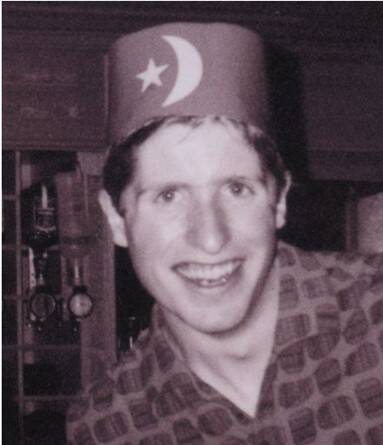
Image 23: Trevor Deely
A huge amount of recognition must go to Trevor's family, friends and community. They were relentless in their search for the 22-year-old, with companies and organisations helping wherever they could. The efforts made by Trevor's loved ones went above and beyond, and it truly seems as though they couldn't have done any more. It's very clear that he was surrounded by love and support, and it's heart-breaking to think that there are still no answers. His father, Michael, still publicises his sons case in the hope of finding a resolution and to keep Trevor's name out there in the news. Mark Deely told the Irish Times: '"we're totally open minded. The truth is, as daft as it might sound, he's as likely to walk in the door in the morning as he is be found dead. We've no information whatsoever."'
Trevor Deely would be in his 40s if he is still alive today. An image released by Gardai shows how he may have looked in 2017, and they continue to appeal for any information about his disappearance.
Trevor's family and friends deserve answers. The city of Dublin deserves answers, and the community deserves to be able to walk home at night with the certainty that they will make it to their own front door and the comfort of home. Someone, somewhere, must know something. There must be additional information which could help to solve the case and get the Deely family the resolution they so desperately need.
If you have any information about the disappearance of Trevor Deely in the early hours of Friday 8th December 2000, please contact Pearse Street Garda Station on (+353) 01 666 9000.
Information can also be submitted to the Garda Confidential Line by calling (+353) 1800 666 111.
References for text:
Disappearance of Trevor Deely - Wikipedia
Re-Appeal for Missing Person Trevor Deely - Garda
The disappearance of Trevor Deely, part 1 – The Irish Times
The disappearance of Trevor Deely, part 2: the search – The Irish Times
The disappearance of Trevor Deely, part 3: living with loss – The Irish Times
Trevor Deely appeal: Gardaí have released enhanced CCTV from night of disappearance
Feared Dublin gangster 'shot and murdered missing Trevor Deely', gardaí told | Irish Independent
Drugs worth €80,000 found as dig for missing Trevor ends | Irish Independent
Trevor Deely investigator says new lines of inquiry are keeping gardaí 'very busy'
No Murder Upgrade For Trevor Deely Case Following Garda Review - Unless New Evidence Emerges - Kfm
Gardaí appeal for information on 25th anniversary of disappearance of Trevor Deely – The Irish Times
Agony Goes On | Evening Herald (Dublin) | Wednesday 11 July 2001 | British Newspaper Archive
Trevor Deely: How a missing person investigation changed course after 16 years
Credit for images:
Image 1 - Trevor Deely: Appeal to trace man in connection with Deely disapperance
Image 2 - Trevor Deely: Trevor Deely | International Missing Persons Wiki | Fandom

Image 3 - Example of a Nokia 1610: Nokia 1610 – Nokia Collection
Image 4 - map showing Buck Whaley's nightclub and Trevor's workplace: from Google Maps with endorsements by the author
Image 5 - the gates on Wilton Terrace: from Google Maps (dated 2024) with endorsements by the author
Image 6 - still from CCTV footage of gate 2: Trevor Deely disappearance: Garda investigation identifies man caught on CCTV – The Irish Times
Image 7 - the Renoir Complex on Serpentine Avenue: from Google Maps (dated 2024)
Image 8 - Mark Deely: The disappearance of Trevor Deely, part 2: the search – The Irish Times
Image 9 - a missing poster on the corner of Baggot Street and Haddington Road: Trevor Deely: The search ends, and continues – The Irish Times
Image 10 - divers searching the Grand Canal: The disappearance of Trevor Deely, part 3: living with loss – The Irish Times
Image 11 - members of the search party: The disappearance of Trevor Deely, part 2: the search – The Irish Times
Image 12 - a still from the Haddington Road footage: Trevor Deely appeal: Gardaí have released enhanced CCTV from night of disappearance
Image 13 - Michael Deely with a missing poster: The disappearance of Trevor Deely, part 3: living with loss – The Irish Times
Image 14 - the age-progressed image released by Gardai in 2017: Trevor Deely: Family ‘still searching for answers’ 22 years after disappearance in Dublin – The Irish Times
Image 15 - map showing Chapelizod in relation to where Trevor was last seen: from Google Maps with endorsements by the author
Image 16 - tarpaulin covering the entrance to the site: Trevor Deely search to continue amid hopes of a breakthrough – The Irish Times
Image 17 - the excavation site: Drugs worth €80,000 found as dig for missing Trevor ends | Irish Independent
Image 18 - map showing the most direct route between Wilton Terrace and Serpentine Avenue: from Google Maps
Images 19 to 22 - maps of possible routes home: from Google Maps
Image 23 - Trevor Deely: Missing Person – Trevor Deely 8/12/00 - Garda