

Genette Tate
You can now listen to this case in two parts on YouTube. Also available on podcast platforms!
Disclaimer: this article contains details which may be upsetting for some readers. Discretion is advised.
In this casefile, we're going to cover the story of a young girl who disappeared more than forty years ago. Her case has never officially been solved, and - although there was a suspect - no-one has ever been charged. Her father has gone to his grave without knowing what happened to his beloved daughter, and his wish that she be buried beside him has never been fulfilled, as her body has never been found.
I live very close to the village where the abduction occurred, so I've been able to take some of the images in this article first-hand (I'll apologise in advance for the poor quality of the photos, as these were taken on my phone camera). The story is as heart-breaking today as it was in 1978, and the pain of not knowing what happened to this young girl has extended right the way across the UK. The village has never forgotten, with memorial in the churchyard still laden with fresh flowers.
This casefile is about the disappearance of Genette Tate.

Image 1: a photograph of Genette Tate
Genette Louise Tate was born on 5th May 1965 in Taunton, Somerset, and spent the early years of her life in the Taunton suburb of Wedlands as the only child of her mother, Sheila, and father, John. Together, the little family moved from Taunton into Cornwall for a period of time before settling in the small village of Aylesbeare in East Devon.
At some stage in Genette's youth, her parents separated. Both went on to remarry, with Genette subsequently living with her father and his new wife, Violet, and Violet's daughter, Tania. This meant that, as well as being graced with two sets of loving parents, she had also inherited a new step-sister. Although Genette lived with her new four-member family, she kept in regular contact with her mother.
The family lived in Barton Farm Cottage on the outskirts of the village. In the 2011 census, the population of Aylesbeare was 583, with the total population at the time of Genette's disappearance in 1978 being somewhere below this. By all accounts, it would have been the typical small English village where everyone knew their neighbours and the people that they passed in the street. Today, Aylesbeare is quiet, peaceful and picturesque. It's facilities are limited to a church, village hall and a pub (although even this has recently been closed), but it's position tucked a mile or so from a main road gives it excellent links to Exeter and the M5 motorway in one direction, and beautiful East Devon seaside towns in the other.
On Saturday 19th August 1978, Genette had agreed to do an additional paper round to fill in for the usual paper boy, who was on holiday with his family. This would afford her a few extra coins to add to the money she had saved for her own upcoming family holiday before the start of the school term in September. Her father and step-mother had gone to Exeter for the day, and her step-sister Tania was also in the city.
At 3:28pm, two of Genette's schoolfriends met her as she pushed her bicycle along Withen Lane. Their friend was wearing a white t-shirt with her name embroidered in red thread on the left shoulder, along with light brown trousers and white plimsolls. By the time they bumped into her, Genette had already delivered fourteen newspapers from the paper bag, with a few still left to go, and she gave a copy to her friends to look through. The three had a brief conversation before Genette climbed onto her bike to wheel down the other side of the hill whilst her friends paused to hold the newspaper open whilst they read an article together.

Image 2: the road sign to Withen Lane, at the junction between Withen Lane and the B3184
Just seven minutes later, after closing the newspaper and continuing along Withen Lane, Genette's two schoolfriends were met with an unusual sight in the middle of the road. Genette's bicycle was lying on it's side in the middle of the lane, with newspapers having spilled from the bag and spread across the tarmac, and Genette nowhere to be seen.
A little confused, the two schoolfriends picked up Genette's bike and wheeled it to Barton Farm Cottage. They waited outside the property - perhaps hoping that Genette would come home, wondering where it had gone - and greeted John and Violet Tate as they returned from Exeter, twenty-five minutes after the girls had made the discovery. They asked the couple if Genette was at home and, after a sweeping check of the property, John confirmed that she wasn't. Concerned, Genette's parents searched the area around their home and Withen Lane. By 5pm, however, after a short and fruitless search, John made the decision to contact the police and report his daughter missing.
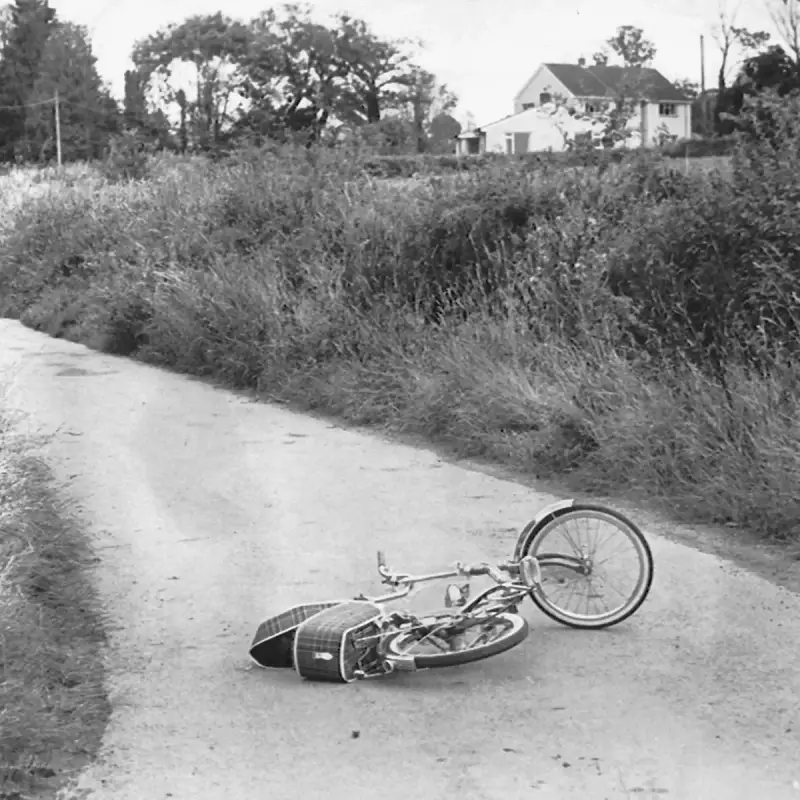
Image 3: a reconstruction of how Genette's bicycle was found
Devon and Cornwall police responded with immediate effect. They visited the home and spoke to John and Violet, and completed a search of Genette's bedroom. They confirmed that all of Genette's possessions were still in place, including her clothes and personal effects, as well as the money she had been saving for her family holiday. The takings from that days paper round were still in the coin purse with the paper bag.
Upon investigating the area of Withen Lane where the bicycle had been found, police noted no disturbance to the road or sidings which would indicate an accident. Genette's bicycle was still intact, dispelling thoughts of a possible hit-and-run.
As mentioned earlier, the size of Aylesbeare village at the time meant that people knew each other, and activity in the village was much more likely to be witnessed due to the quiet nature of the surroundings. It's not a village which is often used as a thorough-fare, and police were fortunate when speaking to local residents to obtain a description of a vehicle seen in the area of Withen Lane around the time Genette disappeared.
The car was described as a maroon-coloured Triumph, or similar model, and a photo-fit was formed of the driver after a description was given of a young man - possibly in his twenties - with a pale complexion and short, dark hair. Witnesses reported that he was wearing a light-coloured shirt and was notably handsome.
Police mounted a full and thorough search of the area in a bid to find the thirteen-year-old. They utilised the small village hall in Aylesbeare as an incident room, where they would remain for the next six weeks. RAF helicopters were brought in to scour the area from the sky, using the most up-to-date aerial photographic technology. Eighty police officers were sent out in co-ordinated searches of the five miles surrounding Aylesbeare village, with an appeal for volunteers of a search of nearby Woodbury Common attracting more than 7,000 members of the public and the Royal Marines. Avon and Somerset police sent a number of mounted police officers to assist with covering larger areas, including hundreds of barns, ricks, silage pits and extensive areas of undergrowth. West Mercia police assisted the investigation by providing cadaver dogs - dogs specifically trained to detect the scent of human remains. Devon and Cornwall police also employed the use of the sub-aqua unit to investigate gravel pits, ponds, streams and wells in the area. The varied landscape of Devon posed a challenge, meaning that a coordinated effort by different teams was required to complete a thorough search.
Towards the end of August the vicar covering Aylesbeare, helpless at the Tate family's situation, decided to set up a twenty-four hour phone line and made a public appeal for the person responsible for Genette's disappearance to make contact. The Reverend Denis Large released a statement saying: 'I do not want to know your name or where you are. I only want to end the terrible strain and distress which Genette's parents are suffering. Just tell me Genette is still alive and give me some proof that she is. If she is dead, phone me and tell me, if you can, where her body can be found. I shall stay by the phone for 24 hours from today [Wednesday 30th August] until noon on Thursday [31st August]. If you telephone me, I shall answer. No-one else will be listening. I promise that you will remain anonymous.'
The police were aware of the Reverend's plan, and although they did not play an active role or endorse it, they didn't stop the vicar from sitting in his office at the Rectory in Clyst St. George by the telephone.
Reverend Large received six hundred telephone calls across the twenty-four hours. He later told the press that the phone line hadn't stopped ringing, saying: 'most of them were very odd indeed. Many people kept ringing up for some extraordinary reason and then just hanging up. Other calls were more sinister. It makes me feel sick that people would ring in like this, knowing what the circumstances are. I have also had many calls from mediums, psychics and clairvoyants. All came with their own solutions, but unfortunately none were the same.'
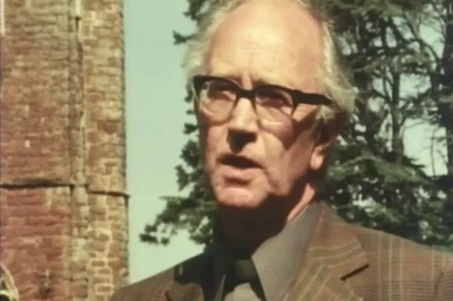
Image 4: The Reverend Denis Large
When asked about the culprit, and why he perhaps hadn't made contact, the Reverend said: 'I feel sure there is a person somewhere who is probably feeling terribly guilty and rather frightened at having done such a terrible thing to a young girl. When they do want to talk, they are going to say much more than either Genette is alive or dead. That is why, I am sure, I have not had the call I am waiting for.'
Reviewing all information collected, and tips sent in by members of the public, was a team of seventy detectives from the divisional and regional crime squad. Data was being collected from Aylesbeare and the local area, but also nationally and internationally. The newspapers, radio and television had ensured that Genette's case reached every city, town and village in the UK, and the intense national interest led to huge quantities of information being submitted to the police by civilians hoping to help find the teen.
Amongst the information collected were at least five hundred letters from self-reported mediums and psychics claiming to have information relating to the case. The police, desperate for a lead, took each letter seriously and investigated the claims. One of these tips would lead to a search of the grounds of Castle Drogo, a National Trust property some twenty-five miles from Aylesbeare, in late September. A search team comprising of the Dartmoor Rescue Group, soldiers and police covered the challenging terrain, which included a deep gorge, steep slopes and river. When questioned about the search and the nature of the public tip, Deputy Chief Superintendent Eric Rundle, who was in charge of the case at the time of the search, told the press: 'we cannot afford to discount any possibility'.

Image 5: Aylesbeare Village Hall, used as a police incident room for the first six weeks of the investigation
After six weeks' residence in Aylesbeare village hall, the police moved their incident room to the police station on Heavitree Road in Exeter. They had made little progress on the case, with Genette appearing to have - quite literally - vanished into thin air. Unable to commandeer the tiny village hall indefinitely, they stored the reems of documented information at the station in a large metal cage and maintained a number of police officers on the case from their headquarters.
Several months later, in December 1978, a research team working on information provided by two clairvoyants requested support from the community for a renewed search in an undisclosed area of East Devon. They invited volunteers to attend the village hall in Aylesbeare to submit their names as part of a coordinated search effort. However, this would still turn up no new leads and no sign of Genette.
Another medium report would be submitted to the police in April 1981. The self-reported medium, 55-year-old Frances Dymond from Perranporth in Cornwall, had assisted in the search for five missing cadets on Dartmoor in previous weeks. She claimed that Genette had been abducted by a culprit with a sexual motive, and that her body had been bricked up in the kidnappers house in the Exeter area after he killed her by strangulation. She described the property as having bay windows, with recent repair work having been completed on one of the upper floors. Ms Dymond also described Genette injuring her leg as her attacker dragged her away from her bicycle.
John Tate responded to the claims by expressing his scepticism around psychic predictions. He told the 'Daily Mirror': 'whatever this woman comes up with there are still no real facts about Genette's fate. I am still convinced that there is someone of flesh and blood who knows what happened and may be too frightened to come forward.'
Police assured the press that they would be looking into the claims made by Frances Dymond, but nothing further came from this report.
A promising development arrived in 1982 when the Daily Express published a story reporting that a prisoner in London's Pentonville prison had confessed to knowing the identity of Genette's killer. Multiple comments made by the detainee to prison officers resulted in a report being made to police that an unnamed man had killed Genette in a car accident as she rode her bicycle along Withen Lane.
The prisoner - who was shortly due for release - was interviewed by Detective Inspector Tony Furzeland from Devon and Cornwall Police. He described the man who had been driving the car as his friend, and told the DI that he and his friend had stolen a caravan from Devon on 19th August 1978. They had towed it to Weston-Super-Mare, but had the sudden realisation that they had left behind some tools containing their fingerprints. Worried about the police being able to identify them, they headed back to Devon where they tried - and failed - to find the same campsite where they had lifted the caravan from. At a loss, they ended up in a small lane off a main road in East Devon where they came across a girl riding a bicycle. Deciding to stop and ask for directions, the prisoner told DI Furzeland that he had got out of the passenger side of the car to speak to the girl. However, as he approached her, his friend reportedly sharply reversed the car into the young girl, where she fell to the floor and hit her head. The pair were terrified as they realised that the girl wasn't moving - and their fear was amplified by the fact that their car was full of stolen property. Panicking, the prisoner informed the DI that they had put the girls body in the back of the car and had driven back to Weston-Super-Mare where they placed her in the caravan. He said that the young girl subsequently passed away in the caravan, so the pair decided to dispose of her body and the caravan in separate locations, although he did not name either of these. His friend - the driver of the vehicle - would hang himself in Wandsworth prison two years later, whilst serving a four-year stint for robbery, with the interviewee telling DI Furzeland that his suicide was due to his inability to cope with what he had done.
Police were quick to dismiss the claims after discovering that the man making the reports had been in prison at the time of Genette's disappearance. He had spent some time in mental institutions in the past, and it was felt that he wasn't likely to be telling the truth - or at least to some extent. The acquaintance that he described, however, was not in prison at the time and police requested that anyone else who had heard the story make contact with them - the detail provided so many years after Genette had vanished must have made them question whether there was some truth to the account. Ultimately, it appears that they found little truth in the tale and this potential lead also faded.
Upon being questioned about the development, Detective Chief Superintendent John Bisset, Head of Devon and Cornwall CID, stated: 'we have no reason to believe there is any truth in the story published in the 'Daily Express'. As we have done on numerous occasions in the past, when we receive information that someone in custody has information about Genette's case, we sent officers to interview a man detained at Pentonville.' As mentioned above, police examined Genette's bicycle and Within Lane immediately after she disappeared and ascertained that it was unlikely that she had been involved in a hit-and-run.
In 1979, one year after Genette's disappearance, John Tate had started a charity dedicated to searching for missing children. John Tate would eventually leave his job to work with the charity full time, and in 1985 he took part in a three-week 'Find-A-Child' mission, where he travelled across the country in a bus displaying posters of fifteen missing children. The then 43-year-old implored members of the public to report anything suspicious when they witnessed it, saying: 'the biggest thing we have to compete with is apathy. Sometimes people just don't want to get involved.' 'Several people have come forward and given information to us on the bus, all be it useless because of the length of time that has lapsed.' John told the press that someone had come forward to provide information about Genette's disappearance: 'he had seen a boat moored at the bottom of his garden in the Exe estuary and someone loading a bundle onto it. It was unusual for a boat to be moored there.' John Tate reported that the man had thought about telling police the information at the time, but had decided not to get involved. After so many years had lapsed, it would have been nearly impossible to identify the boat in question or its owner, especially amongst the number of vessels travelling around the estuary and nearby Exmouth harbour.
John Tate would go on in this interview to express his belief that his daughter was no longer alive, saying that it was more likely that she had been killed and her body disposed of outside the local area.
Reports came to light in 1980 that he was responsible for an assault on a nine-year-old girl. He admitted the offence and was given a police caution - a charge which would seem very lenient today. His charity would go on to be removed from the charity register in 1993 when accusations were made that money was going missing from the accounts, with John being suspected of using funds in a personal capacity. A similar accusation would follow him into a further charity role in 1994, after he had moved back to Taunton, Somerset, and joined his third wife, Kathy, working with the Muscular Dystrophy Group. Within a year of John joining the team, the company was shut down amidst claims of missing money. The group would later reopen under new management, having made a clear statement that he was no longer involved with the company.
Several more years had elapsed when, in 1990, the police were handed a tape recording which contained the voice of a 32-year-old woman from Sidmouth, East Devon, who confessed that she had been a passenger in a car which had knocked down and killed Genette in 1978. The recording went on to say that the male driver had wanted to avoid repercussions and had buried Genette's body nearby. The woman said that the driver had taken Genette's body into woodland and had returned with bloodstains on his clothing.

Image 6: A missing poster advertising an award for information relating to Genette's disappearance
Police duly followed up on this report, but - as mentioned above - were already of the opinion that Genette had not been killed in a car accident. They took the 32-year-old to Aylesbeare, but she was unable to identify any of the locations she had discussed in the tapes. The police were baffled as to why the woman had made the claims - and the tape recordings - and subsequently found her reports to be inaccurate. Despite the time which had been taken reviewing the tapes and interviewing the woman, the force opted not to charge her for wasting police time - a very fortunate outcome for the unnamed woman.
In 2003, Sheila, Genette's mother, who had since remarried and went by the name Sheila Cook, visited the site of Genette's abduction for the 25th anniversary of her disappearance. Unlike her ex-husband, John Tate, who visited Aylesbeare every year, Sheila had not returned to the village for 24 years, but would tell the press that she felt that she had to in order to support John, who would be travelling to the UK from Greece for the date. Sheila said: '"you cannot appreciate how long a sentence it has been. Twenty-five years is pretty horrendous, that is the way I look at it. And the next few days after that will be just as bad. We are marking today together because it is a big landmark. Life is going on without her and you think what might have been."'
At the time of the 25th anniversary, there were still twenty police officers assigned to the case. A filing system which had been set up before police records became computerised contained over 20,000 cards, and the files relating to the Genette Tate case reportedly took up a 12ft by 10ft document unit at Devon and Cornwall Police headquarters. Every effort had gone into solving what was beginning to seem like an unsolvable crime.
Robert Black
In the early 1990s, a man appeared on Devon and Cornwall Polices' radar after he was arrested and convicted of a number of crimes against young girls.
Robert Black was born on 21st April 1947 in Stirlingshire, Scotland, to an unmarried mother and an unknown father - something which, at the time, would have been something of a scandal. In a bid to escape the stigma and attention surrounding her child's birth, Robert's mother handed him into the care system at the age of six months, where he was placed with experienced foster parents Jack and Margaret Tulip. He would take on their surname, and would only revert back to his birth name upon his foster mother's death.
From a young age, Black was known to be aggressive and disruptive, throwing large tantrums and vandalising property. He had very few friends and was often the victim of bullies - something which would encourage him to go on to bully children younger than him. Bruises started to appear on his body, leading to rumours that he was being abused in his foster home. Despite always denying knowing the origin of the injuries and sometimes putting them down to bullying episodes, he would admit later in life that he repeatedly wet the bed as a child, something that he said would lead to a mixture of verbal and physical punishment from his foster mother.
By 1958, Black's life was uprooted when he was moved to a new foster home after the death of both of his foster parents. After experiencing some relative stability since the age of six-months-old, this would have been something of a trauma for any child. Shortly after this move, he committed his first known sexual offence at the age of eleven, leading to his removal from the foster home and transfer to a children's home in Falkirk, Scotland. He had apparently been fascinated by genitalia since the young age of five, when he had compared his own to that of a girl the same age. Whether the offence as an eleven-year-old was, in fact, his first is something that will never be known, but it seems unlikely if he was developing such an unhealthy interest for so many years.
The children's home was mixed-gender, giving Black ample opportunity to regularly expose himself to girl's in the residence. This resulted in his removal, again, and transfer to male-only Red House Care Home over thirty miles away in Mussleburgh, to the east of Edinburgh. This home held a far more disciplined approach to the one Black had previously resided in, but he would later say that he had himself been sexually abused in the residence by a male member of staff - something that continued for three years.
After leaving school, Black would obtain a job delivering meat for a butchers' in Greenock whilst residing in a different care home. He reported that he would use this opportunity to assault young girls if he found them home alone when he made a delivery, estimating the total number of victims to be between thirty and forty. If they occurred as Black states, it appears that none of the offences were reported.
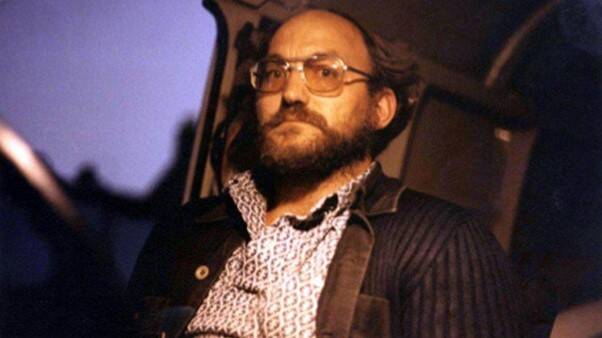
Image 7: Robert Black
Black's next documented offence occurred in 1963, when he was arrested for a lewd act against a child after luring a seven-year-old to an isolated location. He choked the child until she blacked out before committing an indecent act. His actions were quickly reported and he was arrested the following day and given a psychiatric evaluation. I can only assume that the police were completely unaware of Black's history and childhood activities, because the evaluation found that the incident for which Black had been arrested was an isolated one. The police deemed that Black did not need to be held in custody and did not pose a risk, and he was therefore released with what sounds like a slap on the wrist. I can only guess that police might go on to review this decision and wonder whether it was the right one.
Although it's unclear whether Black was fired from his role as a delivery boy with the butchers' or whether he left voluntarily, he moved on from Greenock to Grangemouth, and finally out of the supported care home environment. Although we have a law today in the UK which states that children should be in education until the age of eighteen, no such law existed at the time and it was very common for children of sixteen years old to be making their own way in the world. Once in Grangemouth, Black secured a tenancy in the home of an elderly couple, where he rented a room whilst working for a building company. At the same time, he started to date a woman who would be Black's only known girlfriend, and someone who he had hopes of going on to marry. However, she separated from him after only a few months, citing his perverse sexual preferences as a reason behind the split.
Whether it occurred following the split from his girlfriend, or whether it had happened whilst they were still in a relationship is unclear. What is clear is that Black's landlord and landlady found out that he had sexually abused their nine-year-old granddaughter when she visited the property, something which rapidly led to his eviction from the household. Despite the seriousness of the offence, the couple did not inform the police as they wanted to spare their granddaughter the ordeal of being interviewed by the officials, and the possibility of a trial.
This may have proved to be a critical error in judgement. After leaving the household, Black also left his job and moved back to the town where he had lived with his first foster parents, securing lodgings in a property with a couple and their six-year-old child. Perhaps, if the couple in Grangemouth had reported the assault to the police, Black would have been prevented from moving into a property with direct access to young children, but we will never know. Predictably, Black would live in the property for only a year before a report was made to the police by the landlord and landlady that he had repeatedly assaulted their child. Black pleaded guilty to three offences, negating the need for a trial, and was sent to Polmont Borstal, a young offenders institution.
Black was released from the borstal in the early months of 1968 and would, for the first time in his life, move away from Scotland. He moved into a small bedsit in King's Cross, London, which he would pay for by means of working in a number of casual and temporary jobs. Without the ease of the electronic records and the security of the background checks that we have in place today, it was possible for Black to get a job working as a lifeguard at a local swimming pool, where he was able to assault a young girl - something that was not reported to police in London. He purchased his own camera and would use this to take covert images of young girls at the local swimming facilities. As well as his own home-made images, Black found a contact in a local bookshop, from whom he would purchase indecent images and magazines. In 1972, Black would meet a Scottish couple, Edward and Kathy Rayson, at a local pub where he was a frequent patron and regular darts player. He later moved into the attic room of their house, where he would remain a tenant for eighteen years.
In 1976, Black took permanent employment with Poster, Dispatch and Storage Ltd as a driver, investing in a Fiat van to use for the role. The company were responsible for advertising boards and displays across the UK, with companies paying for their business to be advertised for a set period of time. Adverts were changed regularly depending on how long they had been paid for, meaning that the role was a busy one and would take Black across the full length of the country. This enabled him to become acquainted with many different areas of the UK, including the road layouts and residential areas - information which he would store in his memory banks for future use. He started to regularly change his appearance - sometimes growing a beard or shaving his head - and kept multiple pairs of glasses, wearing one pair on a regular basis and switching to a different pair when committing his crimes. This meant that any description given by witnesses of a crime would differ in elements to Black should the police ever come knocking on the door.
Black kept largely under the radar for many years, with his landlord and landlady given no cause for concern in relation to his activities. They sometimes suspected that he was looking at pornography in his attic room, but would later tell police that they never suspected that it related to children. They found their lodger to be private, perhaps reclusive or antisocial, but he would live quietly under their roof until his arrest in 1990.
1990 - the arrest of Robert Black
On the 14th July 1990 in the quiet village of Stow in the Scottish Borders, retired postman David Herkes was mowing the front lawn of his property when he noticed a blue Transit van pull up on the side of the street outside his house. Herkes paid little attention as the driver climbed out of the van and leaned across the bonnet to wipe down part of the windscreen. He bent down to empty the grass clippings from the collection compartment of his mower, noting as he did so that the six-year-old daughter of his neighbours had come into view on the roadside. No sooner had he noticed her appear than, out of the corner of his eye, he saw her feet being lifted from the ground. Lifting his head, he saw the passenger door of the van slam shut before it raced away.
Having no doubt about what he had just witnessed, David Herkes ran to his neighbour's house to raise the alarm. Police rapidly appeared on the scene - likely with a higher sense of urgency when they realised that the abducted child was the daughter of one of their own policemen. Her father was one of the officers sent to the scene.
Herkes had been quick enough to take the license plate of the van as it drove away, and was in the process of relaying this to police when the van drove past them, heading in the opposite direction. Herkes shouted in alarm and the officers acted immediately, using police vehicles to block the van from escaping. The missing girl's father flung the doors of the van open, spying a sleeping bag tied closed with string in the back. Inside, he discovered the horrific scene of his daughter, bound and gagged with a hood over her head.
Black was arrested and handcuffed at the scene before being driven to nearby Selkirk police station. Despite a medical investigation showing that the young girl had been sexually assaulted, and having clearly gone through significant physical and mental trauma, she was able to take police to the layby on the A7 road where the abuse had occurred, and describe this to police - telling them in a heart-breaking statement that she 'didn't know [Black] was a bad man'. The strength of this young girl, despite her appalling experience is highly commendable and her account would go on to help police unearth a catalogue of horrendous crimes which had gone unsolved for many years.
Under police questioning, Black admitted to assaulting the six-year-old and told officers that the only reason he hadn't done more to the victim was - disturbingly - because he 'didn't have much time'.
The reality of Black's arrest is that the only reason the man was caught - and potentially the only reason that an opportunity arose for the victim to be saved - is because he chose to double back on his driving route on 14th July. It's unclear why he made this decision - if he'd continued down the A7, there's every chance that the young girl would have disappeared entirely. Perhaps Black didn't realise that there was a witness to the abduction - David Herkes had described that he was bending down to tend to the lawn mower, so perhaps he was outside of Black's range of sight. He may have felt confident enough to go back through the village of Stow and observe the fall-out from his actions - criminal psychology has taught us that the culprit often returns to the scene of the crime. It's quite devastating to think what could have been if he hadn't made this decision.
However, as the details of the case and more information about the man who had been captured came to light, David Herkes would go from the hero who saved his neighbour's daughter to the hero who helped to catch a dangerous, prolific serial killer. Such was the impact of the case and the respect for David within the Stow community that, after David passed away in 2012, residents campaigned and raised funds to name one of the local streets in his honour.

Image 8: An image of the sign dedicating the name of a Stow street to David Herkes, who became considered something of a local hero in the wake of Black's arrest
Black was remanded in police custody, with an initial court appearance scheduled for 16th July. In the two days between his arrest and his appointment with the judge, the officers at Selkirk police station were drawing some similarities between the abduction and the unsolved murders of three girls. Their suspicions were only heightened when they searched Black's van and found an array of incriminating items, including black-out curtains over the windows, rope, sticking plasters similar to those used to gag the victim, hoods, a Polaroid camera, a mattress, a range of sexual items, and - most alarmingly - a variety of girl's clothing.
Black initially tried to claim that he dressed in the girl's clothing whilst he was alone - something that, I'm sure, didn't wash with detectives. The thought of a grown man trying to wear clothing intended for a young girl is, at best, implausible due to the size difference.
Concerns mounting and evidence piling up, the Scottish police force made contact with the Metropolitan police in London, explaining that the man they had in custody resided in the city and requesting a search of his rented attic room. The stash of pornographic material relating to children was subsequently uncovered, along with further items of children's clothing, differently styled pairs of spectacles, a newspaper with an article of the 1988 disappearance of a girl named Teresa Thornhill, and further sexual devices.
Less than one month after his arrest, Black stood trial at Edinburgh High Court and pleaded guilty to the offence of child abduction. Despite his lawyer attempting to claim that Black had not pre-meditated the attack and had every intention of releasing the six-year-old, the items found in his van only gave strength to the prosecution's argument that the attack was, very much, premeditated and pre-planned. An opinion sought from medical experts advised that the young girl would have suffocated within fifteen minutes in the sleeping bag based on the way her head had been covered and a gag applied. Psychiatric evaluations from both the prosecution and the defence left no doubt in Black's sickening attitude and behaviour towards young children, confirming his significant risk to society and ongoing danger to children.
Lord Donald MacArthur Ross, presiding, sentenced Black by saying: '"the abduction of this little girl was carried out with a chilling, cold calculation. There was no 'rush of blood', as you have claimed. This is a very serious case; a horrific, appalling case... You will go to prison for life, and your release will not be considered until such a time as it is safe to do so."'
Lord Ross took time in his sentencing statement to praise the swift action of David Herkes, who had alerted the young girl's mother and police, crediting his contribution to the arrest and imprisonment of a dangerous criminal.
Black quickly expressed his intention to appeal against the life sentence imposed on him, but he had dropped this appeal by the time he was transferred to Her Majesty's Prison (HMP) Peterhead in November 1990 - a high security prison on one of the northernmost corners of Scotland.
Over the coming months, it would become apparent that Black's arrest for child abduction was only the tip of the iceberg. Whilst Black was facing the ruling of the criminal court, a fresh frenzy of police work was being carried out behind the scenes.
Uncovering Further Crimes Of Robert Black
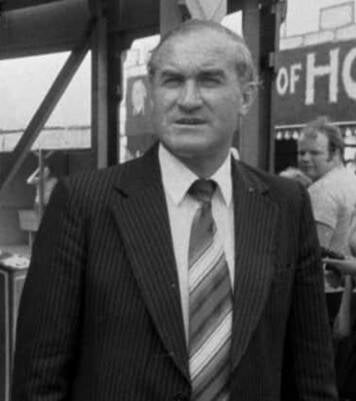
Image 9: detective Hector Clark, pictured at Portobello Promenade after the abduction of one of Black's victims
Police had been working for many years to find the offenders of a number of unsolved child murders across the UK. Ever since Black's arrest for the abduction of the six-year-old girl in Stow, similarities had been drawn with some of the cases where young girls had gone missing. Hector Clark - a detective in charge of three of the missing girl's cases - had been called directly by an officer at Selkirk police station shortly after Black was arrested, and given the opportunity to attend the station and interview the prisoner. Travelling north from Wakefield, Yorkshire, Clark sat down to talk to Black, and - despite Black's short, single-word answers - he left with the feeling that Black was a person of interest in all three of his cases.
In late August 1990, several weeks after Black had been sentenced to life in prison, Hector Clark sent two detectives - Andrew Watt and Roger Orr - to interview Black in prison. He gave the pair instruction to tell Black that they would not be judgemental of any information he told them - likely hoping that this would put Black at enough ease that he might talk more than he had in his previous interview with Clark. At the time, the police had little to go off other than suspicion and, perhaps, the intuition of a police officer.
The interview with Black was tape-recorded and lasted for a total of six hours. In it, Black talked openly about sexual encounters from early in his life, including experiments on himself. He talked about his preferences for younger children, as well as his enjoyment of wearing girl's clothing. He would estimate to police that he had assaulted over thirty young girls across the course of twenty years, between 1960 and 1980, and confessed to luring two girls in the city of Carlisle into his van, saying that he had let them go after realising that there were multiple witnesses in the area.
When Watt and Orr attempted to turn the conversation towards some of the missing and murdered children, Black would reply in a monotone and his free-flowing speech would dry up. The officers specifically spoke of Caroline Hogg, who had gone missing from a funfair in the Portobello area. They told Black that they had obtained fuel receipts from his personal belongings which showed that he was present in the area at the time of Caroline's disappearance, and placed a photofit in front of Black of a man who had been seen leaving the attraction with the young girl. They compared the likeness to other composites which had been made in crimes for which Black had been convicted, but Black disengaged from the conversation and refused to respond when asked directly to confess to the crimes he had committed. Black would refuse to participate further in any of the active police investigations.
Black's Criminal Trials
A joint taskforce was created across the UK for the cases which detectives felt were linked, assembled after the murder of five-year-old Caroline Hogg was connected to that of eleven-year-old Susan Maxwell due to the relatively short distance between the areas where they went missing. Hector Clark was the detective in charge of the task force, with the operation only expanding as other possible victims were identified.
Officers contacted Poster, Dispatch and Storage Ltd and were able to obtain records of Black's fuel receipts, which enabled them to accurately pinpoint many of the locations he had travelled to or from. His delivery schedules had also been kept in the company archives, which they could match with his fuel receipts and compare to the sites where girls had gone missing.
Today, many of our delivery services have accurate time and location records - either through the use of a tracking device in company vans, or via electronic delivery logs. However, such detailed information would not have been possible during the time frame that police were investigating, and they were therefore unable to precisely pinpoint Black's location down to the hour and minute. The times printed on fuel receipts were the closest that they could get to accurate time records, but the information that they had available to them showed that Black was in the area that each girl was abducted on the day that they went missing.
Police uncovered information which showed that Black often lodged overnight at a property in Donisthorpe, Leicestershire, on his way back to London from some of his more distant work destinations. The property belonged to his landlord and landlady's son, and was notably close to where three bodies of missing girl's had been discovered. Police theorised that Black could have disposed of the bodies in this location to ensure that they were far away from their point of abduction - any delay in finding the body of a missing person would have resulted in decomposition, potentially hindering identification and reducing the likelihood of Black being linked to the crime.
In 1991, despite a lack of forensic evidence, police submitted a case to the Crown Prosecution Service with a request to charge Robert Black with the abduction and murder of three young girls, and the attempted abduction of a fourth. The Crown felt that there was sufficient evidence to charge Black with all four crimes.
In 1994, after multiple submissions and objections from Black's defence counsel, Judge William Macpherson ruled in a pre-trial hearing that all cases could be heard together, enabling links to be drawn between the crimes. The ruling from Judge Macpherson also meant that information relating to Black's recent conviction for abduction in Stow could be introduced to the court - something which would be critical for the prosecution's case, as without information from the Stow abduction case, it would be difficult to demonstrate how Black had become a suspect in each of the four cases for which he was to be tried. However, the judge did deny admission of the tape recordings from Black's interview with detectives Watt and Orr into evidence.
On 13th April 1994, Black stood before Judge Macpherson in Newcastle-Upon-Tyne and pleaded not guilty to ten charges including kidnap, murder, attempted murder and preventing the lawful burial of a body. The judge presiding over the case was highly respected, covering a number of high-profile cases throughout his career. He was knighted in 1983, and responsible for the production of the Macpherson report following the death of Stephen Lawrence in the late 1990s.
In the prosecutions opening statement, they would describe each of the crimes for which Black had been charged, and state their belief that each victim had been kidnapped for sexual gratification, and had been kept in the back of Black's van for several hours before being killed. The prosecution spoke for five hours and were able to detail the items found in the back of Black's van, as well as pointing to his catalogue of sexual assault charges and the Stow abduction.

Image 10: Judge Sir William Macpherson, who presided over the 1994 trial of Robert Black
They would bring forward evidence from multiple witnesses, statements from the mother's of the murdered victims, witness statements given to police at the time of the abductions, detectives from multiple police forces involved in the investigations, and forensic scientists. One of these scientists, James Fraser, was cross-examined extensively by the defence counsel on why, out of 1,800 items collected, microscopic examination found no forensic evidence linking Black to any of the victims. However, under re-examination, Fraser was able to explain that there was a significant interval between the deaths of the victims and Black's arrest, and he obtained a new van in 1986. His previous van would have been used at the time of several of the abductions, and the van in question was long gone. The potential to link Black forensically to several of the crimes was, therefore, greatly diminished.
It was clear from police testimony how much painstaking effort had gone into investigating the murders of the young girls. For many of the officers involved, it was likely that these crimes had haunted them over a number of years - the girls seemed to have vanished without any leads at all, and extensive enquiries had been put into trying to garner any information which may give the families answers on what had happened to their precious children. The inability to convict any person of the deaths of the young girls must have led to many lost hours of sleep for detectives. When detective Hector Clark took the stand on the prosecution's final day of presenting evidence, he told the court that he hadn't found any other cases in his years of service where children had been abducted, murdered, and then disposed of so far from their homes. The complexity of the cases were evident. The total cost of the cases combined was estimated to be £12million, and the amount of evidence collected and stored was thought to weigh in the region of twenty-two tonnes.
Black's defence barrister, Ronald Thwaites, would open his client's case on 4th May after nearly a month of evidence for the prosecution. His opening statement to the court would hinge on the fact that the police had been unsuccessfully investigating the murders of three girls until the abduction of the victim in Stow in 1990, whereafter officers seemed to have jumped on the possibility of Black being a good fit for the crimes. Although evidence found in Black's property and van showed a clear obsession, there was nothing that demonstrated that he had progressed from assaulting girls to killing them, with Thwaite arguing that the police had used his client as a scapegoat to ensure that someone was arrested and charged with the unsolved crimes.
Over the course of six days, the defence would put forward evidence of alternative suspects being in the area from which each victim was abducted at the time they went missing, calling witnesses who would testify to other suspicious vehicles being in the vicinity. In closing arguments on 12th May, the prosecution would describe the concept of Black not being the culprit when fuel receipts and delivery routes put him in the exact area of each victim as 'the coincidence to end all coincidences'.
In the closing statement of the defence, they pleaded with the jury to identify the difference between a man who committed sexual assault, and one who committed murder, something that the judge would echo in his summarising statement. Judge Macpherson ordered the jury to disregard the feelings that they may have towards Black as a convicted sex offender, and to not allow his conviction of the 1990 abduction to prejudice their ability to find a fair verdict from the trial. He also reminded them that, as the suspect was on trial for ten offences, one guilty verdict did not automatically lead to nine others, and that each charge should be considered separately and carefully.
The jury would deliberate for two days before returning with ten verdicts. They found Robert Black to be guilty of all three kidnapping counts, three murder counts, three counts of preventing the unlawful burial of a body, and one count of attempted abduction.
Judge Macpherson sentenced Black to life in prison for each offence, to be served concurrently, with a minimum tariff of 35 years, stating that Black's crimes were: '"offences which are unlikely ever to be forgotten and which represent a man at his most vile."'
As Black was led away from the dock, his only comment to the detectives who were present in court to hear the sentencing was '"tremendous. Well done, boys."'
Black was transported to Wakefield prison in Yorkshire, where he would spent his sentence in the segregation unit as a category A prisoner. This time, however, he would appeal against his convictions on the grounds that he did not receive a fair trial due to the admission of the evidence from the 1990 Stow abduction. The appeals hearing was planned to last three days, but concluded after only one day after the judge concluded that Black had, indeed, received a fair trial and that there was no case to be heard.
Predictably, based on his crimes, Black was attacked in Wakefield prison in 1995 by two inmates - he would have been considered at high risk of harm from other prisoners due to the nature of the crimes for which he'd been sentenced. He received superficial injuries as a result of the attack - during which he was beaten with a chair leg, stabbed with an improvised weapon, and had boiling water mixed with sugar thrown over him. The two inmates received an additional three years on top of the sentences which they were already serving.
If anyone thought that this would be the last they would hear about Robert Black, they were gravely mistaken. Police - and perhaps many of the UK public - suspected that Black was guilty of far more crimes than he had been convicted of.
The ones who were convinced that there were more crimes yet to be uncovered were proved right when, in 2009, Black was taken to Armagh Crown Court in Northern Ireland for the case of another young girl who had been murdered decades previously. As with the 1994 trial, he pleaded not guilty to all charges.
In an echo of the trial from nearly twenty years prior, the Northern Ireland police had trawled through hundreds of thousands of fuel receipts and delivery records held by Black's employer, and were able to link him to Ballinderry, the area where the young girl had gone missing. Poster, Dispatch and Storage Ltd confirmed that Black was one of only two of their employees who were willing to make deliveries to Northern Ireland, as this required travel across the Irish sea. However, the employees in question were paid an additional £50 for these trips, and a record of the payment to Black in relation to the relevant trip was found in the companies ledger. Evidence was also found that Black had boarded an overnight ferry from Northern Ireland to Liverpool on the night of the abduction, with his fuel receipts showing that he had stopped in Coventry the following morning to refuel before returning to London.
The trial in 2011 lasted for six weeks, with the jury deliberating for only four hours before finding Black guilty of abduction, sexual assault and murder. On 8th December 2011, Robert Black was sentenced to a minimum term of 25 years in prison, with the judge telling him that he would be 89 years old before he would even be considered for release.
In a show of dignity, the father of the girl who Black had just been convicted of murdering shook hands with the entire defence team, and the girl's mother hugged the barrister. Her father said: '"we would not have been happy if he had been convicted without a proper defence and we believe he had the best defence that could ever have been provided for a murderer"'.
Between his arrest in 1990 and his criminal trial in 1994, Black was interviewed extensively by Ray Wyre, a criminologist who specialised in the treatment of sexual offenders. His interviews with Black were taped, which would later prove critical to assessing Black's involvement in the case of Genette Tate.
Ray Wyre reported that Black refused to cooperate with investigators due to a need to be in control. He stated: '"he's the sort of person for whom it's all about power and control. Having information about what he's done gives him power. He has no desire to ease his conscience, and he's not going to give up the one thing that gives him power over the pain that his victim's families are suffering."' Wyre reported that, in all of the interviews that he held with the man, the closest that Black ever came to confessing was when Wyre asked him why he had never denied any of the charges brought against him when questioned by police. Black's chilling response was: '"because I couldn't"'.
Sometime during Black's incarceration, his prison sentences were reviewed and commuted to a full-life tariff, meaning that he would never be eligible for parole or release.
Robert Black died of a heart attack on 12th January 2016. At this time of his prison term, he was committed in HMP Maghaberry in Northern Ireland. He would be cremated at the end of January, with his ashes scattered at sea in February. No-one attended his funeral.
The Victims
I have chosen to leave it until after concluding the main information about Black to talk about the girls who lost their lives. This is because each of these young girls was a person in their own right, with a life to lead and enjoy, and they deserve to have their own section away from the man who was found guilty of taking their lives.
Below, I've included a brief summary of each case, and I've tried to include some information about each of the girls - although, at times this was hard to find. Some of the families may have wanted personal information to be kept away from the eyes of the media, especially during times of such overwhelming grief.
Jennifer Cardy
Jennifer Cardy lived with her family - mother, father, and three siblings, Mark, Phillip and Victoria - in Ballinderry, County Antrim, Northern Ireland.
She would be described by family friend and pastor Reverend William Beattie as '"a lovely and bright little girl - very well-mannered and behaved. She seemed to be an ideal daughter and was a real gem of a person"'.
On 12th August 1981, Jennifer was enjoying her school holidays and decided to cycle to her friend's house nearby. She had a new red bicycle, and was last seen pedalling away from home on this by her mother at 1:40pm.
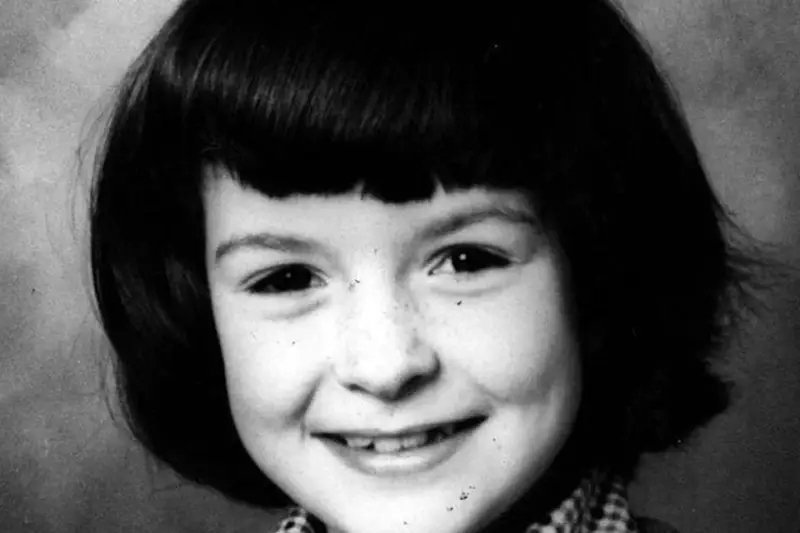
Image 11: Jennifer Cardy
This beautiful red bicycle, of which Jennifer was likely very proud, would be found several hours later after Jennifer failed to arrive at her friend's home. The bicycle was less than a mile from Jennifer's own house with the stand folded down, indicating that she had stopped and dismounted the bike - perhaps to look at something or talk to someone. It had been discarded off the side of the road, and a poor attempt had been made at concealing it by covering it with leaves and undergrowth.
The manner in which the bike had been found caused alarm bells to start ringing immediately within Jennifer's family and the local community.
A search party was assembled, with almost two hundred volunteers turning out to help find the young girl. They searched drains, ditches, and fields surrounding the area where Jennifer's bicycle had been found, but there was no other indication as to where Jennifer may have gone. Despite multiple appeals by Jennifer's parents, Patricia and Andy, for the safe return of their daughter, Jennifer's body would be found six days later at McKee's Dam, near Hillsborough in Northern Ireland. She was wearing a watch, which had stopped at 5:40pm - likely sometime during the period when hundreds of people were searching for her.
An autopsy showed that Jennifer's most probably cause of death was drowning, with a pathologist noting signs of sexual assault. A review of the case notes in the early 2000s also indicated that Jennifer had been strangled before her death, possibly by the sleeve of her own cardigan.
Jennifer's funeral was attended by hundreds of people, many of whom had helped to search for her just after her disappearance. She was laid to rest in a peaceful cemetery near the family home.
Susan Maxwell

Image 12: Susan Maxwell
Susan Claire Maxwell lived in Cornhill-On-Tweed, Northumberland, just south of the border between England and Scotland. On the afternoon of 30th July 1982, she had walked across a bridge over the River Tweed into Scotland to play tennis at a club in Coldstream, and was last seen making the return journey alone at 4:30pm. This came as a surprise for her mother, sister and brother, who turned up at the club to collect sometime later, only to be told that she had already left.
Susan, known to her family as Susie, never arrived home. When her mother realised that her eleven-year-old daughter seemed to have vanished into thin air, she contacted the police who arranged an immediate search. At one stage, over three hundred officers were involved, and police dogs were used to try to find any evidence of the missing child. The investigation expanded over eighty square miles and included thorough searches of every property between Coldstream and Cornhill-On-Tweed. Heartbreakingly, Susan's mother refused to close the curtains each evening, worried that she would be shutting her daughter out.
The only information which police could ascertain from the extensive search effort was reports from multiple witnesses of a white van being parked in a field gateway along the nearby A697, but this description was vague and could have related to any number of vehicles in the area.
Nearly two weeks after Susan had gone missing, her body was discovered in a state of decomposition, bound, gagged with sticking plaster, and covered in undergrowth. Although most of her clothes remained intact, she was reportedly missing her underwear and shoes - her underwear being found folded and placed behind her head. She was found in Uttoxeter, Staffordshire, over 260 miles from her home in Northumberland. Although information from her body was difficult to assess due to the level of decomposition, it was ascertained that she had died shortly after her abduction.
Susan was buried in the quiet churchyard in her hometown.
Caroline Hogg
On 8th July 1983, Caroline Hogg returned home from a friend's birthday party and asked her parents if she could spend a little more time outside, enjoying the sun, before she had to go to bed. Her family lived on Beach Lane in the suburb of Portobello, three miles to the east of Edinburgh city centre, enabling the five-year-old close access to the beach and the local promenade. She waved goodbye to her parents, Annette and John, agreeing to be home after a short period of time. She was still dressed in the smart gingham dress which she had worn to the party that afternoon.
When Caroline had still not returned by 7:15pm, Annette headed out to call her in for the night, but her daughter was nowhere to be seen. Alerting her husband, the two parents scoured the beachfront, hoping to see the fair hair of their daughter heading home, but after a fruitless search the pair called police.

Image 13: Caroline Hogg
Caroline had reportedly been playing with her friends in the play ground near Towerbank School, where a fourteen-year-old witness later saw her sitting on a bench with a 'scruffy' looking man who had a balding head, horn-rimmed glasses, and was 'in need of a shave'. The teenager heard Caroline say 'yes please' in response to a question posed by the man, and the pair headed towards the funfair on Portobello Promenade, holding hands. She was last seen by witnesses on the merry-go-round, and after climbing off of this she walked in the direction of the funfair exit, closely followed by a man matching the same description. They left the funfair at around 7:30pm, with the witnesses saying that Caroline had a frightened expression.
Caroline's parents told the police that they had spoken to their daughter about stranger danger, and were confident that Caroline would not have left with someone she didn't know, unless the person was able to quickly gain her trust.
Over 2,000 volunteers joined a team of fifty members of the Royal Scots Fusiliers in the search for the missing girl. So many people turned up, in fact, that the search effort had to be coordinated from Portobello Town Hall. After exhausting the area of Portobello, they extended the search radius to cover the whole of Edinburgh. After a few days, police started to draw similarities between Caroline's disappearance and the murder of Susan Maxwell due to the close proximity between their abduction sites.
Multiple appeals were made by police and the Hogg family for Caroline's safe return, and her case was one of the first aired on BBC's Crimewatch program.
Ten days after her disappearance, Caroline's naked body was found in a ditch along the M1 motorway near Twycross. The location was over three hundred miles from Portobello, but a distance of only twenty-four miles from where Susan Maxwell's body had been found a year previously.
A clear cause of death could not be ascertained due to the level of decomposition, but the insect activity on Caroline's body enabled pathologists to estimate that her body had been next to the motorway for around six days.
Sarah Harper

Image 14: Sarah Harper
Ten-year-old Sarah Jayne Harper was sent to the local shop at around 7:50pm on 26th March 1986 to buy a loaf of bread. The shop sat only one hundred yards from her Morley home in Leeds, West Yorkshire - a distance which should have taken only minutes to walk. Sarah paid the shopkeeper at around 7:55pm for a loaf of Warburtons bread and two packets of crisps, also returning two empty lemonade bottles in order to be given back a 20p deposit. Out of the corner of her eye, the shopkeeper spotted a balding man, noted to be slightly overweight, entering the store just after Sarah and leaving again without making a purchase as Sarah was at the checkout.
Sarah left the shop and was seen by two girls walking into an alleyway which would take her to her home on Brunswick Place. However, despite the short distance between the shop and her home, Sarah had still not arrived back by 8:20pm - something which started to give her mother cause for concern. Taking Sarah's sister, Claire, with her, their mother left the house and searched the streets between their home and the shop without success.
Jackie Harper reported her daughter missing to the police, sparking an immediate response and a team of over one hundred officers trawling the streets and completing house-to-house enquiries. Over the following days, more than two hundred volunteers from the local community joined the search effort. Police took witness statements from more than 1,400 people and distributed leaflets imploring anyone with information to get in touch.
After receiving information from the shopkeeper about the man who had entered the store at the same time as Sarah, and after receiving another witness statement saying that the same man had been seem lingering in the area, the police contacted other forces to make them aware that Sarah may have been abducted, enabling important information to be passed to a wider area.
A white Ford Transit van was reported in the area at the time Sarah went missing, something which - unknown to detectives at the time - was also reported in the cases above.
Sarah's family would give a heart-breaking press conference on 3rd April - over a week after Sarah had gone missing - during which her mother, Jackie, would state her concern that her daughter was dead, and the family's desire to just know what had happened to her. She addressed the abductor directly, saying: '"I just want her back, even if she's dead."'
Almost a month after Sarah had gone missing, her body was found - partially clothed, bound and gagged - in the River Trent, Nottingham. The site was over seventy miles from Sarah's home. Pathology reports showed that Sarah had been killed somewhere between five and eight hours after she had been abducted. She had sustained injuries to the head, neck and face before her death, with the pathologist reporting that these had likely led to her falling unconscious before she ultimately died of drowning. It was identified that she had been subjected to a horrific sexual assault some time before her death, causing appalling internal injuries which were identified during the autopsy.
After Sarah's body was found, police appealed for information in the area of Nottingham which led to a witness giving a statement to say that they had seen a white van next to the River Soar with a man standing by the passenger door at around 9:15pm on 26th March. The description of the man that the witness gave police matched closely with the description of the man seen in the shop at the same time that Sarah was making her purchase.
Police in Nottingham were able to identify that the River Soar was a tributary leading into the River Trent, giving them a good theory that the man the witness described could have been involved in Sarah's abduction and murder.
The police traced the routes available between Morley, in Leeds, and the site where Sarah's body was discovered, and felt it most likely that the abductor had travelled between the two using the M1 motorway. On the off-chance that the culprit had needed to stop and refuel his vehicle, police arranged for staff at service stations and petrol stations to be questioned to see if this produced any new leads or sightings. Although one member of staff reported seeing a suspicious looking white Transit van on the 26th March, they could not give any clear details on the driver, and had not taken the van's license plate number. How many of us in day-to-day life have looked at a vehicle and thought that it seemed a bit unusual or out of place, before thinking no more of it and getting on with our day? The witness might have told themselves that they were overthinking things and carried on with their work - after all, who would possibly suspect that a kidnapped child could be lying in the back of the vehicle?
Significant parallels were drawn between Sarah's case and the cases of Susan Maxwell and Caroline Hogg after the discovery of Sarah's body. The police now had the bodies of three young girls discovered within a 26 mile radius, and all within a couple of years. Sarah's case now meant that there were six police forces involved in a national manhunt to find the man responsible.
Teresa Thornhill
During the evening of 24th April 1988, fifteen-year-old Teresa Thornhill had been out to meet friends in a park near her home in Radford, Nottingham, with her boyfriend. At only 4ft 11in tall, Teresa was small for her age, and perhaps her petite appearance gave onlookers the impression that she was younger than she actually was.
Teresa started to walk home with her boyfriend, Andrew, before leaving him at the junction of Norton Street as they headed to their respective family homes. As Teresa headed down the road alone, she noticed a blue Transit van ahead of her. It slowed down as she watched it, before rolling to a stop before the driver got out. The driver lifted the bonnet of the vehicle, and asked Teresa if she knew anything about engine maintenance. Teresa, clearly alarmed, started to walk quicker but the van driver grabbed her from behind, covering her mouth with one hand and holding her round the waist with the other.
Teresa fought back as the man attempted to drag her towards the van, kicking fiercely against the strength of the grown adult. As he opened the door and tried to force her into the vehicle, she planted both feet firmly on the edges of the doorframe and pushed back against him, later describing that she was fighting for her life.

Image 15: Teresa Thornhill as a teenager
The mans grip only loosened when, in a moment of inspiration, she grabbed hold of his testicles and squeezed tightly. Feeling his grasp ease slightly, she started to scream continuously, using the opportunity of his hand falling from her face to bite into the mans forearm, feeling his glasses fly off his face. He shouted an expletive which was drowned out by the sound of Andrew, Teresa's boyfriend, running towards the pair shouting '"let go of her, you fat bastard!"' The driver dropped Teresa to the ground, jumped into the drivers seat of the van and slammed his foot onto the accelerator, disappearing down the road.
Teresa, followed closely by Andrew, ran to her home and told her parents what had happened, with a call being made immediately to Nottingham police. The teenagers were able to give a clear description of the man, describing him as 5ft 7in, unkempt, overweight and heavily build, with a balding head. His age was estimated between forty and fifty years old.
Teresa's testimony would later be used at both trials to help convict the man who had tried to add her to his list of victims. In 2011, after the trial in Armagh, 38-year-old Teresa gave an interview to the Daily Mail in which she stated that she thinks about the killer every day, especially what he did to the girls who had not been able to escape. Teresa was the only known victim who managed to fight off her attacker, and said of the aftermath of the attack: '"Overnight I became a different person. I'd always been outgoing, but now all I wanted to do was lock myself away."'
When Teresa went back to school several weeks after the attack, she would be collected from home by a teacher and dropped back to her door at the end of the day, where she would stay for the rest of the evening. Her school grades suffered, and she eventually left school without any qualifications. Police remained in regular contact and would often ask her to look at identity parades to see if she could pick out her attacker. Two years after her attempted abduction, police were able to show her the image of the man they had arrested following the Stow abduction, and she confirmed that he was the man who had tried to take her from the side of the road in Nottingham.
Teresa went on to marry a friend of her brothers, and had two children of her own, but she told the Daily Mail that the trauma from her childhood still affects her every day, as well as how she looks at her own children. All parents worry about their kids, but the insight into the bad in the world that Teresa had been exposed to must have increased this level tenfold.
Teresa gave evidence in the trial of 1994 and the trial of 2011, saying: '"I was terrified because I didn't want to set eyes on him again, but I did my best for the sake of the girls who had died."'
I'm sure that anyone else reading this article will agree that the strength and determination of this lady is incredible. After suffering such trauma as a teenager, she put the memory of Jennifer, Susan, Caroline and Sarah in front of her own fears to ensure that an awful predator was put behind bars.
Suspected Victims
After Black was convicted in 1994, detectives from the six police forces who had been involved in the cases which were taken before the judge held a meeting, together with representatives from several other police forces who had open files on missing children, or unsolved child murders. None of the detectives who had put Black behind bars believed that the crimes he had been convicted of were his only ones. By the time the meeting concluded, it was suspected that he could be responsible for at least eight other crimes which sat in the police casefiles. Some estimations put this number well into the teens, but little evidence exists to convict him of any further crimes.
Today, Black is a suspect in cases both within the UK and in mainland Europe, including Germany, the Netherlands and France - places which he is known to have travelled to for work, and visited on holiday. He is known to have kept a caravan in France, but it's unclear whether police have managed to map out the times he visited the caravan site, or how long he stayed on each occasion. A number of the bodies of suspected victims have never been found, meaning that any similarities which could link Black to these cases cannot be ascertained.
Back to Devon
Hopefully, the information about Black and the crimes he was convicted of has given you a good explanation of why Devon and Cornwall Police quickly took an interest in the man as a possible suspect in the Genette Tate case. By the time he had been convicted of four of his crimes in 1994, the force were able to draw some parallels between the way Black operated and the manner in which Genette had seemingly vanished off the face of the earth.
Knowing that Black was behind bars and not a danger to any more children, the police were under considerably less pressure to start gathering information about him, and any possible evidence which could include or exclude him as a suspect in their case. Eye-witnesses reported to police that they had seen a vehicle similar to the one which Black was driving at the time in the region of Exeter airport at around the time Genette had gone missing - although it's unclear whether these eye-witness reports were made in 1978 or in the mid-1990s. If they were made in the latter, it would be questionable how accurate these reports may be based on the amount of time which had elapsed. There were also reports that some of the recordings taken by Ray Wyre during his interviews with Robert Black detailed accurate information about the site where Genette went missing - although it would be important to eliminate the chance that Black could have obtained this information from media and press releases.
In 1996 and 1998, Devon and Cornwall Police visited Black in prison to question him in relation to the abduction of Genette Tate. As with the crimes which had seen him convicted in 1994, Black denied any involvement or knowledge of the kidnapping, providing police with no further information or insight. Even though Black had little to gain or lose, he still wanted to keep hold of what little control he could, making it much more difficult for police to fully assess whether he was involved or not. However, an assessment of his fuel receipts and the records held by his employer indicated that Black was in the East Devon area at the time Genette went missing - giving the force as good a lead as they'd had since she vanished.
In 2005 - nearly ten years after Devon and Cornwall Police had first interviewed Black - they arrested him for the abduction and murder of Genette Tate, and submitted a file to the Crown Prosecution Service (CPS) with a request to send him to trial for the offences. Any hope that this provided Genette's parents and family that they may finally get some answers were dashed when, in 2008, the CPS declined to press charges on the basis of insufficient evidence to take Black to trial.
Genette's case would go quiet again for a number of years until the police reviewed the files again in 2014. This was triggered by Black's appeal against his conviction of the murder of Jennifer Cardy, which was concluded in 2013 and his sentence upheld. Detective Superintendent Paul Burgan would later say: '"this enabled us to use Black's unique offending and bad character evidence to connect him with this offence."' Burgan also commented that new witnesses had given evidence to the police, which had helped to progress the review into the case, saying: '"it was surprising after 37 years to get new witnesses, but we had strengthened some of the circumstantial evidence and we think we were in a really strong position to put a really strong case to the CPS."'
Twenty police officers were going back over notes and reviewing evidence, and were only five weeks away from submitting a new and refreshed case to the CPS with the request to charge the same man when they received the information that Robert Black had died, suddenly and unexpectedly, in HMP Maghaberry.
Although they continued to tie up the loose ends of their casefile, and would go on to submit it to the CPS in April 2016, the CPS declined to press posthumous charges against Robert Black for the abduction and murder of Genette Tate. This can often be a controversial decision in the eyes of the public - posthumous charges are sometimes not carried forward due to the financial burden of the case, and the fact that it would not be in the public interest to spend this money when the defendant has no chance of serving the punishment. It can also be in the interests of a fair trial - after all, the defendant can't take the stand to plead their innocence. However, it also deprives the family of the chance of seeing someone be put on the stand for the crimes against their loved one. If Black was the man who was responsible for Genette's disappearance, the family will never get to see him taken to trial, will never hear evidence against him, and will never get the chance to hear a verdict.
Genette's mother, Sheila Cook, said in response to the CPS submission: '"it would have been an empty charge. We still wouldn't have known what happened or where she is."' Sheila provided police with one of Genette's old hair brushes, from which they were able to obtain a DNA profile, meaning that Genette's body will be able to be easily identified if it is ever found.
Police reportedly sat down with John Tate in 2016 and outlined the key information of the case to him. The report extended to over five hundred pages and included information which had never previously been released, such as Black admitting to a prison officer that he had visited Aylesbeare in the past. They also explained to John how Genette's case met many of the eight criteria which had come to be associated with the crimes of Robert Black, such as targeting young girls riding bicycles, and being selective about the clothing they were wearing at the time. They were able to show how fuel receipts demonstrated Black being in the vicinity of Aylesbeare at the time Genette was abducted, and were able to give John Tate a thorough profile of Black's movements.
In August 2018, John Tate publicly appealed for anyone with additional information to come forward. Despite the police submitting a case to the CPS only couple of years previously, Genette's father made it known that he was not fully convinced that Black was responsible for her disappearance without firm proof. Since Genette had vanished, he had moved north to Manchester, but had continued to make an annual pilgrimage to Devon on the anniversary that she went missing. However, this journey ceased from 2018 as his health began to deteriorate. He said: '"my life is coming to an end. I dearly want to know where Ginny is. Just to know that she has been found and given a Christian burial would be enough. I could go to my grave in the knowledge that we were together again." "There is no closure. We will probably never have closure, especially now the only suspect is dead. I am not 100% sure that Black did it. But if he didn't do it, it means there is another killer still on the loose. I suppose I just don't want to accept that she is dead. But I need proof that Black killed her. If we could just find her body, that would give me the proof I need."'
John Tate passed away in April 2020, aged 77, without ever seeing any answers to his daughter's case. His wish was that Genette would be buried beside him should her body ever be found - a wish which still hasn't been fulfilled. It's heart-breaking to consider that Genette's loving father, who never stopped looking for his daughter, was unable to find the answers that he deserved before he passed away. He spent much of his life trying to find the remains of his only child, but also putting time and energy into helping other bereaved families find their children by setting up the charity in 1979. I'm sure that the hearts of most of the population went out to this man as he made his plea in 2018 for any final pieces of information which would help him be laid to rest with his daughter.
Devon and Cornwall police advised in 2018 that the case is no longer active, indicating that they believe that they have the answer as to who abducted - and likely killed - Genette. Surely, the only thing which give her mother and surviving family any peace would be the discovery of her body so that, as her father put it, she can be 'given a Christian burial'.
Robert Black remains the only suspect in the Genette Tate case. The similarities between Genette's disappearance and Black's confirmed victims are undeniable - Genette, at the age of thirteen, would have been within the right age range to attract Black's attention, and his ability to snatch innocent victims off the street without a trace fits with the means used to abduct Genette.
The police investigation into Genette's abduction spanned decades, and was incredibly extensive and thorough. One would have thought that any other possible culprits would have been thoroughly vetted and ruled out by police - indeed, no other names have been declared by the force across the forty years since she went missing. We can only assume that the case is considered to be closed unless Genette's body is found, and an examination can be conducted to look for any other evidence.
Conclusion

Image 16: A memorial to Genette Tate in the cemetery of Aylesbeare church. The inscription reads 'In memory of Genette Louise Tate, who disappeared from this village August 19th 1978 aged 13 years, never forgotten, always loved, may she someday be returned to this place to rest in peace'
I'm sure that anyone reading this post will agree that Genette's case is incredibly distressing. The concept that a young girl going about her day and delivering newspapers to a quiet, sleepy Westcountry village could disappear into thin air is the worst nightmare of every parent. The thought that you, as an individual, could be minding your own business and be snatched off the street by a total stranger is traumatising. I think that I've probably found this case all the more heart-breaking because it happened just down the road from me - albeit many years before I moved to the area. Driving through Aylesbeare or near Exeter airport always brings this case to mind. If Black was responsible for Genette's demise, it's impossible to begin to wonder where her body may have been left. Several of his victims were found hundreds of miles from their abduction site, and it's very possible that Genette's body may be the same.
Despite the years that have passed, and the generations which Aylesbeare will have seen come and go, the village never forgot the young girl who was riding her bicycle from house to house that day in August 1978, delivering the daily news to front doors.
I visited the village whilst writing this post, trying to get a better idea of the layout of Withen Lane and the route which Genette may have taken that day. I walked into the grounds of the Blessed Virgin Mary church where I found a small memorial, lined with fresh flowers, and with a tiny model bicycle resting on its surface, remembering a girl who vanished before she could grow and forge her own future.
If you have any information about the disappearance of Genette Tate, including information about where her remains may be located, please contact Devon and Cornwall Police. Details on how to get in touch can be found by following this link:
Contact us | Devon & Cornwall Police
Information can also be submitted anonymously via CrimeStoppers on 0800 555 111 or using their online form via this link:
References for text:
Disappearance of Genette Tate - Wikipedia
BBC NEWS | England | Devon | Genette's parents' Devon pilgrimage
Killer Robert Black's link to Genette Tate reviewed - BBC News
Genette Tate's father is on his deathbed - and has one final plea | Devon Live
Genette Tate disappearance: Father dies without case being solved - BBC News
Genette Tate | West Lancashire Evening Gazette | Tuesday 19 August 2003 | British Newspaper Archive
Genette Tate | Aberdeen Evening Express | Thursday 28 September 1978 | British Newspaper Archive
Genette Tate | Aberdeen Evening Express | Monday 09 August 1982 | British Newspaper Archive
Genette Tate . 4 , | Liverpool Echo | Tuesday 04 June 1985 | British Newspaper Archive
Exeter Memories - Genette Tate
“ I 2}} | Daily Express | Monday 09 August 1982 | British Newspaper Archive
VANISHED GENETTE'S DAD QUITS AS CHARITY WAITS FOR ITS MONEY. - Free Online Library
Robert Black (serial killer) - Wikipedia
Peterhead Prison | Our History
Jennifer Cardy: A 30-year wait for justice - BBC News
Pathologist contradicts findings over Jennifer Cardy's cause of death - BBC News
Cardy murder: Tragic schoolgirl's mum embraces killer Black's lawyer | BelfastTelegraph.co.uk
PressReader.com - Digital Newspaper & Magazine Subscriptions
Who was Robert Black victim Caroline Hogg? | The Sun
Caroline Hogg murder: City scarred 30 years on
Who was Robert Black victim Sarah Harper? | The Sun
I escaped a child killer - but he destroyed my life | Daily Mail Online
Court hears of teenage girl's fight for life with Robert Black | The Herald
Robert Black DID kill schoolgirl Genette Tate 38 years ago, say cops - The Mirror
Credit for images:
Image 1: Genette Tate Killer Robert Black's link to Genette Tate reviewed - BBC News
Image 2: the junction between Withen Lane and the B3184, taken by the author
Image 3: reconstruction of how Genette's bicycle was found Robert Black DID kill schoolgirl Genette Tate 38 years ago, say cops - The Mirror
Image 4: Reverend Denis Large The disappearance of Genette Tate: When a vicar held a 24-hour phone line and received 600 confessions | Devon Live
Image 5: Aylesbeare Village Hall, taken by author
Image 6: Genette Tate's missing poster Exeter Memories - Genette Tate
Image 7: Robert Black Genette Tate disappearance: Father dies without case being solved - BBC News
Image 8: David Herkes roadsign (image cropped from original source) Street tribute to hero David
Image 9: Detective Hector Clark Obituary: Hector Clark, detective who pioneered computers in criminal inquiries
Image 10: Judge Sir William Macpherson Sir William Macpherson: Judge in Stephen Lawrence murder inquiry dies aged 94
Image 11: Jennifer Cardy Cardy murder: Tragic schoolgirl's mum embraces killer Black's lawyer | BelfastTelegraph.co.uk
Image 12: Susan Maxwell Robert Black killed my sister, I just hope wherever she is now, she is still looking out for me - Daily Record
Image 13: Caroline Hogg Who was Robert Black victim Caroline Hogg? | The Sun
Image 14: Sarah Harper Who was Robert Black victim Sarah Harper? | The Sun
Image 15: Teresa Thornhill I escaped a child killer - but he destroyed my life | Daily Mail Online
Image 16: Genette Tate memorial in Aylesbeare churchyard, taken by the author
Add comment
Comments