

Helen Bailey
Disclaimer: this article contains details relating to the death of a child, which may be upsetting for some readers. Discretion is advised.
The area known as Great Barr sits on the north-west edge of Birmingham, and is named as such due to the nearby hill of Barr Beacon, one of the highest summits in the county of the West Midlands. The hill was formerly site to a beacon which would be lit during historic times when attack was likely, or at times of celebration, but is now home to a war memorial and a reservoir. From its peak and on a fine day, one can see across the border of eleven other counties across England and Wales. Barr Beacon sits in it's own nature reserve, with the surrounding area being carefully preserved and classified as green belt land.
Great Barr has become well connected across the years, with the M6 motorway being constructed across its skyline in the 1960s, and the M5 motorway being built just a short distance away. Although it originated as a largely rural area - helped mainly by William Booth in the 18th century when he purchased 200 acres of land for the subsequently named Booths Farm - it has since been developed into an area which is a mixture of urban and suburban.

Image 1: a map showing the area of Great Barr
In August 1975, Great Barr would become the setting of an intense search for an eight-year-old girl who had spent time outside playing happily, but failed to come home at the expected time for her tea. The discovery of her body just twelve hours after she went missing sparked an investigation which reached across the West Midlands and included dozens of police officers. Despite thousands of hours of work being put into finding the person responsible, the case sadly remains unsolved to this day.
In this casefile, we're going to talk about the death of eight-year-old Helen Bailey.
The Disappearance

Image 2: Helen Bailey
Helen Louise Bailey was born on 5th March 1967 in Birmingham in the West Midlands. She was the younger of the two children of father, Leslie, and mother, Margaret, with her brother, Adrian, being two years her senior. The family were described as close-knit, and lived together in Booths Farm Road, a short distance from the remains of the Booths Farm estate and just a stepping stone from the M6 motorway. Leslie worked at the Severn Trent Water Authority, and the two children attended schools in the local area, with Helen being a pupil of Calshot Road Junior School in 1975.
Images which have been released of Helen across the years show a pretty young girl with long blonde hair, blue eyes and a smile in each photo. She was described by her family as being bubbly, lively and chatty, and a generally friendly child. It's certainly clear from interviews given over the years that she was a much-loved member of the Bailey family.
In August 1975, the Bailey family had made plans to head down to the south-west of England and the county of Cornwall for a holiday. The two children were in the middle of their school summer break, giving the family an opportunity to spend some quality time together away from the mundane or routine requirements of daily life.
On Sunday 10th August, Helen had headed out to play during the late morning but arrived home several hours later, in the middle of the afternoon, with her face, clothing and hands covered in dirt. She wouldn't disclose to her parents where she had been or who she had been with, so her mother directed her to take a bath and change her clothing. Having had a wash, she dressed in navy blue shorts, a blue t-shirt or blouse with red-and-white markings around the neck and arms, white knee-length socks and a pair of blue-and-white canvas shoes.
Timings differ somewhat in media reports, but it is known that Helen went back out to play somewhere between 3:30pm and 4:30pm that afternoon. She headed out in search for her brother, Adrian, and his friends, who had left the house some time earlier, with later reports from Adrian stating that he and his friends had gone to one play-area and Helen had gone to a different one looking for them. She was seen alone, playing with a skipping rope on the pavement of Booths Farm Road somewhere around 4:30pm, which would prove to be the last confirmed sighting of her.
At around 5:30pm, Helen's parents became concerned when she failed to come home for her tea. They scoured the streets in the immediate vicinity of the family home, but after a short and unsuccessful search they made the decision to contact police.
Authorities attended the Bailey family home and commenced basic inquiries in an attempt to trace the eight-year-old, but it only took three hours for these inquiries to blossom into a full-scale search in a radius around Booths Farm Road. Friends, family, neighbours, volunteers and trained professionals assembled at 8:30pm for a foot search which ran into the night, at which point the hunt continued by torch light. Uniformed officers conducted house-to-house inquiries as the search party combed areas of local wasteland where children were known to play, in addition to a nearby sand and gravel quarry.
One area which authorities were particularly keen to search was a region known as the Magic Wood, which was located in the land around the former Booths Farm, on the opposite side of the M6 to the Bailey family home in Booths Farm Road. Due to the thickness of the undergrowth surrounding this area, volunteers had to wait until dawn had started to break to enable them better visibility as they started to comb the area.
Distressingly, it was a shout from Leslie Bailey - Helen's own father - at around 6:30am which alerted those around him to a horrifying discovery. The devastated parent was reportedly pulled away from a thicket as he recognised a pair of white knee-length socks and, having stepped closer, the small figure who was wearing them.
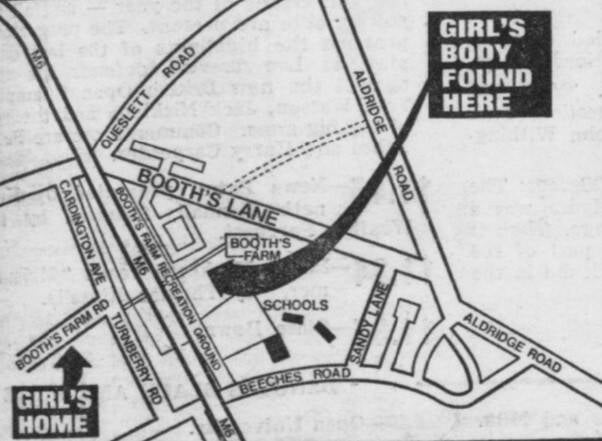
Image 3: a map printed in the Wolverhampton Express and Star on Monday 11th August 1975
The fully clothed body of Helen Bailey was found lying on her back in undergrowth which was part of the land which had belonged to the former Booths Farm. She was just a stone's throw from her home on Booths Farm Road and only 100 yards from nearby Beeches Road School, which - at any other time of year- would have been bustling with activity during the morning. She still wore the blue outfit which she had left the house wearing just over twelve hours earlier, and a strand of her long, blonde hair lay across her neck. She was described by onlookers that she appeared to simply be sleeping.
The area was cleared and sealed off from the public, with forensic teams being rapidly drafted in to help assess the scene. To add to the sheer heartbreak for Leslie, Helen's father, he was asked to remain at the scene for several hours until the pathologist arrived, at which time he was asked to formally identify the body of his daughter before being taken home. Both he and Margaret, Helen's mother, were reportedly provided with sedation, and supported at home by friends and family in the wake of an unimaginable 12 hours.
The Investigation
One of the first questions considered by authorities was how Helen had come to be in the area of the former Booths Farm. Although the Magic Wood was frequented by children who liked to re-enact fairy tales in it's mysterious environment, Helen had been forbidden from playing there by her mother. How had she ended up in an area where she knew she wasn't allowed to go? Had she gone there of her own free will, or had she been enticed there by someone? And for what purpose? If she had gone there to play - either alone or with someone else - how had she met such an awful fate?
Helen's death rapidly made the pages of the newspapers, with Detective Chief Superintendent John Bagnall - who was involved in the investigation from the outset - being quoted as saying: '"the motive for this child's death is a complete mystery. There is no reason to suggest a sexual motive. She was a very pretty, bonny, girl with long blonde hair and blue eyes."' He confirmed that the case was being treated as a murder investigation and, although another officer confirmed that Helen had been attacked and injured, neither could elaborate as to what her injuries were without a post-mortem being carried out. Nor could either officer comment on whether Helen's suspected murder was connected to the indecent assault of a nine-year-old girl just miles away in Erdington, Birmingham, which had occurred less than 24 hours earlier.
Any possibility that Helen may have been dropped onto the wasteland over the edge of the M6 motorway, which passed over the area via an elevated carriageway, was quickly discounted based on the condition of her body. In the immediate aftermath of the discovery, police were seriously concerned that the killer may strike again and gave advice for parents to keep their children either at home or close by, and not to leave them unsupervised. They also appealed for anyone who may have seen Helen between midday and 4pm on Sunday 10th August - the hours which she would not account to her parents, after which she came home covered in dirt - and anyone who may have seen her after 4:30pm, when she was last seen playing with a skipping rope on the pavement outside her home.
Initial inquiries on Monday 11th August were conducted in Great Barr, and local children were questioned by police in case they knew who Helen may have been out playing with earlier in the day on Sunday 10th and why she may have returned home in such an unkempt state. Police considered from an early stage that Helen may have gone out to meet the same person she had been with that afternoon, and if they found out the identity of that person then they could be one step closer to finding out how she had come to be injured. A mobile incident room was set up a short distance from the crime scene, enabling local residents to stop and talk to officers if they had any information or concerns.
Whilst a fingertip search of the Magic Wood and surrounding area commenced, Helen's post-mortem was carried out later on the same day she was found, conducted by Home Office pathologist Frederick Griffiths. There were no signs of indecent assault against the eight-year-old - something which would have perhaps been some sort of relief for her heartbroken family, and examination revealed that the cause of death was a cut to the throat which had caught the jugular vein. Frederick Griffiths found no signs of pressure being applied to the neck, or any additional bruising which would result from this. He went on to give his opinion that the wound had been inflicted with minimum force and that it was reasonably shallow, having only slightly caught the vital vein.
I'm cautious about discussing the cause of Helen's death in too much detail, but the neck injury will become a source of significant controversy later on, so I'm going to take a moment to very briefly explain this and why it is important.
There are three pairs of jugular veins in the neck, and from reading the information available in the public domain it appears that the internal jugular vein on the left side is the one which was damaged in Helen's case. This vein is covered by layers of muscle in the side of the neck, protecting it as much as possible from external damage. The human brain requires 15% to 20% of the blood pumped out by the heart, and once the blood has circulated the brain it returns to the heart by travelling down the jugular vein and flowing into the superior vena cava - the biggest vein in the body - which transports it back into the heart. Damage to the jugular vein would reduce the amount of blood returning to the heart, and rapidly becomes life-threatening.
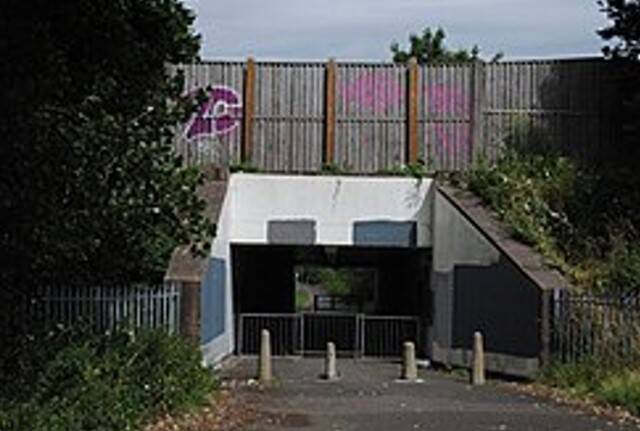
Image 4: the underpass now known as Forager's Walk
With the outcome of the post-mortem being reviewed and digested by senior detectives, house-to-house inquires and interviews of local residents continued. A group of children who had been playing in the area during the evening of Sunday 10th August described seeing Helen walking through the underpass beneath the M6 motorway at approximately 7:10pm. Shortly after this, they also saw a man with bushy ginger hair and a beard heading in the same direction - the same man who they had also seen lingering in the area earlier in the day and during the week prior to the crime. The children described him as being 5ft 11in to 6ft tall and between 35 and 40 years old. He was wearing brown trousers and a lime-green shirt beneath a dark-coloured zipped jacket. They described him as being unkempt in appearance.
This man reportedly closely matched a description handed to police of the person accused of indecently assaulting the nine-year-old girl on Saturday 9th August, leading to police appealing across the region for witnesses to come forward if they believed that they had seen the same man.
Leads on this man poured into authorities in the wake of the public appeal. Not only did calls flood in from those who believed they had seen someone matching the description, but multiple men with ginger hair and a beard voluntarily attended their local police station to be ruled out of each investigation. A police spokesperson said: '"the response from the public has been marvellous. We have had dozens of calls from people who believe they have seen him, mainly in the northern part of Birmingham, and we are following up every one."' A similar appeal was put out for a young man who had been riding a Go-Kart around the terrain of the former Booths Farm, with authorities considering that he may have seen something of significance, even if it was from a distance.
Whilst police followed up on these leads, local newspaper the Wolverhampton Express and Star printed thousands of posters appealing for information about where Helen may have been on Sunday 10th August, and with who, distributing these around the area of Great Barr and further afield in a bid to encourage people to come forward. They were displayed in public areas and in shop windows in the hopes that they would catch the eye of someone who may have some information, no matter how small. The Birmingham Evening Mail joined this action by dressing a tailor's dummy in clothes identical to those worn by Helen on the day she went missing and taking a photo of this with an image of Helen's face superimposed over the top. This was published on Thursday 14th August and, again, brought in an excellent response from members of the public.
On Thursday 14th August 1975 an inquest into Helen's death was opened and presided over by the city Coroner, Mr George Billington. Both Leslie and Margaret Bailey were present and were supported by family and close friends. Leslie Bailey was called to give formal evidence of the identification of his daughter, which must have been something of a trauma in itself - remember, it was only three days since her body had been discovered. After his statement, the Coroner adjourned the hearing to a later date to enable police to continue their inquiries.
At it's peak, the investigation included nearly 100 officers as authorities made inquiries into Helen Bailey's background, friends, acquaintances and movements on the day she went missing. By mid August, authorities declared that they had ruled out any connection between Helen's death and the indecent assault of the nine-year-old girl just a few miles away, meaning that police were trying to trace two separate individuals. By the time this information was released, more than 10,000 statements had been taken and in excess of 150 men with ginger hair had come forward voluntarily to have themselves ruled out of the case. Despite West Midlands police asking those living in the radius around the former Booths Farm to check their gardens in case the potential weapon had been discarded over a fence, and the intense fingertip search completed of the area, the murder weapon was never traced.
Helen Louise Bailey was laid to rest on Friday 5th September 1975. Her funeral procession began at the Bailey family home on Booths Farm Road and headed to St. Paul's Church on Walsall Road, where a service took place at 11am. From there, her body would be interred at Uplands Cemetery in Smethwick, not far from the home she had shared with her parents and older brother.
The First Inquest
By the end of September the number of officers assigned to the case had dwindled to forty. Pupils from twelve local schools had been interviewed, in excess of 4,000 local households had been spoken to, and hundreds of patients at St. Margaret's Psychiatric Hospital had been questioned. Despite the lack of forensic evidence obtained from the scene, the inability to trace the ginger-haired man or the young boy on the Go-Kart, and the missing murder weapon, Detective Chief Inspector Bob Snee remained positive, saying: '"we are certainly making good progress, and intend to continue until we catch the murderer. Information is still coming in and I am optimistic we are closing the gap."'
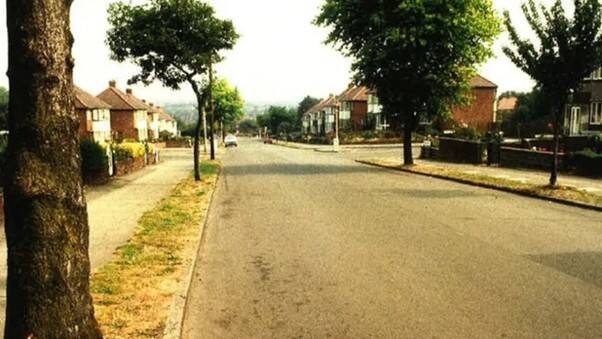
Image 6: Booths Farm Road, pictured in the 20th century
As a result of the discussions with local school children, two 14-year-old boys came to the attention of police. They had been seen conversing with Helen on the afternoon of Sunday 10th August, and some school children reported that one of them had chased after Helen. With information circulating in the press that the wound to Helen's neck could have been caused with minimal force, and police unable to rule out a child being involved in the crime, the rumour mill started rolling and fingers were pointed. Anonymous letters implicating the two boys were sent to police and to one of the 14-year-olds - although being written by hand, the handwriting was reportedly heavily disguised and the writer could not be identified. Although accusations were thrown at the pair, who both lived near to Booths Farm Road, no publication around this would appear in the press until the inquest resumed, meaning that the pair at least avoided the full attention of the media.
The inquest into Helen's death resumed on 10th March 1976, with a jury being assembled to decide a verdict. Distressingly, twenty children were called to given evidence in the court, making up more than half of witnesses who would testify. The subject of the two 14-year-old boys who had faced multiple accusations over the proceeding months was brought up, and the jury were instructed to ignore the content of the anonymous letters. Coroner George Billington stated: '"let me say right from the start that they deny having had anything to do with Helen, that they both made errors in their early statements; they were mistaken. Anonymous letters are wretched things and not worth the paper they are written on. As far as the accusations against these boys are concerned, the best advice is to ignore them."'
Police Sergeant Edwin Shuck, the first officer to arrive when Helen was found, gave evidence about the scene. He described how a strand of her own blonde hair had been draped across Helen's neck, saying: '"I think it had been deliberately put there to hide the cut in the neck"'.
Home Office pathologist Frederick Griffiths took to the stand to go through the results of the post-mortem conducted on 11th August 1975. He described how the knife wound to the neck was shallow, and that it could have been caused by accident. He stated that he had completed many autopsies on murder victims who had suffered neck wounds, and his experience led him to conclude that the circumstances of Helen's death lacked the hallmarks of a murder, instead suggesting: '"it could have been an accident or it could have been a practical joke that misfired."' In the wake of this comment, national newspapers printed articles stating that the wound to Helen's neck was 'definitely not a stab wound'.
Coroner George Billington summarised the inquest by saying how the neck wound would have been 'trivial' had it not caught the jugular vein and caused such a catastrophic result. On the back of the evidence presented, the jury found that Helen died from a wound to the neck but ultimately concluded with an open verdict, documenting: '"there being insufficient evidence to say when, where and by what means she came by her death"'. Helen's brother and father reportedly disagreed strongly with the verdict, insistent that the much-loved eight-year-old had been the victim of a killer, despite authorities now telling them otherwise.
Based on this verdict, focus turned away from treating the case as a murder. After all, the official documentation from the inquest could find no indication of the act being deliberate, leading to resources being stepped down. Detective Superintendent Bob Snee insisted that the case would continue, saying: '"we now have four officers at the incident room at Walsall Police Station and they will continue inquiries"', although it seemed to be in the understanding that this would now be focused on assessing what kind of accident or prank had led to Helen's death, rather than seeking a murderer.
Beyond the conclusion of the inquest in March 1976, Helen's case seemed to simply disappear from the pages of the newspapers. Media attention faded and the boxes of evidence, statements and documents made their way to the cold case shelves of the police station, with the Bailey family left to quietly mourn their daughter and sister.
2012 onwards
Anyone who believes that a huge legal injustice had been served to the Bailey family will be very glad to hear that this is not where the story ends.
It seems that members of the authorities also felt that something wasn't quite right in the way the case had been handled, because in 2012 the original documentation, images and test results relating to Helen Bailey's post-mortem was handed to Home Office pathologist Nathaniel Cary for review. It took the medical professional a short time to come to an entirely different conclusion to his predecessor, with his assessment leading to West Midlands Police opening a new cold case review in 2014.
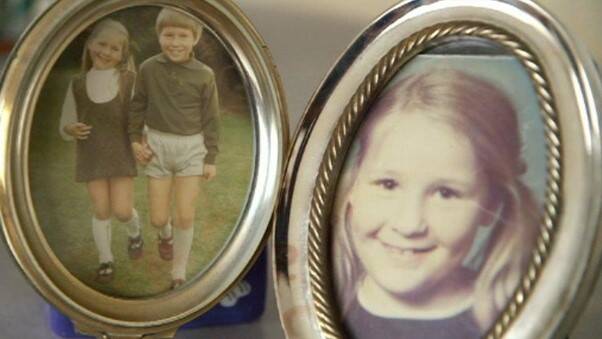
Image 7: photos of Helen and her brother, Adrian
Cary found evidence that there had been not one, but two incisions to the throat, and that far from being as shallow as Griffiths had indicated, the wounds had been inflicted with enough force to sever subcutaneous fat and muscle in the neck. If you remember the brief overview of the jugular vein which we discussed earlier, you'll remember that the internal jugular vein is protected by muscle and fat, so for the jugular vein to be damaged in a fatal manner, one would have thought that the wound was relatively substantial - something which was concluded by Nathaniel Cary. This would transpire to be only one revelation which emerged from his case review.
Cary also identified visible petechiae on Helen's face, eyelids and forehead, leading him to believe that she had received manual compression to the throat before she died. For anyone who may be unfamiliar, petechiae are tiny red or purple dots which can appear on the face or in the eyes when blood pressure becomes unbalanced in the context of compression to the neck. This occurs when the arterial blood flow - or flow of blood into the brain - is undisturbed, but venous flow - or flow of blood away from the brain and back to the heart - is obstructed. The arterial blood flow continues into the brain but is not able to continue it's journey out and back to the heart, meaning that the pressure in tiny blood capillaries in the head and neck increases to the point where they burst, causing the tiny blemishes on the surface of the skin. It is commonly known in criminal cases as being a tell-tale sign of strangulation.
This finding by Nathaniel Cary only leads to more questions. Helen had been buried in 1975, and Cary was working only from photos and documented evidence from the original post-mortem, so if he was able to ascertain this information from paperwork then how had it been missed first time around? How had pathologist Frederick Griffiths, who - by his own account - was experienced in the completion of post-mortems in the case of homicide, missed such a glaringly obvious sign? If the petechia were visible in photographs studied more than thirty years later, then surely they would have been visible during the post-mortem itself. Not only that, how had the wound to Helen's neck been described as shallow when it was significant enough to have impacted so much of the neck structure? Why had her family been put through the distress and trauma of being told that their precious daughter and sister had been killed by accident when, by the assessment of Nathaniel Cary, her death was 'a clear case of homicide'? Helen's family had seen her death be treated initially as a murder inquiry, then had to come to terms with it being designated as an accident, and had been left for decades to try to come to terms with it as such. How different could things have been if the signs were identified during the 1975 post-mortem?
Margaret Bailey would give an interview some years after the cold case was reopened, describing the impact of being told that her daughter had, in fact, been murdered as a bombshell. Her husband, Leslie, had passed away without knowing the truth about what happened to his daughter, something about which he was '"tormented every day"'.
She said: '"the police came to see us, opened the case again and so for the last six years we've known what's happened and it's different to what we were told in the beginning, so we want the truth now. It was dreadful. My son said he was coming down to see me, and it was such a shock and he said 'mom, it's murder'. I've never really been the same since. Obviously I have grieved all these years. She's never left me really. She's with me all the time, I'm talking about her all the time, my friends all know about her, and my family, everybody knows about it. It's just blighted our lives. So now it would be lovely to have closure - a bit late. But better late than never."'
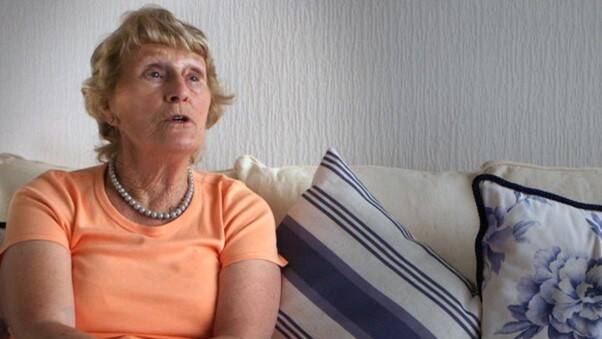
Image 8: Margaret Bailey, pictured in 2017
Adrian, Helen's older brother, was also interviewed and said: '"it's been there all the time, and obviously I can remember the day myself, but I never accepted it all through my adult life. For me personally I've always wondered why it took so very, very long in the circumstances of it being reopened."' Of the reopened case, he added: '"we're thankful for the team [of detectives] at the moment, they've been fantastic. But unfortunately, people in the past have made serious mistakes and errors and we have had the consequence of being delayed so long. We're still not getting final closure with having somebody arrested - he's still out there. It would be nice to think we might get some people who - even though it's a very long time ago - come forward that might give us that little bit of evidence that tips it over for the Crown Prosecution Service, so we can move forward."'
In 2017, the year when Helen would have turned 50 years old, a fresh appeal was issued by police for anyone with information which could help the murder inquiry to come forward. Detective Superintendent Caroline Marsh, speaking in June 2017, stated: '"this is a direct appeal to the offender or anyone who may have spoken to the offender about what happened that day"' adding that the police '"strongly believe that the person responsible for Helen's murder has confided in someone"'. The case was also featured on an episode of the Crimewatch Roadshow in an attempt to raise awareness of the case across the nation. Margaret Bailey spoke in an interview in 2017 of the impact of the loss of her daughter more than forty years on: '"it's with me all the time and I just want closure. I'd like to think I can finish my life knowing justice has been done for Helen. I just wonder what she would have been. She would have been engaged perhaps, got married and had a family. And we've been robbed of all that."'
The New Inquest
In 2018, an application was submitted by senior Coroner Louise Hunt to request the result of the original inquest be quashed, and a new inquest into the death of Helen Bailey be carried out - an application which was approved in December that year by Lord Justice Hickinbottom and Mrs Justice Whipple. The ruling stated: 'in all of the circumstances of this case, I am persuaded that the interests of justice do make a further inquest desirable. In my view, the emergence of this new evidence may well lead to the conclusion that the truth of how Helen met her death was not revealed at the first inquest.'
The ruling from the pair included an even bigger bombshell, however, when mention was given to a series of possible confessions from a man in 1978 relating directly to Helen's murder. The ruling described these statements as being 'entirely consistent' not only with facts relating to her death, but information which was only ascertained following the reopening of the case in 2014, none of which had been released to the public, and which had played a key role in encouraging police to seek a new inquest. Information that Helen had been strangled prior to her death only became public knowledge at the pre-inquest review in May 2019, having previously been kept strictly confidential.
On 5th July 2019, the inquest was formally opened. Called to testify was the man who had reportedly made the confessions to Helen's murder, with a court ruling that his identity could be made public despite him filing for anonymity.
John Sir, formerly known as Kenneth Etchells before he legally changed his name, had been sentenced to life in prison in 1991 on a charge of attempted murder after he attacked and seriously injured his mother with a hammer, and remained behind bars in 2019. Newly released information showed that he had been interviewed in relation to Helen's death as far back as 1975, and had been arrested in relation to the crime in 2014. He had been transferred from an unnamed prison to Bloxwich Police Station, where he was questioned over a period of two days. As information began to trickle out into the public domain, it transpired that Sir had been in his 20s and had lived in Tamworth during 1975, with his family home being a short distance from where Helen's body had been found.
Sir was represented at the inquest by solicitor Spencer Stephens, and testified for 25 minutes via video link - partially over concerns for his safety if he were to be transported to court in person, and partially to spare Helen's family from having to see him in the courtroom. He was 72 years old at the time of the second inquest, and was dressed in square-rimmed glasses and a somewhat ill-fitting yellow t-shirt for the court appearance.
It would transpire throughout the course of questioning that he had given three confessions to healthcare professionals in 1978, telling them that he had strangled Helen and cut her throat with a pen knife when he realised that the eight-year-old was still breathing. The inquest pointed out that it wasn't known that Helen had been strangled prior to her death until the review of the post-mortem by a second Home Office pathologist in 2012, posing intense questions as to how Sir could have known this detail if he wasn't involved in the crime. Sir said that he had made these statements to staff at Highcroft Hospital because he wanted to be admitted the mental health facility, saying that he '"wanted a refuge, somewhere to just sort myself out. It's something that I have done a few times."' He told the Coroner, Louise Hunt, that he felt the confessions made him '"more interesting"'. He had been taken to the hospital following an attempt to take his own life, and was under their care at the time the statements were made.
Sir insisted that he had obtained information from what he had read in the papers, but it was made clear that this could not have been possible at the time, leading him to put the similarities between his statements and the case evidence down to coincidence. In an excerpt from court transcripts, an exchange between Sir and Coroner Louise Hunt read:
Hunt: '"you are telling the court that it's a coincidence that in 1978 you gave three separate confessions that are consistent with post-mortem findings that were only available in 2012?"'
Sir: '"As I say, all I can say is it was a coincidence."'
Hunt: '"you made confessions in 1978 that gave a very specific mode by which Helen died - that she was strangled and then that her throat was cut. That was not known at the time and it's only in 2012 that that has since become known. How could you have known that information when it wasn't available or known about until 2012?"'
Sir: '"I cannot explain that, other than coincidence."'
Sir would go on to be asked if he had owned a pen knife at the time when Helen had been killed. After a long pause, he responded: '"I may have done, because I go fishing. It would have been in with my fishing tackle."' He admitted to being in the vicinity of the Magic Wood on 10th August 1975, testifying that he had been walking two dogs in the area.
As we have mentioned in previous casefiles, the Coroner's inquest is not a place to apportion blame. It is simply a statement of fact and that someone who may have been considered a suspect by police had been called to testify at the 2019 inquest should not be read into, as it is not part of a criminal trial and no charges had been brought against Sir. He had been brought to the inquest to testify as to why he had made statements which were relevant to the case and contained previously unknown information about how Helen had died - he was not on trial. That being said, statements provided by Sir could have been used in the future should a criminal case have been brought against him.
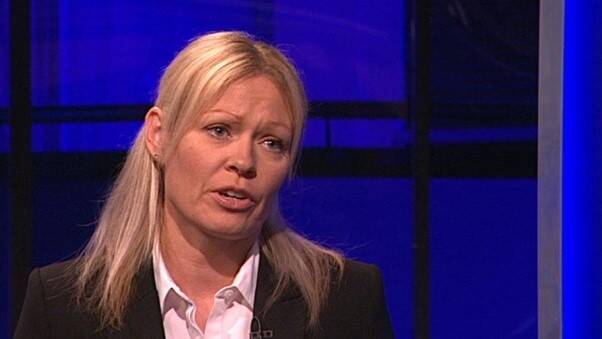
Image 9: Detective Chief Superintendent Caroline Marsh
Detective Chief Superintendent Caroline Marsh, who had been involved with the cold case review since 2014, made a bold statement to the inquest regarding her own beliefs, saying: '"I have no doubt in my mind. I believe the perpetrator was Kenneth Etchells and there are no outstanding suspects in this inquiry."' She added that the Crown Prosecution Service, who assess each criminal case prior to it being taken to court and ensure that prosecutions are carried forward fairly, had so far concluded that there was not enough evidence to prosecute John Sir for murder.
Home Office pathologist Nathaniel Cary was also called to the stand, and questioned by the Coroner on the discrepancies between his own assessment and the original post-mortem findings. Cary discussed how signs of strangulation had been missed during the 1975 post-mortem, and stated his belief that Frederick Griffiths had been misled when he gave his opinion that Helen's neck wound was shallow, and that it could even have been caused by a stray tree branch. In contrast, he believed that Helen had been lying on the ground and had most likely been unconscious at the time when the fatal wound was inflicted.
The 2019 inquest found that Helen Bailey had died as a result of unlawful killing - a verdict which many surely felt was long overdue, and was the first step in obtaining justice for the eight-year-old. Senior Coroner Louise Hunt advised the court that she would write directly to the Crown Prosecution Service with the outcome of the inquest and ask them to review their decision in the case. After the inquest concluded, Detective Chief Superintendent Mark Payne, the then head of West Midlands Police CID, said: '"we're very pleased today that the coroner has recorded a different verdict which properly reflects the way that Helen met her death. We are actively pursuing this investigation - a cold case review - and are very much hopeful of bringing an offender to justice."'
Margaret Bailey was 86 years old at the time of the second inquest, and was present in court to hear the verdict with the hope that the fresh outcome may lead to justice eventually being served. She described her daughter's killer as 'wicked' and said: '"we would like closure. We've waited 44 years for this day"'.

Image 10: Margaret Bailey, pictured in 2019
Conclusion
This, however, is where progress in the cold case apparently stalls. Despite the encouraging activities of 2019, where a fresh inquest outcome was handed down and a potential suspect was identified, no further information has reached the public domain in the near decade since. In the wake of the 2019 inquest, a representative of the Crown Prosecution Service for West Midlands Police, Mark Paul, gave a statement which read: '"following a careful review of the evidence presented by police to the CPS on Helen Bailey's tragic death, as well as advice from two independent members of the Queen's Counsel, the difficult decision was made that there was insufficient evidence to provide a realistic prospect of conviction for murder against the suspect. Should new evidence come to light and be presented to the CPS by police, we would review and assess this new information accordingly. Our deepest sympathies remain with the family of Helen Bailey at this difficult time."'
Helen's case has appeared in the press several times since the second inquest, where the facts of the cold case have been reiterated to the public in articles released as recently as April 2026. Many of the headlines refer to the eight-year-old as 'Little Girl Blue' in a reference to the blue outfit she was wearing on the day she died. John Sir is mentioned in some of the articles, but he has never been charged with the attack on Helen and any evidence which may, or may not, connect him to the case is securely locked away in police files.
Information about John Sir is not readily available online, with the only past conviction visible in the public domain being the one for which he is serving a life sentence. Police will know far more about this man than they will be releasing to the public, but the Crown Prosecution Service has already declared that any evidence presented to them is not enough to secure a conviction against him. We know from Sir's own statements in court at the inquest that he had spent time in mental health facilities prior to the 1978 admission, but the reasons for these admissions are unknown. And if he did have any involvement in Helen's death, what would his reasons have been?
No motive has ever been established as to why Helen was killed. Aside from the wound to her neck and the evidence of strangulation, authorities found no other damage to her person. Indecent assault was ruled out during the post-mortem, and her clothing was undisturbed. If she had any money on her person, the amount would surely have been minimal and she would have been a unrealistic target for robbery. No defensive wounds or signs that she had been involved in a struggle were noted at the inquest according to news reports. So how did the eight-year-old come to be in the thicket in the Magic Wood, and why?
Police have never been able to establish where Helen was, or who she was with, before she came home covered in dirt in the middle of the afternoon on Sunday 10th August. They theorised in 1975 that this period of time could hold key information into her death, suggesting that she may have met the same person later in the day. She never told her parents who she had been playing with and how she came to be covered in dirt, meaning that the only other person who could attest to her actions at that time would be the person she had been with. As that person - if there was one - has never come forward, there has been no progress in filling the gap in the timeline of that day.
Helen was seen walking through the underpass beneath the M6 motorway, unaccompanied, at approximately 7:10pm on the day she died. The man who was seen heading in the same direction five minutes later has never been traced or identified - is there a chance that he could have been involved, or did he just happen to be in the area at the time and was heading somewhere else entirely? Why was Helen walking through the underpass and how did someone manage to lure her to the Magic Wood, where she knew she shouldn't have been playing? Does it suggest that the person involved may have been someone that she knew and trusted, or was it a very convincing and seemingly trustworthy stranger? Why was Helen out so late, walking on her own, when she knew that she should have been back home for tea long before that time? And if people were out searching the area for her already after 5:30pm, how was she not seen by someone? The underpass was just metres away from her own front door - if people were out looking for her, how did she go unnoticed?
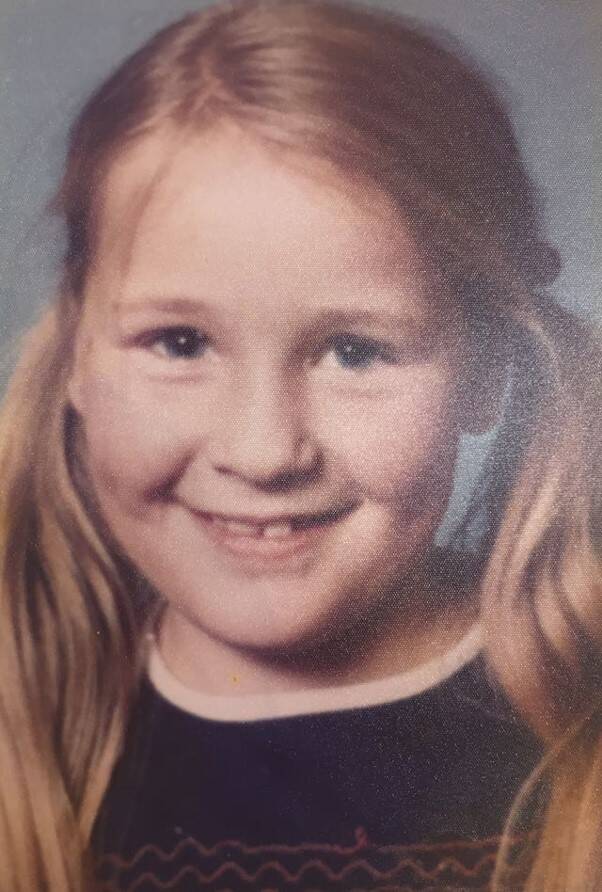
Image 11: Helen Bailey
There are many, many questions which remain unanswered in Helen Bailey's case, and it seems that fresh information still needs to come forward in order for these to be answered. If police have forensic evidence tucked away in the cold case storage, perhaps advances in forensic testing could provide a step forward. At the moment, however, the case appears to be at a stand-still.
Helen was simply enjoying time outside as all young children should be able to do. She was in a close proximity to her home and should have been safe. She should have been able to walk through her own front door, perhaps with a minor telling-off for being late home, but still have been able to go to Cornwall with her family for their holiday. The girl who was described as bubbly and lively should have been able to go back to school that September, grow up and live her life. She should have been able to get a job, perhaps get married and have children of her own.
Something terrible happened to an innocent eight-year-old child on Sunday 10th August 1975, and the person responsible has, so far, evaded justice. The lives of a close-knit family were irretrievably changed in the space of one day, and that family have never received the answers that they deserve. Leslie Bailey passed away before hearing the new inquest state that his daughter had, in fact, been the victim of a murder.
Someone must know something. There must be information which is yet to come forward, or evidence which is yet to be uncovered which could help to solve this devastating case. This young girl had a future which was cruelly taken away from her in a crime which appears to be completely motiveless. We can only hope that new information comes forward, or that new testing can help to uncover the person responsible and bring them to justice, no matter how many years have passed.
If you have any information about the murder of Helen Bailey, who died on Sunday 10th August 1975 in the area of Great Barr, please contact police on 101 or submit information via the West Midlands police website: Home | West Midlands Police
Information can also be submitted anonymously to CrimeStoppers by calling 0800 555 111, or by using their online form: Giving information anonymously | Crimestoppers
References for text:
Killing of Helen Bailey - Wikipedia
Little Girl Blue never far from her mother's thoughts - BBC News
Probe ordered into murder of 8-year-old girl more than 43 years after her death | ITV News Central published 12th December 2018, retrieved 29th September 2026
Coroner to urge new review after man confessed to strangling ‘Little Girl Blue’ | Hexham Courant published 5th July 2019, retrieved 29th September 2026
Little Girl Blue murdered as she played in ‘Magic Wood’ - Birmingham Live published 14th October 2015, retrieved 29th September 2025
Little Girl Blue murder: Renewed appeal for 1975 case - BBC News published 28th June 2017, retrieved 29th September 2026
High Court Judgment Template retrieved 29th September 2026
Helen Bailey's mother demands justice 43 years on from killing published 5th July 2019, retrieved 30th September 2026
Who killed 'Little Girl Blue' Helen Bailey - found dead by the M6 43 years ago? - Birmingham Live by James Cartledge, published 28th June 2017, retrieved 30th September 2026
Jugular Veins: Anatomy and Function
British Newspaper Archive:
Shropshire Star, published Monday 11th August 1975, retrieved 1st October 2026
Liverpool Echo, published Monday 11th August 1975, retrieved 1st October 2026
Wolverhampton Express and Star, published Monday 11th August 1975, retrieved 1st October 2026
Birmingham Mail, published Monday 11th August 1975, retrieved 1st October 2026
Kent Evening Post, published Tuesday 12th August 1975, retrieved 1st October 2026
Western Daily Press, published Tuesday 12th August 1975, retrieved 1st October 2026
Aberdeen Press and Journal, published Tuesday 12th August 1975, retrieved 1st October 2026
Shropshire Star, published Wednesday 13th August 1975, retrieved 1st October 2026
Birmingham Daily Post, published Thursday 14th August 1975, retrieved 1st October 2026
Birmingham Mail, published Thursday 14th August 1975, retrieved 1st October 2026
Wolverhampton Express and Star, published Friday 15th August 1975, retrieved 1st October 2026
Birmingham Mail, published Friday 15th August 1975, retrieved 1st October 2026
Wolverhampton Express and Star, published Tuesday 19th August 1975, retrieved 1st October 2026
Wolverhampton Express and Star, published Thursday 21st August 1975, retrieved 1st October 2026
Wolverhampton Express and Star, published Wednesday 3rd September 1975, retrieved 1st October 2026
Wolverhampton Express and Star, published Thursday 25th September 1975, retrieved 1st October 2026
Wolverhampton Express and Star, published Tuesday 7th October 1975, retrieved 1st October 2026
Birmingham Mail, published Wednesday 10th March 1975, retrieved 1st October 2026
Shropshire Star, published Thursday 11th March 1975, retrieved 1st October 2026
Birmingham Mail, published Thursday 11th March 1975, retrieved 1st October 2026
Liverpool Daily Post, published Thursday 11th March 1975, retrieved 1st October 2026
Credit for images:
Image 1 - map showing Great Barr: taken from Bing Maps
Image 2 - Helen Bailey: Coroner to urge new review after man confessed to strangling ‘Little Girl Blue’ | Hexham Courant
Image 3 - map of the area printed in the Wolverhampton Express and Star on Monday 11th August 1975
Image 4 - the underpass now known as Forager's Walk: By Andy Mabbett - Own work, CC BY-SA 4.0, https://commons.wikimedia.org/w/index.php?curid=92503437
Image 5 - Helen Bailey: Coroner to urge new review after man confessed to strangling ‘Little Girl Blue’ | Hexham Courant
Image 6 - Booths Farm Road, pictured in 20th century: Last seen skipping in garden, the tragic tale of 'Little Girl Blue', 8, found dead 50yrs ago - and it’s still a mystery
Image 7 - photos of Helen and her brother: Little Girl Blue murder: Renewed appeal for 1975 case - BBC News
Image 8 - Margaret Bailey in 2017: Little Girl Blue murder: Renewed appeal for 1975 case - BBC News
Image 9 - Detective Chief Superintendent Caroline Marsh: Little Girl Blue murder: Renewed appeal for 1975 case - BBC News
Image 10 - Margaret Bailey, pictured in 2019: Coroner to urge new review after man confessed to strangling ‘Little Girl Blue’ | Hexham Courant
Image 11 - Helen Bailey: Coroner to urge new review after man confessed to strangling ‘Little Girl Blue’ | Hexham Courant