

Jessie Earl
Disclaimer: this article contains details which may be upsetting for some readers. Discretion is advised.
In the south-east of England, just over fifty miles to the south of London and around twenty miles to the east of Brighton, sits the seaside town of Eastbourne. Thriving largely on an income from tourism, the town attracts thousands of visitors every year to wander along its four miles of shingle beach, hike the nearby South Downs, or take a dip in the sea.
In 2021, the town's population had risen to just over 100,000 residents, bolstered by the easy commute to the city of London and the cheaper house prices. Many families have settled in the town over recent years, and it remains a popular destination for students due to its colleges and training opportunities. Residents can take advantage of the many parks and open spaces around the town, relaxing in the open air away from the busy seafront but still benefiting from peace and quiet.

Image 1: the chalk cliffs and lighthouse at Beachy Head
The Victorian buildings dotted along the seafront as well as the picturesque scenery in the surroundings have been utilised in both television and movies, with Beachy Head being used as a backdrop in Harry Potter and the Goblet of Fire for the Quidditch World Cup, and the town itself being seen in episodes of The Two Ronnies, Agatha Christie's Marple and a 2021 episode of The Crown.
As beautiful as this area may sound, we all know that nothing is perfect - and this includes the villages, towns and cities which we each like to call home. Never has this been so true as in May 1980, when a talented student, loving daughter, and intelligent young woman would go missing on a sunny afternoon. What happened to her would remain a mystery for nine long years - but even then, only a few of the questions were answered. Her family have campaigned for decades for answers as to what happened to their treasured daughter, sister and niece, but her case remains firmly on the cold case shelf to this day.
In this casefile, we're going back to 1980 to look at the story of Jessie Earl.
The Disappearance
Jessie Victoria Earl was born on 16th December 1957 to parents John and Valerie, making up a family of four including brother, James. The family lived in Eltham, South London, where John Earl worked as a building surveyor with the Greater London Council. By all accounts and from the information available, they sounded like a solid, loving and supportive family unit.
Jessie flew the nest early by heading to college in Wales during her late teens. Being so far away from home seemed to be difficult for her, though, and she moved back to Eltham for a short period of time before heading instead to Eastbourne, where she enrolled at the former Eastbourne College of Art and Design, now known as East Sussex College. The closer proximity to her home in London seemed to work much better for her, and in May 1980 she was approaching the end of a two-year graphics course. Jessie lived in a bedsit on the top floor of a building in Upperton Gardens, which she been renting since March 1979, and was somewhere which was convenient both for getting to college and getting to/from the train station which would take her back to London when she visited home. Jessie's landlady, Christine Jay, would briefly describe her tenant to the Eastbourne Herald, saying: "Jessie was reserved but friendly in a quiet way. She is the last person I could think of anything like this happening to."
Image 2: a map showing locations around Eastbourne which will be important in this casefile
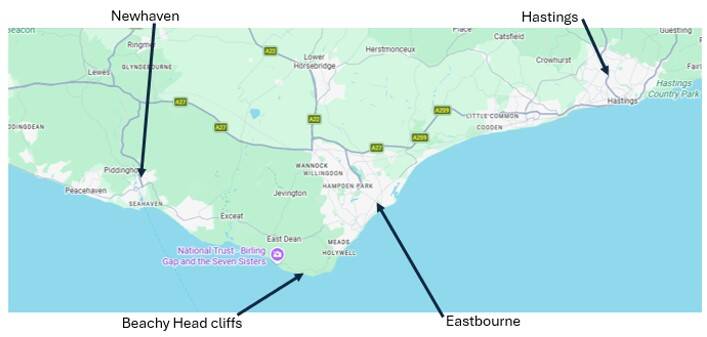
Whether Jessie chose the bedsit for it's location or whether she took what was available is unclear, but it's site on the outskirts of town put her within walking distance of the seafront as well as the cliffs at Beachy Head. She reportedly loved being outdoors and immersed in nature, something which she wrote about in her journal. She would walk for miles along the Sussex coast and often down to Newhaven, sometimes clocking up fifteen miles at a time, but had a particular soft spot for Beachy Head where she would sit and read. She loved the sea, and would call her mum from a payphone kiosk on the seafront so that she could hold the receiver in the direction of the water, enabling Valerie to hear the sound of the waves all the way from London. Although she enjoyed roaming the countryside in her free time, Jessie was described as someone who enjoyed the comfort of home and rarely went out in the evenings with friends or to parties, preferring instead to relax in the peace and quiet of her bedsit with a book or her journal.
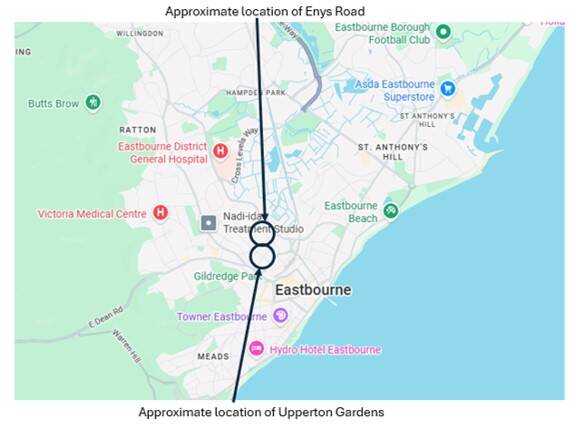
Image 3: map showing the approximate location of Upperton Gardens, where Jessie's bedsit was located, and her GP surgery on Enys Road
Jessie had stayed with her parents between the 2nd and 6th May, at which point she had headed home to her bedsit in Eastbourne to prepare for a series of upcoming exams. Between 6th and 13th May she made two calls to her parents and also wrote them a letter, something which she did often and was a much more popular before the Millennium and the increasing sales of mobile phones.
On Wednesday 14th May, Jessie called her mother to let her know that she would be visiting home that weekend, intending to arrive on Friday 16th. She spoke of the recent exams, describing them as encouraging, and was looking forward to seeing her Australian pen-friend, Melanie, who was visiting the capital city and would be staying with Jessie's parents in Eltham for a night. Valerie would later described Jessie as sounding very cheerful and her normal self during the phone call.
On Thursday 15th May, Jessie was seen by a neighbour leaving the residential building in Upperton Gardens. Ivy Selby had commented on the dress which the 22-year-old was wearing, later telling the Eastbourne Gazette: "she was wearing a blue floral dress. I remarked on it because normally she went around in jeans." Jessie had headed out at around 5pm, telling Ivy that she was quickly heading to her GP surgery on Enys Road to leave a note requesting a repeat prescription. She suffered from multiple allergies, asthma and eczema and had several prescriptions including an inhaler and skin treatment. The surgery was just a few minutes walk away from her front door, and the time it would have taken to do the round trip would have been very short indeed.
There are varying reports in the public domain as to whether Jessie was seen returning to her bedsit or not. Some report that her leaving for the GP surgery was the last time she was seen, whereas others mention that she was seen coming back to the building and leaving again shortly after, having changed her clothes. It's difficult to discern which report is correct, but what is known for certain is that she never collected the prescription which she had ordered.
On Friday 16th May, Jessie's parent's became uncomfortable when she failed to arrive at their home in Eltham. She was known as a reliable young woman, and they knew that she would have made contact with them if she had been delayed or wouldn't be able to make it for the weekend. Without Jessie having a phone in the bedsit, and without the modern methods of instant communication which we have today, it wasn't possible for John or Valerie to contact her at her rental property to check that everything was alright.
When Jessie still hadn't appeared by Saturday 17th May, Valerie took a train to Eastbourne and let herself into the bedsit on the top floor of the building on Upperton Gardens. Her daughter wasn't in the property, and several things in the home struck Mrs Earl as being unusual.
The room looked as though Jessie had just left for a couple of minutes. Her purse lay on top of the bed, her glasses lay on the floor alongside a book, preparations for a meal of chicken, mushroom and rice had been assembled and left uncovered, dirty dishes lay in the sink to be washed up, and Jessie's asthma inhaler - which she never left home without - was still in the property. Her clothes and toiletries were untouched, with everything looking as it should and nothing noted to be missing.
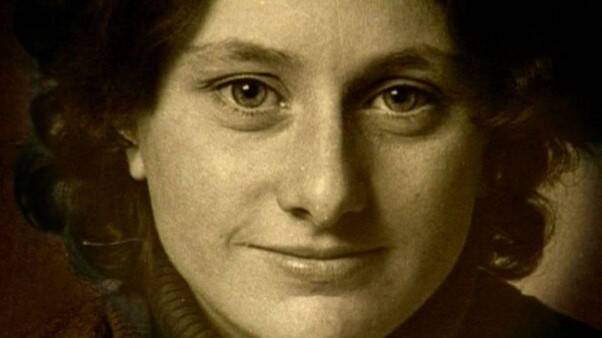
Image 4: Jessie Earl
Valerie Earl stayed in the bedsit for the rest of Saturday 17th, hoping that her daughter would walk through the door. Her hopes were in vain, though, and on Sunday 18th May she reported 22-year-old Jessie Earl as a missing person. Before heading home to update her husband on the situation, she left a note in the Upperton Gardens bedsit asking her daughter to get in touch with them as soon as she could. It was a request which would, sadly, never be fulfilled.
The Investigation
The police set about checking items in Jessie's bedsit and speaking to people who may have seen her in the lead up to her disappearance. They spoke to friends, classmates and tutors at her college, none of whom had seen her since Wednesday. Although it may seen unusual for a college student not to be on campus every day, it's worth remembering that Jessie was in the final few months of her 2 year course and had already started her exams. During this period, college classes are often reduced in frequency to allow for additional study time and exam preparation, giving students the flexibility to study at home in a place which is comfortable for them. It may have been that Jessie had no need to go into the college on Thursday 15th May and had chosen to study at home.
The police were able to ascertain that the last time Jessie had been seen was during the early evening hours of Thursday, with her neighbours informing them that she had been heading out to order a prescription at 5pm. As we mentioned above, this seems to be the last confirmed sighting of her, with mixed reports of whether she was seen coming back to her bedsit and leaving again a short time later. The reports in the press that she may have come back home, changed her clothes and left again seemed to have been accurate, as Valerie had found the dress that Jessie had been seen wearing earlier in the day in the property, indicating that Jessie had gone out again wearing a different outfit. Had she perhaps gone for an evening walk, and changed into something more appropriate for this? Her mum would later tell the press that Jessie sometimes went out for a bit of fresh air before the evening set in - was it possible that this was what she had gone out to do?
Little progress was made in the early stages of the investigation, despite posters being put up in the area of Upperton Gardens, as well as searches of the residential area being conducted with tracker dogs. A description of Jessie Earl was released stating that she was around 5ft 3in tall with short brown curly hair reaching down to her shoulders, blue eyes and slim in build. She was believed to have been wearing dark trousers and a coloured shirt at the time she went missing but it's unclear how this conclusion was drawn - it's possible that it was as a result of Valerie checking the clothing which remained in her daughter's home and noting which items were missing.
With the missing person being a young woman in her early twenties, living on her own, and having no history of disappearing or going off for any period of time, one would have thought that the press would jump on the story. This seemed to be far from the truth, however, as the first archived newspaper article I could find wasn't published until 24th May 1980 - nearly ten whole days since Jessie disappeared. Why did it take so long for Jessie's story to hit the newspapers? Surely such an important incident in the seaside town would have been worthy of print - it would have helped to get her name and picture out to the local population and encourage anyone who may have seen her to come forward quickly. With the number of tourists visiting the area on a regular basis, it's possible that early awareness could have brought forward vital witnesses. This lack of publication seemed to be a theme for some time - even when Jessie's case did hit the press, it remained in the local newspapers and didn't reach national print (as far as I can tell) until the end of June 1980.
We know that the media can be something of a double-edged sword. The invasive nature of some investigation methods and the controversial publications which sometimes hit the headlines can be a great source of upset and distress. However, in situations such as this, the benefits of getting the story out to the community are undeniable - it is often the quickest way to draw attention to the case and bring forward vital information to the police. So, why did it take so long for Jessie's name to hit the press? Could earlier publication of her disappearance have helped to draw up support - either in the form of witnesses, or in the form of volunteers to help search for the missing student? We will simply never know.
Police trawled through Jessie's journal with a fine-toothed comb, looking at people she had recently mentioned - something which provided them with a name of interest. Jessie had mentioned meeting a man called Tim on one of her walks across the Downs, and wrote that he had given her a lift home to Eastbourne from Cuckmere Haven, a distance of just over seven miles, with Jessie documenting that he had been driving a red car. She described him in her journal as being in his late 30s, and having recently separated from his wife after 13 years of marriage, with whom he had four children. Subsequent entries in her journal described how he had visited her at her bedsit a couple of times since their meeting on the Downs, with the most recent visit being in the days before she disappeared.
DI Colin Taylor, in charge of the missing person investigation and head of Eastbourne CID at the time, was quick to stress that the mention of the man in Jessie's diary did not mean that they were romantically involved, but the authorities were keen to trace and talk to him to eliminate him from their enquiries. Such little information was forthcoming in relation to the student's disappearance that every single person known to have interacted with her in the days before she vanished needed to be looked at by police. It would take some time for Tim to come forward - perhaps because of the lack of publicity around Jessie's disappearance - but he did eventually do so, and was able to be ruled out as having any involvement with the case.
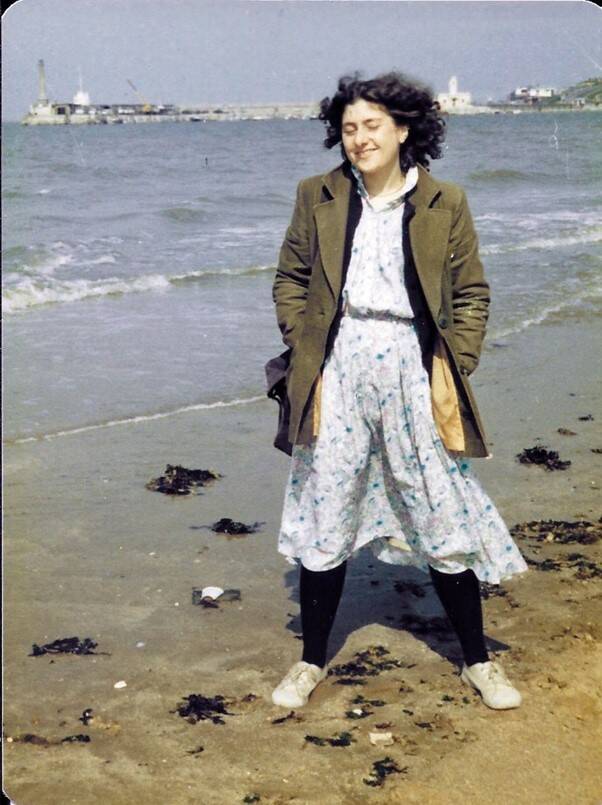
Image 5: the last known photo of Jessie Earl, taken in the weeks before she went missing
As the police search escalated, a lot of the search attention focused on Beachy Head and the South Downs, areas which were frequented by Jessie Earl. As we mentioned above, she loved to be outside and walking amongst nature, and would enjoy spending time on top of Beachy Head taking in the view and reading a book. Consideration was that she had gone for a walk, perhaps making the most of the extended evening light after the clocks rolled forward to British Summer Time (BST) in March, and that something had happened to her whilst she was away from her bedsit. Although police had been present in the area of the Downs and had been actively searching for signs of the 22-year-old, on the weekend of 24th and 25th May mounted police and sniffer dogs were added to the ranks of authorities combing the land in a bid to find even the smallest trace of the student. They scoured the area between Eastbourne and Newhaven, extending along the cliff base between Birling Gap and Holywell, hoping that the smallest piece of evidence may appear.
Valerie Earl spoke to the Eastbourne Gazette as the search for her daughter continued, saying: '"we feel totally helpless. We have no idea what happened to our daughter. She was happy in Eastbourne and came home regularly and kept in touch by letter and telephone."'
Three weeks after her disappearance, police flew a helicopter with thermal imaging technology across the Downs. Infra-red equipment was also utilised in the hour-long search from the air, but the efforts were without success. The press were quick to print headlines on the air search, with the Eastbourne Herald stating: 'police used a thermal scanner during their air search. If Jessie was lying dead on the Downs this could have picked up some trace of her.' I'm not all that clear on the technology behind using thermal scanners to locate people, and the studies available online looking into this are quite scarce. If police were considering that Jessie may have died shortly after she went missing, was it possible that a thermal scanner would still pick up signals of heat three weeks later? Or were they considering that she could still be alive but lying injured somewhere? Let me know if you have any insight into this.
On Tuesday 10th June, DS Paul Miller and accompanying officers visited the Earl family home in Eltham, London, and carefully interviewed both John and Valerie for a period of three hours. They questioned the couple on every name mentioned in Jessie's journal - some of whom the parents hadn't even heard of - in the hopes that one name may jog a memory for the parents. This attempt led nowhere, however, as John and Valerie were unable to provide any further information on many of the people mentioned in it's pages. Valerie was close with her daughter and did not believe her to have any special boy or girl friends who may be able to assist police.
By 11th June - nearly a full month after Jessie walked out of her bedsit and disappeared - the majority of the focus remained on the area around the Downs and Beachy Head, with the coastguard also being drafted in to help with the search. Although no sign of Jessie was found with all of the different teams assisting, PC Ian Tubb did stumble across a live shell measuring 4inches near the Belle Tout lighthouse. With the area being sealed off for safety, a further 80 devices were found across an area of beach spanning nearly 500 yards in length, each of which were safely detonated at the scene.
Jessie had paid the rent for the upcoming week (week commencing Monday 19th May) before she went missing, and her parents continued to do this out of their own money in the hopes that their daughter would be able to come home to her bedsit in just the way she'd left it. Paying the rent back in 1980 meant going to the property in person, and Valerie spoke of how she would find herself walking the streets of Eastbourne each time she visited the town in a bid to catch a glimpse of her daughter amongst the crowds or find some clue as to where she'd gone. If her husband, John, joined her when she travelled to the seaside resort, the pair would drive the road past the Downs all the way to Newhaven in case they could see her wandering the cliffs she loved so much. Valerie visited the principle of the college where Jessie was studying but he was also at a loss as to where the student had gone, and could offer no information to help the distressed mother.
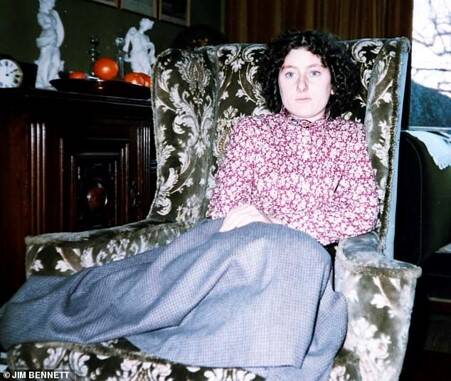
Image 6: Jessie Earl
Constance Miller, John Earl's sister and Jessie's aunt, played her own role in the search for her niece by travelling round nearly twenty chemists in her home area of Hastings with a photo of Jessie and newspaper clippings of the case. She considered that Jessie would have needed to obtain prescriptions for her asthma and allergies and, as she had always enjoyed visiting her aunt in Hastings, Constance wondered whether she may have gravitated to the area. The family could not accept suggestions by the police that Jessie may have gone somewhere to end her own life, or that she may have left the country, instead considering that something may have happened to cause her to lose her memory. They worried that she may have been wandering alone somewhere and been forced to seek medical help for her long term conditions, as all her medication was still in her bedsit.
Constance Miller spoke to the Eastbourne Herald about her campaign to contact as many chemist stores as possible, saying: '"I just wanted to do something - we all feel so frustrated at not being able to help. It is difficult to think of anything else to do. We seem to have run out of ideas. Eventually the police are going to slow down their inquiries if they are not getting any results."' On the topic of what may have happened to her niece, and whether she believed that she was still alive, Constance said: '"We are all very upset and depressed but I feel that she is alive somewhere. I don't feel that she has died - we haven't given up hope by any means."' On the back of Mrs Miller's tour of the chemist stores around the Hastings area, the Pharmaceutical Journal published an appeal to any chemists who may have dispensed the same items which Jessie used for her allergies in case Jessie had entered a store somewhere else in the UK.
Constance Miller felt that if Jessie had lost her memory and had no recollection of who she was or where she lived, her love for the sea would have kept her near coastal areas. There were even suggestions that she may have travelled further afield to areas which were familiar to her, such as Carmarthen in Wales where she had studied between 1976 and 1977. She had travelled to, and had a great fondness for, areas such as Brecon, Tenby and Haverfordwest, leading to her photo being printed in the Carmarthen Journal newspaper in case someone had seen her in the area.
At the start of July, after seven weeks of paying the rent on Jessie's bedsit, Valerie Earl travelled to Eastbourne to start packing her daughter's belongings. Distressingly, she found a birthday card which Jessie had been making for her mother but had never got to finish, something which only added to the family's certainty that she hadn't disappeared of her own free will. She had told the Eastbourne Herald after 50 days without word from her daughter: '"the longer it goes on the more likely it will have a serious outcome. I am very depressed now - it gets more difficult to be optimistic. I feel that a big hand has come down and lifted my daughter out of her own room."'
In August 1980, after the police investigation had started to go cold, the Earl family started a huge publicity campaign in an attempt to generate new information in their daughter's case. Jessie's name had only briefly started appearing in the national news from 30th June - six weeks after she had gone missing - and her story had been mainly confined to Eastbourne and the surrounding area. This changed when the Earl family paid for 3,000 leaflets to be printed containing information about Jessie's appearance, her mannerisms and the known information about her movements around 15th May. Posters and signs were sent as far afield as possible, reaching well into Wales and the south-west of England, with leaflets being sent directly to police stations for their attention. Friends and relatives of the family travelled around towns distributing posters and leaflets to anyone who would take them, especially in areas which Jessie was known to have visited or frequented. John and Valerie Earl appeared on the Wogan Show to talk about their daughter, and a piece was featured on BBC's Crimewatch in a bid to bring forward witnesses.
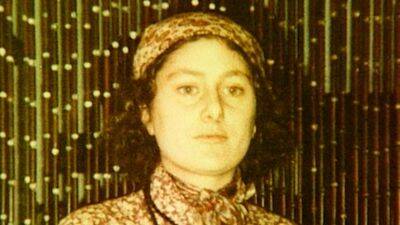
Image 7: Jessie Earl
Despite a number of calls being made to authorities on the back of the appeal, no sightings of Jessie Earl were confirmed. To the horror of the Earl family, 1980 concluded with a report being produced by the police which stated that Jessie had likely ended her own life, citing the pressure of exams and low mood over the number of allergies she suffered from. The outrage and distress that this must have caused the Earl family is unimaginable, especially with all the evidence indicating that she had only left her property for a short period of time. She had spoken of her wish to stay in Eastbourne after her exams had ended, intending to find a summer job and stay by the sea. Why would she make these plans if she intended to take her own life?
The justification behind this printed police report is unknown. It seems to be in direct contradiction to statements made by officers to the press and information provided by the Earl family during the process of the search and the investigation. Not only that, but such a conclusion led to the case being wound down, and official attempts to continue looking for the 22-year-old student seemed to fade into the background.
1981 to 1988
Local news publications in the Eastbourne area continued to print Jessie's name in the years following her disappearance in an attempt to keep her case in the minds of the local community. Close to the first anniversary of the 22-year-old going missing, the Eastbourne Gazette printed a bold headline and article, with the all-capital title shouting: 'JESSIE, WHERE ARE YOU?', followed by a hard-hitting paragraph reading: 'The year was 1980. The date was May 15. The day was Thursday. It was a lovely sunny day. It was the day Eastbourne art student Jessie Earl walked out of her bedsitter in Upperton Gardens and vanished.'
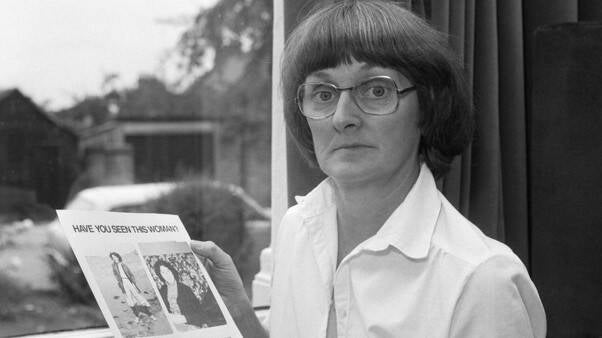
Image 8: Valerie Earl with a missing poster in 1980
Valerie Earl was interviewed in the article and spoke about how they had kept her bedroom at the family home in Eltham exactly as it was when she had last stayed there, saying: '"her room looks just as it did when she left it so it will be ready if she is ever found. She is always on our minds. If we go away for a few days, we always notify the police and neighbours so that we can return immediately if something happened."' They also interviewed Jessie's college tutor, Malcolm Williams, who said that no-one at the college had given up hope that she would be found.
Out of sheer desperation for information about their missing child, John and Valerie Earl employed the services of psychic detective Robert Cracknell in June 1981. He was permitted access to Jessie's former bedsit, and also visited detectives in Eastbourne who had taken part in the investigation and staff at the college. He also reportedly intended to travel to Wales to see the area where Jessie had lived when she studied in Carmarthen. The 46-year-old would tell the Eastbourne Herald that he believed Jessie to still be alive, saying: 'I have managed to deduce certain things about the girl which cause me to hope that she is still alive."' He based this deduction on a feeling, and no further information or updates were received from his independent investigation.
By the time 1984 and the fourth anniversary of Jessie's disappearance rolled around, the headlines in the Eastbourne papers had made a distinct shift from those released in previous years, with the Eastbourne Herald going to print with the title 'WHO KILLED JESSIE EARL?'
DI Colin Taylor, the man who had been in charge of the investigation in 1980, had since left the force and started running a restaurant in the town. He gave his opinion to the press that Jessie was no longer alive, saying: '"if she was alive, she would have contacted her parents. I am sure she has been murdered."' He added to this by saying that reading entries in Jessie's diary had led him to believe that she hadn't taken her own life, and that her body would have been found if she had been involved in an accident - ruling out both of these as potential outcomes in his own mind. He also mentioned that her passport had been found in the bedsit, reducing the possibility that she had gone abroad, and there was no record with the passport office or with local post offices that she had attempted to obtain a new passport. All of this begs the question - why did the police publish the report in 1980 stating that it was likely that Jessie had taken her own life? If the leading officer had been of the opinion that she had met with foul play, why was this the conclusion which was drawn at the time?
The new head of CID in 1984, DI Brian Foster, also spoke to the Eastbourne Herald as part of the fourth anniversary article. He was quoted as saying: '"she remains a person that has gone missing and perhaps for reasons of her own has not contacted us or her parents. There is always a dark side to it, but we have no evidence to indicate that anything untoward has happened to her."' The words of Brian Foster didn't ring true with the quotes from former DI Colin Taylor, something which surely raised questions in the minds of readers of the publication. Why did two officers who had been involved in the same case have such different opinions?
John and Valerie Earl continued to search for answers across subsequent years. They appeared again on the Wogan Show to speak about Jessie, something which generated forty new calls to police. John spoke to the press about how Jessie's bank statement had arrived in the post shortly before the sixth anniversary of her disappearance, showing that her bank account remained untouched.
It would be nearly nine years before the couple received any kind of answer as to what had happened to their daughter - but the revelation would only lead to a stream of more unanswered questions.
The Discovery
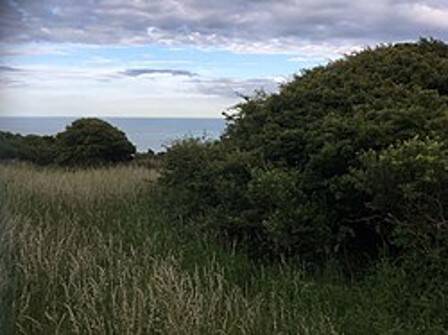
Image 9: the thicket where Jessie's remains were found
On a blustery day in March 1989, an 8-year-old child had been flying a kite on Beachy Head when it was swept away in a particularly fierce gust of wind, landing in an overgrown thicket of hedging near Whitbread Hollow. Determined to retrieve his daughter's kite, her father fought his way through 70 metres of the briers to extract it from the area where it had become tangled. To his horror, he stumbled across the skeletal remains of what he recognised to be a human body, an image which would stay with him for many years to come.
Police attended the scene, initially considering the remains to be those of Lord Lucan, a local aristocrat who had disappeared in 1974 after his children's nanny was found deceased.
Any thoughts of the remains being those of the male were dispelled when comparison of dental records confirmed the skeletal remains to instead be those of Jessie Victoria Earl, who had vanished nearly nine years earlier. Heartbreakingly, parents John and Valerie had been about to embark on a break to Paris when they heard that human remains had been found in Eastbourne. They made the difficult decision to continue with their break after leaving details of their hotel with police, by that point having followed up more than fifty discoveries of remains across the years, only to find out that they were not their missing daughter. They received a call at their hotel after Jessie's identity was confirmed, but were encouraged by authorities to remain in the French capital until the media frenzy around the discovery had calmed down, with police anticipating that the couple would be subject to many calls and visits by the press at their home - something which they were keen to spare the bereaved parents.
Constance Mills and her husband, John Earl's sister and brother-in-law, found out about the discovery whilst watching a TV broadcast, something which no family member should ever have to experience. Despite the battle to publicise Jessie's missing person case over the years, the media swarm around the discovery of a body on Beachy Head rapidly hit headlines and news bulletins, meaning that it was a challenge to inform family members before news spread through media channels.
I'm going to include a clip from the Eastbourne Herald below, which was printed on Saturday 15th April 1989. The article shows a letter written to the publication by Gordon Cross, the man who stumbled across Jessie's remains whilst trying to retrieve his daughter's kite. As is often the case in the aftermath of such discoveries being made, rumour and speculation had led to the publication of sensationalised details according to the father - something which he was keen to set straight for the benefit of the Earl family. The desperation to achieve a shocking headline and higher newspaper sales by printing sensationalised stories should never, ever come at the detriment to the people who have lost a loved one, or those who have had the misfortune to make such a harrowing discovery. This situation should always be treated with respect and dignity - a message which Gordon Cross made the important decision to put across. The Cross family had no further involvement in the case aside from discovering Jessie's remains.
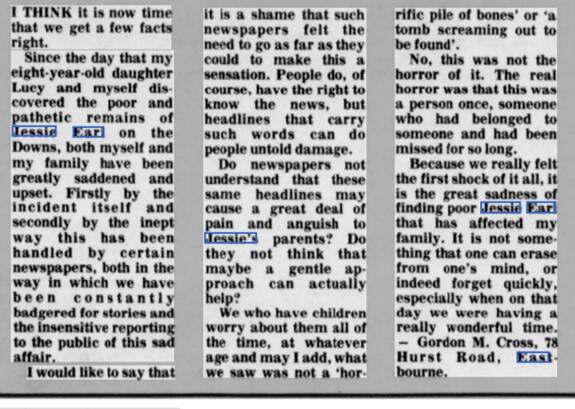
Image 10: Eastbourne Herald article, printed Saturday 15th April 1989
A post-mortem of Jessie's remains, completed by a Home Office pathologist, could find no evidence of violence but such was the level of decomposition that little information could be ascertained from her body - including her cause of death. This was just another layer of grief to add to that being experienced by the Earl family and Jessie's friends - not knowing how she died, and how she came to be laying in a thicket on top of Beachy Head would surely have been torment. Police did assess that she had most probably died at the location she was found, although how they came to this conclusion is unclear.
It was suspected by the pathologist that Jessie may have been indecently assaulted, but it was impossible to categorically confirm or disprove this due to the level of body decomposition. For any readers or listeners who may not be familiar with how this would be ascertained, evidence of indecent assault would be visible on body tissues and the skin of the victim - either through bruises, scrapes, grazes or other markings. Any forensic evidence left by an assailant would also be on the surface of the skin, which is where it is normally collected using swabs during a physical examination. As time progresses and a body decomposes, skin and tissue disappear and take this evidence with them, meaning that little relating to an assault of this kind can be observed from skeletal remains. The concept is the same for assessing the cause of death. Some evidence may only be ascertained from the outer layers of the body surface, and there may be little indication at a skeletal level as to what happened to cause the victim's death unless the cause was something like a blow to the head, where the skull may be fractured.
The only item found with Jessie's remains was her brown bra, which had been knotted tightly and giving the appearance that it had been tied around her wrists as a restraint. No other possessions were found with her in the thicket, including what Valerie described as a silver ring and a leather bag which Jessie would have with her whenever she left the house. The fact that these weren't found was highly suspicious in the eyes of the Earl family - if she had gone into the thicket of her own accord, it's unlikely that she would have done so without any clothes and without her possessions. John and Valerie would later visit the thicket where Jessie was found and would describe the hedging as being similar to barbed wire, with John Earl telling the Eastbourne Gazette: '"the position of the body in that deep thicket rouses in us the most extreme suspicions. I do not think she went in there of her own free will."'
After the discovery of Jessie's body, a radius of twenty square metres of thicket was cleared and scoured by forensic teams. Soil was excavated and closely studied in a bid to find the tiniest piece of evidence which may help to provide answers as to how the 22-year-old had come to be there. Metal detectors were utilised by police in the surrounding area and along the cliff top, with archaeologists being drafted in to assist the search. They came across items such as jewellery and old belt buckles, but none of these seemed to bear a link to Jessie Earl.
One of the most important questions which much be asked at this point is how? How did extensive searches of Beachy Head, the South Downs, the cliffs and the beach in the wake of Jessie disappearing in 1980 fail to recover her body? How did it remain lying in the thicket of hedging for such a long time? The police search in 1980 used the area of Beachy Head as a focal point, with sniffer dogs and a helicopter being used. We can only assume that the search was painstakingly thorough based on the many, many weeks that the police were present in the area and the amount of manpower which was utilised, according to reports in local newspapers. So how was Jessie's body not recovered? If her death had occurred shortly after she went missing on 15th May, and if she was killed at the site as police suspected, her body would have been in the location throughout the weeks of searching - lying just metres away from officers. The search extended into the warmest season of the year, and one would have thought that, once the process of decomposition began, the smell which accompanies this would have attracted attention - so why didn't it? Was the search perhaps not as intense as the papers suggested? Or is there a chance that Jessie's body wasn't there at the time? Information hasn't been released into the public domain about when the police thought that Jessie's body was left in the thicket, as it can be more difficult to narrow this down the longer a body has been in situ.
The devastating consideration resulting from this is that, had Jessie's body been found in 1980 when the searches were being conducted, so much more evidence could have been recovered. Had police and forensic teams located her remains - providing they were there since she disappeared - before the decomposition process had set in, her family could potentially have had the opportunity to find out the cause of her death. Forensic evidence could have been retrieved from her body which may have led to catching her killer - but we will simply never know.
With no clothing, no personal possessions, and little forensic evidence obtained from the scene, there were few details which could be taken forward to the inquest four months after Jessie's body was found. In July 1989, Coroner David Wadham opened what would transpire to be the first inquest into Jessie's death.
Anne Capon, an officer who had worked on the case from the outset, described how Jessie had always walked the same route along the Downs - she remembered this from her diary entries. The area of scrub and the thicket in which her remains had been found, however, was some distance from Jessie's normal walking route, but there was no way of knowing whether she had strayed from this route of her own accord, or whether she had been apprehended by someone. DS Capon clearly stated to the court: '"my own personal opinion is that Jessie was murdered."' This opinion was compounded upon when a knot expert took to the stand, describing the knot made in Jessie's bra as something of a makeshift handcuff, indicating that someone had, indeed, used the undergarment as a restraint.
This, in addition to information about the items left in Jessie's flat, the indication that the student had only left her bedsit room for a few minutes, the sudden cessation of all communication, the lack of activity in her bank account, and the fact that all of her medication was left in her property, left the Earl family in no doubt that Jessie had not ended up in the thicket on Beachy Head of her own free will, and John Earl implored the Coroner to take this into consideration.
His pleas seemed to achieve little, however, when David Wadham returned an open verdict in the inquest into the death of Jessie Earl meaning that, although Jessie's death could be confirmed, there was not enough information to determine the cause or the circumstances which led to it. He backed up his verdict by citing a lack of evidence to ascertain a clear cause of death, but was clear that there was also no evidence to suggest that the 22-year-old had intended to take her own life - something which would have been some kind of relief for the Earl family to have officially documented, as they had argued this point from the very beginning. Coroner Wadham closed the inquest with the comment: '"the big question mark which hangs over her death, I am afraid, remains the lack of evidence to indicate how she died,"' but added to this by remarking: '"the evidence tends to show that her death was not a natural event."'
Despite the open verdict reached by the inquest, Jessie Earl's family continued to insist that she was murdered, never swaying from their belief that she would not have run away of her own volition without telling her family where she was going.
2000 to 2021
In the year 2000 authorities opened a review into forensic and scientific evidence, witness statements and pathology evidence in the Jessie Earl case, giving the review the name 'Operation Silk'. For the very first time - exactly two decades after she disappeared and eleven years after her body was found - her case was recorded as a murder inquiry.
Operation Silk met with one enormous hurdle from the outset. Because the case hadn't been classified as a murder inquiry in 1980 and the two decades beyond, there had been nothing preventing key evidence from being removed from storage and destroyed as part of routine clearance. After all, for twenty years the case had been treated as a missing person inquiry, with a report in 1980 stating that it was suspected that the student had taken her own life, so any evidence collected was treated in a different way to the more serious cases of murder. In 1997, critical forensic evidence in the case - including the bra which was suspected to have been used as a restraint, and soil samples collected from beneath her body - had been disposed of, removing any potential to utilise new forensic techniques in an attempt to gain as much information from the items as possible.
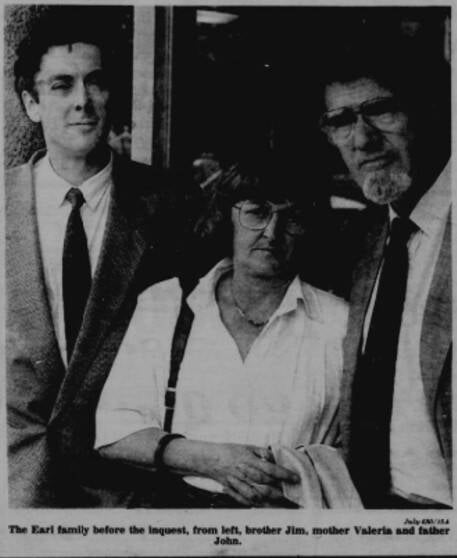
Image 11: The Earl family
It was a devastating blow for both the Earl family and the police investigation. The evidence which could be collected from the scene in 1989 - bearing in mind Jessie's body was found nine years after she went missing, with both her remains and the surrounding area being subject to years of weathering by the coastal elements - was minimal, and the key items which had been retrieved from the area had now been destroyed. DCI Steve Dennis, who led the review in 2000, admitted that a significant mistake had been made and, unsurprisingly, little progress was made in Operation Silk aside from the documentation which now listed Jessie's case as a murder inquiry.
The case appeared very little in the press across the following decade. Speculation over the names of potential culprits were banded around the local community, but no-one was named as a suspect or person of interest in the crime.
In 2018, Valerie and John Earl called for a fresh inquest to be conducted in their daughter's death. Valerie Earl had campaigned for many years for her daughter's death certificate to be updated in order to reflect that she was unlawfully killed, but this could not happen without a new inquest. The first inquest had been conducted eleven years before the case was officially classed as a murder inquiry, meaning that this vital update in classification could have an impact on how this was reviewed by a Coroner. In response to the call from John and Valerie, the Attorney General's office made a statement explaining the process, which read: 'once a request is received a Law Officer will consider whether to grant their consent. To do this, the Law Officer must be satisfied there is a reasonable prospect of the application succeeding in the High Court. It is then for the High Court to determine whether it is in the interests of justice for a new inquest to be held.' Sussex Police did state that they had suggested a new inquest during Operation Silk in 2000, but reported that the Coroner at the time declined to do this.
The appeal for a new inquest reached the Attorney General in 2020 after a campaign to progress the application. John and Valerie Earl cited that their daughter's body had been found naked with evidence of an item being used as a restraint, and that they had long had suspicions that she had been murdered. At the time of the appeal, John was 92 years old and Valerie was 88. John told the press that they had long suspected that Jessie had met with a violent end, saying of the initial inquest: '"it was a wrong verdict. We have always felt it wasn't fair to Jess from day one. We have always known it was murder."'
Their years of fighting paid off when, in November 2020, the Solicitor General granted permission to appeal the verdict of the first inquest, and to request a new one. The Rt Hon Michael Ellis QC MP stated: 'I have concluded the initial investigation was insufficient and further lines of inquiry should have been pursued. It is in the interest of justice the application for a new inquest be heard by the High Court.'
Despite this significant advance it still took a year for the hearing to go ahead, and it was in December 2021 that Stephen Kamlish QC stood in the High Court to represent the Earl family, bringing forward the multiple flaws in the police investigation. He told the judges how the initial investigation had lasted just four weeks, with 103 potential lines of inquiry being left unreviewed. He described how Jessie had mentioned that she had met a man whilst out walking who she described to her mother as a Scotsman, but no attempt had been made by police to identify this male. Of the original inquest in 1989, Kamlish pointed out that no pathologist was called to give evidence, nor was Jessie Earl's GP called as a witness - something which would surely have been key in the face of the 1980 police report stating that Jessie had low mood and potentially took her own life. Kamlish also made reference to the evidence of a behaviour analyst who was spoken to in one of the later investigations who suggested the probability that Jessie had been strangled by her own clothing. He argued that Coroner David Wadham should have categorically ruled out any possibility of Jessie Earl having taken her own life as part of the initial inquest.
The clear points laid out by the QC and the open discussion in court led the three presiding judges presiding to write a judgement letter advising that the original inquest be quashed, with a new inquest to be held. They left the decision on whether to exhume Jessie's body for further examination to the discretion of the Coroner who would be overseeing the new inquest.
The 2022 Inquest
The second inquest into the death of Jessie Earl was opened at Eastbourne Town Hall in May 2022, presided over by deputy Coroner James Healey-Pratt.
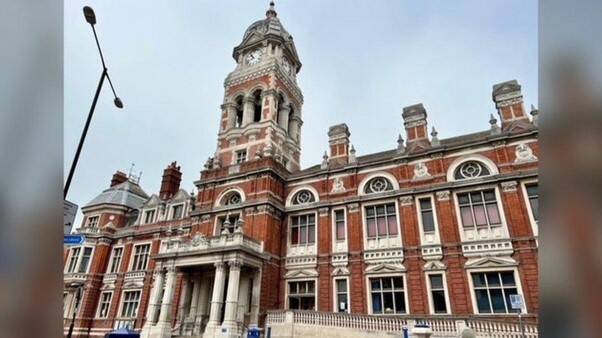
Image 12: Eastbourne Town Hall
He began proceedings by first addressing the family of Jessie Earl, who were present either in person or remotely, saying that he was '"conscious you've had a long wait to put things right for Jessie."'
Valerie Earl gave evidence remotely, describing how the 1989 investigation following the discovery of Jessie's remains '"didn't seem to be making progress."' She spoke of communication from the force, adding: '"I was surprised how little we were told but I believed that was the way the police worked. I was very naïve, I felt I couldn't complain."'
Former DS Anne Capon, who had given evidence in the first inquest in 1989, was called again during her retirement to take the stand for the new inquest. As well as working on the 1989 investigation, she had been a part of Operation Silk in 2000 and had extensive experience and knowledge of Jessie's case. She gave her opinion, as she had in 1989, that Jessie Earl had been the victim of a murder, and also spoke of the devastating destruction of the brown bra in 1997, saying: '"there would have been every chance we might have got DNA, especially from the bra. The offender would have touched it. It was a really important thing for us."' However, Capon went further than her statement in 1989 by describing how she had been told not to describe the case as a murder inquiry after the remains were found, saying that the Senior Investigating Officer had made the decision that the case was not a homicide and described it as a '"policy decision'".
Evidence was presented in court to indicate that Jessie Earl had likely been tied to a tree near to where her remains were found, with her bra used as a wrist restraint, and had potentially been indecently assaulted. In the absence of critical evidence such as the bra, DNA had been taken from Jessie's parents to compare to trophy items which had been collected by two serial killers who had lived in the Eastbourne area in the 1980s and whom the family were keen to have investigated as having potential links to Jessie's case, although no matches had been found at the time the inquest was in process.

Image 13: former DS Anne Capon
Emma Heaton, the retired former head of major crimes with Sussex Police, took to the stand to discuss her review of the case in 2019 when she was still part of the force. She stated: '"I think she was a victim of crime. Everything points to her meeting her death up on those Downs. Whether it was someone known to her or not, I simply can't say."'
Heaton was question by Stephen Kamlish QC on why a Freedom of Information request, submitted by the Earl family in relation to documents from Operation Silk, had been declined by the force. The Earl family had reportedly been asking for basic clarification as to whether they had been provided with an accurate report in the wake of the 2000 review, with Heaton saying that the request had been declined due to the investigation being open and ongoing. The basic reason for the Earl family requesting the report led Kamlish to respond: '"the FOI officer has given a false reason in law for not responding,"' indicating that this information did not need to be withheld from the family at the time.

Image 14: Assistant Coroner James Healey-Pratt
The court heard that not only had the Earl family submitted a Freedom of Information request but they had also request a review of Operation Silk in 2009, but the force failed to submit a report about the 2000 investigation until just days before the second inquest started in May 2022. Deputy Coroner James Healey-Pratt said: '"the court has not received the adequate explanation as to why this 2009 report was not disclosed earlier. Clearly the Earl family felt let down by Sussex Police and the Sussex Coroner in 1989."' There were reportedly repeated failings by the force to submit records not only to the Earl family, but also to the court ahead of the inquest.
Healey-Pratt was thorough in his assessment of the case, the investigation and the evidence presented. He criticised not only the investigation but the way that the Earl family had been treated, saying: '"the family have been victims of a substantial miscarriage of justice. This is an issue. I think it still needs to go on the record that the family have had to fight to get certain documents. The family have not had due disclosure in a timely fashion."' He described how the theory that Jessie may have taken her own life due to exam pressure and allergies was flawed, and cited how this consideration led to less resources being allocated to the case than if it had been classed as a suspicious disappearance from the very outset. He said that the report published in 1980, '"had the result of making Jessie's death less of a priority for Sussex Police because it was treated as a suicide. In other words, it would have a chilling effect on police efforts to investigate the disappearance of Jessie."' He went on to describe the report, which suggested that the student had taken her own life, as 'wrong and contrary to evidence'.
In his summary, James Healey-Pratt ruled that the death of Jessie Earl was the result of unlawful killing by murder. He said: '"on the evidence heard in this inquest, I do not consider there to be evidence of suicide, accident, misadventure or natural causes that would justify any conclusion of such short form conclusion. I am satisfied on the evidence that Jessie was murdered, that she was killed by a third-party perpetrator who intended to kill her."' He described that her bra had been knotted '"due to being tied tightly by a third party, or subjected to struggling, or being loaded with weight through suspension or dragging."' In direct contrast to the 1980 report, which had described Jessie as a student under pressure, as an introvert with few friends, and as a sufferer of life-long allergies, Healey-Pratt said that entries in Jessie's diary instead provided a '"fairly reliable personal account of an intelligent, well-balanced young woman enjoying almost every moment of her life." "Curiously, there is no evidence to support these reasons that were given as supporting suicide as the most likely outcome. Neither has there been any explanation why that report made a conclusion that was seemingly dissonant with the available evidence."'
As a result, the Coroner stated that the Earl family had suffered an enormous amount of distress in the nine years between Jessie going missing and her body being found, with the subsequent 1989 investigation being flawed from the very beginning as a result of the Senior Investigating Officer discounting any suggestion that she may have been murdered. He ruled that her assailant had '"intentionally killed her by means unknown."'
In response to the ruling at the 2022 inquest, Chief Constable of Sussex Police Jo Shiner gave a statement saying that she accepted the 'historic failings of Sussex Police in this case', adding that 'the police investigations in 1980 and 1989 were inadequate, with some aspects wholly inadequate'. She concluded by stating that any new lines of inquiry would be thoroughly investigated, and that the case remained open.
It can only be hoped that the ruling in the new inquest went some way to ease the immense pain which had been experienced by the Earl family across four decades, not only from their daughter's death but from the constant battles they had taken on to get things put right.
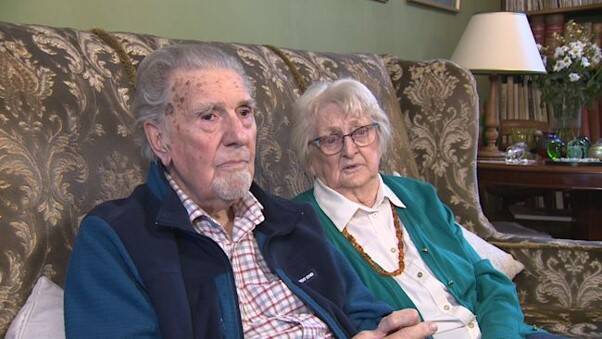
Image 15: John and Valerie Earl, pictured at the time of the new inquest
Suggested Suspects
The Earl family had been keen for two names in particular to be reviewed for any possible links to Jessie's murder. Whilst it's important to stress that neither man has been formally linked to the case, we are going to take a brief look at each one and the reasons why their names have been connected to Jessie Earl's death, and why her family are so keen to have them thoroughly investigated.
David Fuller
Some may recognise the name and face of this man from the news across recent years, as he was imprisoned for life as recently as 2021. His name became synonymous with reports of horrific crimes being committed against the deceased who lay in hospital morgues, but these only came to light after he was found to be responsible for the murders of two young women just thirty miles from Eastbourne, where Jessie Earl went missing.
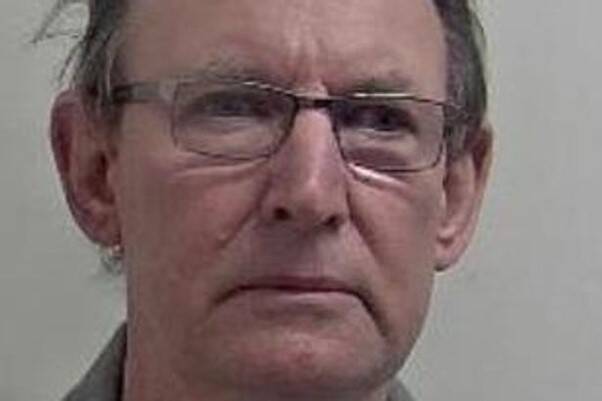
Image 16: David Fuller
David Fuller was born on 4th September 1954 in Deal, Kent. During his early life he undertook an apprenticeship with the Ministry of Defence before going on to work as an electrician. He was married three times, and at the time of his arrest in 2021 had children and grandchildren. From 1989, he worked in the hospital maintenance team as an electrician at the Kent and Sussex Hospital before moving to Tunbridge Wells Hospital in 2010. At his trial in 2021 he was presented as unremarkable, with no indication in his day-to-day life of the atrocities of which he was found guilty. He came across as an ordinary man - a husband, father and grandfather with no red flags which posed any alarm to his family. The names of his family members were never released to the press, as they were felt to have been oblivious to his secret life. He is currently serving a full life term for multiple crimes.
In 1987, two young women were living in the town of Tunbridge Wells - each renting a bedsit room and holding down a job in the local area. They were beautiful, smart women who were making their own way in life and enjoying their independence and freedom.
Wendy Knell was 25 years old in 1987 and lived in a ground floor bedsit on Guildford Road. On 22nd July 1987, she left her workplace - the SupaSnaps store on Camden Road - at 5pm and popped to the bank before heading home. Later that evening, she visited her boyfriend at his home, where she sat and watched television with him and his mother to relax after the work day. At approximately 11pm, her boyfriend dropped her back to her home. The last time she was seen alive was heading into her property wearing black cord trousers, a black leather jacket, and carrying a crash helmet.
Concerns were raised when Wendy failed to turn up for her shift at work the following day. A visit to her flat found the 25-year-old naked and deceased on her bed, with the duvet thrown over the top of her body, having been indecently assaulted, beaten and strangled. Two significant items - a keychain containing a small brass cowbell on a keyfob (a souvenir from Austria) with a brass plate reading 'Woman of the Year' and two keys, as well as her diary - were missing from the home.
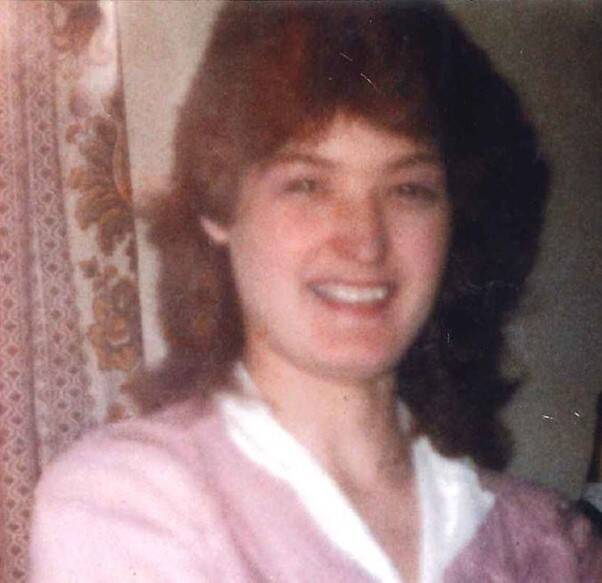
Image 17: Wendy Knell
Police later uncovered reports of a prowler in the area when a 19-year-old reported that she had been told to keep her windows locked in the days prior to the offence after a man had been seen peering into people's homes, with the same man seen looking through windows near to Wendy's ground floor room on the night she was killed. Although there was no sign of forced entry into Wendy's bedsit, it appeared that the window to the rear of the property could not be locked as the latch had been painted over, but it was never confirmed if this had been the point of entry for the intruder.

Image 18: Caroline Pierce
Police were still investigating the murder of Wendy Knell when, on 24th November that same year, 20-year-old Caroline Pierce disappeared from outside the building where she rented a bedsit in Grosvenor Park. In what could have been an eerie coincidence, she worked in Buster Brown's restaurant on Camden Road - just a short distance from the store where Wendy was employed. Caroline had been on a night out with friends when a taxi dropped her outside her front door at around midnight, and was last seen wearing the long black skirt and red jumper which she had donned for the evening out. Neighbours reported hearing screams from outside the Grosvenor Park property just after Caroline would have been left by the taxi driver, and it seems that she never made it back inside her home.
Caroline's body was found nearly forty miles away in St Mary in the Marsh, Romney Marsh, on 15th December 1987. Like Wendy, she had been indecently assaulted, beaten and strangled, with her body left naked in a field. She had been carrying her keys with her when she went missing, which included the keyfob for Buster Browns restaurant. These keys were never found. It later transpired that Caroline had reported a prowler outside her bedsit in October 1987 - just one month before she disappeared from outside her own front door.
Both of these young women were in the prime of their lives and were discovering their independence in the world. They had jobs and rented their own small homes to come back to at the end of the day. They had friends and families who loved them. They should have been safe in their own properties, with the knowledge that they would get up the next morning and head to work as normal. These two appalling crimes display the ultimate fear for many women in the world - the fact that safety isn't even guaranteed within their own four walls.
Authorities believed that the two crimes were linked from an early stage. Both were young women in their twenties, both had been living on their own just a short distance from each other, and the manner of attack was similar in each case. It was considered that the man responsible had knowledge of the local area, either from living, working or socialising there, and evidence was able to be gathered from each victim and crime scene - including a footprint on a blouse from Wendy's bedsit.
Despite extensive and exhaustive investigations by police, Wendy and Caroline's cases would remain unsolved for more than three decades. Wendy's father was desperate to see a resolution to his daughter's case and the culprit put behind bars, but he sadly passed away in 2017 without knowing the identity of the person responsible. Although the DNA of the suspect was isolated in 2007 and recorded on file, the breakthrough wouldn't arrive until 2020 when advances in technology led police to shortlist 90 names of people with similar DNA to the culprit of the so-called 'Bedsit murders'. This was whittled down to one single person who was a partial match to DNA obtained from the scene, indicating that the culprit was a close relative of the person they had on file. Familial testing subsequently found a firm match and provided a name, with a billion-to-one chance that the DNA could belong to anyone other than David Fuller. His home in Heathfield, East Sussex, was raided by police on 3rd December 2020 with Fuller being arrested and remanded in custody.
Evidence against the prime suspect soon began to stack up. The footprint found on the blouse in Wendy's bedsit had been identified as being from a rare trainer manufactured by Clark's, and images of Fuller wearing the same kind of trainer in the 1980s were found when police searched his property. Fuller's appearance in 1987 closely matches the description of the man seen peering through windows around Wendy and Caroline's homes. His fingerprint matched one collected from a blood-covered bag located under Wendy Knell's bed.
Although authorities were searching his home in relation to Wendy and Caroline's murders, the discoveries made in his Heathfield property suddenly took a very dark and disturbing turn away from their cases. Police seized multiple computer hard drives and USB devices which, when examined, were found to contain more than 14 million indecent images. Some of these had been taken by Fuller himself, showing him committing horrendous acts against deceased victims being stored in the morgues of hospitals where he had worked between 1989 and the time of his arrest, with careful examination identifying more than 100 victims. The horror of his crimes was widely published in the UK press, with families of the victims subjected to unimaginable and overwhelming trauma in the face of what had happened to the bodies of their loved ones.
Fuller was taken to court and found guilty of 51 crimes, including the murders of Wendy Knell and Caroline Pierce more than thirty years previously. He was sentenced to a whole-life tariff, something which is rarely handed down in the UK, meaning that he will never be released from prison. In the wake of the convictions, Kent Police opened a review into multiple unsolved rapes, missing women and unsolved murders in a bid to assess if David Fuller could be linked to any other cases. Detective Chief Superintendent Paul Fotheringham said in 2021: '"given the nature and the length of time of his crimes, it is unthinkable he didn't commit other offences."'
And this is where speculation of a link between Fuller and the case of Jessie Earl started to creep in. The Detective Chief Superintendent was surely right - Fuller's known offending had started in 1987 with the murders of two women, and evidence evaluated by psychologists and psychiatrists over many years has assessed that prolific offenders normally develop their crimes over a period of time. This has raised the question in the minds of many as to whether the murders of Wendy Knell and Caroline Pierce in 1987 were Fuller's first crimes, or whether they are simply the first crimes for which he was caught. Although police found no evidence that his family knew anything at all about the crimes for which he'd been convicted, information emerged during his trial that he had potentially been abusive towards his second wife, as she had been seen with bruises and a black eye from where he had reportedly kicked her, demonstrating a history of violence at home.
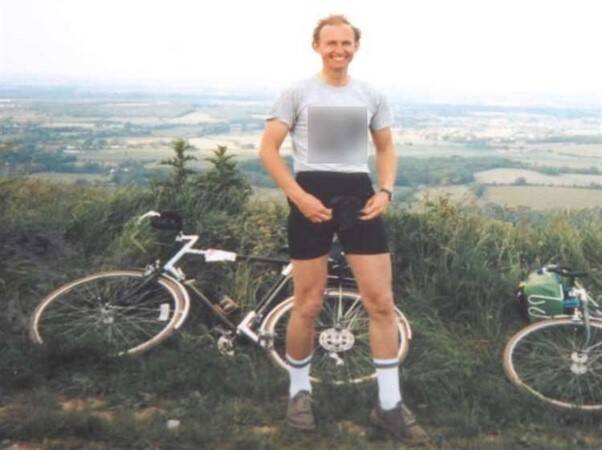
Image 19: Fuller in his younger years
His sister-in-law, the sister of Fuller's wife, told the court that he had attempted to flirt with her not long after he had married his wife, and that he could become verbally aggressive despite being an outwardly quiet person. He was known to have been unfaithful during the marriage - the couple both had an enthusiasm for cycling, and Fuller had started a relationship with a fellow member of the West Kent Cycling Touring Club. He also went on to have an affair with a nurse after he started working for the NHS as an electrician, who gave evidence about the relationship in court. His second wife died in 2015, and Fuller would tell police that the relationship had broken down because she had cheated on him, something which he reportedly found unforgiveable despite the evidence from some of his former girlfriends being given in court that they knew he was married when they were involved with him. He married for the third time after the death of his second wife.
So, is there a chance that Fuller could have been involved in the murder of Jessie Earl? From the outside, there certainly appear to be similarities between the crime against the 22-year-old and the deaths of Wendy Knell and Caroline Pierce. All three were women in their early to mid twenties, and all lived alone in a bedsit room. All three had brunette coloured hair, and weren't dissimilar in appearance. Whilst Wendy was attacked inside her property, Caroline and Jessie went missing from somewhere outside their homes, although the exact location from where Jessie disappeared is unknown to this day. The bodies of all three women were left naked, with specific items missing from each woman - in Wendy and Caroline's case, it was their keychains and a diary, and in Jessie's case her bracelet and a ring had been taken. It's entirely possible that the killer may have taken items from each woman to squirrel away as some sort of macabre trophy to remind them of the crime. Although Wendy's body was found in her property, Caroline's remains were found nearly forty miles from her home so it's clear that Fuller was willing to travel in the course of his offending.
There are some differences, though. Wendy and Caroline were attacked during the middle of the night, whereas Jessie went missing in the daylight hours of an early spring evening. Little attempt was made to hide the bodies of Wendy and Caroline, whereas Jessie's body was concealed within a thicket of hedging. Wendy and Caroline both went missing from the area of Tunbridge Wells - local to where Fuller lived at the time - whereas Jessie disappeared from a town more than thirty miles away. Wendy and Caroline were both beaten and strangled, but there was no evidence of this found during the autopsy on Jessie's body - although, as we mentioned previously, the level of decomposition meant that some facts could not be ascertained.
There is currently no update on whether any evidence in the case of Jessie Earl can be connected to David Fuller, but nothing had been found at the time of her second inquest in 2022 and there is nothing to say that he had any involvement in her death. However, as Kent Police have opened reviews into many unsolved cases to see if they can be linked to Fuller, we can only wait and see if any updates are provided over the months and years to come. As we mentioned previously, the level of decomposition of Jessie's remains and the bra being destroyed have meant that the potential to compare DNA evidence is lacking - something which ultimately helped to solve the cases of Wendy Knell and Caroline Pierce.
Peter Tobin
The name of this horrific offender has long been mentioned in Jessie Earl's case. Although originally from Johnstone in Renfrewshire, Scotland, he spent twenty years living in Brighton - just 25 miles from Eastbourne - and reportedly worked in a hotel in the Eastbourne area during the 1980s, so was likely familiar with the area.
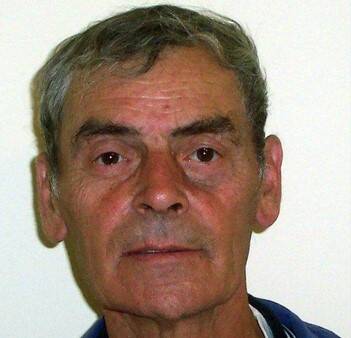
Image 20: Peter Tobin
Tobin was born in August 1946 as the youngest of eight siblings and was reported to be behaviourally difficult from a young age, something which resulted in him being sent to a specialised school and led to him spending a period of time in borstal. He joined the French Foreign Legion but soon deserted, and shortly thereafter was imprisoned on charges of burglary and forgery.
In 1969, Tobin moved to Brighton from Scotland with his girlfriend, 17-year-old Margaret Mountney, something which Margaret would later describe was a move against her will. Although she said that Tobin - who was six years her senior - had behaved like a gentleman when they first met, his true personality soon broke the surface and he showed himself to be what Margaret described as a 'Jekyll and Hyde' character.
Having originally met and started their relationship in Glasgow, Tobin quickly starting isolating Margaret from family and friends - a move seen frequently in situations of domestic abuse. He prevented her from leaving his flat in Shettleston, Glasgow, and rapidly made the decision to move south to Brighton without the knowledge of Margaret's family. Margaret later described how Tobin forced her to marry him in August 1969 and talked two of his friends into impersonating her parents at the wedding and act as witnesses - as she was still under the age of 18, she would have needed parental consent to marry.
Margaret was frequently physically assaulted by Tobin, describing how he would hit her in places where the bruises and marks were less likely to be noticed. Neither of them had any money and Tobin would leave the property to steal from shops so that they had food, but Margaret was confined to the inside of their home at all times. He would also indecently assault her, and it was after one of these instances that he used a knife which he regularly kept on his person to attack his wife. After being left alone in the property to die, Margaret was found by the downstairs neighbour who had noticed blood leaking through the ceiling of his flat. She was able to get away from the property after Tobin was caught and arrested for crimes in Brighton - although this appeared to not include the vicious assaults on his wife. She managed to return to her home in Scotland in 1970, and a divorce was finalised in 1971.
Image 21: a gallery of Peter Tobin's appearances across the years
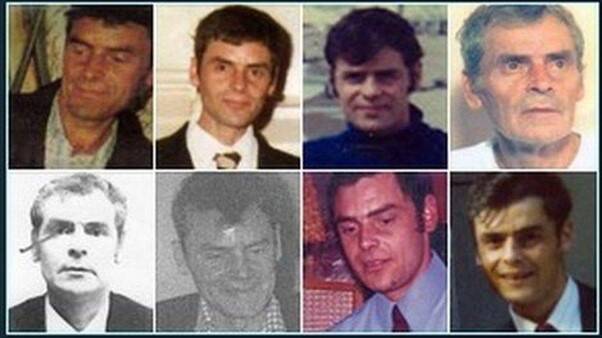
Tobin wouldn't remain single for long, and had found a second wife by 1973 with whom he had two children, although one sadly passed away shortly after birth. Like his first marriage, his second was also short lived with his wife divorcing him in 1976. His third marriage occurred over a decade later in 1989 and also resulted in a child, with the couple moving to Bathgate in West Lothian, Scotland. This marriage was nearly as short as his first, with his wife leaving in 1990 and returning south to her native city of Portsmouth, Hampshire. The accounts provided by all three of Tobin's wives were shockingly similar - they married a man who was charming, well-presented and loving, only to find a carefully concealed psychopath hiding beneath the surface who would violently assault them and subject them to many forms of abuse during their marriages.
Shortly after his third wife left him in 1990, Tobin moved back to the south of England in 1991, stopping in Margate, Kent for a couple of years before moving to Havant in Hampshire in 1993 to be nearer to the son from his third marriage - something which surely only increased anxiety levels for his former wife. Knowing that a previous abuser - who she had moved hundreds of miles to escape - was then only a short distance away must have been extremely distressing. Fortunately, she wouldn't have to deal with his close residential proximity for long.
On 4th August 1993, shortly after he had moved to Hampshire, two girls visited the apartment building where Tobin lived and called on one of his neighbours. Receiving no answer at the door, they paused at the door of Peter Tobin's flat and were invited in to wait for their friend to come home. Alarm bells were potentially softened for the two women by the fact that Tobin's son - who would have still been very young at the time - was with him in the property. Surely nothing untoward could happen with a young child present?
Unfortunately, the two 14-year-old girls were far from safe. Tobin, who was known to carry a knife on his person, threatened both girls with the weapon, forcing them to drink cider and vodka before indecently assaulting the pair - an attack which resulted in one of them being stabbed, all the while with his young son in the room. He turned the gas cooker on without igniting it, letting the gas flow freely, then took his son and left the building. Despite trying to conceal his identity with an alias and by moving to Coventry to join a religious group, he was later captured in Brighton after his car was identified. Astonishingly, both of the girls who had been subjected to such a horrendous attack had survived and were able to see their attacker plead guilty in Winchester Crown Court in 1994, where he was sentenced to fourteen years behind bars, leaving his young victims to attempt to come to terms with the sickening crimes they had endured and to attempt to rebuild their lives after doing something as innocent as calling at the home of a friend.
Peter Tobin was released from prison on parole in 2004, ten years after being incarcerated. I feel sure that there were many a police and prison officer who felt uncomfortable about letting the 58-year-old walk back onto the streets but there was little that the justice system could do - he had served his time and had been released in line with the law. He returned to his native Renfrewshire in Scotland, but his name would remain on the Violent and Sex Offender Register as a result of the 1993 attacks.
It didn't take long for Tobin to breach the terms of his parole conditions, with a warrant for his arrest being issued in November 2005 after he disappeared from his property in Paisley without notifying his parole officer or police. He would remain off the radar for nearly a year until, in September 2006, he was uncovered as the true identity of handyman Pat McLaughlin at a church in Glasgow. Tobin vanishing from the monitoring of police and prison authorities had resulted in the worst possible consequence.
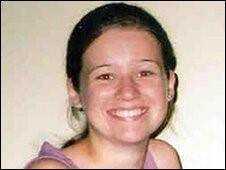
Image 22: Angelika Kluk
Angelika Kluk, a 23-year-old Polish national, had been staying at the presbytery (or clergy house) of St Patrick's Church in the district of Anderston, Glasgow, during September 2006 as part of a working holiday in the UK. She was a student at the University of Gdansk in Poland, where she was studying for a degree in languages, and had been working as a cleaner at the church to cover her board. She had visited the UK to immerse herself in the English language in order to develop skills for her course, but stayed in close contact with her family, friends and boyfriend back at home. She was friendly, hard working and kind, and was willing to work and help the church parish who had welcomed her into their community.
Angelika's boyfriend, back home in Poland, was the first to raise the alarm after he became concerned that he hadn't heard from his girlfriend for a while - she had stopped responding to his text messages, something which was very out of character for the young woman who always stayed in contact. Glasgow Police duly followed up on the concerns raised to them and visited St Patrick's Church to check on Angelika's welfare - only to discover that she wasn't there. The last time the student had been seen was in the company of the middle-aged handyman, Pat McLaughlin, on 24th September when she had been helping him to paint the outside of a shed. McLaughlin was questioned, along with others at the church, but he suddenly vanished hours after being informally interviewed by authorities.
This behaviour naturally raised suspicions, and in addition to an appeal for information about Angelika's whereabouts police also released an image of Pat McLaughlin to the public in a bid to obtain information about the man. It wasn't long before a telephone call to authorities from a member of the public changed everything.
Pat McLaughlin transpired to be one of up to forty aliases used by Peter Tobin. Tracking him down proved just as difficult as identifying him - he had lived at more than sixty different addresses over the years. In the meantime, a thorough search of St Patrick's Church had turned up a horrifying and heart-breaking discovery.
On 29th September, an eagle-eyed officer had noticed an imperfection in the floor of one of the rooms on the church premises, and efforts to investigate it led to the discovery of a small hatch leading to a hollow space in which Angelika's body had been concealed. She had been bound and gagged, indecently assaulted, beaten with a piece of wood, and stabbed sixteen times. Post-mortem examination found that she had likely still been alive when she had been stuffed into the space beneath the floor - a harrowing thought which surely only heightened the trauma for her loved ones. How could this happen to a young woman who had gone on a working summer break?
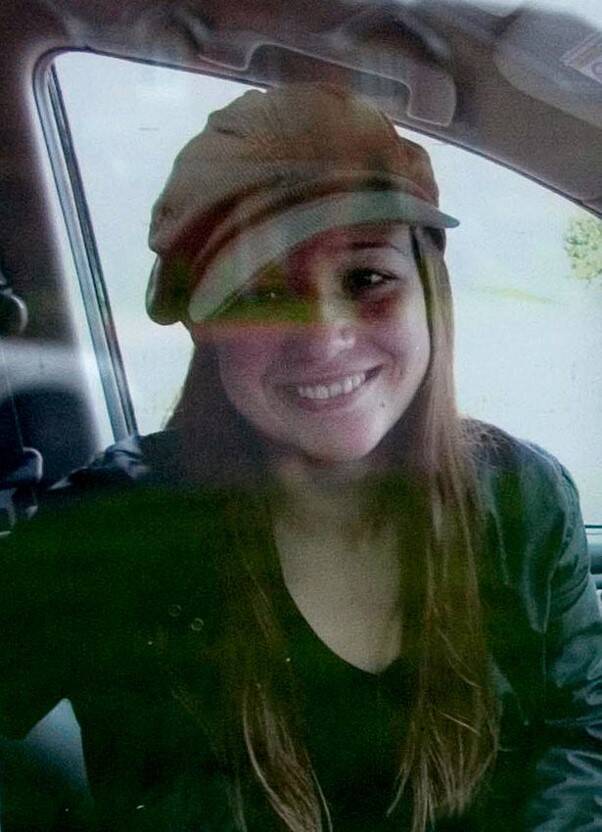
Image 23: Angelika Kluk
As police searched for details about Tobin - the missing handyman - it became clear that his background was one of sheer depravity. Tracking down the man who had most likely taken the life of a 23-year-old student became priority number one, and a call from a nurse at a London hospital meant that he didn't remain on the run for long. Tobin had been recognised as he admitted himself to hospital, reporting that he thought he had had a heart attack. He checked himself in under the name James Kelly, telling staff that he was a pipe fitter - but the nurse looking after him, thankfully, didn't buy his story. London police officers were quick to descend on the scene, arresting the man who - as it happened - had made false claims relating to his health in an effort to avoid detection on the streets of the capital city. He was arrested for breaching the conditions of his bail and remanded into custody, something which bought authorities time to keep investigating the events at St Patrick's Church without worrying that their prime suspect was running free and posing a significant risk to women everywhere.
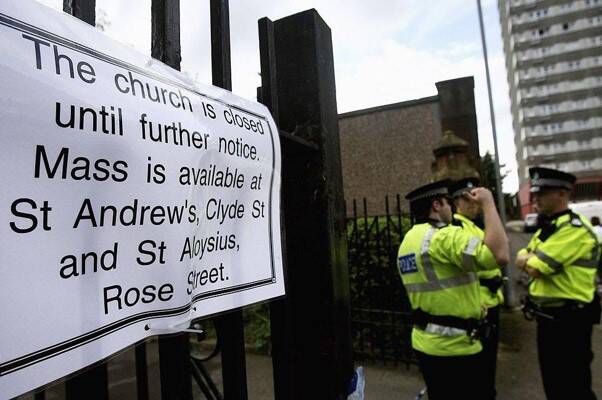
Image 24: a sign remained outside St Patrick's church whilst it was closed for five weeks as police continued to investigate
DNA comparison whilst Tobin was in custody solidified his involvement in the murder of Angelika Kluk, and confirmed that he was, indeed, Peter Tobin and not one of the aliases he had been throwing at authorities.
But something was troubling lead investigator David Swindle as he and his team assembled evidence to sent Tobin to trial for murder - the attack was surely too frenzied for this to be his first murder victim. The team knew that he had been found guilty of attacks on two teenage girls in 1993, but were there other unsolved crimes which this heinous man could be responsible for? If he had reoffended so readily after his release from prison, surely there was a chance that he could have committed other crimes beyond the 1993 attacks?
Tobin's trial lasted from March to May 2007, and he was ultimately found guilty of the indecent assault and murder of Angelika Kluk. He was handed down the mandatory sentence of life behind bars, with a minimum term of 21 years before he would be considered for parole. The conclusion of the trial was far from the end of the investigation for authorities, however. Certain that Tobin had more crimes tucked away in his past, and unable to get any information out of the man himself, police opened Operation Anagram, headed by Detective Superintendent David Swindle who had taken the lead in the case of Angelika Kluk. Swindle told BBC News: '"the concept of Anagram was basically to look at Tobin as a serial killer. The only way we could do that was to look at his life and where he had been over the years and start to build up a timeline."'
Operation Anagram would run from 2006 and although activity wound down significantly in 2011, authorities were keen to emphasise that it would never be closed. Multiple forces became involved in the extensive investigation into the history of Peter Tobin, studying his movements and attempting to trace his location at times when unsolved crimes had been committed. Analysts and researchers were drafted in to help review the information collected, looking at everything from where Tobin was living at any one time, where he worked, who his friends were and what car he drove. The killer lived a nomadic lifestyle, frequently moving from one place to another with little notice, making the investigation complex.
In June 2007, just one month after he had been sentenced for Angelika's murder, a house where he had previously resided in Bathgate, West Lothian, was searched in connection with the disappearance of a school girl in 1991.
On 10th February 1991, 15-year-old Vicky Hamilton left her big sister's property and headed off to wait at a bus stop in Livingston, West Lothian, from where she travelled to Bathgate. She purchased a bag of chips, which she ate before heading to her next bus stop to catch a connecting coach to her home in Redding, near Falkirk, but she never arrived. Almost no sign was found of the missing teenager until her purse was recovered from a gutter in St Andrew's Square, Edinburgh, more than twenty miles from where she was last seen. At the time, it was considered that she could have run away from home, a theory which is often considered in the case of missing teens, but why would she have discarded her purse? Surely this was the one thing she would have wanted to keep on her person - after all, how could she get by in the world without money?
Police kept the case on file, and it became part of frequent reviews over the years by the cold case team in Lothian and Borders police, but no new evidence came to light.
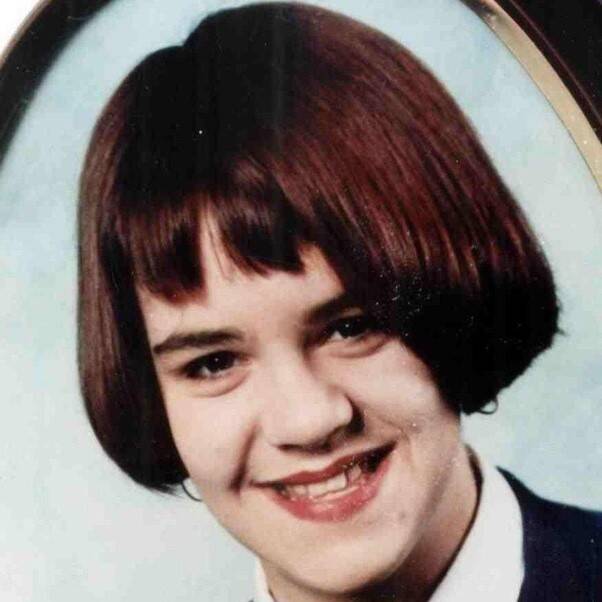
Image 25: Vicky Hamilton
That was until Operation Anagram, when police found that Tobin had been living alone in Bathgate during 1991, residing in a property one mile away from where Vicky was waiting for her bus. The information was enough to secure a search of the property where he had lived at the time, and an exhaustive investigation of the loft space found a small dagger with a five-inch long blade hidden in a recess. It was immediately sent for forensic testing, and the results provided authorities with their first real breakthrough when Vicky Hamilton's DNA was found on the blade. Although this was far from the answer that her family would have hoped for, it meant that police now had a stronger case to continue to search properties linked to Peter Tobin.

Image 26: Dinah McNicol
At the same time as the search for links to Vicky Hamilton was underway in Scotland, the Anagram team were also investigating any possible connection to the disappearance of 18-year-old Dinah McNicol in the south of England. Dinah had been attending the Torpedo Town music festival with friend David Tremlett in Liphook, Hampshire, on 6th August 1991 - just six months after Vicky Hamilton had gone missing - when the pair hitched a lift from a passing motorist to travel home. David was dropped off near his home in Surrey, leaving Dinah in the car to continue onwards to her house in Essex. It was the last time she was seen alive, but regular withdrawals were made from her building society account in the wake of her disappearance totalling over £2,000 - something which would later transpire to be the work of Peter Tobin.
Operation Anagram found that Peter Tobin had moved into a rental property in Margate, tucked right on the far south east coast of England, just six weeks after Vicky Hamilton had disappeared. It would have been an easy journey for him to continue in this direction after dropping David Tremlett off along the M25.
Police descended on the property which Tobin had previously rented in Irvine Drive, Margate, and spoke to neighbours who had been living in the area as far back as 1991 in case they could remember the man. This led to police finding someone who would go on to be a critical witness. David Martin had lived in the area in the early 1990s, and remembered the man he had known as 'Scottish Pete' living at number 50, recalling that he would have custody of his young son at weekends.
David Martin told police that one particular incident stood out to him. He'd leaned over the fence when he saw Tobin digging a large hole in the back garden of his property. He told the court: '"I said what are you doing, Pete? You going for Australia? And he said 'no', he said: 'I'm digging a sandpit for the lad when he comes up, somewhere for him to play.' And then about two days went by and it was all filled in and flattened off."'
Police wasted no time in obtaining a warrant to excavate the garden, utilising radar technology to check for any disturbances beneath the surface of the soil.
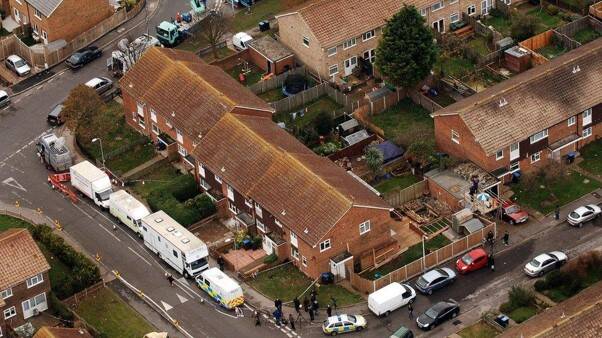
Image 27: police at the scene in Irvine Drive, Margate
On 12th November 2007, police uncovered the body of a young woman. Detective Superintendent Swindle remembered the moment well, telling BBC News that he had received a call from a Detective Superintendent at Sussex Police to tell him that a body had been found. '"I said: 'that will be Dinah then. That's sad but it's good for you.' He said: 'no. It's not Dinah. It's Vicky Hamilton."' Dental records and clothes found with the body helped to identify the 15-year-old girl who had gone missing 400 miles away in West Lothian more than fifteen years prior. Despite the passage of time, there was reportedly signs that she had been indecently assaulted and strangled, with her remains subsequently being dismembered - perhaps in a macabre bid to make transportation easier, as police felt that her death had occurred over the border in Scotland with her body being moved to the property at Irvine Drive later on.
Further excavation of the garden uncovered the bound and gagged body of Dinah McNicol on 16th November 2007, buried just a short distance from 15-year-old Vicky. Post-mortem examination found that both girls had traces of amitriptyline in their livers, a drug which functions foremost as an anti-depressant, but can have sedating side effects. Dinah McNicol's liver also contained traces of sleeping pills.
In 2008, Peter Tobin went on trial for the murder of Vicky Hamilton, with evidence being presented that his fingerprints were found on the bag used to wrap her remains. He was found guilty, and received the same verdict when he stood trial for the murder of Dinah McNicol in 2009. The summary from the judge in the case of Vicky Hamilton was damning against the convicted killer: 'you stand convicted of the truly evil abduction and murder of a vulnerable young girl in 1991 and thereafter of attempting to defeat the ends of justice in various ways over an extended period... Yet again you have shown yourself to be unfit to live in a decent society. It is hard for me to convey the loathing and revulsion that ordinary people will feel for what you have done... I fix the minimum period which you must spend in custody at 30 years. Had it been open to me I would have made that period run consecutive to the 21-year custodial period you are already serving.'
Despite the suspicions that Tobin could have been responsible for dozens more murders - a figure which he reportedly put at 48 when speaking to a fellow inmate - he has never formally been connected to any others. This is despite multiple items of jewellery being found when police examined his possessions, with none of the 32 items being claimed by any of Tobin's former wives. It's considered that these are likely to be trophy items from victims who are, as yet, unknown. Police released an image of all of the recovered items in 2009, but if any information was submitted as a result of this appeal then authorities are keeping it under wraps.
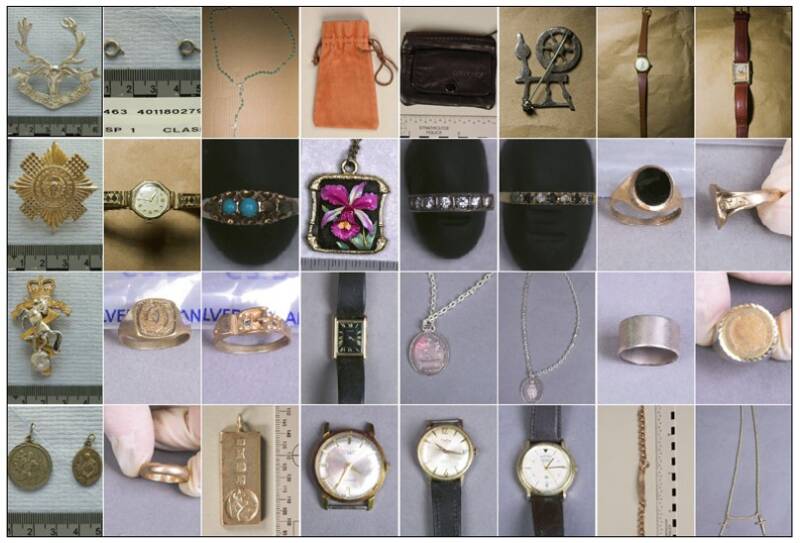
Image 28: the 32 items recovered from Tobin's possessions
Tobin has long been considered a candidate for the murder of Jessie Earl. Not least because he was reported to be living in nearby Brighton at the time of her disappearance, but due to the manner in which he committed his crimes. He had a history of targeting young women, with two of his victims not being located until more than a decade after they vanished. His crimes appeared to be sexually motivated, something which was also suspected in the case of Jessie Earl based on the lack of clothing found with her remains. Valerie Earl, Jessie's mother, recalled her mentioning meeting a Scotsman on one of her walks, and hinted that he had made her feel uncomfortable. Tobin was known to move almost immediately after he had been involved in a crime, getting as far away from the area as possible. Shortly after Jessie Earl's body was found on Beachy Head in 1989, Operation Anagram found that he had moved to Bathgate in Scotland. Was there a reason for his swift departure from the area?
As with David Fuller, there are some differences in Jessie Earl's case and the way in which Peter Tobin operated. Many of his victims were stabbed, and we know that he habitually carried a knife on his person. There was no evidence of a knife attack on Jessie, and it's likely that a frenzied attack such as Tobin was known to carry out would have left some evidence on her bones if this had been the case. However, Tobin was found to have strangled one of his victims so there is a chance that he changed the way he committed his crimes over the years. Jessie's remains were found unclothed, whereas items of clothing were recovered with Tobin's known victims.
Both David Fuller and Peter Tobin have been extensively mentioned in connection with Jessie Earl, but no conclusive evidence has yet been uncovered to link either man to her case. Their names have been mentioned in other unsolved cases, with Tobin also being suggested in the unsolved case of Louise Kay, who also went missing from Beachy Head - the same area as Jessie Earl frequented - in 1989. She told a friend that she was going to spend the night sleeping in her gold-coloured Ford Fiesta car on the top of the cliffs, something which she had done previously and enjoyed. Some time before she disappeared, she mentioned to a friend that she had met a Scottish man in the local area and that he had paid for some fuel for her car. Neither Louise nor her car were ever found, but Operation Anagram uncovered information that Tobin had again been living in Brighton at the time she disappeared and was working in a hotel in Eastbourne. He also had a history of dealing cars, suggesting that he may have been able to have the car resprayed and sold on.
Any chance of obtaining information first-hand from Peter Tobin has long gone, as he the convicted killer died behind bars in October 2022, a matter of months after Jessie Earl's second inquest. He had refused to engage with police questioning throughout his life and never admitted to any of his crimes.
Conclusion
Since the new inquest in 2022 came to a conclusion, no information has been released about Jessie's case. We can only hope that activity is still going on behind the scenes, with police perhaps looking at any possible connection to Tobin or Fuller, or any other suggested names. The challenges in the case are very real, though - arguably the most important evidence which could have provided forensic value was destroyed nearly thirty years ago, providing a serious barrier to finding justice for this young woman who was just starting out in life.
If John and Valerie Earl are still alive today, they would be in their mid to late nineties. They never gave up hope of finding out what happened to their daughter, and fought across decades for a fair inquest outcome. The Earl family unit was shattered in 1980 by the disappearance of someone so loved, and even more so in 1989 when her body was discovered, but the family have never stopped trying to find justice for her.
Jessie Earl was a woman heading into the prime of her life. She was on the verge of finishing college with a brand new qualification - and who knows where this could have taken her? What could this 22-year-old have gone on to become and achieve? Would she have had a career and a family? Would she have chosen to stay living near the sea, or moved to explore a new area? The possibilities in her future were robbed from her by a person who has eluded legal justice for more than forty years - someone who continued to live their life without a conscience or a thought to the human being who lost theirs. This intelligent, quiet, nature-loving young woman should have been able to enjoy everything that her future had to offer. Her family should have been able to watch their daughter, sister, niece and loved one grow and flourish.
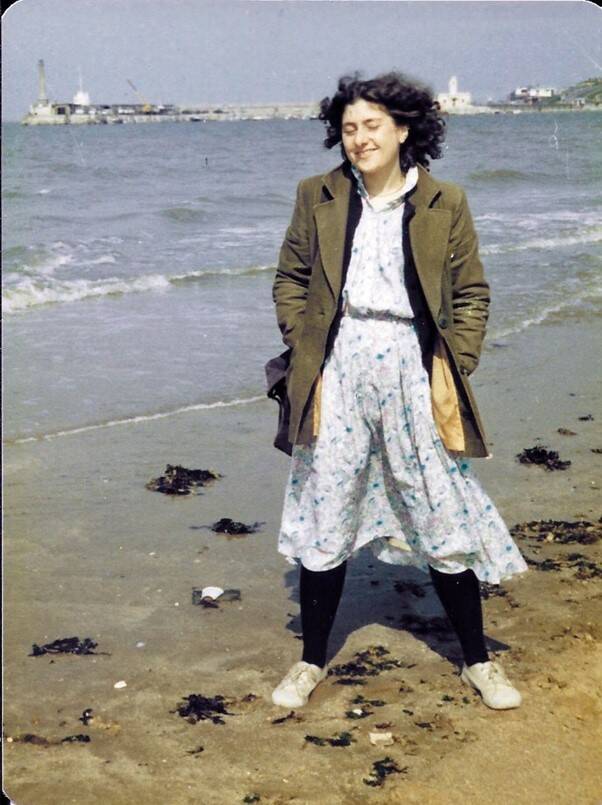
Jessie Earl deserves justice. She deserves to rest peacefully in her grave, with the person who committed such an appalling crime seeing only the inside of prison walls. Her family deserve closure for this case which has lasted for so many years. But most of all, Jessie deserves to be remembered as the woman who loved to walk the cliffs and the South Downs, who loved to call her parents from the payphone on Eastbourne seafront, and who loved to sit in her bedsit and journal, safe in the comfort of her own home.
If you have any information about the murder of Jessie Earl, who disappeared from Eastbourne in May 1980, please contact Sussex Police on 101 or submit information via their website using this link: Home | Sussex Police
Information can be submitted anonymously to CrimeStoppers by calling 0800 555 111 or by filling out their online form here: Independent UK charity taking crime information anonymously | Crimestoppers
References for text:
Murder of Jessie Earl - Wikipedia
Jessie Earl murder: Fresh inquest bid over 1980s death - BBC News published 23rd June 2020, retrieved 12th May 2026
Jessie Earl death: Parents want inquest verdict changed - BBC News published 25th September 2018, retrieved 12th May 2026
Jessie Earl: Coroner says family victims of 'miscarriage of justice' - BBC News published 11th May 2022, retrieved 12th May 2026
Could serial killer Tobin have killed Eastbourne student? | The Argus published 24th June 2010, retrieved 12th May 2026
BBC News - Piecing together serial killer Peter Tobin's past by Mario Cacciottolo, published 16th December 2009, retrieved 12th May 2026
BBC News - Peter Tobin's wife: 'I was raped and left for dead' by Vanessa Barford, published 16th December 2009, retrieved 12th May 2026
Jessie Earl: Fresh inquest for art student found dead in 1989 - BBC News published 14th December 2021, retrieved 12th May 2026
Serial killer Peter Tobin linked to disappearance of student later found dead near cliffs - Daily Record by Sally Hind, published 23rd December 2021, retrieved 12th May 2026
Jessie Earl inquest: Former detective had 'no doubt' woman was murdered - BBC News published 10th May 2022, retrieved 12th May 2026
Fresh inquest starts into death of murdered Eastbourne student Jessie Earl after High Court ruling | ITV News Meridian published 10th May 2022, retrieved 12th May 2026
Coroners rules death of Jessie Earl as murder by Rebecca Speare-Cole, published 12th May 2022, retrieved 12th May 2026
Sussex police 'failed to disclose evidence' in case of 1989 murder of Jessie Earl, inquest told | Daily Mail Online by Matthew Lodge, published 11th May 2022, retrieved 13th May 2026
The unsolved Beachy Head murder of Jessie Earl and link to serial killer Peter Tobin - SussexLive by John Cooper and Jasmine Carey, published 8th October 2022, retrieved 13th May 2026
Parents fear monster 'Bedsit Killer' David Fuller murdered their daughter too - The Mirror by Tom Pettifor, published 16th December 2021, retrieved 2nd June 2026
Key evidence in morgue monster David Fuller's trial from DNA to horrific hard drives - The Mirror by Benjamin Lynch, published 15th December 2021, retrieved 2nd June 2026
From cold case to conviction: The evil crimes of David Fuller – Overview & Analysis | Crime+Investigation UK, retrieved 3rd June 2026
BBC NEWS | England | Kent | DNA profile for cold case killer published 20th August 2007, retrieved 3rd June 2026
The full heartbreaking story of the bedsit murders which shook Tunbridge Wells | Kent Live by Scott Banks, published 5th December 2020, retrieved 3rd June 2026
David Fuller murder trial: Heathfield man accused of murdering Wendy Knell and Caroline Pierce in Tunbridge Wells by Paul Hooper, published 3rd November 2021, retrieved 7th June 2026
Peter Tobin - Wikipedia retrieved 7th June 2026
Behind the headlines: Peter Tobin: the decades-long search for evil - 1919 Magazine by Jane Hamilton, published 3rd February 2026, retrieved 7th June 2026
Peter Tobin police probe Operation Anagram 'wound down' - BBC News published 9th June 2011, retrieved 7th June 2026
The British Newspaper Archive:
Eastbourne Herald (page 1), printed Saturday 24th May 1980, retrieved 13th May 2026
Eastbourne Gazette (page 1), printed Wednesday 28th May 1980, retrieved 13th May 2026
Eastbourne Herald (page 1), printed Saturday 31st May 1980, retrieved 13th May 2026
Eastbourne Gazette (page 1), printed Wednesday 4th June 1980, retrieved 13th May 2026
Eastbourne Herald (page 64), printed Saturday 7th June 1980, retrieved 13th May 2026
Eastbourne Gazette (page 1), printed Wednesday 11th June 1980, retrieved 16th May 2026
Eastbourne Herald (page 1 and page 3), printed Saturday 14th June 1980, retrieved 16th May 2026
Eastbourne Herald (page 1), printed Saturday 21st June 1980, retrieved 16th May 2026
Eastbourne Herald (page 64), printed Saturday 28th June 1980, retrieved 16th May 2026
Daily Express (page 7), printed Monday 30th June 1980, retrieved 16th May 2026
Eastbourne Herald (page 13), printed Saturday 5th July 1980, retrieved 16th May 2026
Carmarthen Journal (page 3), printed Friday 25th July 1980, retrieved 16th May 2026
Sunday Express (page 5), printed Sunday 3rd August 1980, retrieved 16th May 2026
Eastbourne Gazette (page 5), printed Wednesday 6th August 1980, retrieved 16th May 2026
Eastbourne Gazette (page 1), printed Wednesday 13th May 1981, retrieved 16th May 2026
Eastbourne Herald (page 20), printed Saturday 20th June 1981, retrieved 16th May 2026
Eastbourne Herald (page 18), printed Saturday 12th May 1984, retrieved 16th May 2026
Eastbourne Gazette (page 32), printed Wednesday 14th May 1986, retrieved 16th May 2026
Eastbourne Herald (page 1), printed Saturday 14th February 1987, retrieved 16th May 2026
Eastbourne Gazette (page 1), printed Wednesday 29th March 1989, retrieved 16th May 2026
Eastbourne Herald (page 10), printed Saturday 1st April 1989, retrieved 16th May 2026
Eastbourne Gazette (page 1), printed Wednesday 5th April 1989, retrieved 16th May 2026
Liverpool Daily Post (page 9), printed Friday 28th July 1989, retrieved 16th May 2026
Eastbourne Herald (page 1), printed Saturday 29th July 1989, retrieved 16th May 2026
Credit for images:
Image 1 - cliffs and lighthouse at Beachy Head: Beachy Head Light Lighthouse in Eastbourne, GB, United Kingdom - lighthouse Reviews - Phone Number - Marinas.com
Image 2 - map showing important locations: taken from Google Maps with endorsements by the author
Image 3 - map showing approximate location of Jessie's bedsit and her GP surgery: taken from Google Maps with endorsements by the author
Image 4 - Jessie Earl: Jessie Earl murder: Fresh inquest bid over 1980s death - BBC News
Image 5 - last known photo of Jessie Earl: Serial killer Peter Tobin linked to disappearance of student later found dead near cliffs - Daily Record
Image 6 - Jessie Earl: Sussex police 'failed to disclose evidence' in case of 1989 murder of Jessie Earl, inquest told | Daily Mail Online
Image 7 - Jessie Earl: Fresh inquest starts into death of murdered Eastbourne student Jessie Earl after High Court ruling | ITV News Meridian
Image 8 - Valerie Earl with missing poster: Coroners rules death of Jessie Earl as murder
Image 9 - the thicket where Jessie's remains were found: By BarehamOliver - Own work, CC BY-SA 4.0, https://commons.wikimedia.org/w/index.php?curid=119987415
Image 10 - Eastbourne Herald article: from The British Newspaper Archive, Eastbourne Herald printed on Saturday 15th April 1989 (page 11)
Image 11 - The Earl family: The British Newspaper Archives, Eastbourne Herald (page 1), printed Saturday 29th July 1989, retrieved 16th May 2026
Image 12 - Eastbourne Town Hall: Jessie Earl inquest: Former detective had 'no doubt' woman was murdered - BBC News
Image 13 - former DS Anne Capon: Jessie Earl inquest: Former detective had 'no doubt' woman was murdered - BBC News
Image 14 - Assistant Coroner James Healey-Pratt: Jessie Earl inquest: Former detective had 'no doubt' woman was murdered - BBC News
Image 15 - John and Valerie Earl, pictured at the time of the new inquest: Fresh inquest starts into death of murdered Eastbourne student Jessie Earl after High Court ruling | ITV News Meridian
Image 16 - David Fuller: David Fuller - News, views, pictures, video - The Mirror
Image 17 - Wendy Knell: Key evidence in morgue monster David Fuller's trial from DNA to horrific hard drives - The Mirror
Image 18 - Caroline Pierce: Key evidence in morgue monster David Fuller's trial from DNA to horrific hard drives - The Mirror
Image 19 - Fuller in his younger years: David Fuller murder trial: Heathfield man accused of murdering Wendy Knell and Caroline Pierce in Tunbridge Wells
Image 20 - Peter Tobin: Peter Tobin: Serial killer's ashes scattered at sea - BBC News
Image 21 - a gallery of Tobin's appearances across the years: Peter Tobin: The horrific crimes of a serial killer - BBC News
Image 22 - Angelika Kluk: BBC News - Piecing together serial killer Peter Tobin's past
Image 23 - Angelika Kluk: The unsolved Beachy Head murder of Jessie Earl and link to serial killer Peter Tobin - SussexLive
Image 24 - sign outside St Patrick's Church: Peter Tobin: The horrific crimes of a serial killer - BBC News
Image 25 - Vicky Hamilton: Peter Tobin: The horrific crimes of a serial killer - BBC News
Image 26 - Dinah McNicol: Peter Tobin: The horrific crimes of a serial killer - BBC News
Image 27 - police at the scene in Irvine Drive, Margate: Peter Tobin: The horrific crimes of a serial killer - BBC News
Image 28 - the 32 items recovered from Tobin's possessions: BBC News - Police clues: Tobin jewellery
Add comment
Comments