

Some Mother's Son
Disclaimer: this article contains details which may be upsetting for some readers. Discretion is advised.
This casefile is going to be a little different to some of the others we've covered. Not only is it going to be very short due to the sheer lack of information which has been uncovered and is available in the public domain, but there is also no evidence at all that a crime has taken place.
Instead, the mystery which has traversed more than four decades is one of identity - despite intense and exhaustive efforts by authorities, the person discussed in this article remains nameless. This could all change, however, as local residents have refused to let the man fade into the history books and are determined that his name should be restored, and his gravestone amended to reflect the identity of the person buried beneath it.
This casefile is about the unidentified male known only as Some Mother's Son.
Just over six miles to the west of Devon county's maritime city of Plymouth sits Tregantle Fort, one of a number of historic forts which were built with a purpose to protect the city and its harbours. Tregantle Fort sits just over the border into Cornwall, a popular holiday destination due to its expanse of stunning beaches, clear waters and picturesque coastal towns.
On 22nd January 1982, 31-year-old farmer David Matthews set about trimming the gorse in one of the fields which bordered the B3247, close to the grey, imposing walls of Tregantle Fort and perched on the top of Trethill cliff. The temperature that day wouldn't rise above 9 degrees centigrade, and exposed as the cliff-top was to the elements it would likely have felt much colder, so it was probably with a sigh that the farmer stopped the tractor and descended the steps when the hedge trimming uncovered a round, white shape. Thinking he had found a stray football which he could toss to one side to prevent it getting caught in the tractor machinery, he was stunned when he came face-to-face with what was, very clearly, a human skull.
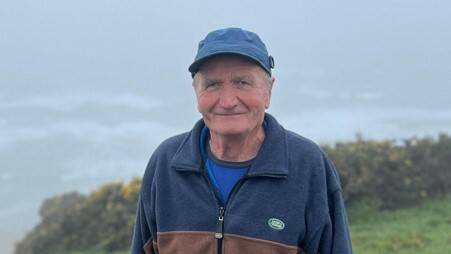
Image 1: Farmer David Matthews, pictured in 2026
He would speak to the BBC many years later and described how he couldn't imagine anyone getting into the gorse hedging within the last two or three years without physically forcing their way in, such was the density of the undergrowth at the time. Indeed, the fact that a skull had been uncovered indicated that the person had been there for quite a while.
Police attended the scene and the remains of an adult male were soon unveiled. Close to the skeletal remains was a British Passport with the embossed date of issue still visible but all other details faded away, and a blue Merchant Navy discharge book which had suffered the same fate. In addition to the personal documents, there was also a pouch containing some coins - some of which were dated in the 1970s and the most recent being dated 1977 - fragments of a copy of the Sun newspaper dated 1978, a rucksack, an overcoat, and the remains of what was believed to have been a vest.
The skeleton of the male was conveyed to Freedom Fields Hospital in Plymouth, back across the border into Devon, where a post-mortem examination was carried out by Home Office pathologist Dr Albert Hunt. He was able to conclude that the man had been between the ages of 25 and 30 years old, but little other information was forthcoming. A cause of death could not be ascertained due to the years that the body had likely been exposed to the battering elements of the Cornish coastal weather, but with no indication of foul play or accident it was suspected that he may have crawled into the hedging in a bid to seek shelter from the elements, and subsequently died from exposure. Dr Hunt ruled that the man had died from natural causes.
With the newspaper found next to the man having been issued in 1978, it was suspected that he could have been laying in the hedging for close to four years - although I'm not sure how the print on the newspaper had survived if the details in both the passport and Merchant Navy discharge book had faded so severely. Looking back over the weather conditions during that year, it was noted that an immense snowstorm had battered the country between 18th and 20th February 1978, with some of the worst conditions being focused on the area of Devon and including high ground such as Trethill cliff. Was it possible that the unidentified man had been caught out by the snowstorm and had crawled into a hedge in an attempt to avoid the worst of the weather?
Attention turned to the documentation which had been found with the man. It was considered highly likely that he had been employed with the Merchant Navy due to the discharge book found with his person, but the book proved to be useless in aiding identification due to the weathering of the printed and handwritten information contained within it. The name, identification number and travel details were no longer visible, having been exposed to the elements for too long.
The Merchant Navy were responsible for transporting essential items to and from Britain, with their cargo including raw materials, food and fuel - something which was particularly vital during the war years, when they were frequently the target for enemy attacks. Workers could volunteer to go aboard each ship and be signed on in their log book, then signed off again and paid at the end of each voyage, after which they could elect to find a different job on the shore or search for the next available Merchant Navy sailing.
Plymouth city is home to Millbay Docks and Cattewater Commercial Wharves, both of which have been used by the Merchant Navy for many years and were just a stones throw from Tregantle Fort and the field where the unidentified male was found. Rowbotham ships, who had built up a business transporting oil tankers, were operating in Plymouth in 1978, and Brittany Ferries had also been running vessels from Millbay Docks since 1973, so there were a number of options for sea-faring employment.
But if the man had worked for the Merchant Navy before he passed away, how did he get to the location he was found, and what was his reason for being there? Had he been walking to, or from the docks? Unless there were small ferries which would cross the estuary from Plymouth to Torpoint, just down the road from Trethill cliff, he would have had to head slightly inland to cross the Tamar Bridge by foot before heading back towards the coast on the other side. Local transport would have been developed enough that he should have been able to take a train from Plymouth to a different area of the UK if he was heading home, or perhaps a bus. We know that he had coins on his person based on the pouch found next to him - although the total monetary value hasn't been clarified - so he would perhaps have been able to pay for a fare. The immediate area of where he was found is very rural, so if he was local it may have been easier to walk to and from the docks - but if he was local, then why has no-one come forward to identify him? Even if he didn't have any family, surely someone in the local villages would have noticed that he hadn't come home.
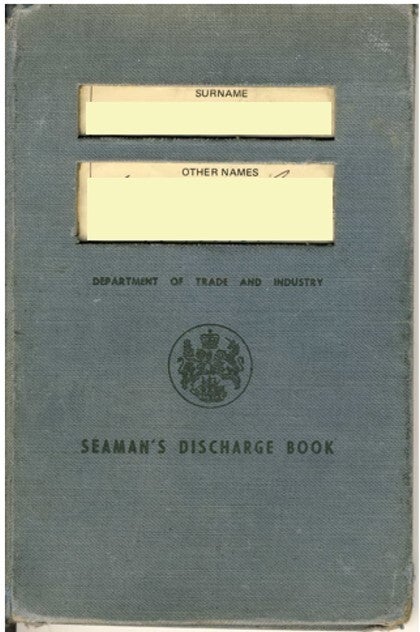
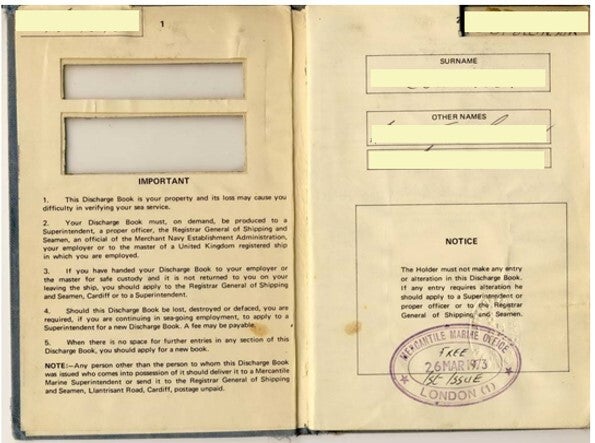
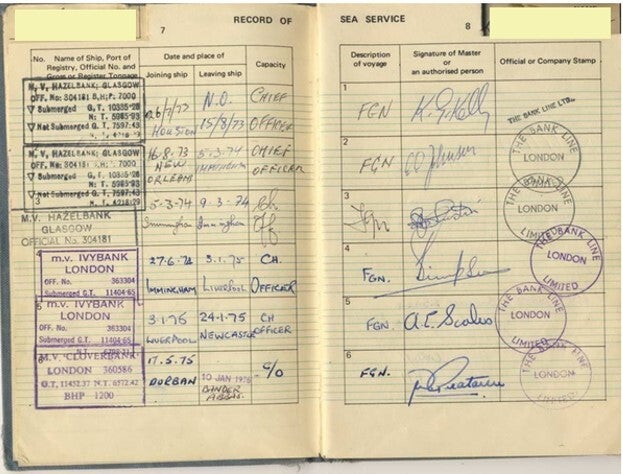
Images 2 to 4: examples of a Merchant Navy discharge book, with front cover, inner front page, and an example of how the travel details were recorded
With the Merchant Navy discharge book drawing a blank for police, attention turned to the British Passport. From 1972, passports were imprinted with a watermark and became valid for ten years, rather than the previous five years with an optional five year extension, but laminated photos weren't introduced until 1975. I can't find details on the issue date published anywhere online but if the man's passport was still valid for travel in 1978, it had either been issued after 1972 or had been renewed when it reached it's five-year cut off. If such little information could be found in the weather-beaten pages, however, perhaps it was issued prior to the laminated photos coming into play, as the lamination may have provided better protection against the elements and a photograph may have survived.
What was visible was the embossed issue date, and police travelled to Newport, Wales, and to the passport office to see if this could help them trace the man's identity. It would transpire that 12,000 passports had the same issue date, but with careful police work officers were able to whittle this number down to 23 people who couldn't be accounted for. These 23 names were compared with National Insurance records, passed to other police forces, and handed to the Merchant Navy to enable different agencies to compare them to their records, but no name was singled out which matched the details of the unidentified man.
Despite prolonged, intensive efforts to find out who the man was and return him to his family, nearly two years passed with no information being obtained to identify him. The adult male was ultimately buried in Horson Cemetery in the Cornish village of Torpoint, a short distance away from where he was found, on 24th October 1983. He was interred in a graveyard alongside 65 victims of an air attack on HMS Raleigh on 28th April 1941.
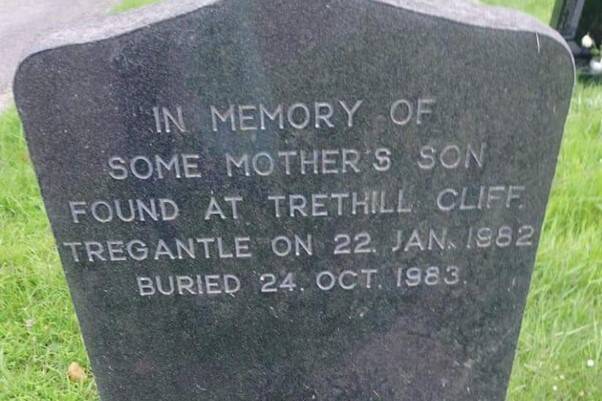
Local residents were so touched by his story that the landlord of the pub raised money for a headstone to be installed, with the community choosing the inscription which read:' In memory of Some Mother's Son, found at Trethill Cliff, Tregantle on 22nd Jan 1982, buried 24th Oct 1983'. The title Some Mother's Son gave reference to the fact that the man had been a human being with a family somewhere - that he was someone's child, and perhaps someone's grandchild, brother, uncle or friend. It made him a real person, rather than just referencing the skeletal remains he left behind.
Image 5: the headstone installed in memory of the unidentified man
This, thankfully, isn't where the story ends. Local independent researched Simon Owens, of Torpoint, tentatively started looking into the background surrounding Some Mother's Son, and has attempted to trace his identity over the last few years. He has posted appeals for information in addition to videos online, and opened a Buy Me a Coffee page where he leaves updates on how his research is progressing, bolstered by the modern day technologies and communication methods available.
Simon Owens' interest in the case prompted the charity Locate International to start reinvestigating the case. Supported by a team of 250 volunteers, many with specialist backgrounds such as former police detectives, forensics, lawyers, journalists and social workers, the charity has been part of a pilot operation with Devon and Cornwall Police. Operation Locate is aiming to review 200 missing person cases and the cases of 34 unidentified remains in the hopes that some may finally be solved with the joint efforts of the police force and the voluntary sector. Former Detective Dave Grimstead - a co-founder of Locate International - told the BBC: '"I still remember those cases that I never solved and I know people are still working on those cases now, decades later. If we can provide that specialist support at no cost... that's where we'll make a difference."' He added that the team were: '"working together with that kind of common purpose to try and find an answer in these cases where families are still searching."'
Of the pilot trial itself, Dave Grimstead said: '"there's a need to try and provide that support for police and for coroners and for families, so if we can make this work in Devon, in Cornwall, then it will work elsewhere."' Inspector Gareth Hammett, the deputy lead for Devon and Cornwall Police's missing person unit, was quoted as saying: '"Devon and Cornwall Police are the first police force in the country to explore the capabilities, knowledge, and skills that Locate International offer, capitalising upon advances in forensic science and technology. This gives us an opportunity to re-examine cases and potentially yield breakthroughs that were not possible at the time."'
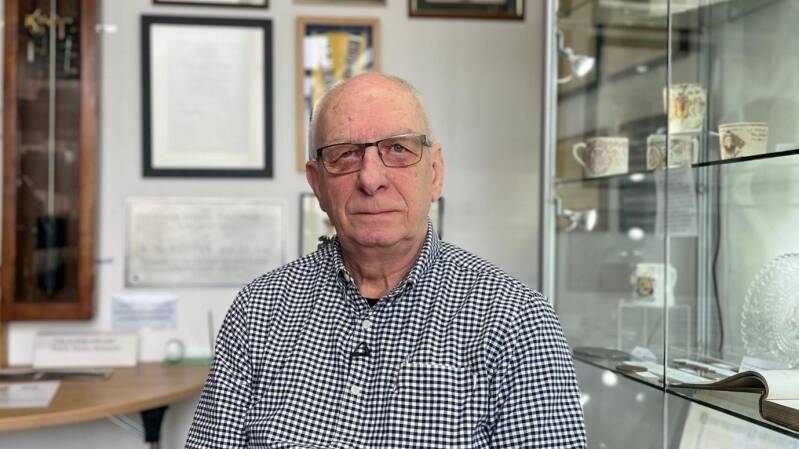
Image 6: Paul Roper, one of the original investigating officers
Paul Roper was also interviewed as part of the renewed appeal in this case, publicised by the BBC in 2026. He was one of the original investigating officers and first on the scene in 1982, and was quoted on the Locate International website as saying: '"this case has stayed with me since that winter's day in 1982. We did all we could with the tools we had, yet the young man we found - 'Some Mother's Son' - still has no name. Today, with modern technology and a community working alongside Devon and Cornwall Police and Locate International, we have our best chance yet to finally restore his identity."'
Despite staff from Locate International being granted access to the police archives to review information relating to the cases they are reviewing, no records relating to the man found at Trethill cliff remain. These may have been discarded as part of routine clearance due to there being no suspicious activity documented in his case, but the result is that the charity have to effectively start investigating his case from scratch, although it's not clear whether the items found with him have also been destroyed. Locate International have launched an appeal for information in his case on their website, and have provided an online form where people are able to submit information anonymously should they not wish to disclose their name.
Conclusion
The support from Locate International in conjunction with the authorities will surely give this unidentified male the best possible chance of finally being named, and being reunited with any of his remaining family. His name and identity have been elusive for more than forty years, but there must surely be someone out there who is still missing him. Someone may have wondered what happened to a friend who they stopped hearing from, or a distant relative who seemed to vanish.
How Some Mother's Son came to be in a field on top of Trethill cliff in Cornwall may forever be a mystery, with perhaps only the man himself knowing why he chose to head that direction and why he crawled into the hedgerow. Despite the details of how he met his fate and his identity remaining unknown, the community around Torpoint and Tregantle have never forgotten him. Flowers are frequently left on his grave, and images online have shown rows of pennies and coins being left on top of the headstone - a symbol of respect and a way of saying that the person beneath the ground is still remembered.
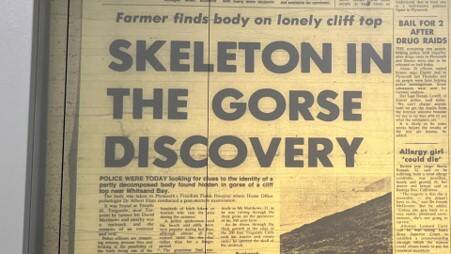
Image 7: a newspaper article from 1982
Perhaps, sometime in the future, advances in technology or information from a single individual may provide the essential detail which will identify this man, giving him the chance to have his name on his headstone instead of being known only as Some Mother's Son.
If you have any information which may help to identify the man found on Trethill cliff, near Tregantle Fort, on 22nd January 1982, please contact police via 101, or make a report on the Devon and Cornwall Police website: Home | Devon & Cornwall Police
You can also submit information via the Locate International website, with the option to do so anonymously: Contact Us — Locate International
References for text:
Some Mothers Son — Locate International
'I've got no peace': Missing cold cases reopened - BBC News published 29th April 2026, retrieved 14th October 2026
British merchant seamen of World War II - Wikiwand
Credit for images:
Image 1 - farmer David Matthews, pictured in 2026: 'I've got no peace': Missing cold cases reopened - BBC News
Images 2 to 4 - example of Merchant Navy discharge book: Documents: Richard's Second Seaman's Discharge Book - issued 26 Mar 1973: Past and Present Company
Image 5 - the headstone for Some Mother's Son: Long search for answers over heartbreaking mystery of young man's body found on clifftop | The Herald
Image 6 - Paul Roper, one of the original investigating officers: 'I've got no peace': Missing cold cases reopened - BBC News
Image 7 - a newspaper article from 1982: 'I've got no peace': Missing cold cases reopened - BBC News
Add comment
Comments